
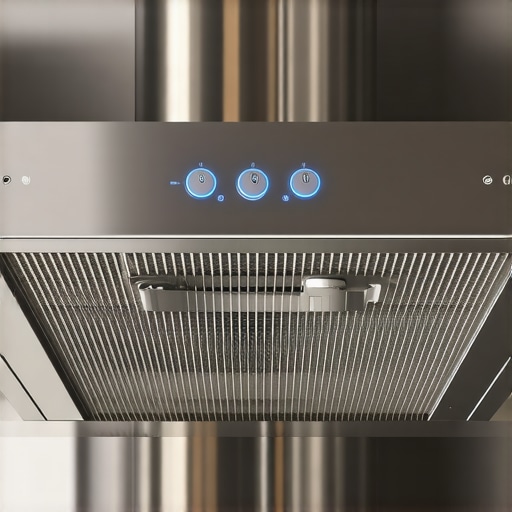
Last Tuesday, I was trying to sear a couple of ribeyes for dinner, and the moment I flipped the switch on my range hood, the noise was so deafening I actually checked to see if a lawnmower had somehow started in my cabinets. It wasn’t just a hum; it was a bone-rattling vibration that made my wine glass dance across the counter. I realized then that I’d been putting up with a jet engine in my kitchen for way too long. We often think a loud fan means it’s working hard, but more often than not, it means something is desperately wrong or poorly installed.
Stop Ignoring the Racket in Your Kitchen
The truth is, your range hood shouldn’t require earplugs. If you can’t have a conversation while boiling pasta, you’re likely dealing with more than just a powerful motor. I’ve seen folks spend thousands on high-end appliances only to have the range hood fan vibrate their kitchen cabinets into another dimension. Early in my DIY journey, I made the mistake of thinking I could just tighten a couple of screws and call it a day. I didn’t realize that a misaligned blower wheel or a clogged duct was the real culprit. It cost me a lot of frustration before I finally looked into expert appliance repair and installation to get it right. Today, I’m going to help you figure out exactly why your kitchen sounds like a construction zone and how to silence the beast for good.
Is a quiet range hood actually possible?
You might be skeptical. You’ve probably lived with that rattling hum for years and assumed that’s just how air moves. But here’s a surprising fact: According to the Home Ventilating Institute (HVI), fans rated over 1.5 sones are often loud enough that homeowners simply stop using them, leading to poor indoor air quality and grease buildup on your walls. A properly functioning, well-installed unit can move massive amounts of air without the headache. If you’re tired of the noise, you might want to look into fast and trustworthy appliance installation to see what a modern, quiet setup actually feels like. Have you ever felt like your range hood was trying to win a shouting match with you?
The Culprits Behind the Chaos
Usually, the noise boils down to three things: mechanical failure, poor installation, or a lack of maintenance. Sometimes it’s as simple as the way your range hood venting is sealed. If the air has nowhere to go, it creates backpressure that makes the motor work twice as hard and roar twice as loud. Other times, it’s a structural issue. If you’re in the middle of a renovation, don’t forget the one ventilation step most kitchen remodels skip. Getting it right the first time saves you from having to call for same-day appliance repair later on when the motor finally gives up the ghost.Start by cutting the power. I cannot stress this enough—reaching into a housing with a live motor is a great way to lose a fingertip. Once the filters are out, look at the blower wheel (the drum-shaped fan). If it has even a millimeter of play when you wiggle it, that’s your rattle. I once spent two hours chasing a ‘motor noise’ only to realize a single set screw had backed out by half a turn. Tightening it silenced the whole unit. If you find the wheel is caked in grime, it becomes unbalanced. It’s like a washing machine with a heavy wet towel stuck on one side; it’s going to shake. Cleaning this properly is the first step toward understanding why your range hood isn’t venting smokes and odors properly. I remember trying to ‘balance’ a wobbling blower wheel once by taping a small weight to one of the blades in a moment of DIY desperation. It worked for about three minutes before the weight flew off, sounding like a gunshot inside the vent. Never do this; clean the blades instead.
Examine the Ducting for Airflow Bottlenecks
If the motor sounds like it’s straining—a high-pitched whine rather than a rattle—the air is likely hitting a wall. Check the damper, which is the little flap that opens when the fan is on. Sometimes these get stuck shut with dried grease or even outdoor debris like bird nests. If the flap can’t open, the air just churns inside the housing, creating a vortex of noise. This is a common issue I see when performing fast and trustworthy appliance installation. People often forget to check the exterior wall cap for obstructions, assuming the problem is always internal.#IMAGE_PLACE_HOLDER_B#Furthermore, look for flex ducting that has been crushed or bent at sharp 90-degree angles. Imagine trying to breathe through a straw that has a kink in it; you have to work much harder to get the same amount of oxygen. Your range hood is the same. Replacing a section of crushed ducting can drop the decibel level significantly without you ever touching the motor. If the installation was botched from the start, you might need to consult an expert guide to appliance repair and installation today to see if the whole run needs a rethink.
Manage Your Warranty Protection Wisely
Sometimes the motor bearings are just shot. You’ll know because the noise sounds like grinding metal or a constant screech. If your unit is less than a year old, do not try to fix the motor yourself. Modern manufacturers are incredibly picky, and cracking open that motor housing will void your coverage instantly. Instead, gather the document every technician needs to see for a valid warranty visit. Having your receipt and serial number ready can be the difference between a free replacement and a $300 bill. For those with older units that are out of the manufacturer’s window, look into warranty-backed appliance services you can rely on to ensure the replacement motor doesn’t fail in six months. It’s also wise to how to verify your new appliance is covered under the original warranty before you call a third-party shop. Often, motors have longer separate warranties than the rest of the unit, and you could save yourself a fortune just by checking the fine print.Let’s dig deeper into a hard truth most homeowners ignore: speed is often the enemy of a quality repair. We live in a world of instant gratification, and when your range hood or dishwasher dies, your first instinct is to Google the fastest response time. But there is a massive difference between a technician who shows up in two hours and one who actually fixes the problem on the first visit. In my experience, the industry’s obsession with ‘same-day’ metrics often leads to ‘same-day diagnostics’ followed by a two-week wait for parts. If you want the real deal, you need to know what to expect from same-day appliance repair experts before you book. True experts don’t just show up; they arrive with a truck stocked for the most likely failures based on the model number you provided.
Stop chasing the fastest arrival time
Everyone says you should hire the first person who answers the phone, but I’ve found that the busiest (and best) techs often need a 24-hour window. The ‘Oops’ factor here is assuming that ‘same-day service’ guarantees a same-day resolution. It rarely does. A common trap is the ‘service call fee’ bait-and-switch, where a company offers a low entry price just to get in the door, only to tell you the part is backordered indefinitely. When you are scheduling your appliance repair for same-day service in 2025, ask if they carry OEM parts for your specific brand on the van. If they don’t, you’re just paying for a glorified inspection.
Why is your ‘covered’ repair still costing you hundreds?
This is the nuance that separates the pros from the amateurs. Many homeowners fail to distinguish between a manufacturer’s warranty and a third-party service contract. I’ve seen people get hit with massive labor bills because they didn’t understand the difference between a factory warranty and a service contract. A factory warranty usually covers parts and labor for the first year, but a service contract might have a ‘deductible’ or cap on labor rates that leaves you holding the bag. According to a study by Consumer Reports, nearly 20% of homeowners who filed a claim through a home warranty felt the process was difficult or resulted in a denied claim due to ‘improper maintenance.’ This is exactly the fine print in your home warranty that denies every claim. If you can’t prove you’ve cleaned those range hood filters or descaled that dishwasher, they have a legal out. Have you ever fallen into this trap? Let me know in the comments.#IMAGE_PLACE_HOLDER_C#
The electrical trap that kills modern control boards
When it comes to new installs, people think as long as the plug fits, they’re golden. This is a dangerous myth. Modern high-efficiency appliances are essentially computers that cook or wash. They are incredibly sensitive to voltage fluctuations. I’ve seen brand-new units fried within weeks because the installer skipped a basic circuit load test. For instance, why your new smart oven needs a dedicated circuit isn’t just a suggestion—it’s a requirement to prevent the control board from burning out during a self-clean cycle. Before you sign off on a job, make sure you know how to ensure reliable appliance installation in 2025 by checking that your home’s amperage matches the unit’s peak draw. If the manufacturer finds out your wiring wasn’t up to code, they will absolutely use that to learn how to claim your warranty when the manufacturer denies you is a losing battle. To stay protected, always maximize your appliance warranty during emergency repairs by insisting on a licensed installer who provides a written compliance statement. Doing it right the first time is the only way to keep the ‘quiet’ in your kitchen and the money in your pocket.
The Essential Toolkit for Any Serious Homeowner
Whenever I walk into a kitchen to troubleshoot, I am not just looking for a loose screw. I am looking for data. One tool that has saved me thousands in unnecessary parts is a reliable multimeter—specifically the Fluke 117. I use it to check for continuity in fuses and heating elements. If you have ever wondered how to check if your oven igniter is too weak to light, a multimeter is the only way to get a definitive answer instead of just guessing. I also swear by a simple non-contact voltage tester; it is the first thing I pull out to ensure I am not about to get a nasty surprise from a poorly grounded range hood or a faulty wire.
But tools are not just hardware. Your smartphone is arguably the most powerful diagnostic device in your pocket. Before I touch a single bolt, I record a 30-second video of the appliance acting up. This is a game-changer when you are looking for top tips for same-day service warranty coverage. Showing a technician the exact sound your fridge makes at 2 AM is far more effective than trying to mimic the noise with your mouth once they arrive. Plus, knowing how to document appliance damage for a warranty payout with clear photos of the serial plate and the failure point can cut through weeks of red tape and manufacturer denials.
#IMAGE_PLACE_HOLDER_D#
How do I maintain my appliances over the long haul?
Long-term reliability is rarely about the brand you buy and almost always about the rituals you keep. The Association of Home Appliance Manufacturers (AHAM) notes in their technical standards that airflow restriction is the leading cause of premature motor failure across all kitchen ventilation. This means more than just washing your range hood filters once a year. It means checking the simple gasket cleaning that stops fridge door sweating to ensure your compressor is not running 24/7. It also means performing the maintenance step that extends the life of your high-efficiency washer by clearing the drain pump filter every quarter to prevent stagnant water from burning out the motor.
Why AI is about to change how we fix things
Looking ahead, I predict we are less than five years away from appliances having predictive failure sensors as a standard feature. Your fridge will likely email you—or a local shop—a week before the evaporator fan dies based on vibration patterns. We are already seeing the beginnings of this with Wi-Fi-enabled diagnostics, but it is going to get much smarter. In the meantime, you can stay ahead of the curve by scheduling your appliance repair for same-day service in 2025 with companies that embrace these remote diagnostics. If you are feeling overwhelmed, do not hesitate to contact us for a second opinion on a complex install. My best advanced tip? Go pull your dishwasher out just two inches and check the drainage slope rule for a silent dishwasher install right now—it is the most common quiet killer I find in modern kitchens.
Hard Truths About Your Range Hood’s Lifespan
Over the years, I’ve realized that noise is actually a gift—it’s your appliance’s only way of screaming for help before it completely dies. One of the biggest ‘aha’ moments for me was discovering that most rattling is caused by simple physical imbalances, not complex electrical failures. If you address a vibrating fan early, you can often avoid needing affordable same-day appliance fixes with warranty benefits later on. Another lesson? Don’t trust the marketing hype over your own ears. Even if a unit says it’s ‘ultra-quiet,’ poor venting can turn it into a megaphone. I once saw a high-end range hood sound like a jet engine simply because the installer used the wrong diameter duct. Checking your own work or hiring for fast and trustworthy appliance installation is the only way to ensure the specs on the box match the reality in your home.
The Essential Diagnostic Gear I Keep in My Kitchen Drawer
You don’t need a van full of parts to be a smart homeowner, but you do need a few high-value items. First, a reliable multimeter is non-negotiable. It’s how I learned how to check if your oven igniter is too weak to light without calling a professional just to tell me it’s broken. Second, I always keep a digital copy of my appliance’s service manual on my phone—most brands hide these behind the kickplate or inside the range hood housing. Lastly, never underestimate the power of your smartphone camera. Before a technician arrives, I record the failure in high definition. Knowing how to document appliance damage for a warranty payout is the difference between a smooth claim and a frustrating denial. These simple habits turn you from a passive consumer into an informed advocate for your own home ecosystem. #IMAGE_PLACE_HOLDER_E#
Take Back Your Quiet Kitchen
Kitchens are the heart of the home, but they shouldn’t be the loudest room in the house. By tackling these rattles and hums today, you aren’t just fixing a machine; you’re reclaiming your peace of mind. Whether you decide to go the DIY route or consult our expert guide to appliance repair and installation today, the goal remains the same: a functional, efficient, and silent workspace. Don’t let a noisy fan or a vibrating cabinet steal your joy for cooking. What’s the loudest appliance in your home right now, and what’s stopping you from silencing it? Let me know in the comments below!