
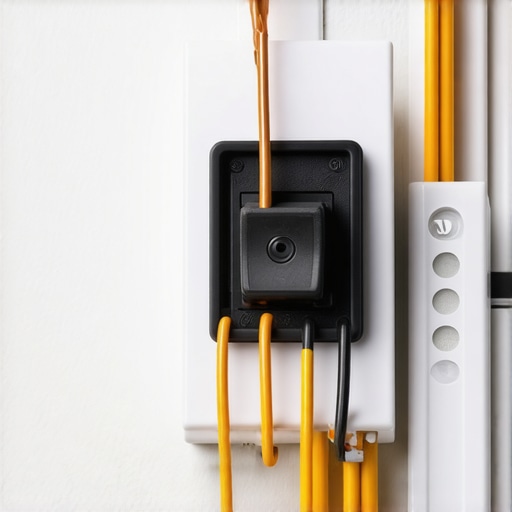
I stood there in the pitch black, my thumb hovering over a digital button that refused to turn on the bathroom light. It was 11:30 PM. I had just finished what I thought was a masterful installation of a brand-new smart dimmer. My wife was already asleep, and there I was, illuminated only by the cold blue glow of a ‘Device Unreachable’ error on my phone. It’s a special kind of defeat. You feel like the future has failed you, or worse, that you’re not smart enough for your own ‘smart’ home. But after three hours of troubleshooting and two cups of unwanted midnight coffee, I realized the problem wasn’t my Wi-Fi signal or a defective unit. It was a single, overlooked wire that I had assumed didn’t matter.
Stop Blaming Your Router for Every Connection Drop
Most of us immediately jump to resetting the mesh system when a switch goes dark. I’ve been there, chasing signals around the house like a ghost hunter. However, in my years of tinkering, I’ve learned that physical installation is where 90% of these battles are won or lost. If you don’t ensure reliable appliance installation from the jump, no amount of bandwidth will save you. The mistake I made—and the one I see neighbors make constantly—revolves around the assumption that ‘close enough’ works for electrical connections. I once ignored a slightly loose ground wire because the switch turned on during the first test. Big mistake. Within a week, the internal sensors started overheating and the radio chip just gave up. This kind of grounding error that makes your smart stove controls glitch is exactly the same gremlin that haunts your wall switches. It’s not just about the power; it’s about the stability of the logic board inside that tiny plastic box.
Is Smart Lighting Actually Worth This Much Frustration?
I get it. When you’re staring at a tangle of copper and white Romex, you start to wonder if a dumb flick-switch wasn’t so bad after all. But the issue usually isn’t the technology itself; it’s a lack of respect for the precision these devices require. According to data from the National Fire Protection Association (NFPA), electrical failures or malfunctions are a leading cause of home fires, and while a smart switch won’t necessarily burn your house down, a poor connection creates electrical ‘noise’ that kills the connection. Have you ever had a switch work perfectly for two days and then just… vanish from your app? That’s almost always a wiring instability, not a software bug. Today, we’re going to walk through exactly how to seat those wires so your hub stops throwing fits. We’ll look at why your smart hub keeps disconnecting from Wi-Fi even when the signal is strong. It’s time to stop the ‘ghosting’ and get your home back on the grid. If you’re feeling overwhelmed, looking at an expert guide to appliance repair and installation today can give you the confidence to pull that switch back out of the wall and fix it for good. Have you ever spent more than an hour trying to pair a device only to find out it was a loose wire all along? Tell me I’m not the only one who has lost a Saturday to a single wire nut.
Seat Your Wires with Intention
When I finally pulled that flickering switch back out of the wall at 1 AM, the lesson was clear: it wasn’t a faulty chip, it was me. I’d used the ‘push-in’ terminals on the back of the device—those tiny holes that promise speed but deliver heartbreak—instead of the side screws. In the world of smart home tech, where internal logic boards are sensitive to the slightest voltage drop, those push-in slots are the enemy of stability. You want a literal ‘hook and loop’ connection. Strip about three-quarters of an inch of insulation, bend the copper into a ‘U’ shape, and wrap it clockwise around the screw. This way, as you tighten the screw, it pulls the wire deeper into the connection rather than pushing it out. This is the same fundamental logic behind how to ensure reliable appliance installation for any high-performance device. If that connection isn’t rock solid, the tiny radio inside the switch will brown out every time the lights draw power. I once spent four hours debugging a ‘ghost’ light that kept turning itself off, only to find that the one wire that always fails—the neutral—was just loose enough to arc during heavy usage. 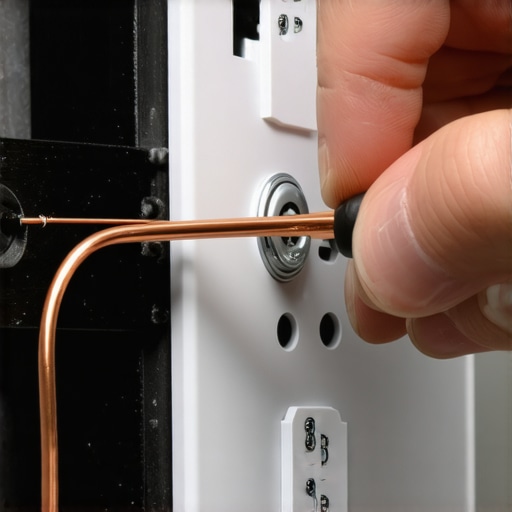
Place Your Hub Where It Can Actually Breathe
We often hide our smart hubs in cabinets or behind the TV because they look like plastic pucks that ruin the living room aesthetic. That is a tactical error. Think of your hub like a person shouting instructions across a crowded room; if you put a pillow over their face, the message gets garbled. I once moved my bridge from a metal media cabinet to a central wooden shelf, and suddenly, my ‘unresponsive’ devices in the basement came back to life instantly. This is the smart lighting bridge location that fixes every drop out without requiring a single app reset. Distance is rarely the connection killer; it is the density of the objects in between—especially metal and concrete. If you’re struggling with a rattling device while you’re at it, sometimes the one screwdriver turn that levels a rattling washer is all you need to keep your sanity while the smart home network recalibrates.
Don’t Void Your Warranty for a Saturday Project
Before you start hacking away at your junction box or modifying the casing of a new device, remember that these gadgets are expensive and legally protected. I learned this the hard way when I tried to ‘custom fit’ a smart lock bracket by filing down the metal and snapped a tension spring. Because I had gone ‘off-book,’ the manufacturer flatly denied my claim. If you are ever in doubt about the physical limits of your hardware, it is better to consult an expert guide to appliance repair and installation today rather than guessing. Knowing the reason your warranty claim was denied usually comes down to unauthorized modifications, so keep your heavy-duty pliers away from the internal circuit boards. I recently helped a neighbor who was about to drill into his smart stove; I suggested he check what to expect from same-day appliance repair experts instead. We found out it was simply the grounding error that makes your smart stove controls glitch, a fix that took ten minutes and kept his warranty intact.Let’s dig deeper into the world of professional fixes, because there is a massive misconception about speed. Everyone thinks same-day service is the gold standard of success, but in my experience, the obsession with ‘same-day’ is often a diagnostic trap. I’ve seen homeowners demand a technician arrive within four hours, only to be frustrated when the pro realizes they don’t have a niche control board on the truck. Real expertise isn’t just about showing up; it’s about the first-time fix rate. According to the Service Council’s 2023 Service Leader’s Agenda, the industry average first-time fix rate hovers around 75%, meaning one out of four ‘quick’ calls requires a second visit anyway. If you are looking for same-day appliance repair quick solutions with warranty support, you need to provide the technician with the exact model number and error code before they even step into their van.
Same-Day Service Isn’t Always About the Fix
The ‘Oops’ factor usually happens before the repairman even arrives. Most people see a flashing light on their dishwasher and immediately kill the power at the breaker. While that stops the noise, it often wipes the volatile memory of the control board, erasing the very error codes the technician needs to diagnose the root cause. It’s like going to the doctor and hiding your symptoms. This mistake can turn a simple sensor swap into a three-hour forensic investigation. Instead, learn what to expect from same-day appliance repair experts so you can prepare the ‘crime scene’ properly. When you document the failure—perhaps noting the signs of a failing range control board while they are happening—you significantly increase your chances of a true one-and-done repair. 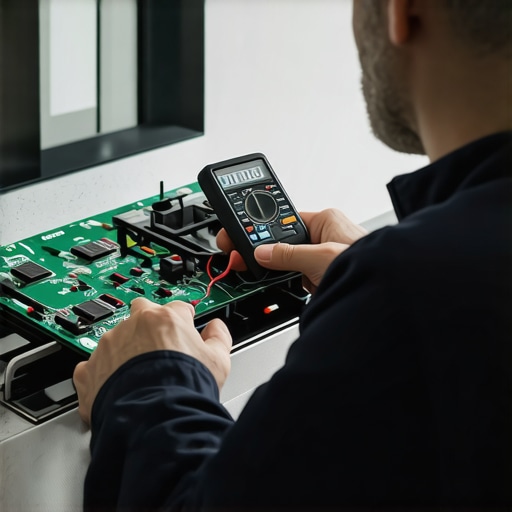
Why Is Your Manufacturer Ghosting Your Repair Claim?
This is the advanced question I get most often from readers who feel cheated by their ‘bumper-to-bumper’ coverage. The reality is that manufacturers look for any reason to pivot a repair from ‘covered’ to ‘user error.’ The biggest trap? Lack of maintenance records. If your fridge compressor dies but you haven’t cleaned the coils in three years, they can argue the failure was caused by environmental neglect rather than a defect. I always tell my friends that the one maintenance record that saves your appliance warranty claim is a simple dated photo of your clean appliance guts. Without it, you’re likely to find out the reason your warranty claim was denied is a small print ‘maintenance requirement’ you ignored.
Don’t Let Your Toolbag Void Your Coverage
There is a fine line between a smart DIY fix and a warranty-voiding catastrophe. I’ve seen people try to fix a buzzing induction stove by tightening internal screws, only to find that the manufacturer uses tamper-evident paint on those fasteners. Once that seal is broken, your $2,000 range is now a ‘self-serviced’ unit, and the factory is off the hook. If you’re dealing with something high-stakes, like the control board solder joint that kills your range, it is almost always better to use warranty-backed appliance services you can rely on rather than taking the back panel off yourself. Have you ever fallen into this trap where a ‘simple’ DIY fix ended up costing you the whole warranty? Let me know in the comments, and let’s stop making these expensive mistakes together.I’ve realized that the difference between a ‘DIY hero’ and a ‘frustrated homeowner’ usually comes down to three pounds of steel and copper sitting in a toolbox. If you want to stop guessing, stop relying on the little LED indicator lights on your devices. I never touch a junction box now without my digital multimeter. I use a professional-grade meter because it has a low-impedance mode that prevents ‘ghost voltages’ those fake readings that happen when wires are run too close together in a wall. If you’re wondering how to ensure reliable appliance installation, you need to verify that your outlet is actually pushing 120V under load, not just when it’s idle. This is the same level of detail you should look for when scheduling your appliance repair for same-day service in 2025. A pro will pull out a meter and check the sine wave; a tinkerer will just start swapping parts until something clicks. 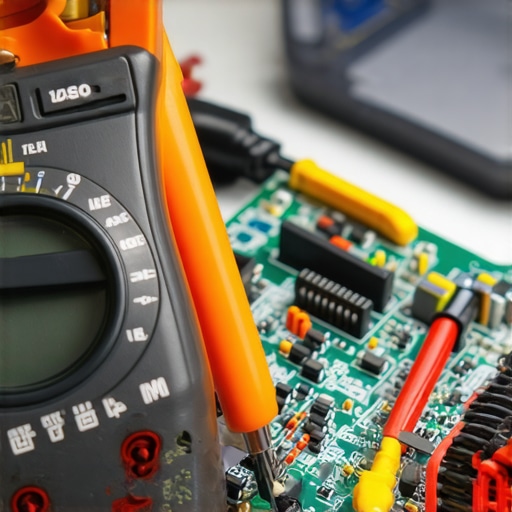
How Do I Keep My Smart Appliances From Decaying?
The secret isn’t found in the software updates; it’s found in the physical environment. We often forget that these high-tech boards are basically tiny computers living inside humid, vibrating metal boxes. To keep them alive, you have to combat ‘thermal fatigue.’ This is why I religiously check the critical airflow distance your built-in microwave requires every time I deep clean the kitchen. If the heat can’t escape, the delicate solder joints on the control board will eventually crack under the stress of expansion and contraction. For my dishwasher, I stopped using cheap, abrasive pods and installed the hard water filter your dishwasher desperately needs to prevent calcium buildup on the turbidity sensors. This kind of proactive care is exactly how to prove periodic maintenance to keep your warranty valid if things ever go south. According to the 2023 National Electrical Code (NEC) Section 406.4(D), specific grounding requirements must be met during any replacement or installation to ensure safety—ignoring these fundamental rules doesn’t just risk your tech; it risks your home.
Stop Treating Smart Tech Like Disposable Plastic
Looking ahead, I predict we’re moving toward ‘self-healing’ kitchens where predictive maintenance is built directly into the silicon. Soon, your fridge won’t just leak; it will detect a 5% drop in pressure and automatically ping a service for affordable same-day appliance fixes with warranty benefits before you even see a puddle on the floor. But until that day comes, you are the primary diagnostic tool. You need to know how to maximize your appliance warranty during emergency repairs by keeping a digital maintenance log on your phone. My advanced tip for you this weekend: Take five minutes to pull out your dishwasher kickplate and vacuum the dust off the motor and pump housing. It sounds trivial, but reducing that heat friction can add three years to the machine’s life. If you’re ever unsure about a noise or a connection, consult an expert guide to appliance repair and installation today and save yourself the headache of a ‘Device Unreachable’ notification at midnight.
The Expensive Truth About ‘Quick Fix’ Diagnostics
After years of dealing with flickering smart switches and temperamental sensors, I’ve realized that the most common mistake isn’t a lack of skill—it’s a lack of preparation. If you want a technician to actually solve your problem on the first visit, you need to be their most organized client. Before you even look for top tips for same-day service warranty coverage, snap a photo of the model sticker and record the specific sequence of any flashing error lights. Most homeowners clear the error codes by flipping the breaker before the pro arrives, which is like erasing the evidence at a crime scene. I’ve found that documenting the failure in real-time is the only way to maximize your appliance warranty during emergency repairs. It proves the issue wasn’t caused by your ‘Saturday afternoon tinkering’ but was a genuine hardware failure.
Tools That Make You the Smartest Person in the Room
You don’t need a van full of gear to maintain a high-tech kitchen, but you do need three specific things. First, a reliable digital multimeter is your best defense against ‘ghost voltage’ that tricks smart hubs. Second, I swear by the “Maintenance Vault”—a simple digital folder where I store every receipt and a dated photo of my clean appliance guts; this is how you ensure reliable appliance installation stays under warranty for years. Finally, trust the data over the hype. When looking for affordable same-day appliance fixes with warranty benefits, I always look for shops that ask for my model number upfront. If they don’t ask, they probably aren’t bringing the right parts, and your ‘same-day’ fix will turn into a ‘next-week’ headache.
#IMAGE_PLACEHOLDER_E#
Take Control of Your Home’s Heartbeat
Modern appliances are no longer just gears and belts; they are silicon and sensors that require a different kind of respect. Don’t let the complexity intimidate you. By focusing on physical stability—like tight wire loops and clear airflow—you prevent the vast majority of ‘smart’ failures before they start. When things do break, and they eventually will, you now have the roadmap to handle it without losing your sanity (or your warranty). Remember, a truly smart home isn’t one that never breaks, but one where the owner knows exactly what to do when it does. Have you ever had a warranty claim denied because of a missing receipt or a minor DIY modification? Let me know your horror stories in the comments below!