
It was a humid Saturday morning, coffee in hand, and a shiny new smart lock sat on my kitchen table like a promise of a better, more tech-forward life. I was convinced I would be done in twenty minutes. Instead, three hours later, I was staring at a jagged crack in my mahogany door frame and a deadbolt that refused to slide home. I had ignored the cardinal rule of home improvement: if it doesn’t fit, don’t force it. That single mistake cost me a weekend of wood-filler and sanding that I still see every time I walk through the front door. Today, I want to make sure you don’t repeat my frustration. We are going to walk through the exact steps to get that smart lock humming without turning your door into a pile of splinters. If you have ever felt that sinking feeling when a screw goes in crooked, you are in the right place. Have you ever started what you thought was a ‘simple’ home project only to end up at the hardware store three times in one afternoon? I’d love to hear about your most memorable DIY ‘oops’ moment in the comments below.
Why You Should Never Force a Bolt Into a Bad Fit
Look, I know the temptation. You are halfway through the install, the app is ready to sync, and the deadbolt is just a fraction of an inch off. You think a little extra elbow grease will solve it. Stop right there. According to a security analysis by SafeHome.org, nearly 28% of smart home hardware issues are actually caused by physical installation errors rather than software glitches. If you find yourself struggling, take a breath and check out what to do when your smart lock refuses to budge before you reach for the heavy tools. Forcing the mechanism doesn’t just ruin the wood; it puts immense strain on the tiny motor inside the lock. This is exactly how you void a warranty before the batteries are even in. It is just as vital as keeping the warranty document you must save before discarding the box. Doing it right from the start ensures you have warranty-backed appliance services you can rely on if the internal electronics ever decide to act up later. Getting the alignment perfect isn’t just about aesthetics; it’s about making sure the motor doesn’t burn out in six months because it was fighting a misaligned strike plate every single day.
Will This Actually Keep My Home Safe?
The biggest fear I hear from neighbors is that a DIY install might leave their home more vulnerable than the old-school key they’ve used for a decade. It is a valid concern. If the strike plate is loose or the door frame is weakened by too many unnecessary drill holes, you are basically handing an intruder an invitation. This is why we focus on precision over power. We want to ensure that every screw bites into solid wood, not just thin air or filler. If you are worried about the technical side, like why your smart hub keeps disconnecting from wi-fi, remember that the physical lock is your first line of defense. A smart lock is only as smart as the door it is attached to. Let’s make sure yours is rock solid.
Ditch the Guesswork with a Template
The first mistake I made on that mahogany door was thinking I could eyeball the center point. I thought I knew where the hole should be, but even being a hair off means the lock will bind. Most smart locks come with a cardboard or paper template for a reason. Tape it to the door like you are performing surgery. If your existing hole is too small, don’t just ‘shave it down’ with a pocketknife. Use a hole saw with a guide. Getting this right is the cornerstone of reliable appliance installation in 2025. Think of the mounting plate as the foundation of a house; if it is tilted even a degree, the rest of the structure is doomed to fail. I once tried to skip the template on a back door project and ended up with a lock that only worked if I pulled the handle upward while turning the key. It was a daily reminder of my own laziness until I finally patched and redrilled it.
Set the Stage for a Smooth Deadbolt Glide
Once your holes are prepped, you need to look at the strike plate on the door frame. This is where most DIYers lose the battle. If your door doesn’t latch perfectly when you close it normally, a smart lock will struggle. The motor inside these units is about the size of a thumb; it doesn’t have the torque to pull a heavy door into alignment. You should be able to throw the bolt with a single finger. If you have to push or pull on the door to get the lock to engage, you are essentially slow-cooking the motor until it dies. This kind of mechanical strain is a leading reason for hardware failure, much like the signs of a failing range control board where one small electrical or physical blockage leads to a total system shutdown. If the strike plate is shallow, use a chisel to deepen the mortise. It is better to spend ten minutes with a chisel now than to be calling for scheduling your appliance repair for same-day service in 2025 because your lock jammed while you were at work. 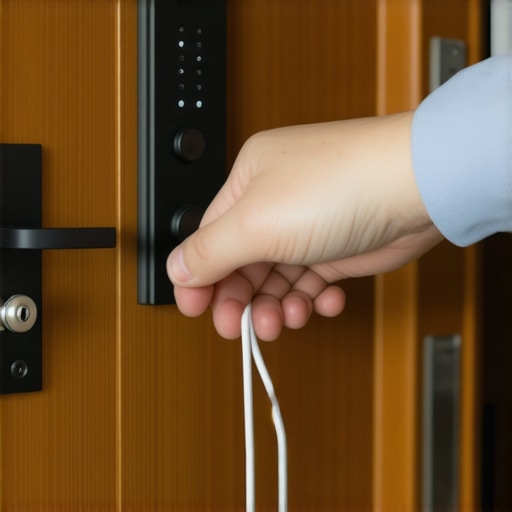
Protect the Ribbon Cable Like It Is Gold
The most fragile part of any smart lock isn’t the deadbolt; it’s the tiny ribbon cable that connects the exterior keypad to the interior battery pack. During my third attempt at an install, I accidentally pinched this wire between the mounting plate and the wood. It didn’t snap, but it was enough to cause intermittent power loss. It felt exactly like why your smart hub keeps disconnecting from wi-fi—you think it’s a software bug, but it’s actually a physical connection failing under pressure. When you thread that cable through the hole, make sure it sits in the designated channel. If the plate feels like it’s ‘bouncing’ when you push it against the door, you’ve likely got the wire trapped. Back off immediately. Following an expert guide to appliance repair and installation today means respecting these delicate components just as much as the heavy steel bolts. Hand-tighten the screws first to ensure everything is seated before you even think about using a power drill. A drill’s torque can easily strip the soft brass screws or crack the mounting bracket before you realize something is misaligned.
Stop Believing Your Warranty Ends at the Front Door
Everyone loves to tell you that the moment you pick up a screwdriver, your manufacturer’s protection vanishes into thin air. In my experience, that is a total myth used to scare you into paying for ‘certified’ labor. According to the Federal Trade Commission (FTC), under the Magnuson-Moss Warranty Act, a manufacturer cannot legally deny a claim just because you did the work yourself, unless they can prove your specific installation caused the failure. The real danger isn’t the DIY act; it is the lack of evidence. When people ask how to ensure reliable appliance installation in 2025, they often focus on the screws and forget the receipts. If you cannot prove the door was plumb and the lock was installed to spec, you’re giving the manufacturer an easy ‘out’ for why your warranty claim was denied later on.
Can a Small Installation Error Really Lead to a Denied Claim?
Yes, and usually it’s something invisible. The most common trap I see is the ‘prior condition’ loophole. If your door frame was already warped or the strike plate was shimmed with cardboard, the manufacturer can argue that the mechanical stress was ‘external’ to the device. This is why I always take a five-second video of the deadbolt sliding smoothly before I even put the batteries in. This simple act is one of the top tips for same-day service warranty coverage because it proves the hardware worked under ideal conditions. 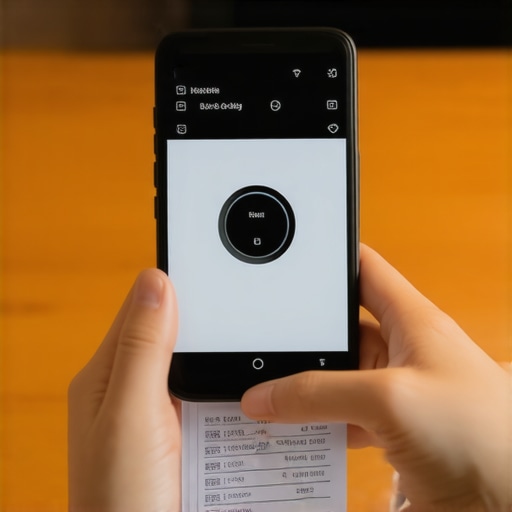
Don’t Let Same-Day Promises Blindside You
We have all seen the ads for ‘instant’ fixes, but you need to understand what to expect from same-day appliance repair experts before the panic sets in. A common mistake is assuming that ‘same-day’ means ‘fixed by dinner.’ In reality, it often means ‘diagnosed today, parts ordered tomorrow.’ To actually get your lock functional again quickly, you need to have the one maintenance record that saves your appliance warranty claim ready to go. Without it, the technician might have to spend hours on the phone with the manufacturer instead of working on your door.
Watch Out for the Hidden Wear and Tear Clause
Most DIYers assume that because the lock is new, it’s covered for everything. But if your smart lock is fighting a heavy door every single day, that is often classified as ‘abnormal use.’ Check those wear and tear clauses that might void your warranty carefully. If the internal gears are stripped because the door didn’t close properly, that is on you, not the factory. Navigating these nuances is the difference between getting affordable same-day appliance fixes with warranty benefits and paying for a whole new unit out of pocket. Have you ever fallen into this trap where a tiny oversight cost you a big claim? Let me know in the comments.
The Three Specific Tools That Save My Sanity
When I first started doing these installs, I used whatever beat-up screwdriver was at the bottom of my junk drawer. Big mistake. Now, I never touch a smart lock without my Wiha torque screwdriver set. Why? Because smart lock housings are often made of softer alloys that strip if you even look at them wrong. By setting the torque to exactly what the manufacturer recommends—usually around 12 to 15 inch-pounds—I ensure the unit is secure without warping the internal frame. This level of precision is the secret to reliable appliance installation in 2025. I also keep a digital caliper handy. It might seem like overkill, but measuring the exact thickness of your door ensures you use the right mounting bolts the first time, preventing that dreaded ‘clunk’ when the motor tries to engage. Using the wrong bolt length is a primary driver for why your warranty claim was denied because it physically obstructs the mechanism.
How do I maintain my smart lock over time?
Maintenance isn’t just about changing batteries when the app chirps at you. Every six months, I perform what I call the ‘friction audit.’ I remove the strike plate and check for any wood expansion. If your house settles, that perfectly aligned hole from last summer might be a millimeter off now. I use a dry graphite lubricant—never WD-40, which attracts dust and gunk—to keep the cylinder moving smoothly. This proactive approach is exactly how to prove periodic maintenance to keep your warranty valid if you ever need to file a claim. If you notice the motor sounding strained, don’t wait for it to fail. Taking ten minutes to realign the door can save you from scheduling your appliance repair for same-day service in 2025 during a holiday weekend. 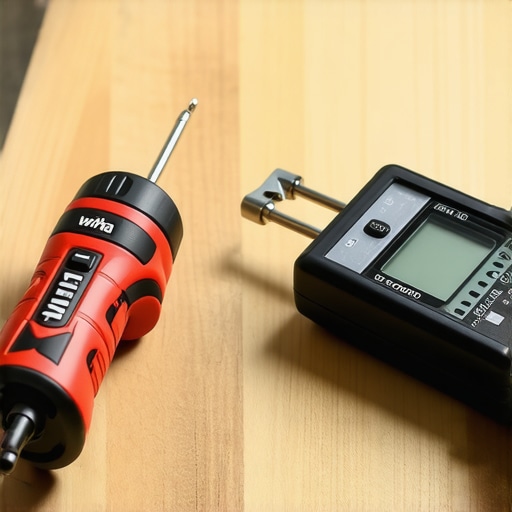
What the Next Five Years of Smart Security Looks Like
I predict we are moving toward a world where ‘installation’ is almost entirely software-driven, but the physical hardware will become more sensitive to alignment. With the rise of the Matter protocol, your lock will talk to your thermostat and lights more reliably, but the physical stress on the deadbolt remains the same. According to the Builders Hardware Manufacturers Association (BHMA), Grade 1 certification—the highest level of residential security—requires a lock to withstand 250,000 cycles. However, that rating assumes a perfect installation. If your install is sloppy, you might only get 10% of that lifespan. Following an expert guide to appliance repair and installation today is the only way to hit those manufacturer benchmarks. I’m already seeing ‘predictive maintenance’ sensors in high-end units that alert you when the deadbolt is hitting resistance, much like signs of a failing range control board in a kitchen.
Keep a Physical Paper Trail
Documentation is your best friend. Every time I swap the batteries or tighten a screw, I log it in a simple notebook. It sounds tedious, but having the one maintenance record that saves your appliance warranty claim can be the difference between a free replacement and a $250 bill. This is one of the top tips for same-day service warranty coverage because it gives the technician immediate context. If you want to be truly ahead of the curve, I challenge you to try the ‘Paper Slip Test’ tonight: slide a piece of paper between your door and the frame while locked. If it pinches or tears, your alignment is off and you’re killing your motor. Let’s fix that before it breaks.
The Hardest Lesson My Mahogany Door Ever Taught Me
The biggest lightbulb moment I had wasn’t about the technology; it was about the physical tension. Precision beats power every single time. If you are sweating while turning a screwdriver, you are likely creating a point of failure. I learned that hand-tightening is a virtue, especially when dealing with the soft alloys used in modern smart locks. Another hard truth? Your warranty is only as good as your documentation. If you can’t show that you followed the expert guide to appliance repair and installation today, you might be on the hook for costly replacements. Finally, remember that the paper slip test is your best friend—it is a low-tech way to ensure a high-tech device lasts for years without burning out the motor.
Tools That Stop You From Stripping Screws
I never walk into an installation without these three specific items. First, a Wiha Torque Screwdriver; it prevents you from over-tightening and cracking the internal mounting plate, which is a common reason your warranty claim was denied during inspections. Second, Dry Graphite Lubricant. Avoid oil-based sprays that turn into sludge; graphite keeps the tumblers moving freely without attracting dust. Third, I always keep a digital copy of the manufacturer’s spec sheet on my phone alongside the one maintenance record that saves your appliance warranty claim. This digital paper trail is your insurance policy. Having these records ready helps you know what to expect from same-day appliance repair experts if you ever need a professional touch for more complex issues.
Now Go Secure Your Peace of Mind
You have the insider wisdom and the toolkit to make this happen without the heartbreak of a cracked door frame or a voided contract. Smart home technology should make your life easier, not more stressful. By prioritizing reliable appliance installation in 2025, you are setting yourself up for years of effortless access. Take your time, trust the template, and do it right the first time. Have you ever had a smart lock jam at the worst possible moment, like during a rainstorm or when your hands were full of groceries? Let me know your most memorable DIY stories in the comments below!