
I was standing over a pot of boiling water when it happened. My brand-new smart stove decided it wanted to preheat itself to 500 degrees while I was trying to simmer sauce. The touchscreen flickered like a cheap neon sign at a dive bar. I felt that instant pit of regret in my stomach—the kind you get when you realize your expensive new kitchen centerpiece is acting like it is possessed. I almost called for an exorcist, but instead, I started digging into the wiring to find the source of the madness.
Your Touchscreen Is Not Haunted—It Is Just Looking for a Way Out
Most of us think that if an appliance turns on, it is installed correctly. I made that exact mistake when I rushed my own kitchen setup. I assumed the three-prong outlet from the 90s was good enough for a high-tech induction range. It was not. These modern control boards are incredibly sensitive to electrical noise. If there is not a solid path to the ground, that excess energy has nowhere to go but right back into your sensitive electronics. This static buildup is often the control board solder joint that kills your range because the heat and electrical interference eventually crack the connections.
Is My Smart Stove Actually Worth the Headache?
You might be wondering if you should have just stuck with a manual dial stove. I get it. But the truth is, most of these glitches are not defects in the stove itself but issues with the environment they are plugged into. According to the Electrical Safety Foundation International, improper grounding is a leading cause of electronic equipment failure in homes, often leading to phantom signals. If you are seeing ghost touches or random error codes, the first thing to look at is not the software—it is the physical connection. Learning how to properly ground your new induction cooktop can save you from a very expensive and unnecessary service call.
Why You Should Not Ignore Those Random Beeps
When those controls start acting up, it is tempting to just flip the breaker and hope for the best. Do not do that. I did that for a week, and it only led to more signs of a failing range control board appearing as the components stayed stressed. You need to ensure the chassis is bonded correctly to the ground wire. If you are not comfortable opening up the back of your unit or testing for continuity, looking for warranty-backed appliance services you can rely on is the smartest move you can make. Have you ever seen your stove screen flicker and wondered if you were just seeing things? You are not alone, and it is almost certainly a grounding error trying to tell you something is wrong before it becomes a permanent failure.
Stop the Ghost Touches with a Real Ground
The first thing you need to do is kill the power at the breaker—not just the knob on the front. Modern touchscreens are essentially tiny computers, and like your laptop, they hate ‘dirty’ power. Once the power is dead, pull the unit away from the wall. This is a great time to check if your installer actually put in the anti-tip bracket every range installation needs. If they skipped that, they likely skipped the grounding screw too. Open the small metal cover where the power cord enters the back of the stove. You are looking for a three-wire or four-wire setup. If you see a green wire just flapping in the wind, that is your culprit. Without a solid connection to the chassis, static electricity builds up on the control panel, causing those ‘ghost touches’ where the stove thinks a finger is pressing a button when it is just stray voltage.
Verify Your Terminal Block and Wire Connections
The terminal block is the heart of your stove’s electrical system, and it is where most DIY disasters begin. You need to ensure every nut holding those wires is tight. A loose connection creates heat, and heat is the primary reason you start seeing the signs of a failing range control board. I once worked on a high-end induction unit that would shut off every time the oven hit 350 degrees. After two hours of scratching my head, I found a terminal nut that was only finger-tight. The vibration from the cooling fan was enough to break the circuit. While you are back there, check the thickness of your wires. Using the wrong size is a fire hazard; you can compare yours to the correct wire gauge for your new electric dryer as they often share similar heavy-duty requirements. If the wires look charred or the plastic is melted, stop what you are doing. This is no longer a simple grounding fix; it is a hardware failure that requires an expert guide to appliance repair and installation today to solve safely.
When Your DIY Limits Are Reached
If you have tightened everything and the screen still flickers like a haunted house, the internal shielding might be compromised. This is common in cheaper models where the manufacturer cut corners on the wiring harness. This is the moment to look for same-day appliance repair quick solutions with warranty support. Do not keep ‘limping’ the appliance along by flipping the breaker every morning. Constant power cycling can fry the logic chips, turning a $50 grounding repair into a $600 board replacement. If the unit is brand new and acting this way out of the box, you must how to document a dead on arrival appliance for a full refund before you start taking it apart yourself. I remember a friend who tried to ‘solder’ a new connection on a range that was only two days old. He fixed the ghost touch, but he also voided a five-year warranty in the process. Always check your coverage before you break out the heavy tools. Ensuring how to ensure reliable appliance installation in 2025 means knowing when to step back and let a certified tech handle the high-voltage components.Most homeowners assume that once a certified technician signs off on an install, the battle is won. But here is the contrarian truth: a factory-spec installation is often just the bare minimum for functionality, not the gold standard for longevity. Everyone says that following the manual is enough, but in my experience, the manual does not account for the specific electrical noise profile of a modern, 2025-era smart home. These high-tech units are frequently installed using ‘good enough’ standards that leave the electronics vulnerable to micro-surges. If you want to truly protect your investment, you need to understand how to ensure reliable appliance installation in 2025 by looking beyond the basic ground wire.
Why Your Protection Plan Is Probably Thinner Than You Think
The biggest ‘oops’ factor I see with clients is a blind trust in the fine print. You might think you are covered for any glitch, but many people are shocked to find the wear and tear clauses that might void your warranty before the first year is even up. Manufacturers often categorize control board failures caused by ‘environmental factors’—like that static buildup we talked about—as non-covered events. To stay ahead, you must learn how to maximize your appliance warranty during emergency repairs. It is not just about having the paper; it is about proving the environment was not the cause of the failure. According to the National Fire Protection Association (NFPA), electrical failures or malfunctions are a leading cause of home fires, often stemming from issues that standard warranties claim are ‘maintenance’ responsibilities.
Can Your Router Actually Mess With Your Oven’s Brain?
It sounds like a conspiracy theory, but it is pure physics. Most smart appliances operate on the 2.4GHz frequency, which is incredibly crowded. If your high-output mesh router is sitting right on the other side of the kitchen wall, it can create electromagnetic interference that translates into those maddening ghost touches or UI lag. This is the hidden reason your smart oven keeps losing connection or behaving erratically. I have walked into homes where a $5,000 range was ‘broken,’ only to fix it by moving a Wi-Fi extender six feet away. 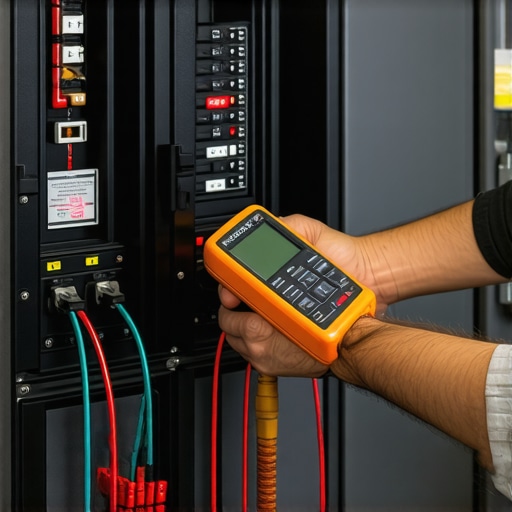
The Same-Day Service Promise That Most People Misunderstand
When you are staring at a cold oven and see an ad for ‘Same-Day Service,’ you probably expect a fully functional kitchen by dinner time. However, you need to know what to expect from same-day appliance repair experts to avoid disappointment. Usually, ‘same-day’ refers to the diagnostic visit, not necessarily the final repair, especially if a proprietary control board needs to be shipped from a central warehouse. The trick is to provide the technician with the exact model number and error code before they arrive to increase the chances of an on-the-spot fix. If your unit is fresh out of the box and failing, do not let them ‘repair’ it—know how to document a dead on arrival appliance for a full refund instead. Attempting a repair on a DOA unit can sometimes lock you into a cycle of refurbishments rather than getting the new replacement you paid for. Have you ever fallen into this trap where you thought you were covered, only to find a hidden exclusion? Let me know in the comments.I don’t just carry a toolbox anymore; I carry a diagnostic suite. People often ask me why I spent a small fortune on a Fluke 117 multimeter when a fifteen-dollar unit from the local hardware store seems to do the same thing. The difference lies in a feature called LowZ (Low Impedance). When you are dealing with the sensitive control boards found in modern smart ranges, a standard meter can pick up ‘ghost voltage’—stray electromagnetic interference from nearby wires that makes a dead terminal look live. Using a high-precision meter is the first step in an expert guide to appliance repair and installation today. I have seen countless DIYers replace entire wiring harnesses simply because their cheap meter lied to them about a phantom signal that was never there.
The Maintenance Habit That Saves Your Warranty
Beyond the tools, the most important thing you can do is document your upkeep. Manufacturers are getting stricter about denying claims, and if you cannot prove you have been taking care of the unit, they will cite ‘negligence.’ I tell everyone to keep a digital folder of every filter change, every terminal tightening, and every professional inspection. Learning how to prove periodic maintenance to keep your warranty valid is just as important as the repair itself. If you have a dishwasher nearby, for example, ensure you have the drain hose high loop that stops dishwasher backflow properly installed, as moisture from a poorly drained sink can actually migrate through cabinetry and cause corrosion on your stove’s electrical connections over time.
How can I maintain these complex electronics over the long haul?
The secret is heat management and electrical stability. Once a year, you should pull the unit out and use a vacuum with a brush attachment to clear dust from the cooling fans on the back of the control board. Dust acts as an insulator, trapping heat and shortening the life of the capacitors. I also recommend performing the refrigerator thermostat test every diyer should know if you have a multi-appliance kitchen, as general ambient heat can affect how your range sensors behave. If you ever feel the control panel getting excessively hot during a normal bake cycle, do not wait for a failure. Look for affordable same-day appliance fixes with warranty benefits to address the cooling fan before it cooks the logic chips. 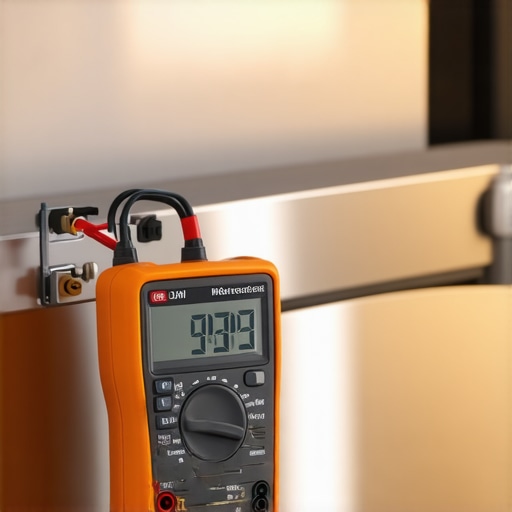
The Future of Kitchen Repair Is Modular
Looking ahead, I predict we are moving toward a ‘hot-swap’ era of appliance repair. Manufacturers are starting to move the most sensitive electronics into shielded, modular boxes that can be replaced without a soldering iron. This will make same-day appliance repair quick solutions with warranty support more common because technicians will carry universal ‘brains’ for these machines. However, until that becomes the standard, we are stuck with the IEEE 1100-2005 (The Emerald Book) standards for grounding, which emphasize that a clean signal is the only way to prevent logic errors in sensitive home equipment. My advanced tip for today: Check your terminal block nuts for tightness every six months; the constant expansion and contraction from heat cycles will loosen them, and a loose wire is a fire waiting to happen. Go grab a 10mm nut driver and check yours right now—it takes thirty seconds and could save your kitchen.
I’ve spent years in kitchens across the country, and if there’s one thing I’ve learned, it’s that a smart stove is only as smart as the person who wired it. I’ve seen $4,000 units turned into expensive paperweights because a homeowner ignored a tiny flicker until the logic board fried. One of the biggest shocks for my clients is learning that the reason your warranty claim was denied often comes down to ‘pre-existing electrical conditions’—basically, the manufacturer blaming your home’s wiring for their circuit failure. Don’t let that be you.
What My Worst Service Calls Taught Me About Smart Tech
Dealing with these high-tech machines requires a shift in mindset. First, never assume a ‘new’ house has perfect grounding. Builders move fast, and a loose screw in the main panel can cause electrical noise that manifests as ghost touches. Second, keep a meticulous paper trail. If you ever have to maximize your appliance warranty during emergency repairs, having a log of your voltage checks and professional inspections will make you look like an expert and make it much harder for a company to deny your claim. Finally, realize that why some extended warranty plans are better than others usually comes down to whether they cover ‘environmental factors’ like static discharge—always read the fine print regarding sensitive electronics.
Tools and Tactics for a Glitch-Free Home
If you want to handle maintenance yourself, I recommend a few ‘non-negotiables’ for your toolkit. #IMAGE_PLACEHOLDER_E# Invest in a multimeter with a LowZ setting; it’s the only way to accurately measure voltage without being fooled by ‘ghost’ signals from nearby wires. I also suggest keeping a digital folder with your receipts and photos of your terminal block connections. When you find yourself in a pinch, scheduling your appliance repair for same-day service in 2025 is much faster when you can email the technician a photo of the error code and your model number before they even leave the shop. Also, take a moment to evaluate your long-term strategy: is a manufacturer extended plan actually worth the monthly cost for your specific induction model? Often, the high price of modern control boards makes these plans a smart insurance policy.
Secure Your Kitchen’s Future Today
You don’t have to be a master electrician to keep your appliances running smoothly for the next decade. Simply being aware of how grounding and electrical noise affect your stove’s ‘brain’ puts you miles ahead of the average consumer. By taking these small preventative steps—tightening terminal nuts and ensuring a clean ground—you’re not just fixing a flickering screen; you’re protecting your home and your wallet from the massive headaches of premature appliance repair. Take thirty seconds to check your connections today and breathe easy knowing your kitchen is solid. Have you ever had a warranty claim denied for a reason that seemed totally unfair? Let me know in the comments below!