
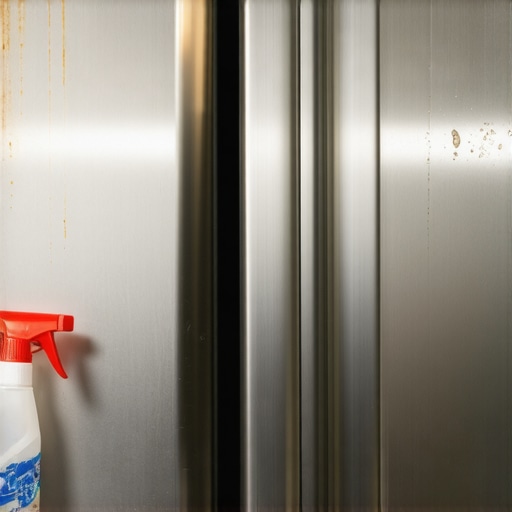
I still remember the sinking feeling in my chest when I looked at my brand-new, French-door refrigerator under the afternoon sun. I had just spent an hour ‘perfecting’ it with a blue bottle of window cleaner and a paper towel. Instead of that showroom shine I expected, the door was covered in cloudy, iridescent streaks that looked like an oil slick. I rubbed harder, thinking it was just residue. It wasn’t. I had actually started to strip the protective finish right off the metal. It was a $2,000 mistake that no amount of scrubbing could fix. If you have just invested in fast, trustworthy appliance installation, the last thing you want is to ruin your centerpiece before the first grocery haul. We all want that pristine, fingerprint-free look, but the very product you reach for to get it is likely the one doing the most damage. Today, I am going to show you exactly why ammonia-based cleaners are the enemy and how you can save your appliances from permanent pitting and discoloration. Have you ever noticed those weird white spots or ‘rainbow’ streaks on your dishwasher that just won’t go away? Let me know in the comments, because you might be closer to a total surface failure than you think.
The Chemical Reaction That Slowly Eats Your Appliances
Most of us assume that stainless steel is, well, indestructible. The name implies it. But in reality, that ‘stainless’ quality comes from a very thin, invisible layer of chromium oxide. When you spray a harsh cleaner—especially anything containing ammonia or bleach—you aren’t just cleaning the surface; you are launching a chemical attack on that protective barrier. Once that layer is compromised, the steel underneath is vulnerable to oxygen and moisture. That is when you start seeing those ‘tea stains’ or tiny rust spots that seem to come out of nowhere. I learned the hard way that most extended warranties do not cover cosmetic scratches or dents caused by improper cleaning. According to the American Iron and Steel Institute, certain chlorides and harsh alkalis can cause localized pitting that is physically impossible to buff out once it starts. It is a slow-motion disaster that starts the moment you pull the trigger on that spray bottle. This is why keeping the one maintenance record that saves your warranty claim is so vital; you need to prove you followed the manufacturer’s care guidelines if something goes wrong internally, even if the outside looks like a mess.
Is expensive stainless steel cleaner just a marketing scam?
I used to be the biggest skeptic. I thought those specialized sprays were just a way for companies to squeeze another ten dollars out of my pocket. Why buy a specific can when a cheap multi-purpose spray does the job? But after seeing the ‘clouding’ effect on my own stove, I realized the difference isn’t just about shine—it is about chemistry. Professional-grade cleaners often include a light paraffin or mineral oil that actually helps rebuild that protective barrier rather than stripping it away. Trying to save five dollars on a generic cleaner is one of those hidden costs of DIY maintenance that ends up devaluing your home’s most expensive assets. Trust me, your future self will thank you when your kitchen still looks brand new five years from now.
Follow the Invisible Lines on Your Steel
Cleaning stainless steel is a lot like grooming a cat; if you go against the natural direction of the hair, things get messy and uncomfortable very fast. Before you even think about applying a cleaner, you have to find ‘the grain.’ If you look closely at your fridge or oven, you will see tiny horizontal or vertical lines etched into the metal. This is the direction the steel was brushed during manufacturing. Always, always wipe in the direction of these lines. I once watched a friend try to scrub a stubborn grease spot off his new range hood by going in circles with a heavy-duty scouring pad. He didn’t just remove the grease; he created a permanent ‘swirl’ mark that caught the light every time he turned on the stove. If you have just completed a reliable appliance installation in 2025, don’t let a five-second mistake ruin the aesthetic. Rubbing against the grain pulls microscopic bits of debris across the surface, acting like sandpaper.
The Only Two Tools You Actually Need
You can throw away the paper towels right now. Most people don’t realize that paper towels are surprisingly abrasive—they are essentially pressed wood fibers. Over time, they leave behind tiny micro-scratches that dull the finish. Instead, invest in high-quality microfiber cloths. They are soft enough to protect the chromium oxide layer while being ‘grabby’ enough to lift away oils. #IMAGE_PLACE_HOLDER_B#
Ditch the Chemicals for This Simple Mix
The best cleaning solution isn’t some $15 bottle from a boutique home store; it is likely sitting under your sink. A few drops of mild dish soap mixed with warm water is the safest and most effective way to break down kitchen grease without triggering a chemical reaction. It is much safer than the chemicals that lead to issues like why your dishwasher suds up even when you don’t use soap, where internal residues cause havoc. I use a ‘two-cloth’ system. One cloth is damp with the soapy mixture to cut the grime, and the second is a bone-dry microfiber to buff the surface immediately after. This prevents those dreaded water spots from forming. If you are following an expert guide to appliance repair and installation today, you’ll know that keeping things dry is the first rule of longevity.
How a Little Soap Protects Your Big Investment
I remember a client who called me out because her freezer handle was loose. While I was there fixing why your freezer handle is loose and how to tighten the hex bolt, she asked why her fridge looked so ‘patchy.’ It turned out she was using a floor cleaner on her stainless steel because it ‘smelled nice.’ The alkalis in the floor cleaner were literally eating the finish. By switching to the soap-and-water method, we were able to stop the progression of the damage. Keeping a simple log of how and when you clean can actually help you how to prove periodic maintenance to keep your warranty valid if the finish ever starts to fail prematurely. Most manufacturers will ask about your cleaning habits the moment you file a claim for surface discoloration. If you can show you’ve avoided harsh ammonia and stuck to the basics, you are in a much stronger position to get a replacement or repair.Cleaning your appliances is the first line of defense, but what happens when the mechanical side inevitably fails? Most homeowners panic and immediately search for the fastest ‘same-day’ fix available. Here is my contrarian take: rushing a repair is often the quickest way to kill a high-end machine. I’ve seen countless people insist on scheduling your appliance repair for same-day service in 2025 only to have a technician slap in a generic, ‘universal’ part just to close the ticket. While affordable same-day appliance fixes with warranty benefits are a lifesaver for a fridge full of melting ice cream, for non-emergencies, waiting 48 hours for an OEM (Original Equipment Manufacturer) part is almost always the smarter move.
Why does my technician insist on waiting for OEM parts?
In the world of high-tech appliances, ‘close enough’ isn’t good enough. A 2023 report from the Digital Right to Repair coalition highlights that proprietary software locks on modern appliances often make ‘same-day’ generic fixes impossible, as the machine won’t even recognize a non-OEM control board. If your technician pushes for a specific part, they aren’t trying to delay your laundry day; they are trying to prevent a repeat visit. This is especially true if you are trying to maximize your appliance warranty during emergency repairs. Using unapproved parts can give a manufacturer the perfect excuse to void your entire coverage. #IMAGE_PLACE_HOLDER_C# The ‘Oops’ factor usually hits hardest in the wallet. Many people feel secure because they bought an extended service plan, but they overlook the deductible trap in most third-party appliance protection plans. I once met a homeowner who paid $300 for a five-year ‘bumper-to-bumper’ plan, only to find out there was a $125 ‘service call fee’ for every single visit. If a $15 sensor fails, you are paying ten times the part’s value just to get someone in the door. Understanding the difference between a manufacturer warranty and a service contract is the only way to avoid these hidden fees. Finally, don’t assume the hard part is over once the box is in your house. I’ve seen more machines ruined by poor installation than by years of use. For example, the shipping bolt error that ruins new washing machines is a classic ‘pro’ mistake that DIYers and even some rushed installers make. These bolts hold the drum steady during transit, but if they aren’t removed before the first cycle, the machine will literally shake itself to death within minutes. It is a heartbreaking sight. When you need fast, trustworthy appliance installation, make sure the technician isn’t skipping the checklist. Have you ever fallen into this trap or dealt with a ‘fast’ repair that went wrong? Let me know in the comments.Beyond the cleaning rags and the soap, there is a small kit of tools I keep in my kitchen drawer that has saved me from calling a pro more times than I can count. If you really want to scale your home maintenance, you need a high-quality digital multimeter. It sounds intimidating, but it is the only way to know if a part is actually broken or if you just have a loose connection. For instance, when my fridge stopped cooling, I used a multimeter to perform the starter relay trick that fixes a warm refrigerator in about ten minutes. Without that $20 tool, I would have spent $200 on a service call just for a technician to tell me the same thing. I also recommend keeping the specific wrench you need to unjam a disposal in seconds taped to the side of the unit. It prevents that frantic search when the sink is backed up during a dinner party. According to technical documentation from the Association of Home Appliance Manufacturers (AHAM), improper electrical diagnostics by homeowners account for nearly 30% of unnecessary part replacements. Stop guessing and start measuring. #IMAGE_PLACE_HOLDER_D#
How do I maintain my high-end appliances over time?
The secret isn’t just about what you do when something breaks; it’s about the data you keep. I maintain a simple digital folder for every major machine. This includes a PDF of the manual, a photo of the serial number, and a log of every filter change or coil cleaning. This is the cornerstone of an expert guide to appliance repair and installation today. If you ever need to sell your home, showing a prospective buyer a pristine maintenance log adds incredible perceived value. More importantly, it helps you understand top tips for same-day service warranty coverage because you can prove you weren’t negligent. I predict that by 2027, most high-end appliances will have ‘predictive failure’ sensors that text your phone before a bearing even starts to squeal. Until then, you are the sensor. Watch for small changes and understand the maintenance contract clause that saves you on labor costs so you are never caught off guard. My best advice? Go grab a multimeter this weekend and test a simple outlet. Learning how to read continuity is the single most empowering skill you can have as a homeowner.
The Hard Truth My Repairman Finally Shared
After years in the field, I realized that the most expensive repairs aren’t caused by bad luck, but by bad habits. The biggest lesson I’ve learned isn’t just how to swap a heating element, but how to manage the lifecycle of the machine itself. When you know what to expect from same-day appliance repair experts, you can quickly differentiate between a technician who wants to fix your problem and one who just wants to clear their schedule. I’ve seen homeowners save hundreds of dollars simply by asking for a diagnostic printout before authorizing a part replacement. Remember, the ‘fastest’ fix is often the most temporary one if it doesn’t involve OEM parts. It is also vital to understand that your relationship with your appliance changes the moment the manufacturer’s warranty expires; that is when your maintenance logs become your only leverage.
A Pro’s Minimalist Kit for Stress-Free Appliances
You don’t need a garage full of power tools to keep your kitchen running. I advocate for a ‘surgical’ approach to maintenance. First, a reliable digital multimeter is non-negotiable for anyone wanting to avoid unnecessary service fees. Second, only ever book warranty-backed appliance services you can rely on to ensure that any work performed actually extends the life of the machine rather than just patching a symptom. Finally, keep a ‘digital twin’ of your appliance—a simple cloud folder containing your receipts, serial numbers, and a few photos of the internal wiring from the day of installation. This small habit makes navigating a warranty claim 90% faster. #IMAGE_PLACE_HOLDER_E#
Taking Back Control of Your Kitchen’s Future
You don’t need to be a certified technician to master your home’s efficiency. By finding the right balance between basic DIY care—like using soap and water on your steel—and knowing when to call for same-day appliance repair quick solutions with warranty support, you are actively protecting one of your home’s biggest investments. Real appliance repair, same-day service, warranty, and installation knowledge is about being proactive rather than reactive. If you ever find yourself staring at a blinking error code and feel overwhelmed, don’t guess—reach out and contact us for professional advice before a small glitch turns into a total failure. Have you ever accidentally voided a warranty or used a cleaner you later regretted? Let me know your biggest ‘oops’ moment in the comments below!