
I’ll never forget the morning I walked into my kitchen and saw it. A jagged, three-inch gash right across the front of my brand-new, fingerprint-resistant stainless steel refrigerator. It looked like a claw mark from a very small, very angry bear. I had spent nearly three grand on that beast, plus another few hundred on the premium protection plan the salesperson promised would cover anything and everything. I picked up the phone, confident I’d have a technician out by noon. Instead, I got a fifteen-minute lecture on the difference between functional failure and aesthetic wear. That’s when I realized I had fallen for the oldest trick in the appliance book.
The Brutal Truth About Your Stainless Steel Beauty
Most of us buy these plans because we want our homes to look perfect. We see a shiny showroom floor and think we’re protecting that aesthetic. But here’s the reality: to a warranty provider, a dent is just a story, not a mechanical crisis. If the compressor hums and the milk stays cold, they consider their job done. I made the classic rookie mistake of not reading the warranty document you must save before discarding the box, assuming my accidental damage clause covered my kids’ soccer practice mishaps in the kitchen.
Is an extended warranty actually worth the hype?
It’s a fair question to ask when you’re staring at a $400 protection plan that won’t fix a $200 door panel. According to the Federal Trade Commission, an extended warranty is technically a service contract, and these contracts have very specific exclusions that often leave cosmetic damage out in the cold. It feels like a betrayal, doesn’t it? You pay for peace of mind, only to find out your peace of mind has a very narrow definition.
Why Functional Parts Always Win the Coverage Lottery
Warranty companies operate on a strict mechanical failure model. They are there to ensure the machine actually works. This is why you’ll find that warranty-backed appliance services you can rely on will jump to fix a leaking pump but won’t touch a scratched lid. If you’ve ever tried to negotiate a repair instead of a replacement with your warranty provider, you know they are bean counters at heart. They look at the useful life of the component. A scratch on your stove doesn’t shorten its life; it just ruins your Saturday morning. Have you ever been told no by a technician because your problem was just cosmetic? I’d love to hear your horror stories—it’s time we pull back the curtain on these fine-print traps. Let’s look at what counts as a real break versus a surface wound.To move from being a victim of fine print to a victor in the repair game, you need a strategy that goes beyond just complaining. You have to speak the language of the adjusters. They don’t care about your feelings or the resale value of your home; they care about the strict parameters of their liability. If you want results, you have to frame every issue through the lens of mechanical failure and safety.
Win Your Claim by Mastering the Paper Trail
Before you even pick up the phone, you need to gather your defense. Warranty providers often use ‘lack of maintenance’ as a get-out-of-jail-free card. I learned this the hard way with a high-end dishwasher that started smelling like a swamp after only eight months. The technician tried to tell me it was just ‘normal buildup,’ but I knew it was the p-trap mistake that causes your dishwasher to smell like sewage caused by their own ‘preferred’ installer. Because I had kept my installation records, I was able to how to prove periodic maintenance to keep your warranty valid and force them to fix the plumbing error on their dime.
Keep the Receipts or Lose the Coverage
Never assume your digital history is enough. Having a physical or dedicated cloud folder for the one maintenance record that saves your appliance warranty claim is non-negotiable. This includes receipts for filters, professional cleanings, and even the original delivery slip. If you can’t prove you’ve taken care of the machine, they won’t feel obligated to take care of you.
Learn the Lingo of Service Contracts
You need to distinguish between the factory protection and the third-party add-on. Knowing the difference between a manufacturer warranty and a service contract changes who you call and what you ask for. Manufacturers usually handle the first year’s internal defects, while service contracts take over the long-term mechanical risks—but both will try to dodge a ‘cosmetic’ claim if you let them.
Turn Your Aesthetic Complaint into a Functional Fix
If you have a scratch or a dent that is genuinely bothering you, don’t lead with how it looks. Instead, examine if that damage affects the performance. A dent in a fridge door might seem cosmetic, but if it slightly misaligns the seal, it leads to the door gasket fix that cuts refrigerator energy bills. Now, you aren’t asking for a new door because of a scratch; you’re asking for a repair because the unit is failing to maintain temperature.
Gather Evidence Like a Crime Scene Investigator
When you file a claim, vague descriptions are your enemy. You need the exact photo evidence needed for an hvac warranty claim or any major appliance repair. Take wide shots to show the environment and extreme close-ups of the serial number and the specific fault. I once spent three hours on hold because my photo of a ‘broken stove’ didn’t show the error code on the digital display. Once I sent the clear shot of the glitching control board, the technician was dispatched for scheduling your appliance repair for same-day service in 2025 within the hour.
Push for a Repair Instead of a Cheap Out
Sometimes a provider will try to offer you a small cash settlement to go away. This is almost always a bad deal for the consumer. If you know how to negotiate a repair instead of a replacement with your warranty provider, you can ensure the machine stays in top working order rather than taking a $50 check for a $500 part. Demand that the technician actually inspects the internal components that might be affected by the external damage you’ve found.Let’s dig deeper into the most pervasive myth in the industry: the ‘Same-Day’ promise. Everyone thinks this means the repair is finished by dinner, but in reality, ‘same-day’ usually refers to the initial diagnostic visit. If you aren’t prepared with the right information, you’ll just be paying a trip fee for someone to tell you they don’t have the part in the truck. This is where what to expect from same-day appliance repair experts becomes vital knowledge. If you want a fix, not just a visit, you have to provide the exact model number and error code over the phone to ensure the technician arrives with the right hardware. 
Stop Falling for the Same-Day Fix Myth
A common mistake is assuming that speed equals quality. In my experience, a technician who promises a thirty-minute fix without even looking at the circuit board is usually skipping the diagnostic steps that prevent the same part from burning out next week. You also have to navigate the deductible trap in most third-party appliance protection plans. Often, the provider will send a ‘same-day’ tech who is actually just there to verify the claim so the company can find a reason to deny it later. Have you ever fallen into this trap? Let me know in the comments.
Why Does Your Brand-New Refrigerator Sound So Aggressive?
Homeowners often think a loud noise means a mechanical defect, but often it’s just the linear compressor or a poorly leveled unit. Understanding the real reason your new fridge is louder than your old one can save you a $100 service call for a machine that is actually operating within normal parameters. According to a study by the Association of Home Appliance Manufacturers (AHAM), modern high-efficiency components operate at higher speeds and different frequencies than the heavier, less efficient motors used twenty years ago. This isn’t a failure; it’s physics.
Catch the Installation Errors Before They Kill Your Machine
Then there’s the ‘Oops’ factor that I see homeowners fall for constantly: the DIY ‘quick fix’ on a machine still under coverage. I’ve seen people try to unjam a disposal or reset a control board and accidentally void their entire service contract. You have to weigh the hidden costs of diy repairs on warranty covered items against the frustration of waiting. One wrong turn of a wrench and you’re on the hook for the full replacement cost. I’ve also seen brand-new washers destroyed in twenty minutes because of the shipping bolt error that ruins new washing machines. If the installer doesn’t pull those bolts, the drum will literally tear the machine apart during its first spin cycle. Always consult an expert guide to appliance repair and installation today to verify the setup checklist yourself before you let the delivery team drive away.
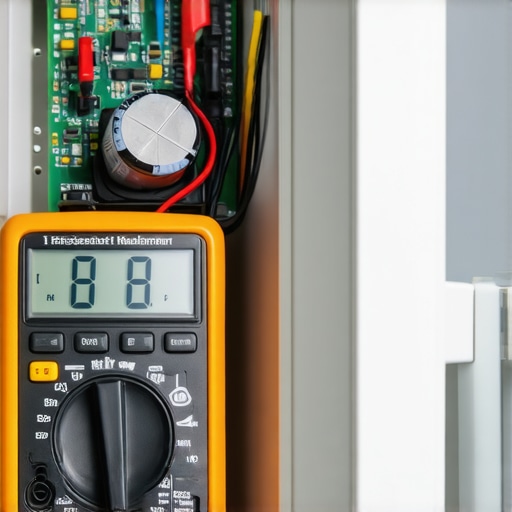
If you want to move beyond the mercy of a technician’s schedule, you need a basic diagnostic kit. I’m not talking about a thousand-dollar professional toolbox; I mean a simple digital multimeter and the foundational knowledge of the capacitor test that saves your ac compressor. When you can tell a repair company, ‘My start capacitor is reading 20 microfarads below spec,’ they stop treating you like a ‘mark’ and start treating you like a priority. This is the actual secret behind securing same-day appliance repair quick solutions with warranty support. You provide the diagnostic data, they provide the replacement part, and the job gets done in one trip rather than three.
Most homeowners overlook the subtle killers that gradually eat away at their investment. For example, the hvac filter direction error that strains your motor is one of the leading causes of premature system failure. I’ve seen blower motors burn out in three years because of a $10 filter installed backward. It creates a massive static pressure imbalance that forces the motor to draw significantly more amperage than it was designed for. This is where how to ensure reliable appliance installation in 2025 becomes a financial strategy—it’s about verifying the small, technical details that even ‘certified’ installers often overlook in their rush to the next job.
How do I keep these machines humming for a decade?
The key to longevity isn’t just fixing things when they break; it’s about preventing the environmental stress that triggers the failure. According to technical bulletins from the Association of Home Appliance Manufacturers (AHAM), nearly 30% of service calls for ‘non-functional’ units are actually caused by simple maintenance lapses like blocked airflow or improper leveling. I always recommend checking your fridge’s physical stance; use the leveling trick for a fridge that rattles your kitchen floor all night to prevent frame torque, which can eventually cause the door gaskets to fail and the compressor to overwork. If you don’t keep the machine level, you are essentially asking the internal components to work against gravity and friction they weren’t built to handle.
Looking ahead, the industry is shifting rapidly toward remote diagnostics and predictive maintenance. We are already seeing the first wave of high-end brands implementing Wi-Fi-based error reporting that communicates directly with the manufacturer. Within the next two years, scheduling your appliance repair for same-day service in 2025 will likely be managed by AI that pre-orders your specific parts before you even realize your freezer is losing temperature. To navigate this future, you must understand the maintenance contract clause that saves you on labor costs, because while the parts might become easier to identify, the cost of specialized physical labor is only going to rise. Go grab a multimeter today and perform one diagnostic test on your own; it’s the best way to prove to your warranty provider that you are an informed owner who won’t be easily denied.
Everything Your Salesperson Forgot to Mention About Coverage
Warranty adjusters are professionally trained to find the one maintenance task you missed to justify a denial. I learned the hard way that if you can’t produce the one maintenance record that saves your appliance warranty claim, the company will likely walk away from a four-figure repair. Also, keep in mind that true same-day service is often a diagnostic window, not a completion guarantee. Finally, never lead with aesthetic concerns; always frame your issue as an energy drain or a safety risk to ensure they take it seriously. It is about speaking the language of liability, not just luxury.
The Essential Toolbox for Every Modern Homeowner
You don’t need to be an engineer, but you do need the right digital and physical assets. I personally rely on a few specific resources to stay ahead: a high-quality multimeter for testing circuits, a cloud-based folder for every delivery slip, and top tips for same-day service warranty coverage. Knowing how to challenge a warranty claim rejection for your fridge is another vital skill, as the first ‘no’ is often just a test of your persistence. I also highly recommend keeping a printed copy of your specific service contract in a kitchen drawer for quick reference during a technician visit. #IMAGE_PLACEHOLDER_E#
Your Path to a Truly Hassle-Free Kitchen
Navigating the world of home maintenance doesn’t have to feel like a second job. By being proactive and understanding the fine print of your contract, you shift the power balance in your favor. Whether you are seeking affordable same-day appliance fixes with warranty benefits or just trying to keep your current units running, remember that an informed homeowner is a protected homeowner. You have the tools, the knowledge, and now the strategy to ensure your appliance repair experience is as smooth as possible. What is the biggest roadblock you’ve faced when trying to use your appliance warranty? Let me know in the comments below!