
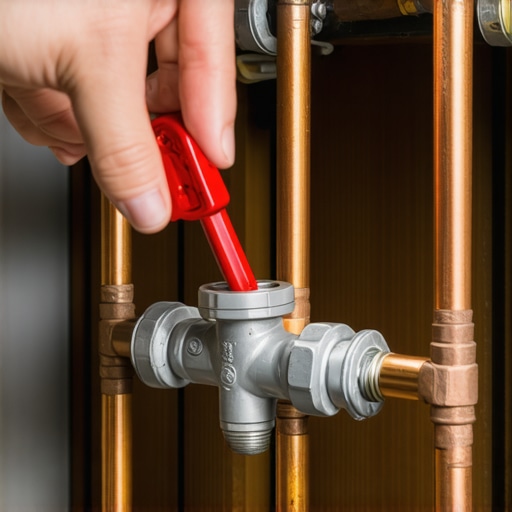
I remember the sound vividly—a sharp crack followed by the frantic hiss of high-pressure water spraying against the inside of my kitchen cabinet. It was 11:30 PM on a Tuesday. By the time I dropped my book and ran to the kitchen, a small lake was already forming under the sink. I panicked. I grabbed every towel I owned, but the water didn’t care. It kept coming. My mind went totally blank because I realized, with a sinking feeling in my gut, that I had no idea how to make it stop. I spent seven very long, expensive minutes tearing through the utility closet and the basement like a madman before I finally found the main valve tucked behind a stack of old paint cans. In that time, I did more damage to my hardwood floors than any same-day appliance repair could easily fix. It was a rookie mistake. I’m an enthusiast who loves tinkering with gear, but I’d ignored the most basic rule of homeownership: know your ‘Off’ switch. Today, I’m going to make sure that never happens to you. We aren’t just talking about where the valve might be; we’re talking about the exact locations you need to check right now, before the next plastic gasket that causes your dishwasher to leak finally gives up the ghost. Have you ever stood in a puddle of water, frantically googling where your main shut-off is? Don’t be that person. According to the Insurance Institute for Business & Home Safety, water damage is one of the most common and costly home insurance claims, with the average claim costing over $11,000. Stop the clock before the bill starts climbing.
Find the valve before the flood finds you
Finding your main water shut-off isn’t a chore for a rainy day; it is the most important ten minutes of ‘maintenance’ you will do all year. If you wait until a pipe bursts, you are already too late. I’ve seen homeowners lose entire basements because they thought the valve was ‘somewhere near the street’ and didn’t bother to verify. Most of the time, the culprit isn’t even a burst pipe—it’s a failed appliance. Whether you need trustworthy appliance installation or you’re dealing with a simple drain line slope issue, knowing how to kill the water supply is your first line of defense. My own failure taught me that valves like to hide in the dark corners we ignore. We’re going to hunt them down together.
Is searching for a valve really worth the hassle?
You might think you can just call a plumber if something goes wrong, but water doesn’t wait for a service tech to find a parking spot. In the five minutes it takes to make a phone call, your dishwasher can dump gallons of water onto your subfloor. Even if you have same-day service warranty coverage, that warranty usually covers the machine, not the ruined drywall and mold remediation. Identifying the shut-off now means you control the situation, rather than the situation controlling your bank account. It’s about peace of mind. Once you know where that handle is, you can tackle any DIY repair or emergency with the confidence that you can stop a disaster in seconds.
Scour the perimeter of your foundation
Start your search by walking the inside perimeter of your home, specifically looking at the wall that faces the street. This is where the water line typically enters from the municipal supply. If you have a basement, it’s usually at eye level or tucked near the floor; if you’re on a crawlspace or slab, check the utility closet or near the water heater. To ensure reliable appliance installation in 2025, you need to verify this location before the delivery truck arrives. I once spent twenty minutes digging through a messy pantry only to find the valve hidden behind a removable panel in the laundry room. Don’t assume it’s visible; look for access doors or small cutouts in the drywall.
Hunt for the meter box at the curb
If you can’t find the valve inside, it’s likely outside in a concrete or plastic box buried in the ground near the sidewalk. These boxes often house the water meter and a shut-off. Opening these can be tricky—sometimes they require the specific wrench you need to unjam a disposal in seconds just to pry the lid off safely. Be warned: these boxes are favorite hiding spots for spiders and frogs. If you’re forced to shut the water off here, you’ll likely need a long-handled ‘curb key’ to reach the valve. It’s a bit more labor-intensive, but knowing this location is your backup plan if the indoor valve fails.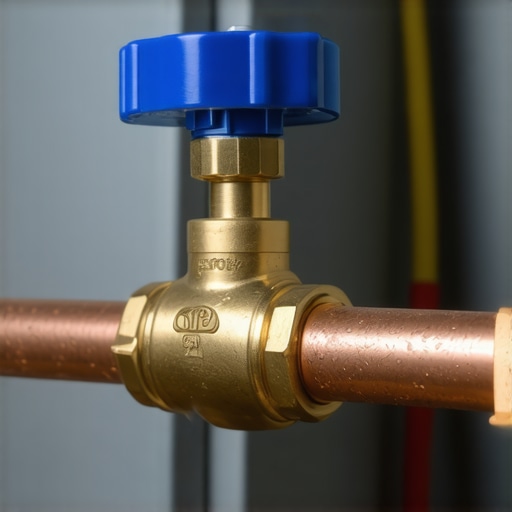
Identify the valve type before you crank it
You’ll likely find one of two styles: a gate valve or a ball valve. A gate valve looks like a round wheel (like a garden hose spigot) and requires multiple turns to close. These are notorious for seizing over time. Two years ago, I decided to test my old gate valve during a routine check. I grabbed the round handle, gave it a firm twist, and—snap. The handle came off in my hand while the internal gate remained open. It was a corroded mess, and I had to scramble for same-day appliance repair quick solutions with warranty support because I’d managed to create a slow drip at the stem. Now, I always recommend upgrading to a ball valve, which has a straight lever that only needs a 90-degree turn to kill the flow instantly. It’s much more reliable and easier to operate when your hands are shaking from a minor panic.
Isolate the appliance to save the floor
Sometimes you don’t need to kill the water to the whole house. Most modern fixtures have local shut-offs. For a dishwasher, check under the kitchen sink. If you see standing water in the tub, you might be dealing with a drain pump trick that fixes a standing water issue, but you should still close the supply line before poking around. Similarly, washing machines have valves right behind the unit. If you ever notice the machine vibrating excessively, it could be the 15 dollar part that fixes a shaking washing machine, but a burst hose is a different beast entirely. Always check that your critical drain hose loop is secure while you’re back there. If you have warranty-backed appliance services you can rely on, they will often inspect these local valves during a repair, but you should know how to turn them off yourself to prevent a localized puddle from turning into a structural nightmare.
Why speed isn’t always your friend in a repair emergency
We live in a culture of immediacy. When a washer leaks, our first instinct is to demand a technician arrive within the hour. While what to expect from same-day appliance repair experts usually includes rapid response, I’m going to tell you something controversial: the fastest tech isn’t always the best one for your wallet. I’ve seen homeowners so desperate for a quick fix that they hire uncertified handymen who bypass the very safety protocols that keep your home safe. A ‘fast’ fix that ignores the root cause is just a delayed disaster. If you are rushing, you might overlook how to maximize your appliance warranty during emergency repairs, leading to out-of-pocket expenses that should have been covered. Speed is a tool, not a solution. Real expertise lies in knowing when to shut off the water and wait for the right part, rather than slapping on a temporary patch that fails by Friday.
How can you tell if an installer is cutting corners?
Sophisticated homeowners know that the real work happens during the first twenty minutes of a visit. If a technician doesn’t check your home’s water pressure or leveling, they are doing you a disservice. According to the Association of Home Appliance Manufacturers (AHAM), nearly 25% of service calls for new appliances are actually caused by improper installation rather than mechanical failure. A common ‘trap’ I see is the forgotten shipping bolt error that ruins new washing machines. These bolts are essential for transport but catastrophic if left in during the first spin cycle. I’ve seen entire laundry rooms mangled because an installer was in too much of a hurry to follow the manual. It’s an expensive mistake that often isn’t covered by the manufacturer because it falls under ‘user or installer error.’#IMAGE_PLACE_HOLDER_C#
The hidden trap of DIY-ing your warranty away
I love a good DIY project as much as anyone, but there is a massive nuance people miss: modern appliances are essentially computers that happen to wash clothes or chill milk. The moment you break a factory seal to save fifty bucks on a sensor, you might be flushing a five-year protection plan down the drain. You must weigh the hidden costs of DIY repairs on warranty-covered items before you pick up a wrench. Often, a failed DIY attempt leaves ‘footprints’ that professional inspectors use to deny claims. If you want to keep your coverage intact, focus on documentation. Keep the one maintenance record that saves your appliance warranty claim in a dedicated folder. This proof of care is your ultimate leverage when fighting a denied claim. Have you ever fallen into this trap? Let me know in the comments. Furthermore, watch out for the deductible trap in most third-party appliance protection plans. Some ‘comprehensive’ plans charge a service fee that is higher than the actual cost of the part you’re replacing. To truly protect your home, you need to look past the marketing and understand the mechanics of both your machines and your contracts. Start by ensuring reliable appliance installation in 2025 by vetting your pros as carefully as you vet your appliances.Continuing from where we left off regarding the pitfalls of DIY repairs, the real secret to longevity isn’t just knowing when to call a pro—it’s having the right diagnostic gear in your kitchen drawer. I’ve found that 90% of the panic I felt during my ‘flood’ incident could have been avoided if I had a basic understanding of my system’s pressure. If you want affordable same-day appliance fixes with warranty benefits, you have to be the first responder who identifies the problem before it escalates. I personally recommend every homeowner invest in a digital multimeter. I use a Fluke 117 because its ‘AutoV/LoZ’ function prevents false readings caused by ghost voltage—a common issue in modern smart homes. When you follow an expert guide to appliance repair and installation today, having a tool that gives you a hard number instead of a ‘maybe’ is the difference between a simple fix and an electrical fire. If your garbage disposal is hum-locking, don’t just poke it with a wooden spoon. Keep the specific wrench you need to unjam a disposal in seconds taped to the side of the unit. It sounds overkill until you’re staring at a sink full of dirty dishwater at midnight. 
How do I maintain my high-end appliances over time?
Maintenance is less about scrubbing and more about monitoring. According to the Service Technicians Society (STS), over 60% of reported ‘control board failures’ are actually caused by loose grounding wires or minor voltage spikes that could have been mitigated by proper surge protection. I make it a habit every six months to check the terminal blocks on my high-draw machines. For example, ensuring the correct wire gauge for your new electric dryer is properly seated can prevent the terminal from melting. If you notice your washer behaving strangely, learn how to check for a blocked impeller in your washer pump before the motor burns out. I predict that within the next few years, ‘Self-Healing’ appliances with built-in AI diagnostics will become the industry standard, but until then, your manual records are your best friend. Knowing the one maintenance record that saves your appliance warranty claim is non-negotiable if you want the manufacturer to honor their word. If you find yourself over your head, scheduling your appliance repair for same-day service in 2025 is easier than ever, but you should still have your ‘maintenance log’ ready to show the tech. Here is my advanced tip for you today: Go to your laundry room right now and take a high-resolution photo of the model and serial number plate on every major appliance. Save them to a dedicated ‘Home’ folder in the cloud. You’ll thank me the next time you’re standing in a hardware store trying to remember if your fridge was a 2021 or 2022 model.
Hard Truths About Water Damage That Professionals Rarely Share
Looking back at my 11:30 PM kitchen flood, I realized that the biggest mistake wasn’t just not knowing where the valve was—it was assuming my home was a static object that didn’t need constant monitoring. One major lesson I learned is the 60-second rule: if you cannot reach your main water shut-off in under a minute, your home is at risk. I now keep bright neon zip ties attached to every handle; in a pitch-black basement during a pipe burst, your brain might miss a brass valve, but it will see neon green. Another hard truth is that water doesn’t just damage floors; it erodes the structural integrity of your peace of mind. By the time you need same-day appliance repair quick solutions with warranty support, you are already playing catch-up. Proactive identification of these valves is the only way to stay ahead of the curve. Finally, remember that your home’s water pressure is often the silent killer of gaskets; if your pressure is too high, no amount of maintenance will save your dishwasher.
My Survival Kit for Modern Homeownership
To avoid the panic I felt, I’ve curated a small ’emergency station’ near my water main that has saved me more than once. First, I keep the specific wrench you need to unjam a disposal in seconds attached to a magnetic strip right under the sink. Second, I highly recommend keeping a printed copy of the warranty document you must save before discarding the box in a waterproof sleeve near your utility area. This ensures that even if your phone dies or your internet goes out during a leak, you have the numbers you need right in front of you. Lastly, I swear by a simple moisture alarm—a $15 device that screams the moment it touches water—placed behind the refrigerator and washing machine. This tiny investment gives you the gift of time, which is the most valuable asset you have during a plumbing failure. If you are ever in doubt, consult an expert guide to appliance repair and installation today to ensure your tools match your home’s specific needs.
Your Home Deserves a Competent Guardian
Becoming the ‘expert’ of your own home isn’t about being able to fix every motor or circuit board; it’s about being the person who knows how to stop a disaster before it becomes a total loss. When you take the time to map your valves and understand affordable same-day appliance fixes with warranty benefits, you aren’t just saving money—you’re protecting your sanctuary. Every minute you spend today exploring your basement or utility closet is a minute you won’t spend in a panic later. Don’t be afraid to get your hands a little dirty now so you can keep them dry when it counts. Whether you are dealing with a faulty seal or just want to verify your setup, having warranty-backed appliance services you can rely on provides the ultimate safety net. It’s time to stop reacting to your home and start leading it. Have you located your main shut-off valve today, or are you still searching for it? Let me know in the comments below.