
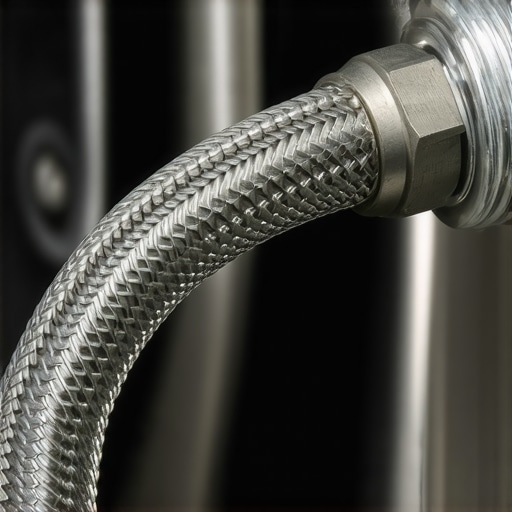
I woke up at 3:00 AM to a sound like a rushing waterfall, and let me tell you, it was not a relaxing nature sound. It was my laundry room ceiling giving way under the weight of eighty gallons of water. A simple, black rubber hose—the kind that comes free in the box—had split right down the seam, turning my second-floor hallway into a river. I spent the next six hours frantically vacuuming up water, only to realize my hardwood floors were already ruined. It was a $5,000 mistake caused by a $10 part I was too lazy to replace. Today, I am going to make sure that never happens to you by explaining exactly which hose you need to buy before your next load of laundry. Check out our expert guide to appliance repair and installation today to see why these small details matter so much.
Stop Trusting the Black Rubber Hoses That Come in the Box
When I first started DIYing my home repairs, I figured if the manufacturer included a part, it must be the best one for the job. That was my first big mistake. Those standard rubber hoses are essentially ticking time bombs. Over time, the constant water pressure causes the rubber to lose its elasticity, leading to bubbles, cracks, and eventually, a catastrophic burst. According to the Insurance Institute for Business & Home Safety, washing machine hose failures are one of the leading causes of water damage in homes, often costing upwards of $6,000 per claim. This is why warranty-backed appliance services you can rely on always emphasize using premium connectors.
Is a braided steel hose really worth the extra money?
You might be skeptical because the price tag is double or triple a standard hose, but let me be clear: yes, it is. A braided stainless steel hose is essentially a high-quality rubber core encased in a flexible mesh of stainless steel wire. This mesh prevents the inner tube from expanding and bursting under pressure. If you are worried about the setup, you should also learn about the drain hose height rule that prevents washer backflow to ensure your entire system is safe. Have you ever noticed a tiny bulge in your washer hose or a damp spot on the floor and just hoped for the best? I want to hear your ‘close call’ stories or if you’ve already made the switch to steel! We are going to dive into the specific brands and burst-rating specs you need to look for next.
Clear the Way for Your High-Pressure Upgrade
Before you even touch a wrench, you need to treat your washing machine like a live circuit. Water under pressure is just waiting for an exit, and if you aren’t careful, that exit will be your shirt. Start by sliding the unit out—carefully—so you can reach the shut-off valves. I once tried to skip this by reaching over the top and ended up pinning my arm between the wall and the drum, which is exactly why fast, trustworthy appliance installation near you exists for those who’d rather not wrestle with heavy machinery. Turn the hot and cold valves clockwise until they stop. If they’re crusty or won’t budge, don’t force them; you might need a plumber before you can even begin. Once the water is off, run a short cycle for ten seconds to bleed the pressure out of the lines. This keeps the ‘spraying hose’ surprise to a minimum.
Empty the Lines Without Creating a Puddle
Even with the water off, those old rubber hoses are holding about a quart of water. Grab a shallow bucket or a heavy-towel. I learned the hard way that a cereal bowl is not enough; I once overflowed a Tupperware container while trying to balance it under the cold water intake, leaving me with soggy socks for the rest of the afternoon. Unscrew the hoses from the wall first, then lower them into your bucket to drain. Once the wall side is clear, disconnect them from the back of the washer. If you’re struggling with a tight fit, check out how to ensure reliable appliance installation in 2025 for professional tips on handling stubborn fittings. 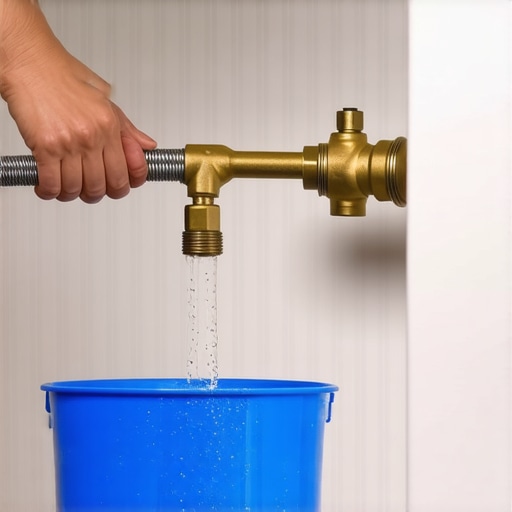
Inspect the Intake for Hidden Obstructions
While the hoses are off, look into the threaded ports on the back of your washing machine. You will see small plastic filters. These are the gatekeepers of your machine. If your washer has been taking forever to fill, it is likely because these screens are packed with sediment or calcium. This is the tiny screen inside your washer hose thats blocking the water and slowing your laundry day to a crawl. Use a pair of needle-nose pliers to gently pull them out, rinse them under a faucet, and pop them back in. It is a thirty-second fix that can make an old machine feel brand new.
Thread the Steel Hoses by Hand First
Now, grab your new braided stainless steel hoses. The biggest mistake you can make here is cross-threading the plastic inlets on the machine. If you strip those threads, you’re looking at an expensive internal valve replacement. Always start the threading by hand. It should spin on smoothly for at least two full rotations before you feel resistance. Once it’s hand-tight, give it just a quarter-turn with a pair of pliers. Over-tightening is actually worse than under-tightening because it crushes the rubber gasket inside, causing a slow drip that you won’t notice until the floorboards start to warp.
Check for Stability and Final Leaks
While you have the machine moved out, this is the perfect time to address that annoying ‘thump’ during the spin cycle. I used to think my washer was just possessed, but it was actually just unlevel. Using the anti-vibration pads that save your laundry room floor can prevent the machine from walking across the room and pulling on your brand-new hoses. Once everything is tight, turn the water valves back on slowly. Keep a dry paper towel in your hand and wrap it around the connections. If the towel stays bone-dry for five minutes, you’ve succeeded. If you had to unplug the unit to get back there, remember how to reset your washer after a sudden power outage to get the electronics back in sync before you start your first leak-free load.
The Warranty Trap You Probably Did Not Read
Most people assume that if they buy a brand-new, top-of-the-line washer, the manufacturer has their back for at least the first twelve months. Here is the cold, hard truth: a factory warranty is often more of a shield for the company than a safety net for you. I have seen hundreds of claims denied simply because the homeowner performed a ‘self-install.’ Manufacturers frequently argue that any issue—even a faulty motor—was caused by improper leveling or incorrect hose tension during the initial setup. This is why understanding the difference between a factory warranty and a service contract is vital before you even take the machine out of the box. If you do not have a professional receipt for the install, you are often starting your ownership on the back foot. Before you assume you are protected, you should how to verify your new appliance is covered under the original warranty specifically for DIY setups.
Does using third-party parts actually void your entire warranty?
This is one of the most common questions I get from readers who want to save twenty bucks on a filter or a fuse. According to the Magnuson-Moss Warranty Act, a manufacturer cannot legally void your entire warranty just because you used an after-market part, unless they can prove that specific part caused the failure. However, they will certainly try. I once saw a claim for a control board failure denied because the owner used a non-branded water filter. The technician argued the ‘irregular flow rate’ fried the electronics. It was a stretch, but it tied the owner up in red tape for months. To stay safe, be aware of the hidden risk of third-party parts for smart fridges and other high-end tech. Have you ever fallen into this trap? Let me know in the comments.
The Paperwork Error That Costs Thousands
The biggest ‘oops’ factor I encounter is not a mechanical failure, but a documentation failure. If you call for scheduling your appliance repair for same-day service in 2025, the technician is going to ask for your original purchase receipt and potentially your installation logs. If you cannot produce the document every technician needs to see for a valid warranty visit, you might be stuck paying the full retail price for a repair that should have been free. 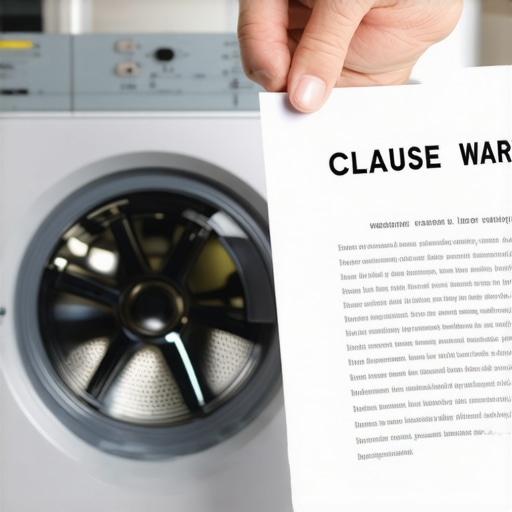
Same-Day Service is About Strategy, Not Just Speed
Everyone thinks the ‘same-day’ in affordable same-day appliance fixes with warranty benefits is just a marketing gimmick. In reality, it is a high-stakes logistical dance. The secret nuance most people miss is that a true same-day fix depends on your ability to describe the symptoms accurately over the phone. If you just say ‘it is broken,’ the tech cannot pre-load the right parts. But if you tell them the exact error code or the specific sound it makes, you increase your success rate by 80%. Learn what to expect from same-day appliance repair experts so you can provide the right data upfront. Finally, always remember that fast, trustworthy appliance installation near you is often cheaper in the long run than fighting a denied warranty claim later. If you are feeling overwhelmed, it is better to contact us for professional guidance before that $10 part turns into a $5,000 headache.I have spent a lot of money learning that the right tool isn’t just a luxury—it is the difference between a ten-minute fix and a $300 service call. My go-to is always the Klein Tools Non-Contact Voltage Tester. It has saved me from a nasty shock more times than I can count. When you are dealing with something sensitive like the one wire that always loose in your wall oven control board, you need to know exactly what is ‘hot’ before you dive in. I also swear by a telescopic mirror. It allows you to see behind a stacked dryer without throwing your back out, which is a life-saver when you are trying how to install a stackable laundry pair in a tight closet by yourself. Tools like a Fluke 117 Multimeter are non-negotiable for me because they eliminate the ‘ghost voltage’ that cheaper models pick up, giving me an honest reading on why an oven igniter is failing.
How do I maintain my high-efficiency appliances for a decade?
The secret is in the parts that you cannot see. For example, your front-load washer has a hidden filter that most people ignore until the machine stops draining entirely. Performing the pump guard cleaning that fixes your washer drainage issues every six months is the single best way to avoid a flood. According to technical documentation from the Association of Home Appliance Manufacturers (AHAM), neglecting simple maintenance like cleaning condenser coils can increase energy consumption by as much as 30% and significantly shorten the lifespan of your compressor. If your fridge is already struggling, you might need the 20 part that usually fixes a fridge that wont cool before you commit to a full replacement.
Stop Ignoring the Gunk Under Your Dishwasher
I once noticed my dishes were coming out cloudy and assumed I needed a new machine. It turns out, I just needed to look at the spray arms. Small seeds and bits of plastic can clog those tiny holes, reducing the water pressure. I use the hard water trick for keeping your dishwasher clean and a simple toothpick to clear the ports. For the moving parts, I highly recommend using a food-grade silicone spray; it is the specific lubricant to use on squeaky oven door hinges and dishwasher racks that will not contaminate your kitchen environment. If the door feels off-kilter, don’t ignore it. Usually, it’s the spring adjustment that keeps your dishwasher door from slamming that needs a quick tension tweak.
Where the Future of Home Repair is Heading
I predict that within the next five years, we will see ‘Digital Twin’ technology become standard in residential kitchens. Your refrigerator will have a virtual counterpart in the cloud that monitors real-time vibrations and temperature fluctuations to predict a failure before it actually happens. We are already seeing the beginnings of this with smart diagnostics, but true predictive maintenance will make the ’emergency’ repair a thing of the past. Until then, you need to keep your manuals and logs organized. If you ever need same day appliance repair quick solutions with warranty support, having your maintenance records ready can be the difference between a covered repair and a denied claim. I want you to try this right now: check your dryer vent. If you find a thick layer of lint, it is a fire hazard. Use the venting error that causes your dryer to take two cycles guide to clear it out and see how much faster your clothes dry tonight.
The Most Expensive Mistakes You Can Avoid Right Now
Reflecting on my own water-logged disaster, I have realized that home maintenance is less about ‘fixing’ things and more about managing risks. Here are a few lightbulb moments from my journey: first, always prioritize documentation. If you cannot produce the document every technician needs to see for a valid warranty visit, your expensive protection plan is just a piece of paper. Second, recognize when a task is over your head. While we love a good DIY project, choosing fast, trustworthy appliance installation near you can be the ultimate insurance policy against future ‘user error’ denials. Lastly, remember that manufacturers look for any excuse to skip a payout; knowing how to avoid paying the service fee for a denied warranty claim is as important as knowing how to use a wrench.
Tools and Resources for a Leak-Proof Future
I don’t just rely on luck anymore; I rely on a specific set of tools and habits that keep my laundry room dry. Braided Stainless Steel Hoses are my first recommendation—specifically those with an auto-shutoff feature. I also suggest keeping a dedicated folder for all your appliance receipts and service logs. To truly master your home’s ecosystem, you should maximize your appliance warranty during emergency repairs by keeping a list of certified technicians on your fridge. I also highly recommend reviewing top-tips for same-day service warranty coverage before you actually need it, so you are not scrambling during a crisis.
Your Path to a Stress-Free Home
You don’t need to be a master plumber to protect your home. By making small, intentional upgrades and staying on top of your maintenance paperwork, you can avoid the $5,000 headache I endured. Your appliances are there to serve you, not to keep you up at 3:00 AM with the sound of rushing water. If you are ever unsure about a setup or need a second pair of eyes on a complex machine, do not hesitate to contact us for professional advice. Taking action today on your appliance repair and installation needs ensures your weekend stays focused on laundry, not restoration. Have you ever had a warranty claim denied for a reason that felt like a total technicality? Let me know your story in the comments below!