
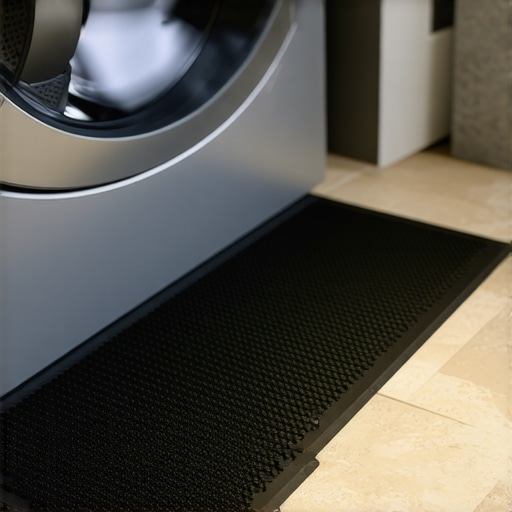
I still remember the Tuesday afternoon my laundry room tried to stage a coup. I was in the kitchen, minding my own business, when a rhythmic thumping started. Within thirty seconds, it evolved into a violent jackhammering that shook the pictures right off my hallway walls. I sprinted to the laundry room only to find my front-load washer a good six inches away from the wall, straining against its hoses like a dog on a short leash. I thought I had done everything right. I’d even tried the leveling trick for a fridge that rattles, thinking if it worked in the kitchen, it would work here. I was dead wrong. My mistake was assuming that a level machine was a stable machine, ignoring the sheer centrifugal force of a 1200-RPM spin cycle. Today, I’m going to show you how a simple set of anti-vibration pads can end the ‘laundry room dance’ for good and protect your home’s structural integrity.
Your Floor is Taking a Beating Every Laundry Day
Modern high-efficiency washers are engineering marvels, but they are also incredibly heavy and fast. When they spin, they generate thousands of pounds of force. If that energy has nowhere to go, it goes straight into your subfloor. This isn’t just a noise issue; according to research on mechanical resonance, sustained vibrations can lead to structural fatigue in building materials, which essentially means your washer is slowly shaking your floor joists loose. Early on, I ignored the rattle, thinking it was just a quirk of the machine. I eventually had to check for a failing bearing in my front-load washer because the constant slamming had actually damaged the internal components. If you’re starting from scratch with a new unit, getting a fast, trustworthy appliance installation is key, but even the best installers can’t always account for a slippery tile or hardwood floor. Have you ever walked into your laundry room only to find your machine has literally moved to a new zip code?
Do these cheap rubber circles actually stop the shaking?
It sounds too good to be true that a twenty-dollar set of rubber pads can outperform a thousand-dollar machine’s built-in suspension. I was a total skeptic. My first ‘fix’ was a scrap of old carpet—which just made the machine slide faster. Then I tried those hard plastic cups, which cracked under the weight. The secret, as I eventually learned, is in the durometer (the hardness) of the rubber. High-quality anti-vibration pads don’t just sit there; they absorb and dissipate energy. They turn that violent kinetic energy into a tiny bit of heat within the rubber instead of letting it travel into your floor. Ensuring a reliable appliance installation in 2025 means looking beyond the manual and addressing the surface the machine sits on. We’re about to dive into exactly which pads work and how to install them without throwing your back out.Putting these pads under a 200-pound machine isn’t exactly like sliding a coaster under a drink. It’s more like changing a tire on a car that’s still moving. You need a strategy to ensure the rubber actually grips the floor instead of just providing a smoother surface for the washer to slide on. If you’ve recently had a fast, trustworthy appliance installation, your machine should already be level, but adding pads requires a bit of disassembly of that perfect setup.
Getting the Pads Under the Feet Without Breaking Your Back
The biggest hurdle is the sheer weight. I learned the hard way that brute force is a recipe for a pulled lower back and a scratched floor. During my first attempt, I tried to tilt the machine while my wife slid the pads in. I lost my grip, the machine slammed down, and I almost crushed her hand. We ended up needing to look into affordable same-day appliance fixes with warranty benefits because the impact actually knocked the door sensor out of alignment. Since then, I use a pry bar or a dedicated ‘air shim’ bag to lift the machine one corner at a time. It’s precise, safe, and saves you from a trip to the ER.
Clean the Floor Like You’re Prepping for Surgery
Rubber needs friction. If there is even a thin film of spilled detergent or dust, the pads will act like skates. I always take a microfiber cloth and some rubbing alcohol to the exact spots where the feet will sit. This is also a great time to perform the maintenance step that extends the life of your high-efficiency washer by checking for leaks around the base. If the floor is damp, the rubber will never bond properly, and you’ll find your machine in the middle of the room by next Tuesday.
Leveling is Still Your First Defense
Pads are not a substitute for a level machine; they are an enhancement. Think of them like the shock absorbers on your car. If the frame is crooked, the shocks can’t do their job. Before the pads go on, use a spirit level to check the top of the machine from left-to-right and front-to-back. If the machine is rocking, you might need to tighten the washer agitator bolt that always loosens over time or adjust the threaded legs. Only when the machine is perfectly still on its own should you introduce the pads. This ensures that the weight is distributed equally across all four pieces of rubber.
The Lever Technique That Saves Your Fingers
If you don’t have a helper, use a 2×4 piece of wood as a lever. Slide it under the side frame—never the plastic bottom panel—and gently lift. Slide the pad under the foot and lower it slowly. If you rush this, you risk damaging the internal suspension springs. I once saw a DIYer try to ‘drop’ the machine onto the pads, which caused a massive internal rattle that required us to how to check for a blocked impeller in your washer pump just to make sure nothing had shaken loose from the impact. Taking it slow is the only way to avoid the hidden costs of diy repairs on warranty-covered items that arise from careless handling.
How to Tell if the Pads are Actually Working
Once the pads are in, don’t just walk away. Run a ‘rinse and spin’ cycle with a few heavy towels. Watch the feet. You should see the machine vibrating slightly within the rubber cups, while the base of the pads stays glued to the floor. If the pads are moving with the machine, the floor wasn’t clean enough. This simple test is a vital part of how to ensure reliable appliance installation in 2025. You want to see the energy being absorbed, not transferred.Most DIYers assume that if the bubble is in the center of the spirit level, their job is done. But here is the contrarian truth I’ve learned after years of troubleshooting: a perfectly level machine on a flexible subfloor, like those found on second stories, will still vibrate like a freight train if you don’t account for structural resonance. Experts at organizations like the Vibration Institute emphasize that isolation is about energy dissipation, not just alignment. If your floor has any ‘give,’ your machine isn’t just shaking; it’s amplifying its own frequency. This is where most people fail by ignoring the surface itself. I’ve seen homeowners obsess over the legs while their thin plywood subfloor acts like a drum skin. If you didn’t get a fast, trustworthy appliance installation from the start, you might be fighting a losing battle against physics.
Can adding rubber pads actually void your manufacturer’s warranty?
This is a sophisticated concern that many high-end appliance owners overlook. Generally, adding external pads won’t void a warranty, but the way you install them can. If you tip the machine too far and strain the internal suspension springs, or if you block the intake vents on the bottom of the unit, you risk the hidden costs of diy repairs on warranty-covered items. Manufacturers look for any reason to blame ‘user error’ or ‘improper environment.’ When you’re following an expert guide to appliance repair and installation today, the focus is always on maintaining the manufacturer’s specified clearances. The ‘Oops’ factor here is real: I once saw a client lose their coverage because they used thick, non-breathable pads that caused the motor to overheat from restricted airflow. Have you ever fallen into this trap? Let me know in the comments. To stay safe, always ensure you have the document every technician needs to see for a valid warranty visit, which should include your installation date and any modifications you’ve made. If the vibration persists even with pads, you may need to how to negotiate a repair instead of a replacement with your warranty provider because the issue might be internal, such as a factory-defective balance ring. If you’re ever in doubt, reaching out for affordable same-day appliance fixes with warranty benefits is the best way to get a professional eyes on the problem before a simple rattle becomes a structural repair. Keeping a log of your stabilization efforts is the best way to how to ensure reliable appliance installation in 2025 and protect your investment for the long haul.I’ve spent way too many Saturdays chasing a runaway Maytag across a tiled floor to rely on guesswork anymore. When it comes to tools, I’ve retired the crowbar for good. Instead, I use a high-pressure air shim—basically a heavy-duty inflatable bag—that slides under the corner of the washer and lifts it with a few squeezes of a hand pump. This tool is a lifesaver for an expert guide to appliance repair and installation today because it prevents the frame-warping tilts that usually happen when you’re trying to muscle a machine onto rubber pads. If you’re doing this alone, an air shim isn’t just a luxury; it’s the difference between a successful install and a pulled muscle that lands you on the couch for a week.
How do I maintain my washer’s stability over time?
Stability isn’t a ‘set it and forget it’ situation. Every six months, I make a point to revisit the maintenance step that extends the life of your high-efficiency washer by checking the levelness again. Floors settle, and rubber pads can compress or shift. I also highly recommend checking the debris trap location in your high-efficiency washing machine. Most people don’t realize that a clogged filter causes the pump to work harder and the water to drain slower, which keeps the drum heavier during the spin cycle. That extra weight is what leads to the violent shaking that eventually destroys your bearings.I’ve also started looking at the long-term structural impact through the lens of civil engineering. According to the American Society of Civil Engineers (ASCE), specifically regarding floor vibration serviceability, residential subfloors are rarely designed for the sustained 20-30Hz frequencies generated by modern front-loaders. If your machine is still vibrating despite the pads, you’re not just risking the appliance; you’re risking the floor joists. In these cases, affordable same-day appliance fixes with warranty benefits might involve a pro reinforcing the subfloor from the basement below. Looking ahead, I predict we’re going to see ‘smart feet’ integrated directly into high-end units. We already have sensors for everything else, so why not load-cell sensors in the leveling legs that sync to your phone? Imagine getting a notification saying ‘Front-left leg has shifted 2mm; re-level to avoid bearing failure.’ Until then, we have to be proactive. If you want to maximize your appliance warranty during emergency repairs, keep a digital log of your maintenance. Take a photo of the spirit level on top of your machine today. It’s the easiest way to how to ensure reliable appliance installation in 2025 and prove you haven’t been negligent if you ever need to file a claim. Go grab a level right now—even if it’s just an app on your phone—and see how far off you really are.
Why a Level Machine Still Dances and How I Finally Stopped It
After years of wrestling with rogue appliances, I’ve realized that the ‘rattle’ is your machine’s way of screaming for help. Here are the lightbulb moments that finally gave me peace and quiet in my own home. First, the ‘level’ is just the beginning; I used to think a spirit level was the final word, but in reality, a machine can be perfectly level and still lack the necessary friction to stay put. If you didn’t get a fast, trustworthy appliance installation, the legs might be level but the locking nuts could be loose, causing a slow drift during high-speed spins. Second, never ignore the hoses. Every time your washer ‘dances,’ it tugs on the water lines, which can eventually lead to a flooded basement. This is why seeking warranty-backed appliance services you can rely on is crucial—they identify these secondary risks before they become catastrophes. Finally, the floor matters more than the machine itself. If your laundry room is on a second story, those joists act like a drumhead, and anti-vibration pads are the only way to break that resonance loop before you shake the drywall screws right out of your ceiling.
The Stabilization Toolbox Every Homeowner Should Keep Under the Sink
To keep your setup professional and stable, I recommend these specific tools that I personally trust. First, invest in a high-pressure air shim; it is far safer than a pry bar and allows for the millimetric precision needed when sliding pads under heavy feet. Second, keep a bottle of 90% isopropyl alcohol handy to strip old floor wax and soap residue from the friction points before placing your pads. Third, always refer to an expert guide to appliance repair and installation today to ensure you aren’t missing model-specific stabilization steps that might be hidden in the service manual. Finally, make it a habit to locate the debris trap location in your high-efficiency washing machine, as an unbalanced load caused by poor drainage is often the secret culprit behind excessive shaking. #IMAGE_PLACE_HOLDER_E#
Silence the Spin Cycle Once and For All
You don’t have to live with a laundry room that sounds like a construction site every Tuesday. By taking twenty minutes to clean your floors, re-level the legs, and install a quality set of anti-vibration pads, you are performing the maintenance step that extends the life of your high-efficiency washer by several years. It is a small investment that protects your floors, your sanity, and your wallet from the heavy costs of structural repair. Have you ever had a washer move so far it actually unplugged itself or pulled its own hoses out? Let me know in the comments below!