
I walked into my laundry room last Tuesday and honestly thought a high school wrestling team had moved in overnight. That sour, damp, locker room funk hit me like a physical wall. I checked the hampers—empty. I checked the kids’ backpacks—nothing. Then I leaned into my front-load washer and nearly lost my lunch. It’s a betrayal, isn’t it? You spend good money on a machine that is supposed to clean things, only for it to become the source of the stink. I made a huge mistake early on by thinking more soap equaled more clean. Spoiler alert: I was wrong. Today, I am going to show you how to kill that odor and keep your laundry room smelling like actual lavender instead of a sweaty gym.
Your Washer Is Harboring a Science Project
I used to think my washer was a self-cleaning environment. I mean, it’s full of soap and hot water, right? Wrong. The design of front-loaders, while great for water bills, creates a perfect petri dish. Water gets trapped in the rubber seal, and soap scum builds up behind the drum. This creates a biofilm that feeds the very bacteria making your house smell. If you’ve ever ignored the maintenance step that extends the life of your high-efficiency washer, you are basically inviting mold to stay for dinner. I learned this the hard way when I had to peel back my gasket and found something that looked like it belonged in a swamp. According to the American Cleaning Institute, using too much detergent is the number one cause of this residue. If you are struggling with a machine that just won’t stay fresh, you might need affordable same-day appliance fixes with warranty benefits to ensure the internal pumps aren’t clogged with that same gunk. Have you ever opened your washer and been hit by that unmistakable ‘old socks’ aroma?
Is this just the price we pay for being high-efficiency?
It feels like we traded cleanliness for lower utility bills, but it doesn’t have to be that way. The skepticism is real; many of my neighbors have asked if they should just go back to the old top-loaders. You don’t have to give up on your machine, but you do have to change your habits. I used to skip the secret to deep cleaning a front load washer gasket, thinking a quick wipe was enough. It wasn’t. You need to get into those folds. If the smell is already deep in the system, it might be time to consult an expert guide to appliance repair and installation today to see if your drainage lines are the culprit. We are going to dive into the exact steps to sanitize your machine and prevent that locker room smell from ever coming back.
Attack the rubber gasket first
Most of the smell lives in that big grey ring around the door. Last month, I took a flashlight to mine and found a half-dissolved baby sock and what looked like grey pudding. It was horrifying. To fix this, you need to peel back the layers of the rubber. Use a mix of white vinegar and water, or a mild bleach solution if the mold is stubborn. Spray it deep into the folds and let it sit for ten minutes. Wipe it out with a microfiber cloth until the cloth comes back clean. If you find tears or if the mold has actually eaten into the rubber, you might need the secret to deep cleaning a front load washer gasket to get it truly sanitary. If the rubber is beyond saving, calling for affordable same-day appliance fixes with warranty benefits can get that seal replaced before the next load of whites. 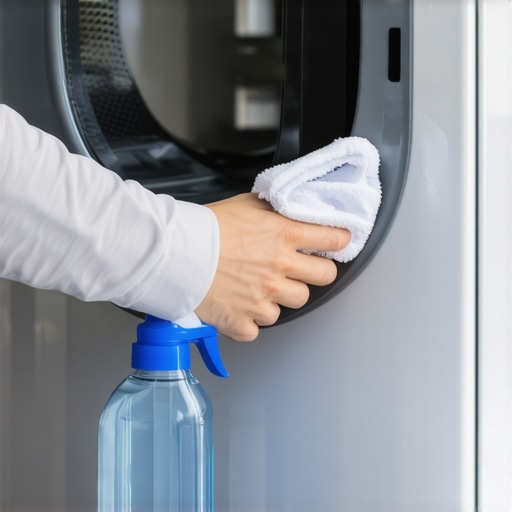
Empty the debris trap before it overflows
Every front-loader has a ‘secret’ door at the bottom. This is the debris trap or pump filter. I ignored mine for three years until the machine stopped draining. When I finally opened it, a gallon of stagnant, grey water poured onto my floor—have a towel ready! This trap catches coins, hair, and lint that would otherwise clog your pump. Unscrew the cap slowly, let the water drain into a shallow tray, and pull out the mesh filter. Scrub it under hot water. If you can’t get the cap off or if water stays in the drum despite a clean filter, you should check the debris trap location in your high efficiency washing machine to ensure you aren’t missing a secondary blockage. Sometimes a stuck impeller is the real culprit, and you might need to learn how to check for a blocked impeller in your washer pump to keep the system moving.
Run a high-heat sanitizing cycle
Once the manual scrubbing is done, the machine needs a chemical reset. Don’t just throw in clothes. Run the longest, hottest cycle your machine offers—usually called ‘Tub Clean’ or ‘Sanitize.’ I use two cups of white vinegar poured directly into the drum, followed by a second cycle with half a cup of baking soda. This bubbling action helps break down the biofilm hidden behind the metal drum where you can’t reach. If your machine is throwing errors during this process, it might be a sign of a deeper mechanical issue. Consulting an expert guide to appliance repair and installation today can help you determine if the heating element is actually reaching the temperatures needed to kill bacteria.
Dry the machine after every single use
The biggest mistake I made was closing the door as soon as I pulled the wet clothes out. That traps moisture and starts the mold cycle all over again. Now, I keep a dedicated ‘washer towel’ on top of the machine. I wipe the gasket and the inside of the door, then I leave the door ajar at least four inches. It looks a bit messy, but it’s the only way to ensure the interior dries completely. If you have drainage issues that keep the bottom of the drum wet, look into the pump guard cleaning that fixes your washer drainage issues to prevent standing water from becoming a permanent roommate.Let’s get real about the ‘quick fix’ mentality that dominates the laundry room. Most homeowners believe that calling for same-day service means the machine will be humming perfectly by dinner time. In reality, the goal of scheduling your appliance repair for same-day service in 2025 is often about stabilization and expert diagnosis rather than a 100% cure on the first visit. I see people get frustrated when a part needs to be ordered, but having a pro identify the failure early prevents a small leak from turning into a flooded basement. Everyone says you should just DIY everything, but in my experience, a ‘quick’ amateur fix is usually what leads to a permanent replacement. The biggest myth is that all technicians carry every single part for every brand in their van. They don’t. When you are looking for what to expect from same-day appliance repair experts, understand that their expertise is in rapid triage—stopping the damage before it spreads. One major ‘oops’ factor I see constantly is the DIY hero move. We’ve all been there—watching a video and thinking we can swap a sensor. But here is the nuance: most high-end manufacturers will void your entire protection plan if they see non-certified tool marks on the housing. According to a report by the National Appliance Service Association, professional intervention is the leading factor in extending an appliance’s lifespan beyond the seven-year mark. If you poke around without knowing the difference between a factory warranty and a service contract, you might be flushing hundreds of dollars down the drain. Even a tiny error can lead to the voltage issue that kills your new oven control board, turning a cheap fix into a total loss.
Does your service contract actually cover the high-tech sensors?
Many people assume every part is covered, but there’s a huge loophole involving ‘consumables’ or ‘software-related errors.’ If your smart washer stops talking to your Wi-Fi, it might not be a mechanical failure at all. This is why you must have the document every technician needs to see for a valid warranty visit ready to go before they arrive. Without those service logs and the original purchase receipt, you are basically flying blind.  Here is the hard truth: if you cannot prove you performed basic maintenance, like cleaning the gasket or the debris trap, some companies will deny your claim for ‘owner neglect.’ I’ve seen it happen dozens of times. They will ask for your service history. If you’re unsure how to handle the paperwork, knowing how to claim your warranty when the manufacturer denies you is a skill every homeowner needs. It’s always safer to lean on an expert guide to appliance repair and installation today than to wing it with a multimeter. Learning how to avoid paying the service fee for a denied warranty claim starts with knowing when to put the wrench down and call in the experts for warranty-backed appliance services you can rely on. Have you ever fallen into this trap and had a claim denied for a ridiculous reason? Let me know in the comments.I’ve spent thousands on my laundry setup, and I refuse to let it die because of a loose bolt or a crooked floor. If you want to move beyond basic cleaning, you need to think like a technician. I always keep a small telescopic inspection mirror in my laundry cabinet. Why? Because you simply cannot see the back of the drain hose or the underside of the pump without pulling the entire machine out. Moving a 200lb stackable unit just to check for a small drip is a nightmare that usually ends in a back injury. This tiny mirror lets me spot moisture or salt-like residue before it rots the subfloor. If I see a leak, I don’t panic; I immediately look for same-day appliance repair quick solutions with warranty support to handle the heavy lifting while my floors are still dry. It is about being proactive rather than waiting for a flood to tell you there is a problem.
How do I maintain my heavy-duty machines over time?
Consistency is the boring answer that actually works. Every six months, I put a spirit level on top of the machine. Vibration is the silent killer of internal electronics. If your machine is walking across the floor, you are vibrating the solder joints right off the control board and wearing down the shock absorbers. I’ve found that the leveling secret for a top-load washer that never dances works just as well for front-loaders to ensure the drum stays centered. If you can’t get it perfectly flat due to an uneven floor, investing in the anti-vibration pads that save your laundry room floor is the cheapest insurance policy you will ever buy. It’s not just about the noise; it’s about mechanical longevity. According to the Miele Technical Service Guide, even a minor 1-degree tilt significantly increases bearing wear, leading to that dreaded ‘jet engine’ sound during the spin cycle.
Stop the backflow before it ruins your load
Another tool in my kit is a simple heavy-duty zip tie. It sounds basic, but I use it to secure the drain hose to the standpipe. I’ve seen enough flooded basements to know that the plastic ‘hook’ that comes with the machine is often flimsy. You have to follow the drain hose height rule that prevents washer backflow to ensure dirty, used water isn’t siphoning back into your clean clothes mid-cycle. If you’re moving into a new home, don’t trust the previous owner’s setup blindly. Ensure you get reliable appliance installation in 2025 that accounts for modern high-pressure drainage systems which can easily blow a loose hose out of the wall. 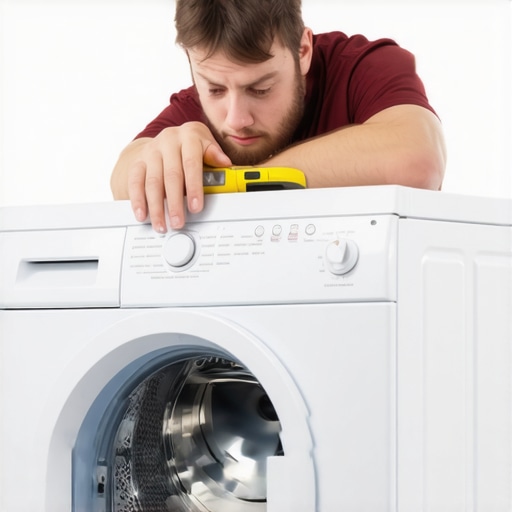 The future of this industry is moving toward predictive maintenance. We are already seeing high-end brands integrate AI that monitors the amperage draw of the drain pump. If the pump struggles due to a partial clog, the machine sends an alert to your phone before it actually fails. This will change how we view scheduling your appliance repair for same-day service in 2025, shifting from ’emergency fixes’ to ‘scheduled optimizations.’ However, even the smartest machine cannot fix a pinched hose—that’s still on us. If you’re currently dealing with a tech-heavy machine that is acting up, remember to maximize your appliance warranty during emergency repairs by documenting these ‘smart’ error codes before the tech arrives. I strongly suggest you grab a level today and check your machine; it takes two minutes and could save you a $400 repair bill. If it is already shaking the house down, it might be time to check out our expert guide to appliance repair and installation today to get it stabilized professionally.
The Costly Mistakes That Taught Me to Respect the Gasket
Biofilm is a silent killer of front-loaders. I used to think a splash of bleach solved everything, but if you don’t address the hidden gunk in the debris trap, you’re just masking a symptom. Another huge realization was that what to expect from same-day appliance repair experts isn’t a magic wand; it’s a professional triage to save your floor and your peace of mind. I also learned that the maintenance step that extends the life of your high-efficiency washer is non-negotiable if you want to avoid a $500 repair bill three years in. One of my neighbors even learned the hard way that how to claim your warranty when the manufacturer denies you often comes down to proving you actually cleaned that gasket regularly.
Tools for Your Forever Laundry Room
I’ve curated a small kit that stays in my laundry cabinet to keep things humming. First, use a spirit level to prevent “dancing” machines; even a slight tilt wears out bearings. Second, keep a telescopic mirror for periodic leak detection behind the drum. Third, always verify how to verify your new appliance is covered under the original warranty before you start unscrewing panels. I personally trust warranty-backed appliance services you can rely on when the electronics act up, as modern control boards are far too sensitive for a “wait and see” approach. #IMAGE_PLACEHOLDER_E#
Take Back Your Laundry Day
You don’t have to live with that locker room funk. By following the drain hose height rule that prevents washer backflow and drying your gasket after every load, you’re doing more than just cleaning—you’re preserving your home investment. Proper reliable appliance installation in 2025 is the foundation of a quiet, fresh-smelling home. Take a few minutes today to check that seal and level the legs; your future self (and your nose) will thank you. Have you ever found a “treasure” in your debris trap that made you question everything? Let me know in the comments below.