
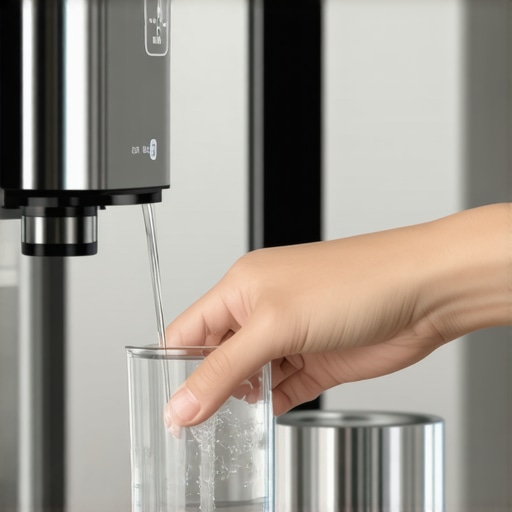
I remember standing in my kitchen at 11 PM, staring at a trickle of water coming out of my brand-new filter. I’d just spent twenty minutes wrestling with the housing, only to have it perform worse than the old, clogged one I just threw away. It’s infuriating when you try to do the right thing for your home and it backfires. I’ve been around appliances long enough to know that expert appliance installation is usually a straightforward job, but this was a humbling moment. If you are currently staring at a slow stream and wondering if you bought a lemon or somehow broke your fridge, take a deep breath. You didn’t break it, and I’m going to help you get that flow back to full throttle today.
The Frustrating Reality of a Trickling Water Dispenser
When we talk about same-day appliance repair, we usually focus on the big stuff like dead compressors or washers that won’t drain. But honestly, it’s these little everyday frustrations—like a glass of water taking two minutes to fill—that drive us the most crazy. I made a classic amateur mistake years ago when I first started DIYing my kitchen maintenance: I assumed the filter was ‘plug and play.’ I didn’t realize that air trapped in the lines or a slightly misaligned bypass valve could choke the flow. I once spent three days thinking I had a faulty water inlet valve when, in reality, I just hadn’t flushed the air out of the system properly. According to the Centers for Disease Control and Prevention, proper filtration is essential for removing contaminants, but if the water isn’t moving, that expensive carbon block isn’t doing much for you. We’re going to look at why your pressure plummeted and how to fix it without calling in a pro for an expensive warranty-backed service visit.
Is a generic filter actually worth the risk?
Many of my neighbors ask me if they should stick to the expensive brand-name filters or go for the cheap knock-offs they find online. The fear is real: will a cheap filter clog faster or, worse, leak and ruin your kitchen floor? While some third-party options are decent, others lack the precise fit required to fully engage the water valve. If the ‘teeth’ on the filter don’t line up perfectly, the internal valve only opens a tiny bit, leaving you with that miserable trickle. I’ve seen homeowners lose their appliance warranty coverage because a leaky non-OEM filter caused water damage. It’s a gamble that often leads to more stress than savings. Have you ever felt like your ‘upgrade’ actually made your appliance perform worse? Let me know in the comments if you’ve been burned by a bad filter too. We are going to dive into the mechanical reasons for this slowdown next, starting with the simplest air-lock issues and moving to the more stubborn valve problems.
Purge the air pockets choking your water line
When you snap a new filter into place, you are essentially trapping a large bubble of air inside the housing. This bubble acts like a physical plug, resisting the flow of water. Think of it like trying to drink through a straw that has a giant gap in the middle; the suction simply won’t work until that gap is gone. I once helped a friend who had ‘repaired’ his fridge, only to have the dispenser hiss and spit at him like an angry cat. He was terrified he’d blown a seal, but it was just trapped air. You need to provide a clear, high-pressure path for the water to push that air out. This is a fundamental part of expert appliance repair and installation that often gets overlooked by DIYers.
Push through the spluttering for a full flush
Don’t just tap the dispenser for a second and assume it is broken. You need to hold a large pitcher under there and let it run for at least three to five minutes. It is going to sound terrible—a loud, rhythmic knocking. If that noise is coming specifically from the back of the unit, you might want to check why your freezer is making a jackhammer noise to ensure it is not a secondary mechanical failure. Usually, after a gallon or two, the stream will suddenly smooth out and turn into a steady flow. This process also rinses out the loose carbon fines from the new filter, which can sometimes taste metallic if left in the line.
Reseat the filter to engage the internal valve
If the water is still a trickle after a flush, the filter likely isn’t ‘seated’ deep enough. Modern refrigerators have a spring-loaded manifold. If the filter isn’t pushed in and twisted to the exact millimeter, the bypass valve only opens a tiny crack. I remember a job where I spent twenty minutes checking the emergency water shut-off only to realize I hadn’t pushed the filter hard enough to hear the definitive ‘click.’ Take the filter out, inspect the rubber O-rings for any tears or debris, and shove it back in with a bit more authority this time.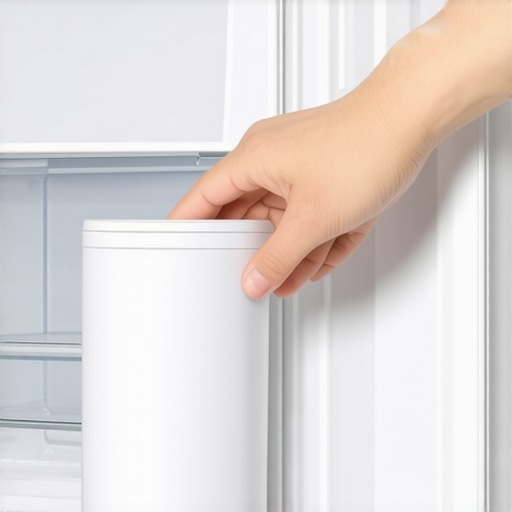
Check the supply line for a hidden kink
Sometimes the act of sliding the fridge out to reach the filter compartment causes the flexible plastic water line to fold. A kinked line is the silent killer of water pressure. It’s like a garden hose with a heavy foot on it. While you are back there, ensure you haven’t triggered a power cord error by pinching the main cable against the wall. If your fridge has been pushed back too tightly, it might be crushing both the water line and the electrical supply, which is a recipe for a same-day appliance repair emergency you would rather avoid.
When the water inlet valve decides to quit
If the line is straight and the filter is seated, the solenoid in the water inlet valve might be failing. These valves are small electronic gates opened by a coil. Over time, sediment from your local water supply can jam the gate. If you’ve had a recent ice maker jam after a power outage, the electrical surge might have weakened the solenoid’s ability to pull the gate fully open. At this stage, if you aren’t comfortable testing voltage with a multimeter, it is worth consulting what to expect from same-day appliance repair experts to get a professional diagnosis. Replacing a valve is a quick job for a pro, but it can be a messy ordeal if you aren’t prepared for the water pressure behind it.Let’s dig deeper into a nuance most homeowners miss: the ‘invisible’ failure. Everyone tells you that if the water is slow, it’s the filter. But sometimes, the problem isn’t mechanical—it’s digital. In my experience, especially with the latest smart models, the fridge’s internal logic can actually throttle flow if it doesn’t recognize the filter’s metadata or if a sensor is stuck in a ‘low-pressure’ error state. This is where scheduling your appliance repair for same-day service in 2025 becomes a strategic move rather than just a desperate one. A pro knows how to bypass these software hiccups that a standard DIYer would never find. I’ve seen a recurring trap that I call the ‘Seating Illusion.’ You think the filter is in because it clicked, but if the O-ring is slightly dry or misaligned, it can create a vacuum seal that mimics a clog. If you force it, you risk cracking the plastic manifold, which leads directly to the hidden costs of DIY repairs on warranty-covered items that nobody talks about. You might save a few dollars on the service call but end up voiding a major component warranty because you didn’t use the right food-grade lubricant or seating pressure. According to the Association of Home Appliance Manufacturers (AHAM), improper installation and maintenance are leading causes of premature system fatigue. Have you ever fallen into this trap of trying to save a buck only to have it cost you double? Let me know in the comments.
Can a simple power cycle actually restore your water pressure?
It sounds too simple to be true, but in the age of high-tech kitchens, a ‘hard reset’ is a legitimate diagnostic step. If your fridge recently suffered a power spike, the control board might be sending insufficient voltage to the water solenoid, preventing it from opening fully. This is often misdiagnosed as a physical blockage. If a reset doesn’t work, you’re likely looking at the need for warranty-backed appliance services you can rely on to test the board’s output. Always check the one maintenance record that saves your appliance warranty claim before you let anyone—including yourself—start pulling wires. Documentation is your only shield when a manufacturer tries to deny a claim based on ‘unauthorized tampering.’ Ensuring reliable appliance installation in 2025 means keeping these logs as standard practice, something most DIYers completely ignore until the moment of failure.I’ve spent years digging through the back of refrigerators, and if there is one thing I’ve learned, it’s that the right tool makes the difference between a ten-minute fix and a three-hour nightmare. When you are dealing with water lines, precision is everything. I personally never swap a filter without a small tube of food-grade silicone grease in my pocket. Why? Because most ‘slow flow’ issues after an expert appliance repair and installation are caused by dry O-rings that catch and tear. A tiny dab on the filter’s rubber seals ensures a perfect glide into the manifold, preventing the leaks that lead to expensive same-day appliance repair calls.
Keep your O-rings slick to avoid the seating struggle
If you’ve ever fought with a filter that just won’t click, you know the frustration. I use Molykote 111 because it’s heavy-duty, water-resistant, and won’t degrade the rubber over time. This is a level of detail that generic DIY guides usually skip, but it’s how pros ensure reliable appliance installation in 2025. By lubricating the connection points, you reduce the physical stress on the plastic housing, which is often the first part to crack under pressure.
How do I maintain my water filtration system over the long haul?
Beyond just swapping the cartridge, you should be inspecting your supply line every six months. I’ve seen countless homeowners rely on the cheap plastic tubing that comes in the box, but those are prone to brittleness and pinhole leaks. I always recommend upgrading to a braided stainless steel line. According to technical standards from the National Sanitation Foundation (NSF/ANSI 42), material integrity is paramount for maintaining water quality and preventing structural failure. A braided line is virtually impossible to kink, meaning you won’t accidentally choke your flow when you push the fridge back into its alcove.
The future of smart water monitoring is almost here
Looking ahead, I predict we are going to see more refrigerators integrated with real-time flow-rate sensors that sync directly to your phone. We are already seeing smart lights flashing red during hub conflicts, and soon your fridge will likely alert you to a 5% drop in pressure before you even notice the trickle. This proactive data will make scheduling your appliance repair for same-day service in 2025 much easier, as the technician will already have the diagnostic codes before they arrive. If you want to get ahead of the curve, I suggest investing in a simple leak detector puck. You place it on the floor behind the unit, and it screams the second it senses moisture. It’s a $20 investment that can save you from a $2,000 floor replacement. If you’re currently dealing with a stubborn unit, try this pro trick: shut off the water, remove the filter, and use a damp Q-tip to clean the internal teeth of the manifold. Even a tiny speck of carbon dust can prevent a full seal. Don’t forget to keep your maintenance record that saves your appliance warranty claim updated with every filter change. For those who want the absolute best results, I recommend checking out what to expect from same-day appliance repair experts to see how they verify line pressure with professional gauges.
Hard-Won Lessons from the Back of the Refrigerator
I have learned the hard way that the smallest oversight can lead to the biggest headache. For example, don’t ignore the filter reset light just because the water has started flowing again; on certain smart models, failing to clear that alert can keep the internal logic in a restricted performance mode. Another lightbulb moment for me was realizing that over-tightening the housing is often worse than leaving it slightly loose. If you strip the threads on the manifold, you are looking at a mandatory call for fast trustworthy appliance installation near you rather than a simple DIY fix. Finally, always check your fridge temperature settings. If the fresh food section is too cold, the water reservoir behind the crisper can develop ice crystals, choking the flow before it even reaches the filter. Knowing top tips for same-day service warranty coverage can save you if these small issues escalate into something that requires a professional touch.
My Go-To Kit for Maintaining Perfect Water Flow
To keep your dispenser running like new without constant tinkering, I recommend a few specific tools. I always keep a tube of food-grade silicone grease handy for O-rings and a braided stainless steel supply line to replace the factory plastic tubing, which is prone to kinking. I also suggest keeping a basic TDS (Total Dissolved Solids) meter in your kitchen drawer; it is the only way to verify that your filter is actually removing contaminants. Understanding the difference between a manufacturer warranty and a service contract is equally important, as it helps you decide which upgrades are safe to perform yourself and which require a certified tech. For those who want to optimize every part of their appliance, checking out the door gasket fix that cuts refrigerator energy bills can further improve the overall health of your unit while you are already in maintenance mode.
Stop Settling for a Weak Stream
You do not have to live with a dispenser that takes forever to fill a single glass. By taking control of the air-bleeding process and ensuring a perfect mechanical seal on your filter, you can restore your fridge to its peak performance. If the problem persists despite your best efforts, affordable same-day appliance fixes with warranty benefits are available to ensure your water flows fast and clean. Your home deserves a kitchen that works for you, not against you. Have you ever discovered a weird trick or a hidden button that suddenly fixed your fridge’s water pressure? Let me know in the comments below!