
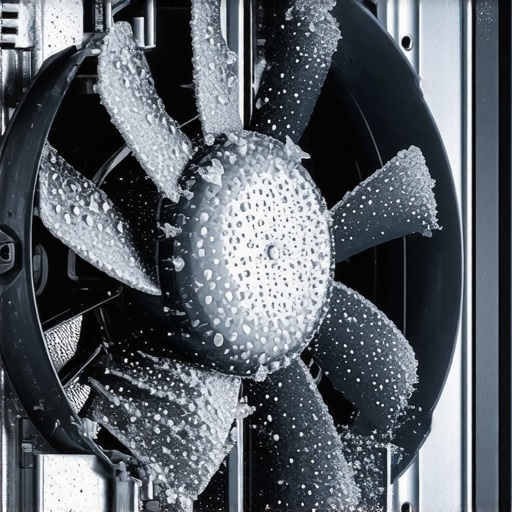
It was 3:14 AM when I first heard it. A rapid-fire thwack-thwack-thwack that sounded less like a kitchen appliance and more like a neighbor decided to install a deck in the middle of the night. I froze, heart hammering against my ribs, wondering if my house was finally giving up the ghost. It wasn’t a ghost, though; it was my freezer. Specifically, it was the evaporator fan hitting a wall of ice. At the time, I made the classic rookie mistake: I figured it would just melt away if I turned the temperature up for an hour. Big mistake. That little hack actually led to a spoiled gallon of milk and a service call I could have avoided. Today, I am going to show you exactly why your freezer is making a loud hammering noise and how to stop the construction crew in your kitchen before they do real damage.
Stop the Noise Before It Costs You a New Compressor
We often treat our refrigerators like silent workhorses, but when they start talking—or shouting—it is usually a cry for help. That jackhammer sound every hour is almost always tied to the defrost cycle or the fan assembly. If you have noticed the sound stops the second you open the door, you have likely got an evaporator fan obstruction freezing your freezer. I learned the hard way that ignoring this does not just keep you awake; it forces your motor to work double-time. If you are currently dealing with this, you might be tempted to reach for a screwdriver, but you need to know what you are looking at first. Before you start pulling panels, make sure you check if you have warranty-backed appliance services available to you, as DIY-ing can sometimes void those protections.
Does Every Odd Sound Mean Your Fridge Is Dying?
It is the question that keeps us up (besides the noise itself). Is it a $15 part or a $2,000 replacement? Most of the time, it is a simple fix that requires affordable same-day appliance fixes. However, the skepticism is real. You might think it is just the ice maker, and sometimes it is. But if that hammering is consistent, you are likely facing an ice buildup issue. According to the U.S. Department of Energy, even a small amount of frost on cooling coils can significantly decrease efficiency, leading to higher bills and eventual mechanical failure. If you are unsure if your situation is a DIY job or requires same-day appliance repair experts, do not panic yet. Have you ever felt that dread of a noisy appliance right after the manufacturer coverage expired? Let’s break down how to diagnose this without losing your mind—or your groceries.First, you need to verify that the racket is actually coming from the internal components and not the external compressor. The easiest way to do this is the door test. If that aggressive hammering stops the very second you pull the handle, you have confirmed that the culprit is the evaporator fan. This fan is the lungs of your appliance, circulating cold air throughout the cabinet. When ice builds up due to the evaporator fan obstruction freezing your freezer, the blades begin to strike the frost, creating that rhythmic thwack-thwack-thwack that sounds like a miniature construction crew is living in your crisper drawer.
Verify the Fan Failure with a Simple Door Trick
Opening the door cuts power to the fan motor on most models. If the silence is instant, you know the fan blades are the source. This typically happens when the defrost system fails to clear away the daily accumulation of frost. Before you start unscrewing things, check your documentation to maximize your appliance warranty during emergency repairs, as some manufacturers are very particular about who opens those internal panels. If you are clear to proceed, you will need to remove the food and the shelving to reach the back wall of the freezer compartment.
Access the Evaporator Without Breaking the Clips
The back panel is usually held in by a few hex-head screws or plastic tension clips. This is where most DIY attempts go south. I remember a humid Saturday in July when I tried to rush this step; I used a standard flathead screwdriver to pry the panel and heard a sickening ‘snap.’ I’d broken three of the plastic retainers, and the panel never sat flush again, causing a permanent vibration noise that was worse than the hammering. If the panel feels stuck, it is likely frozen to the coils behind it. Instead of prying, use a handheld steamer to gently thaw the edges. If you find the ice is too thick to manage, seeking out affordable same-day appliance fixes with warranty benefits can save you from destroying the expensive plastic housing of your unit.
Defrost the Coils Using Safe Methods
Once the panel is off, you will likely see a solid block of ice encasing the fan. Your instinct will be to grab a hair dryer or a kitchen knife to chip it away. Stop right there. I once watched a friend pierce an evaporator coil with a screwdriver while trying to ‘help’ the ice out; the refrigerant hissed out in seconds, and the fridge was effectively totaled. The only safe way to defrost the unit is to unplug it and let it melt naturally, or use a steamer to accelerate the process without introducing high-heat or sharp metal. While you are back there, ensure you haven’t made the power cord error that voids your fridge warranty by using an ungrounded extension cord.
Check the Defrost Timer to Prevent a Recurrence
Simply melting the ice is a temporary band-aid. You need to know why the ice formed. Usually, the blame lies with the defrost timer failure that freezes your refrigerator coil. If this timer doesn’t trigger the heater, the frost will return within 48 to 72 hours. You can manually advance the timer with a screwdriver to see if the heater kicks on. If the heater stays cold, you might be looking at a bad bimetal thermostat or a dead heating element. For those who aren’t comfortable testing live circuits, same-day appliance repair quick solutions with warranty support can identify the specific failed component before you spend money on parts you don’t need. Finally, if the motor itself is making a grinding noise even when clear of ice, you might need to apply the starter relay trick that fixes a warm refrigerator or replace the fan motor assembly entirely.Let’s dig deeper into why simply melting the ice isn’t the end of your journey. Many homeowners assume that once the noise stops, the problem is solved. This is the first major mistake. In my years of dealing with these systems, I’ve found that the fix is often just the beginning of a larger conversation about longevity. One common myth is that same-day service is always the gold standard. While we all want a quick fix, if you do not know what to expect from same-day appliance repair experts, you might end up with a technician who lacks the specific diagnostics for your high-end model. Sometimes, waiting 24 hours for a specialist is better than getting a generalist in 2 hours who only treats the symptom, not the cause. Then there is the warranty trap. I’ve seen countless people lose out on thousands of dollars because they didn’t realize the difference between a manufacturer warranty and a service contract. A manufacturer might cover a failed compressor, but they won’t touch the labor costs if the failure happened due to environmental factors like dust buildup. A study by the Association of Home Appliance Manufacturers (AHAM) suggests that nearly 30% of repair costs could be mitigated by consumer-level preventative maintenance, yet most people skip it until the hammering starts. Have you ever fallen into this trap? Let me know in the comments.
Will Your Service Contract Cover Natural Wear and Tear?
This is the question that trips up even the most prepared homeowners. Most third-party plans have the wear and tear clauses that might void your warranty. If your freezer fan died because you never cleaned the condenser coils—a standard maintenance task—a claims adjuster might deny your payout. This is why keeping the one maintenance record that saves your appliance warranty claim is non-negotiable. You need to know how to prove periodic maintenance to keep your warranty valid if you want the big repairs covered. Another oops factor I see constantly involves people buying open box or used units. They think the remaining four years of the factory warranty apply to them, but the warranty loophole for second-hand appliances you should know about often dictates that coverage is non-transferable. Always check the original proof of purchase. Finally, if you are moving beyond the freezer and installing new units, watch out for the shipping bolt error that ruins new washing machines. It is an advanced mistake that even some pro installers make, leading to a vibrating unit that sounds like a jet engine from day one.To really get ahead of these mechanical headaches, I rely on a very specific toolkit that most people overlook. For example, I never touch a freezer back panel without my Wagner handheld steamer. Unlike a hairdryer, which can warp plastic or create hot spots that crack the liner, a steamer provides controlled, moist heat that melts ice blocks in minutes without risk. I also keep a Klein Tools digital multimeter in my kitchen junk drawer. If you suspect the defrost heater has failed, you can check for continuity in seconds. If the circuit is open, you’ve found your culprit. Understanding these basics is the core of an expert guide to appliance repair and installation today. I have personally saved over $400 in labor costs just by being able to tell a technician exactly which part failed before they even arrived.
The Essential Toolkit for Every Homeowner
Beyond the steamer and multimeter, you need a long-reach nut driver set. Most manufacturers hide the evaporator screws behind deep plastic channels that a standard screwdriver cannot reach. By having the right reach, you avoid stripping the heads of the screws—a mistake that turns a 20-minute fix into a two-hour nightmare. If you find that the hardware is already damaged from a previous owner, it might be time to look for fast-trustworthy-appliance-installation-near-you to get a fresh start with a unit that hasn’t been compromised.
How do I keep my fridge running perfectly for a decade?
Maintenance isn’t a one-time event; it is a rhythm. According to the technical specifications in Samsung’s Technical Bulletin ASC20170605001, even a slight misalignment in the evaporator fan housing can lead to recurring ice buildup. To combat this, I recommend a deep clean of your condenser coils every six months. Dust acts like an insulator, forcing the compressor to run hotter and longer, which eventually disrupts the defrost timing. If you are worried about the labor involved, checking the maintenance contract clause that saves you on labor costs can provide a safety net for these biannual checks.
Sensors that Predict Failures Before the Hammering Starts
We are moving into an era where appliances will tell us they are sick before they start screaming. I am already seeing a trend toward vibration-sensing AI modules that plug into the smart port of modern refrigerators. These sensors can detect the minute change in frequency when a fan blade first grazes a thin layer of frost, sending an alert to your phone before the ‘hammering’ even begins. As we look toward how to ensure reliable appliance installation in 2025, these diagnostic integrations will become standard. For now, your best bet is to stay proactive with your records. If you ever have to call for same-day appliance repair quick solutions with warranty support, having your maintenance log ready will ensure you get the most out of your top tips for same-day service warranty coverage. If you’re still hearing that noise, try this advanced tip: check the door gasket with the ‘dollar bill test.’ Close the door on a bill; if it pulls out with no resistance, your seal is leaking warm air, which is the root cause of all that ice. If you need a professional eye to check your seal or internal components, feel free to contact us for a consultation.
Lessons from a Flooded Kitchen Floor
I’ve spent years tinkering with compressors and fans, and if there is one thing I’ve learned, it’s that noise is your early warning system. If I had listened to that first faint rattle years ago, I wouldn’t have ended up with a freezer full of melted ice cream and a ruined floor. Another big takeaway? Don’t rush the thaw. Using a hair dryer might seem like a shortcut, but the risk of warping your plastic liner or causing a heat-related crack is never worth the ten minutes you save. Lastly, remember that your documentation is just as important as your toolkit. I once saw a legitimate claim denied simply because the homeowner couldn’t prove they’d performed basic maintenance. Avoid the wear and tear clauses that might void your warranty by keeping a simple logbook of when you vacuum those coils.
My Secret Weapon Appliance Kit
You don’t need a professional workshop to handle these issues, but you do need the right gear to do it safely. I swear by my handheld steamer for defrosting—it’s the only way to melt stubborn ice blocks without risking the structural integrity of your fridge’s internal components. I also highly recommend keeping a digital copy of an expert guide to appliance repair and installation today on your phone for quick reference when things go thumping in the night. If you’re planning for the future, start looking into how to ensure reliable appliance installation in 2025 so your next unit is set up for success from day one. These resources have saved me thousands of dollars over the years by preventing small rattles from becoming total system failures.
Take Control of Your Kitchen Again
Dealing with a noisy appliance is stressful, but you now have the knowledge to diagnose exactly why your freezer is making a loud hammering noise and how to stop it. Whether you decide to tackle the ice yourself or decide it’s time for scheduling your appliance repair for same-day service in 2025, being an informed homeowner is your greatest asset. Just stay vigilant about the fine print, especially the deductible trap in most third-party appliance protection plans. Your refrigerator is the heart of your kitchen; a little proactive care ensures it keeps beating quietly for a long time. Have you ever found a massive ice block hiding behind your freezer panel where it shouldn’t be? Let me know in the comments below!