
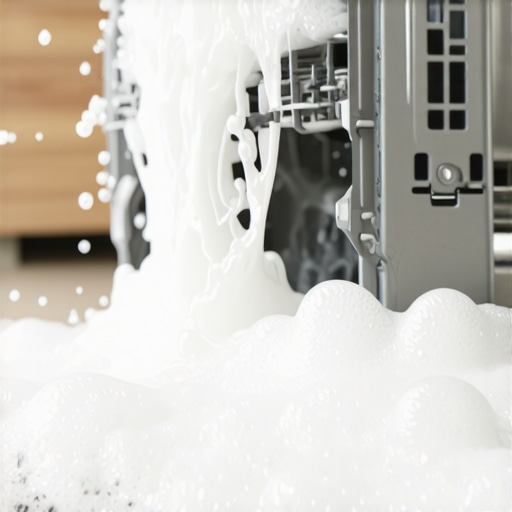
I’ll never forget the Tuesday evening I walked into my kitchen and felt like I’d stepped into a low-budget 90s music video. White, fluffy bubbles were oozing out of the bottom of my dishwasher, creeping across the linoleum like a slow-motion avalanche. I panicked. I hadn’t even put a detergent pod in! I just hit ‘Start’ on a half-load of breakfast plates. My first thought? ‘Great, there goes my Saturday and probably five hundred bucks for a new unit.’ This phenomenon of the ‘ghost suds’ is more common than you’d think, and usually, it’s not because your machine is possessed. It’s usually a simple chemistry mismatch or a tiny cleaning habit that has backfired.
The Mystery of the Ghost Bubbles
It’s incredibly frustrating when you play by the rules and your appliances still act out. You didn’t use dish soap. You didn’t use a cheap off-brand pod. Yet, here you are, staring at a mountain of foam. Usually, this happens because of ‘oversudsing,’ and it’s often a result of hidden residues. According to research cited by Consumer Reports, even a tiny amount of hand dish soap—like what’s left on a sponge when you ‘pre-scrub’ your plates—can create enough foam to trigger the soap suds error that shuts down modern dishwashers. I made this exact mistake early on. I thought I was being helpful by scrubbing a lasagna pan with liquid Dawn before tossing it in. Big mistake. Huge. That trace amount of concentrated soap is the dishwasher’s worst enemy. If you’re seeing this, don’t panic and call for same-day appliance repair just yet. We’re going to look at the culprits you might be missing, from your rinse aid to your water chemistry.
Is Your Machine Actually Broken or Just Overwhelmed?
When the suds start rising, it’s natural to assume the pump is gone or the seals have failed. But more often than not, it’s a chemistry problem, not a mechanical one. Have you ever opened your dishwasher mid-cycle and been greeted by a wall of white foam? If so, you aren’t alone. Another sneaky culprit is the water softener setting that is ruining your dishwasher. If your water is too soft and you’re using a standard amount of detergent, the soap has nothing to ‘grab’ onto, leading to excessive foaming. It’s a delicate balance. If you’ve been fighting a losing battle with bubbles, I want to show you how to reset the system without voiding your warranty-backed appliance services. Before we get into the heavy lifting, have you checked if someone else in the house ‘helped’ by pre-washing with the wrong soap? Let’s dive into the practical steps to drain those suds and prevent the foam from returning.
Clear the Foam Without Flooding the Floor
If you’re staring at a tub full of bubbles, your first instinct is probably to hit the drain button and hope for the best. Stop. Pushing more water through a foam-clogged pump is like trying to breathe through a wet towel—it strains the motor and can lead to a messy overflow. Instead, grab a bowl and manually scoop out as much foam as possible. Once you’ve cleared the bulk, sprinkle a healthy dose of table salt over the remaining suds. Salt is a natural ‘foam killer’ because it breaks the surface tension of the bubbles instantly. I once spent forty minutes trying to scoop foam out of a high-efficiency unit before I remembered the salt trick; it turned a mountain into a molehill in about thirty seconds. If the pump still sounds like it’s struggling after the bubbles are gone, you might need to look into the right way to fix a noisy dishwasher pump without replacing it before the motor burns out completely.
The Cooking Oil Solution You Wont Believe Works
It sounds counterintuitive, but if you have a persistent suds error that refuses to clear, a tablespoon of vegetable oil is your best friend. In my early twenties, I made the classic mistake of using liquid dish soap in a dishwasher. The foam was coming out of the door vent like a science fair volcano gone wrong. My landlord told me to pour a bit of olive oil into the base. I thought he was hazing the new tenant, but the oil acts as a powerful defoamer. It coats the soap molecules and stops them from trapping air. Just one tablespoon, run a quick rinse cycle, and the ‘ghost suds’ vanish. If your machine keeps throwing errors even after the bubbles are gone, it might be time for same-day appliance repair quick solutions with warranty support to reset the internal sensors that can get ‘stuck’ in an error state.
Fix the Plumbing Behind the Machine
Sometimes the bubbles aren’t about the soap you just put in; they’re about the drainage from the night before. If your dishwasher isn’t draining fast enough, soapy water sits in the bottom and gets whipped into a frenzy by the spray arms. Check under your sink for a common installation error. Do you see a loop in the drain hose? This is the critical drain hose loop you’re missing in your dishwasher setup. Without that ‘high loop,’ dirty, soapy water from your sink can actually backflow into your dishwasher, bringing along concentrated soap residue from your sink that triggers the foam.
Why Your Water Softener Is Part of the Problem
If you live in an area with hard water, you probably use a softener to protect your pipes. But if that setting is dialed too high, your detergent becomes hyper-active. You might actually need the hard water filter your dishwasher desperately needs to regulate the mineral balance without over-softening the water to an extreme degree. When the water is too ‘pure,’ the soap has nothing to bind to except air, which creates a sudsy nightmare. To prevent this, always ensure you are following the the one maintenance record that saves your appliance warranty claim by checking your water hardness levels annually. This simple step keeps the chemistry in balance and the bubbles at bay.
However, there is a nuance most people miss when they finally give up and call a pro. Most people assume that ‘same-day’ is a buzzword, but in my experience, scheduling your appliance repair for same-day service in 2025 is less about convenience and more about data preservation. Modern dishwashers use ‘volatile memory’ for certain sensor errors. If you wait days to call someone, the machine might overwrite the sub-code that tells the tech exactly why the sudsing started in the first place. You end up paying for a diagnostic that says ‘no fault found’ only for the bubbles to return the next morning. It is a race against the machine’s internal logs, and that is why speed matters more than you think.
Why Does Your Modern Sensor Keep Failing After the ‘Fix’?
I’ve seen it a hundred times: a homeowner cleans the filter, runs a vinegar cycle, and the machine works for a week before throwing another error. The culprit is usually a ‘cloudy’ turbidity sensor. According to data from the Association of Home Appliance Manufacturers (AHAM), the sensitivity of modern sensors has increased by nearly 40% in the last decade to meet energy standards. This means even a microscopic film left over from a single ‘oops’ moment with liquid dish soap can permanently recalibrate what the machine thinks is ‘clean.’ If you’re struggling with this, ensure you know how to ensure reliable appliance installation in 2025 because a slight tilt in the machine can cause these residues to pool directly over the sensor lens.
Don’t Let Your Repair History Sink Your Claim
Here is the ‘oops’ factor that almost cost me a brand-new unit: resetting the error code manually. Most people think they are being clever by searching for the button combination to clear the flashing lights. While this might get the cycle running, it can be a trap. If you have a legitimate defect, clearing that code without documenting it can lead to a rejection of your claim. To protect yourself, always maximize your appliance warranty during emergency repairs by taking a photo of the error code on the display before you touch a single button. This is the ‘black box’ evidence you need if the manufacturer tries to claim the issue was user error or lack of maintenance.
The Deductible Trap in Fine Print
Everyone says third-party protection plans are a safety net, but I’ve found they often hide a nasty surprise. Many people don’t realize there is often the deductible trap in most third-party appliance protection plans that can cost you more than a local independent repair. If your dishwasher was under $600, a $150 deductible for a ‘free’ repair is a bad deal. Always compare the cost of affordable same-day appliance fixes with warranty benefits against your plan’s fine print. Sometimes, paying out of pocket for a specialist who knows how to fix the plastic gasket that causes your dishwasher to leak is cheaper and faster than waiting for a warranty-assigned contractor who doesn’t carry the right parts. Have you ever fallen into this trap? Let me know in the comments!
I don’t just rely on luck anymore. I keep a pack of 5-in-1 water hardness test strips in my junk drawer, right next to the spare batteries. Most people assume their water quality is static, but seasonal shifts in municipal reservoirs or even changes in your building’s plumbing can alter the mineral content overnight. If you’ve just moved, securing fast trustworthy appliance installation near you is the first step, but the second is knowing exactly what’s coming out of your tap. When I see my hardness level drop, I immediately cut my detergent dosage. Without those minerals to neutralize the soap, you’re one heavy-duty cycle away from a bubble bath on your floor. As documented by the Association of Home Appliance Manufacturers (AHAM), modern HE (High Efficiency) dishwashers use roughly 80% less water than models from the 90s, meaning the concentration of impurities—like that tiny bit of Dawn on your sponge—becomes critical much faster.
The Test Strip Habit That Saved My Pump
It sounds like overkill, but spending ten dollars on a testing kit can save you a $300 service call. If your water is consistently ‘too soft’ because of an aggressive home system, you might actually need the hard water filter your dishwasher desperately needs to provide a stable mineral baseline. I personally use the ‘titration method’ where I slowly add detergent until I see just the faintest hint of bubbles at the very end of the cycle. It’s about finding the minimum effective dose. If you’re unsure about your setup, consulting an expert guide to appliance repair and installation today will give you the specific parameters for your specific brand and model. I’ve found that European brands are particularly sensitive to these shifts, often requiring much less soap than their American counterparts.
How do I keep my dishwasher from foaming up ever again?
Maintenance isn’t a one-time event; it’s a rhythm. Every Sunday, while I’m waiting for the coffee to brew, I pull out the bottom rack and unscrew the cylindrical filter. If you see a gray, slimy film, that’s not just food—it’s undissolved detergent and fats. That film acts as a ‘suds stabilizer,’ making it even easier for bubbles to form in the next cycle. Wipe it down with a soft brush and warm water. While you’re there, check the spray arm holes for tiny seeds or bits of plastic. If the arms can’t spin at full speed, they can’t effectively ‘knock down’ the foam that naturally occurs during the wash. Ensuring you know how to ensure reliable appliance installation in 2025 includes verifying that your machine is perfectly level. I use a simple bubble level on the top edge of the open door; even a one-degree tilt can cause water to pool in a way that prevents the filter from self-cleaning, leading to a build-up of soap residue.
Expect Your Next Dishwasher to Talk Back
Looking ahead, I predict that by 2026, ‘Smart Dosing’ will be standard in even entry-level models. We are moving toward a world where your dishwasher will have an internal reservoir for liquid detergent and will use optical sensors to measure the water turbidity and surfactant levels in real-time. It will literally refuse to start if it senses hand soap residue from a pre-rinsed pan. Until that technology is in every kitchen, you have to be the brain of the machine. I highly recommend trying the ‘Salt Trick’ tonight even if you don’t have a flood. Keep a small shaker of table salt under the sink. If you ever see a hint of excess foam through the door, sprinkle it in mid-cycle. It’s the most effective way to stabilize the chemistry before a sensor trips and locks you out of your machine, forcing an emergency reset.
Hard Truths About Modern Sensors and Sudden Foam
Looking back at my own bubble-filled kitchen, I realized that the biggest lesson isn’t just about avoiding liquid dish soap; it’s about respecting the sensitivity of modern engineering. Today’s machines are designed for extreme efficiency, not for handling a bubble bath. One lightbulb moment for me was realizing that the soap suds error that shuts down modern dishwashers is actually a protective measure for the motor. If you try to force the machine to run while it’s foaming, you risk burning out expensive components that might not be covered if user error is cited. I also learned that you should never trust a ‘clear’ display until you’ve verified the underlying cause—otherwise, you’re just resetting a ticking time bomb. Finally, keep a paper trail; knowing how to prove periodic maintenance to keep your warranty valid is the difference between a free fix and a four-hundred-dollar invoice.
#IMAGE_PLACEHOLDER_E#
My Dishwasher Survival Kit
I don’t go a week without checking these three essentials. First, a simple shaker of table salt is my immediate ‘panic button’ to kill foam on contact. Second, I keep a digital copy of an expert guide to appliance repair and installation today bookmarked on my phone for those late-night error codes that look like gibberish. Lastly, if I can’t solve it with salt or a filter clean, I don’t hesitate to look for affordable same-day appliance fixes with warranty benefits. These resources have saved my linoleum floors more than once, and they’ll do the same for yours.
Stop Fearing the Flashing Error Lights
It’s easy to feel defeated when your kitchen is covered in white fluff, but remember that most ‘catastrophic’ looking appliance issues are just simple chemistry imbalances. By staying proactive with your filter cleaning and keeping an eye on your water hardness, you’re taking control of your home’s longevity. If a situation does get out of hand, make sure you maximize your appliance warranty during emergency repairs by documenting the error with a photo before the technician arrives. You’ve got the tools and the knowledge to keep your kitchen dry and your dishes sparkling. Have you ever accidentally used the wrong soap and created a foam volcano in your kitchen? Let me know your best cleanup stories in the comments below!