
The sound of a relentless click-click-click in a dark kitchen is enough to make any homeowner break into a cold sweat. It was 2:00 AM last Tuesday when I found myself standing in the glow of the refrigerator light, staring at my stove in my pajamas. The range was completely off, yet the igniter was firing away like it was trying to signal for help. It felt like a ticking time bomb, and my first instinct was to panic. But before you go searching for the emergency water shut-off (wrong utility, I know, but panic does strange things), let’s talk about why this happens and how we can shut it up. Today, I’m going to walk you through the most common culprits, from simple spills to moisture traps, and help you decide if you need same-day appliance repair quick solutions or just a common household hair dryer.
Stop the Relentless Clicking Without Calling a Pro
When this first happened to me, I was convinced the control board had fried. In my rush to fix it, I actually made a classic rookie mistake: I tried to pry the igniter cap off with a metal screwdriver while the unit was still plugged in. Don’t do that. It is a fantastic way to get a nasty shock and potentially void any warranty-backed appliance services you might have. What I eventually learned after reading an expert guide to appliance repair and installation is that these ignition systems are incredibly sensitive to moisture and debris. If you’ve recently boiled over a pot of pasta or used a bit too much liquid cleaner, that moisture can bridge the gap in the spark switch, making the igniter think it needs to fire constantly. According to safety guidelines from the Association of Home Appliance Manufacturers, modern gas ranges are built with multiple safety layers, but a sparking igniter is often a sign of a misdirected electrical path rather than an immediate gas hazard. Still, it is a nuisance that demands attention before it wears out the spark module. Have you ever been woken up by your appliances acting like they have a mind of their own? It is a special kind of domestic stress that we can usually solve with a little patience.
Is a non-stop sparking igniter actually a fire hazard?
This is the big question every neighbor asks me when their stove starts acting up. While the spark itself is intended to light the gas, if the gas valve isn’t actually open, the spark usually has nothing to ignite. However, the constant electrical arcing can eventually wear out the spark module or overheat the internal wiring. You certainly don’t want to let it go for days on end. If you have already checked that the knobs aren’t stuck in the ‘start’ position and the burner caps are properly aligned, you might be dealing with a faulty ignition switch or trapped grease. This is where you have to weigh the cost of a DIY fix versus seeking affordable same-day appliance fixes. I once spent an entire Saturday afternoon trying to troubleshoot what I thought was a complex wiring issue, only to find out it was a simple debris buildup near the electrode. Sometimes the simplest explanation—like a bit of spilled soup in the wrong spot—is the winner. If your range is also struggling to light when you actually want it to, you might want to see why your gas oven igniter clicks but never lights for more context. Let’s get into the step-by-step process of drying things out and checking those switches safely.
Kill the Power Before Touching Anything
The very first thing you need to do is treat your stove like a live circuit, because that is exactly what it is. Think of the sparking igniter as a runaway train; you need to cut the tracks. Reach behind the unit and pull the plug, or find your circuit breaker and flip the switch to the kitchen range. Working on a clicking stove while it is plugged in is like trying to change a tire while the car is still moving—it is dangerous and unnecessary. Once the power is off, you can work safely without fear of a stray lightning bolt jumping to your finger. If you are unsure about the electrical setup, consult an expert guide to appliance repair and installation today. Even if you have warranty-backed appliance services you can rely on, performing this basic safety step is your responsibility as a homeowner.
Scrub the Electrode to Remove Carbon and Grease
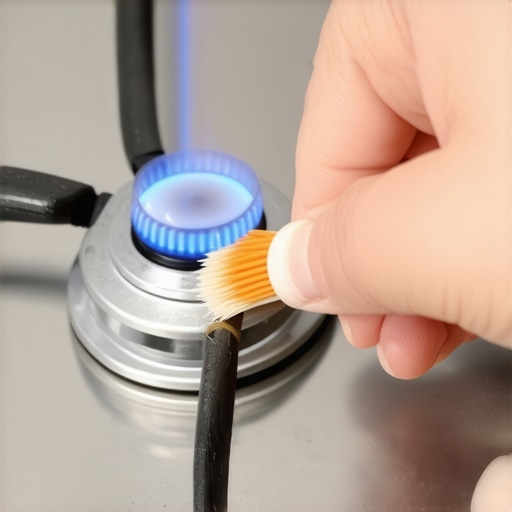
Now that it is safe, take the burner cap off. You will see a small ceramic nub—that is the electrode. I remember a time when my stove clicked for three hours straight after a messy taco night. I was ready to throw the whole stove away. It turned out a single grain of salt and a smear of grease were bridging the gap, creating a continuous circuit. Use a toothbrush dipped in a tiny bit of rubbing alcohol to gently scrub that ceramic electrode. Do not use water, as it will only add to the moisture problem. While you are at it, ensure you follow the correct way to ground a gas stove during a kitchen reno principles by ensuring the burner base is making solid contact with the range top. If the base is crooked, the spark will search for any path to ground, leading to that clicking sound.
Evaporate Hidden Moisture with a Hairdryer
Moisture is the most common silent culprit. If you’ve recently cleaned the stove or had a pot of pasta boil over, water likely seeped into the ignition switches behind the knobs. This is where the hairdryer trick comes in. Set it to a low heat and blow air directly onto the igniter and around the burner bases for about five to ten minutes. I once spent forty dollars on a service call only to watch the technician do exactly this. He told me that even a microscopic amount of water can trigger the spark module. If the hairdryer doesn’t do the trick after ten minutes of focused heat, you might be looking at same-day appliance repair quick solutions to replace a shorted switch. 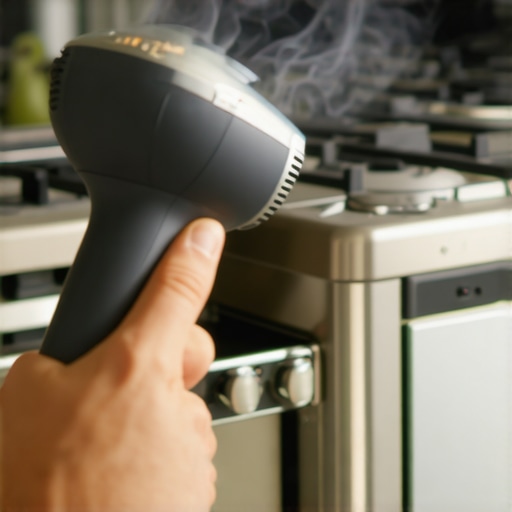
Check Your Knobs for Physical Obstructions
Sometimes the fix is even simpler: the knob itself is stuck. Over time, grease and kitchen grime can build up behind the plastic dial, preventing the switch from fully disengaging after you turn the burner on. Take all the knobs off and look for any gunk. If the switch feels ‘mushy’ rather than having a crisp click when you push it in, that is a red flag. I’ve seen cases where a heavy-duty degreaser actually melted the internal plastic of the switch, making it stick permanently. If you find yourself in this situation, affordable same-day appliance fixes are usually necessary because those switches are delicate and difficult to repair by hand. Make sure the burner caps are sitting perfectly flat. If they are even a millimeter off, the gas won’t ignite properly, and the sensor will keep the igniter firing in a desperate attempt to find a flame.
While drying your igniters with a hairdryer is a great first step, there is a deeper layer to this issue that most DIY blogs skip. You see, everyone tells you to keep cleaning your stove, but in my experience, over-cleaning is actually the primary cause of ignition failure. Most homeowners believe that more degreaser equals a better-performing appliance, but those caustic chemicals are the ultimate ‘oops’ factor. They can eat through the delicate silicone seals on the spark switches, leading to permanent internal shorts that no amount of drying will fix. If you have been aggressive with the spray bottle, you might have already crossed the line from a simple fix to needing an expert guide to appliance repair and installation today to replace the entire wire harness.
Don’t Let a Minor Spark Burn Your Maintenance Budget
There is a common myth that calling for same-day appliance repair quick solutions is an expensive luxury. However, the contrarian truth is that ignoring a ‘ghost clicking’ igniter is far more costly. According to a technical bulletin from the Association of Home Appliance Manufacturers (AHAM), continuous sparking puts a massive inductive load on the main control board. If you let it click for a week, you aren’t just wearing out a $20 switch; you are risking a $500 control board failure. This is why you need to maximize your appliance warranty during emergency repairs by acting the moment the clicking starts. A professional can often isolate the single faulty switch in the chain, saving the rest of the system before a catastrophic surge occurs.
Why does the clicking persist even after you have dried the switches?
If you have spent hours with a hairdryer and the clicking still haunts your kitchen, you are likely dealing with a ‘parasitic ground’ or a cracked ceramic insulator. This is an advanced nuance that trips up even seasoned handymen. A microscopic crack in the ceramic electrode—often caused by dropping a heavy cast-iron skillet on the burner—allows the electricity to leak out to the stove’s chassis before it reaches the burner head. This creates a feedback loop in the spark module. Before you start tearing the manifold apart, make sure you understand how to ensure reliable appliance installation in 2025 by checking that the range is properly leveled and grounded. If the unit isn’t perfectly grounded, the spark module can ‘float’ electrically, causing it to fire at random intervals.
How Your Cleaning Habits Might Void Your Factory Warranty
Here is the trap: many manufacturers consider ‘liquid ingress’ to be user-inflicted damage. If a technician arrives and finds soap residue inside the electrical switches, your claim might be denied. To avoid this, always check top tips for same-day service warranty coverage before the pro arrives. Always document your maintenance and show that you have followed the manual’s cleaning protocols. Using a damp cloth instead of a spray bottle on the knobs can save you from a denied claim and a hefty bill. Have you ever accidentally ‘killed’ an appliance by being too thorough with the cleaning? Let me know in the comments below—I have definitely been there!
Beyond the hair dryer and the toothbrush, I’ve found that having a specific toolkit saves me from what I call the ‘parts cannon’ approach—where you just throw money at new components until the problem stops. I personally swear by a can of DeoxIT D5. Most DIYers reach for a standard lubricant, but that is a disaster for electronics. DeoxIT is a specialized contact cleaner that dissolves oxidation on the micro-switches under your burner knobs without leaving a conductive film behind. This is the pro secret for fixing ‘ghost’ signals that trigger the igniter. If you’re serious about taking care of your kitchen tech, you should definitely read this expert guide to appliance repair and installation before you start pulling wires.
Why a Multimeter is My Most Trusted Kitchen Tool
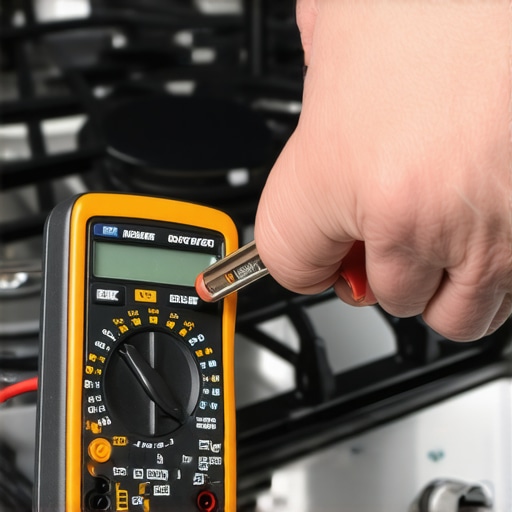
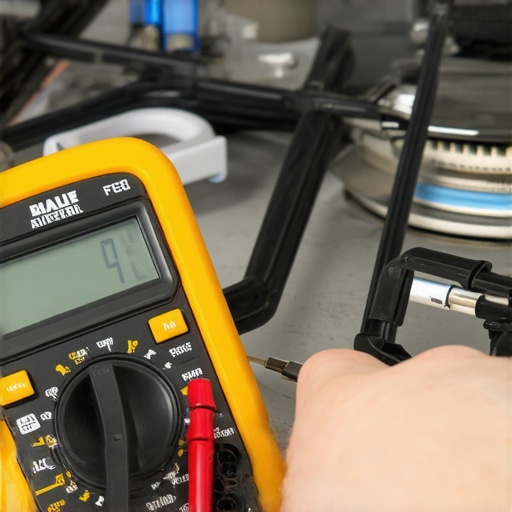
I never troubleshoot a clicking stove without my digital multimeter. Specifically, I use a model with a ‘LoZ’ or Low Impedance mode. Why? Because modern stoves operate on such low-current signals that a cheap meter might pick up ‘ghost voltage’—stray electromagnetic interference—and make you think a switch is closed when it isn’t. This leads people to replace a perfectly good spark module when the issue is actually a tiny break in a wire. According to the National Electrical Manufacturers Association (NEMA) Standard ICS 2, electronic control components in residential appliances are increasingly susceptible to transient voltage spikes. If your home has ‘dirty’ power or an unstable ground, your stove might click simply because the spark module is confused by electrical noise. This is exactly why knowing how to ensure reliable appliance installation in 2025 is vital; it’s about the electrical environment as much as the gas connection.
How do I maintain my gas range igniters over time?
The secret to long-term success isn’t a deep scrub; it is actually preventative dry care. I make it a habit to use a dry, soft-bristled paintbrush to sweep away any carbon deposits around the ceramic electrode once a month. Carbon is conductive, and a buildup can ‘short’ the spark before it even reaches the gas. Never use liquid cleaners directly on the spark heads. Also, after a massive holiday meal where the stovetop was under heavy use, leave the oven door slightly ajar for ten minutes while it cools—the rising residual heat helps evaporate any humidity trapped in the manifold. This simple habit helps you maximize your appliance warranty during emergency repairs because it prevents the ‘environmental neglect’ clause from being used against you. If you need a pro to look at it, make sure you know what to expect from same-day appliance repair experts regarding their diagnostics.
The Future of Stove Ignition Systems
Looking ahead, I predict a major shift toward solid-state ‘hot surface’ ignition for cooktops, similar to what we see in modern ovens. These use high-temperature ceramic heating elements rather than open sparks, which would eliminate the clicking nuisance and the moisture-sensitivity issues entirely. Until that becomes the standard, we have to stay diligent with our current systems. If your DIY efforts haven’t silenced the clicking, you might need to look into scheduling your appliance repair for same-day service in 2025 to avoid burning out your control board. Before you give up, I want you to try one advanced tip: pull the knobs off and use a can of compressed air—the kind meant for computer keyboards—to blow out the switch housings. It’s a 30-second move that clears out dust and debris with a surprisingly high success rate.
The Hardest Lesson I Learned About Same-Day Service and Stove Repairs
After years of tinkering with kitchen gadgets, I’ve realized that most of our appliance woes are self-inflicted. Here are a few lightbulb moments from my own kitchen mishaps that you won’t find in a standard manual: Less is more when it comes to cleaning. I used to soak my stovetop in heavy-duty degreaser, but I eventually learned that the safety check every gas stove installation needs actually involves keeping those delicate electrical switches bone-dry. Excessive liquid is the top enemy of your igniters. Furthermore, grounding is the silent hero of a quiet kitchen. If your range isn’t properly leveled or grounded, those sparks will search for a path to the chassis, causing random firing. Learning the proper way to ground your new smart stove during a remodel saved me from a very expensive control board replacement. Finally, try the 24-hour patience test. Sometimes, the best repair is to simply flip the circuit breaker and let the unit sit. If moisture is the only issue, a day of natural evaporation can save you the cost of a service call.
My Favorite Resources for DIY Appliance Maintenance
You don’t need a massive workshop to keep your range in top shape. These are the specific items I always keep in my kitchen toolkit for appliance emergencies: DeoxIT D5 is the gold standard for cleaning the micro-switches under your knobs. It dissolves oxidation without leaving a sticky mess that causes future shorts. I also recommend keeping a Digital Multimeter on hand; it is essential for checking continuity. If you’re not sure how to use one, check out this expert guide to appliance repair and installation today for a crash course in electrical safety. Lastly, a Soft-Bristled Paintbrush is my secret weapon to sweep away carbon and salt from the ceramic electrodes. It is much safer than using a wire brush or a wet cloth which can crack the insulator.
Reclaim Your Quiet Kitchen Today
There is nothing more frustrating than an appliance that won’t stop nagging you with a repetitive, rhythmic noise. By taking these steps, you’re not just stopping a sound; you’re protecting your investment and ensuring your home stays safe. Whether you managed a quick DIY fix with a hairdryer or decided it was time to seek affordable same-day appliance fixes, you should feel proud of taking proactive care of your home. Don’t let a tiny igniter spark compromise your peace of mind or your repair budget. Have you ever been spooked by a clicking stove in the middle of the night? Let me know your haunted appliance stories in the comments below!