
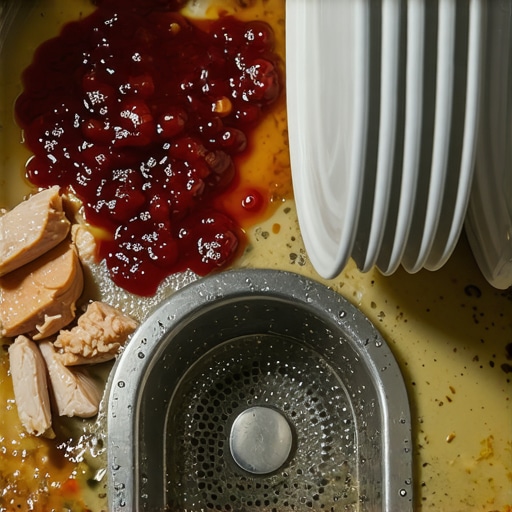
It was roughly 10:15 PM on a chilly Thursday night. The pumpkin pie was gone. The cousins were finally out the door. I was standing over the sink, feeling proud of myself for getting the kitchen clean, when I heard it. A deep, ominous glug. Within seconds, the greasy remains of a twenty-pound turkey began bubbling up into the basin. It wasn’t just a slow drain; it was a total rebellion. I had fallen victim to the classic holiday drain line clog, a mistake I’ve spent years learning how to avoid and fix.
The Nightmare of the Post-Turkey Gurgle
If you’ve ever found yourself staring at a sink full of murky water while your family relaxes in the other room, you know the panic. I spent my first ‘Clog-mas’ frantically searching for the specific wrench you need to unjam a disposal in seconds and making every amateur mistake in the book. I thought I could just power through it. I was wrong. Today, we are going to dive into why your pipes hate your holiday menu and how you can get things flowing again without spending your holiday bonus on an emergency service call. My goal is to save your sanity and your pipes before the next big gathering.
Can a simple plunger actually handle a holiday-sized mess?
You might be skeptical. I certainly was. Early in my DIY journey, I assumed that if a plunger didn’t work in the first three seconds, the situation was hopeless. I once even made the p-trap mistake that causes your dishwasher to smell like sewage by trying to force air through the lines with a shop vac. Spoiler: it didn’t end well for my kitchen rugs. But here is the reality: most holiday clogs are just a buildup of fats and fibrous veggies that need the right mechanical nudge, not a chemical nuke. Did you know that the day after Thanksgiving is actually the busiest day of the year for plumbers? According to industry data from Roto-Rooter, residential plumbing calls jump by 50% on Black Friday. It’s a literal ‘Brown Friday’ for the pros, but it doesn’t have to be for you.
The Five Hundred Dollar Mistake You are Probably About to Make
I used to think boiling water was the cure-all for grease. I dumped a massive pot of it down the drain, thinking I was a genius. All it did was melt the grease just enough to move it further into the wall where it cooled and turned into a literal brick of lard. That cost me a $500 emergency visit. If your sink is acting up, you need a plan that respects the plumbing. Whether you need a drainage trick for a kitchen sink that gurgles or a full system reset, we’re going to get it sorted. Have you ever had a holiday dinner ruined by a backed-up sink, or are you currently reading this while the water is still rising? I want to hear your horror stories in the comments below. Let’s look at what actually causes these backups so you can stop them before they start.
Seal the Air Gap or Prepare for a Mess
The first thing most people do is grab a plunger and start flailing. That is exactly how I ended up with a face full of gray water three years ago. If you have a double-basin sink, plunging one side just sends the pressure (and the mess) out the other side. You have to seal the “open” drain with a wet rag or a heavy stopper to create the vacuum necessary to move the clog. While you are at it, make sure you know the emergency water shut-off every homeowner needs to locate today just in case a pipe decides to give up under the pressure. I spent a frantic twenty minutes trying to clear a potato-skin backup only to realize I was just moving air back and forth because I hadn’t plugged the vent. This simple mechanical seal is the difference between a five-minute fix and a two-hour cleanup session involving soggy rugs and drywall repairs.
Check the Disposal Before You Pull the Pipes
Most holiday clogs happen right at the garbage disposal. If you hear a low hum instead of a grinding sound, the motor is jammed. Don’t stick your hand in there. Instead, look underneath the unit for a small hexagonal hole in the center of the motor base. You need the specific wrench you need to unjam a disposal in seconds to manually rotate the flywheel. I once used a wooden spoon to try and pry a jam loose, which only resulted in a broken spoon and a still-broken sink. Rotating that flywheel manually often breaks up the “fat-berg” of congealed gravy and vegetable fibers enough for the motor to take over and flush the system.#IMAGE_PLACE_HOLDER_B#
How to Clear the P-Trap Without the Stench
If the disposal is clear but the water is still rising, the clog is deeper. This usually means the P-trap—that U-shaped pipe under the sink—is full of gunk. I once made the mistake of unscrewing this without a bucket underneath. I thought I had drained the sink, but gravity had other plans. Two gallons of stagnant, turkey-scented water flooded my cabinet. This is often where homeowners realize the p-trap mistake that causes your dishwasher to smell like sewage is actually a simple fix of alignment and clearing. Ensure you have a bucket and some old towels ready. Unscrew the slip nuts by hand if possible, pull the trap, and literally push the debris out with a bottle brush. If the seals look worn or cracked, replacing them now is cheaper than a flooded kitchen later.
Avoid the High Heat Pipe Trap
I mentioned earlier that boiling water is a trap. Here is the technical reason: most modern homes use PVC piping. While PVC is tough, repeated exposure to boiling water can soften the joints and cause subtle leaks over time. More importantly, it just liquefies the fat so it can travel deeper into the colder pipes behind your walls, where it hardens into a permanent obstruction. Instead, use “hot-ish” tap water mixed with grease-cutting dish soap. If the clog persists despite these efforts, it might be time to maximize your appliance warranty during emergency repairs if the backup has affected your dishwasher’s pump or sensors. Sometimes a simple sink backup can trigger the critical drain hose loop you’re missing in your dishwasher setup to fail, leading to even more water on your floor.It is easy to assume that a warranty is a ‘get out of jail free’ card. Everyone tells you to keep your original receipt in a safe place, but that is barely half the battle when a major appliance fails. In my experience, a detailed service log is the real MVP of home ownership. If you cannot show how to prove you maintained your hvac for a warranty claim or your high-end kitchen appliances, companies will find any excuse to deny your request. The ‘Oops’ factor here is massive: many homeowners frantically call for what to expect from same-day appliance repair experts without checking their own maintenance records first. If a technician arrives and determines the failure was caused by a simple lack of cleaning—like a clogged filter or a pet-hair-covered condenser—you will be stuck learning how to avoid paying the service fee for a denied warranty claim the hard way. A 2023 report from the National Association of Service Managers notes that nearly 30% of warranty disputes stem from a lack of ‘provable maintenance’ rather than actual mechanical defects.
Stop Getting Denied by Your Warranty Provider
You might think that having a piece of paper labeled ‘Warranty’ means you are fully protected. It is a common belief that the manufacturer will simply fix any issue that arises. But here is the nuance: most claims are denied because you cannot prove you did not cause the failure through neglect. This is where you can leverage the third-party warranty loophole that saves you hundreds on parts by maintaining independent service records. I once saw a $400 control board replacement denied because the homeowner could not show they had ever cleaned the dust from the intake vents. 
Is same-day service worth the holiday premium?
When your refrigerator dies on a holiday weekend, the panic is immediate. But before you rush into booking fast trustworthy appliance installation near you, consider that holiday surcharges can often double the labor cost. You should always check top tips for same-day service warranty coverage to see if your protection plan actually covers the ’emergency’ portion of the bill. Frequently, these plans only cover standard labor rates, leaving you to pay the difference out of pocket.
The Document That Saves Your Claim
The single most important thing you can have in your files is the document every technician needs to see for a valid warranty visit. This is not just the sales receipt; it is a chronological log of every time you have cleaned the dishwasher filters or checked the door seals. Without this, you are entirely at the mercy of the technician’s subjective notes. If you want warranty-backed appliance services you can rely on, you have to be your own best advocate by providing proof of care. Have you ever fallen into this trap where a technician blamed ‘owner neglect’ for a broken machine? Let me know in the comments below. Lastly, if you are currently upgrading your kitchen, make sure you understand how to ensure reliable appliance installation in 2025 so you do not start the cycle of technical failures all over again.If you want to move beyond the ’emergency fix’ lifestyle and actually scale your home maintenance, you need to upgrade your toolkit. I used to rely on a cheap voltage pen I found in a bargain bin, but after misdiagnosing a simple capacitor issue that nearly fried my AC board, I realized precision is non-negotiable. I now swear by a true RMS multimeter for any electrical troubleshooting. For example, if you are wondering how to check your hvac blower capacitor without a multimeter, you are already starting at a disadvantage. Real diagnostics require seeing the actual microfarad reading to catch a failing part before it leaves you in the heat. I also keep a tube of food-grade silicone grease on hand because knowing the specific lubricant to use on squeaky oven door hinges can prevent a total hinge failure that might cost you $200 in parts alone. 
How do I maintain my home appliances over several years?
The secret isn’t a magic spray; it’s a relentless focus on airflow and filtration. I spent two years wondering why my clothes took forever to dry until I found the tiny screen inside your washer hose thats blocking the water and realized my dryer was suffering the same fate with lint. Most homeowners ignore the hidden filters that choke performance. If you have a Golden Retriever like mine, mastering the condenser coil cleaning hack for pet owners with hairy dogs is literally the difference between your fridge lasting eight years or fifteen. According to the Association of Home Appliance Manufacturers (AHAM) in their 2024 sustainability report, consistent consumer-level maintenance can reduce energy consumption by up to 15% while significantly delaying mechanical fatigue.
The 2026 Shift Toward Predictive Maintenance
We are entering an era where your fridge will likely tell you its compressor is failing before you ever see a drop in temperature. I predict that by 2026, we will see AI-driven ‘Repair-on-Demand’ apps integrated directly into our smart hubs, which will make scheduling your appliance repair for same-day service in 2025 look like the dark ages. This technological shift will require you to have your expert guide to appliance repair and installation today ready so you can interpret the data your machines are throwing at you. If you haven’t done it this month, pull out your dishwasher’s bottom filter and scrub it with an old toothbrush. It’s a five-minute task that prevents a thousand-dollar backup. Go do it now and see how much gunk you’ve been living with.
The Expensive Realities of Holiday Plumbing Shortcuts
After years of battling ‘Brown Friday’ backups, I have realized that the most common mistakes are born from a lack of patience and a misunderstanding of how pipes actually work. One of the hardest lessons I learned is that ‘out of sight’ never means ‘gone.’ If you dump grease down the sink, you aren’t disposing of it; you are just relocating a future problem to a place where it will be much harder to reach. Secondly, the paperwork matters more than the pipe wrench in the long run. I spent hours arguing over a denied claim because I hadn’t kept a log of when I flushed my system. This is why your extended warranty company keeps asking for service logs—they want to see that you didn’t cause the catastrophe through simple neglect. Finally, never assume a clear drain means a healthy system. Many holiday clogs are just the ‘final straw’ on top of months of slow buildup that could have been prevented with a simple monthly hot-water-and-soap flush.
Gear That Every Proactive Homeowner Should Own
To move beyond emergency panics, you need more than just a plunger. I recommend every homeowner keeps a small, dedicated service binder in their kitchen drawer. This is where you should how to verify your new appliance is covered under the original warranty documents and keep your maintenance records. Beyond the binder, my ‘Home Defense’ kit includes a high-quality 25-foot hand auger and a True RMS multimeter for electrical troubleshooting. If you are ever in doubt about the technical specs of your machines, I always refer back to this expert guide to appliance repair and installation today which covers the nuance of modern high-efficiency systems that standard DIY videos often skip. Having the right tools means you don’t have to settle for the first technician who offers same-day appliance repair quick solutions with warranty support; you can actually diagnose the problem yourself first.
Steer Your Home Toward a Stress-Free 2025
Managing a household during the holidays shouldn’t feel like a high-stakes gambling match with your plumbing. By shifting your mindset from reactive ‘putting out fires’ to proactive maintenance, you protect your wallet and your mental health. Whether you are dealing with a gurgling sink or a jammed disposal, remember that you have the tools and the knowledge to handle it. You deserve to spend your holidays enjoying your family’s company, not staring into a basin of murky turkey water. Take the time now to organize your records and check your seals so that your future self can relax. Have you ever had a warranty claim denied because you lost your maintenance records or forgot to document a repair? Let me know in the comments below!