
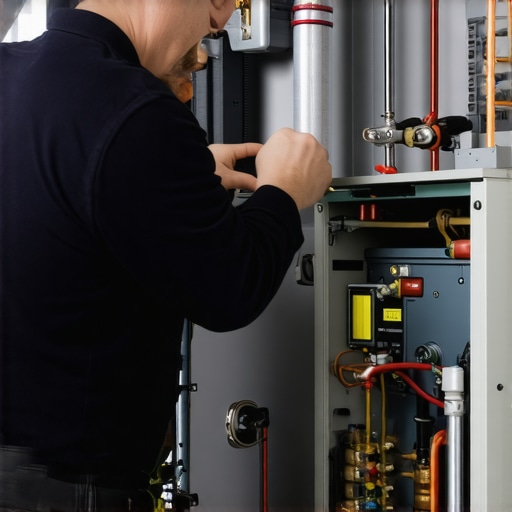
The Critical Airflow Error That Ruins a Farr West Furnace Installation
It is a scenario I see far too often in Northern Utah. A homeowner in Farr West or South Ogden spends thousands of dollars on a top-of-the-line, high-efficiency furnace. They expect lower utility bills, whisper-quiet operation, and a home that stays perfectly toasty when the Wasatch Front winds start to howl. Yet, three months later, they are searching for a heater repair service near me because the brand-new unit is short-cycling, making a whistling noise, or failing to heat the master bedroom.
As an HVAC Service Journeyman and Controls Technician, I call this the “New Furnace Paradox.” The equipment is perfect, but the installation is flawed. The most common culprit isn’t a faulty part from the factory; it is a critical airflow error. Specifically, it is the failure to account for Total External Static Pressure (TESP). In the industry, we often see “box swapping” – where a contractor pulls out an old unit and slides in a new one without ever looking at the ductwork. This oversight is the silent killer of modern heating systems.
The Silent Killer: Understanding Static Pressure
To understand why your new furnace might be struggling, you have to understand static pressure. Think of your HVAC system like the human circulatory system. The furnace is the heart, and the ductwork is the veins and arteries. Static pressure is the resistance the “heart” must overcome to move “blood” (air) through the “veins” (ducts).
If you try to breathe through a tiny coffee stirrer straw, your lungs have to work significantly harder than if you were breathing through a wide mailing tube. When hvac companies install a high-powered, modern blower motor into a duct system designed for 1970s technology, they are essentially forcing that furnace to breathe through a coffee stirrer.
Modern furnaces, particularly those with ECM (Electronically Commutated Motors), are designed to maintain a specific amount of airflow (CFM) regardless of the resistance. If the ductwork is too small or restricted, the motor ramps up its RPMs to overcome the pressure. This leads to three major problems:
- Increased Energy Consumption: The motor uses significantly more electricity to fight the pressure.
- Premature Component Failure: The heat exchanger overheats because not enough air is moving across it to carry the heat away.
- Noise: That “whooshing” or whistling sound isn’t “power” – it’s the sound of air struggling to move through a bottleneck.
If you are experiencing these issues shortly after a new install, you may need a heating and cooling emergency repair to prevent the heat exchanger from cracking. High static pressure is the primary reason why a five-year-old furnace might look like it’s twenty years old on the inside.
Why Ductwork is the “Veins” of Your Home
In many older homes in South Ogden, the original hvac ductwork installation was designed for low-efficiency furnaces that had very different airflow requirements. Old-school furnaces had heavy-duty, single-speed blowers that didn’t care much about precision. Modern high-efficiency units are far more sensitive.
When we perform an air conditioning ductwork replacement or a furnace upgrade, we often find that the return air drop – the part of the ductwork that brings air back to the furnace – is woefully undersized. A furnace cannot blow air out if it cannot pull air in. If your installer didn’t measure the static pressure on both the supply and return sides, they didn’t actually finish the job.
Furthermore, the trend toward high-MERV pleated filters has exacerbated this issue. While these filters are great for air quality, they add significant resistance. If your ductwork is already borderline, adding a thick filter can push the static pressure over the limit. This is why understanding the furnace filter direction mistake that strains your motor is vital for homeowners; even a small error in filter placement can compound an existing airflow problem.
The Critical Error: Skipping Load Calculations
One of the most frequent mistakes made during furnace installation services is the “Rule of Thumb” sizing. A contractor might look at your 2,000-square-foot home in Farr West and say, “You need an 80,000 BTU furnace,” just because that’s what was there before.
This is a technical failure. A true professional performs a Manual J Load Calculation. This calculation considers the home’s insulation levels, window quality, orientation to the sun, and local climate data. If a furnace is oversized – which is common – it will “short cycle.” It turns on, heats the air near the thermostat rapidly, and shuts off before the rest of the house reaches temperature. This constant on-off cycling is brutal on the equipment and often leads to a call for repair heating & cooling systems much sooner than expected.
Short cycling prevents the system from properly dehumidifying in the summer and leads to uneven temperatures in the winter. It’s also a leading cause of blower motor burnout. If you suspect your system is cycling too frequently, keep an eye out for the critical sign your HVAC blower motor is about to quit.
Symptoms of Airflow Failure
How do you know if your Farr West home is a victim of poor airflow? Here is a checklist of symptoms that suggest your installation wasn’t commissioned correctly:
- The “Ghost” in the Vents: Whistling, banging, or “oil-canning” (the sound of metal ducts popping) when the furnace starts.
- The Limit Switch Trip: The furnace shuts down before the house is warm, then restarts a few minutes later. This usually means the internal temperature of the furnace got too high due to low airflow.
- Hot and Cold Spots: The living room is a sauna, but the bedrooms are freezing. This indicates the air isn’t being pushed with enough velocity to reach the ends of the duct runs.
- Sky-High Bills: If your “high-efficiency” furnace costs more to run than your old “clunker,” airflow resistance is likely stealing your savings.
If you notice these signs, it is time to look into hvac system maintenance that includes a full static pressure test. Don’t let a contractor tell you “that’s just how new furnaces sound.” A properly installed system should be nearly silent.
Local Considerations for Farr West & South Ogden
Living in South Ogden or Farr West presents unique challenges for HVAC systems. We deal with extreme temperature swings and high mineral content in the air (which can affect outdoor AC coils). When homeowners search for hvac companies, they often prioritize speed over technical depth.
However, the geography of the Wasatch Front means our furnaces work harder than those in milder climates. An airflow error in a temperate climate might go unnoticed for years; in Utah, it will manifest as a breakdown during the first sub-zero week in January. This is why we emphasize that heating and air conditioning services must include a look at the entire “envelope” of the home.
For instance, homes near the mouth of the canyon often deal with higher dust loads, which can clog secondary heat exchangers if the filtration and airflow aren’t perfectly balanced. If you find yourself needing air conditioning system repair every summer, it might not be the AC unit at all – it might be the furnace’s blower failing to move enough air across the evaporator coil, leading to ice buildup. You can learn more about this in our guide on the one maintenance move that prevents HVAC ice buildup.
The Solution: Commissioning and Maintenance
A “correct” installation doesn’t end when the last screw is driven into the cabinet. It ends with commissioning. This is a process where the technician measures the gas pressure, checks the temperature rise (the difference between the air coming in and the air going out), and verifies the CFM using a flow hood or by calculating it via static pressure charts.
If your technician didn’t bring a manometer (a tool to measure air pressure) to your installation, they didn’t fully install your furnace. They simply placed it. Proper hvac system maintenance should always include a check of these vitals. Skipping these steps is why many homeowners face unexpected repairs. In fact, we’ve documented the real cost of skipping your annual furnace inspection, and it’s almost always higher than the cost of the service call itself.
Furthermore, don’t fall for the common traps. Many people think they need expensive duct cleaning to fix airflow, but that is often a distraction from the real issue of duct sizing. Before you spend money on cleaning, read about the HVAC duct cleaning myth to see what actually needs your attention.
Conclusion: Demand More from Your Install
Your furnace is a 15-to-20-year investment. Don’t let a critical airflow error turn it into a 10-year headache. If you are in Farr West or South Ogden, ensure your contractor is looking at more than just the brand name on the box. They should be looking at your ductwork, your return air capacity, and your home’s specific thermal needs.
When you look for ogdenhvac.org professionals, ask them about static pressure. Ask them for a copy of the Manual J calculation. A technician who understands the science of airflow will be happy to show you their work. A “box swapper” will likely give you a blank stare. Choose the former, and enjoy the comfort and efficiency you actually paid for.
Whether you need a routine checkup or an ogdenhvac.org specialist to diagnose a mystery noise, remember that your HVAC system is a holistic machine. Treat the airflow, and the furnace will take care of itself.