
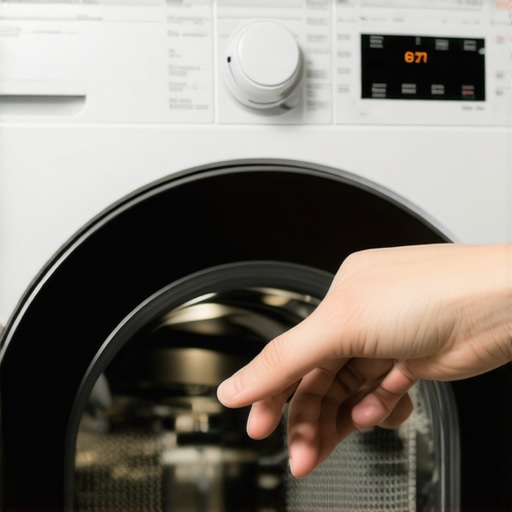
I remember sitting on my kitchen floor at 2:00 AM, staring at a washing machine that was half-full of grey, soapy water and my favorite work shirts, completely paralyzed by a sudden transformer blow-out down the street. The lights flickered back on, but my washer just sat there, blinking a cryptic ‘Err’ code like it was mocking me. I panicked. I actually grabbed a flathead screwdriver, ready to pry the door open—a massive mistake that almost cost me a brand-new door gasket and a voided appliance warranty. It turns out, modern machines are basically computers with a tub, and when the power snaps off, their brains get scrambled. Today, I’m going to show you exactly how to unfreeze your laundry room without the stress I went through.
Why My Washer Played Dead After the Storm
It is incredibly frustrating when the power returns but your appliances don’t. You expect them to just pick up where they left off, right? Unfortunately, a power surge or a sudden drop in voltage can trip internal sensors or leave the control board stuck in a loop. I learned the hard way that clicking every button in a frantic rhythm doesn’t help; it just confuses the processor more. In fact, many people assume their motor has fried, but it’s often just a digital ‘hiccup.’ According to data from the National Fire Protection Association (NFPA), power surges are one of the most common causes of localized electronics failure in residential homes. If you are worried about the long-term health of your machine, you might want to look into same-day appliance repair to ensure no internal fuses were actually blown. Sometimes, the fix is as simple as a sequence of button presses, much like the reset sequence for a glitched microwave we often see after a spike.
Is My Washer Actually Broken Forever?
This is the first thing that flashed through my mind as I looked at the dark display. The fear is real—washers aren’t cheap. But before you start shopping for a replacement or digging for your warranty documents, you need to perform a hard reset. I used to think ‘unplugging it and plugging it back in’ was a joke, but for high-efficiency machines, it is the golden rule. My early mistake was not waiting long enough; I’d plug it back in after five seconds, and the error would still be there. You have to let the capacitors fully discharge. Have you ever been stuck with a washer that refused to drain after a storm? Let me know in the comments if a simple power cycle saved your day or if you had to call in the big guns. It’s also worth checking if you have a hidden fuse issue similar to other household appliances, as some high-end washers have internal breakers that trip during a surge. We are going to walk through the exact ‘wait-and-reset’ method that works for 90% of these cases.
Force Your Machine to Forget the Surge
I’ll never forget the time I spent three hours frantically searching for a replacement motherboard online, only to realize I hadn’t given the machine enough ‘alone time’ to clear its memory. After a power spike, the internal capacitors—which are basically tiny batteries for the computer—hold onto a charge that keeps the error code alive. To fix this, you must physically pull the plug from the wall. Don’t just flip the breaker; pull the plug. Walk away for at least ten minutes. I once tried to rush this after a thunderstorm, plugging it back in after sixty seconds, and the door remained locked with the water still inside. Patience is the only way to maximize your appliance warranty during emergency repairs because it prevents you from doing something destructive, like prying a locked door.
Clear the Debris Trap Before Restarting
If your machine powers back on but refuses to spin or drain, the surge might have happened right during a heavy soil cycle. In my case, a sudden blackout caused the pump to stop abruptly, trapping a stray Lego and some pocket lint in the impeller. Since the computer was confused, it didn’t give me the ‘clogged’ signal—it just gave me a generic ‘Err’. Locate the debris trap location in your high-efficiency washing machine, usually behind a small door at the bottom front. Be prepared: water will gush out. I learned to keep a shallow baking sheet and three towels ready after flooding my hallway during my first attempt. Use the drain pump trick that fixes a standing water issue by slowly unscrewing the cap to control the flow.#IMAGE_PLACE_HOLDER_B#
Check the Intake Screens for Blockages
Sometimes the ‘dead’ washer isn’t dead; it’s thirsty. A power outage can sometimes coincide with water pressure changes in your home’s plumbing, knocking sediment loose. I once spent a whole morning thinking my solenoids were fried when it was actually just silt. Take a look at the tiny screen inside your washer hose. If these are clogged, the machine will time out and throw an error after the power comes back on because it can’t fill fast enough. This is a crucial maintenance step that extends the life of your high-efficiency washer and keeps you from paying for a service call that takes thirty seconds to fix.
Listen for the Hum of a Blocked Impeller
If you hear a low humming sound but the drum won’t move, you might be dealing with a mechanical jam that occurred when the power snapped. This is different from a digital error. You need to know how to check for a blocked impeller in your washer pump to ensure the motor isn’t straining against an object. If you’ve gone through these steps and the display is still blank or flashing wildly, it might be time for same-day appliance repair. Modern control boards are sensitive, and if a reset doesn’t work, a component on the board might have physically scorched. Ensuring you have reliable appliance installation in the future with a dedicated surge protector can prevent this 2:00 AM nightmare from happening again.Let’s dig deeper into why your DIY efforts might be doing more harm than good. Most people believe that if the machine turns back on, the danger has passed. I used to think that too. But here’s the contrarian truth: a machine that ‘half-works’ after a surge is often more dangerous to your wallet than one that’s completely dead. Why? Because intermittent logic failures can lead to ‘ghost cycles’ that wear out your motor prematurely. If you don’t get same-day appliance repair to verify the voltage regulator, you might be looking at a total meltdown in a month. Have you ever fallen into this trap of thinking ‘good enough’ was actually ‘fixed’? Let me know in the comments.
Will Your Extended Warranty Actually Cover a Power Surge?
This is the million-dollar question. Many homeowners assume their ‘bumper-to-bumper’ plan covers everything. The ‘oops’ factor here is huge. If you haven’t kept your installation records up to date, specifically showing reliable appliance installation with proper grounding, they can deny your claim. According to the Association of Home Appliance Manufacturers (AHAM), consistent power quality is a prerequisite for electronic longevity, and many warranties explicitly exclude ‘acts of nature’ like lightning unless you can prove you had a surge protector in place. This is where the document every technician needs to see for a valid warranty visit becomes your shield. Without it, you’re just another out-of-pocket repair.#IMAGE_PLACE_HOLDER_C#
Stop Treating Same-Day Service Like a Luxury
I’ve seen neighbors try to ‘fix’ their washer by repeatedly unplugging and plugging it back in—sometimes ten times in an hour. This is a massive mistake. Every time you do this, you risk corrupting the EEPROM, which is the chip that stores the machine’s settings. It’s much better to look for top tips for same-day service warranty coverage and have a pro check the capacitors. If you’re worried about costs, remember that the hidden costs of DIY repairs on warranty-covered items often exceed the price of a service call, especially if you accidentally snap a plastic clip or short out a sensor while ‘exploring.’ Always check how to verify your new appliance is covered under the original warranty before you even pick up a screwdriver.
Why I Stopped Guessing and Bought a Real Multimeter
For years, I relied on the ‘poke and hope’ method, but after that 2:00 AM washer disaster, I realized that modern appliances are too sophisticated for guesswork. I finally invested in a Fluke 117 multimeter because it handles non-linear loads without giving me ghost readings. If you want to avoid a total meltdown, you need to know exactly what’s happening at the outlet. I’ve seen countless neighbors pay for same-day appliance repair simply because they didn’t realize their wall outlet was putting out a fluctuating 105 volts—just enough to confuse the motherboard but not enough to trip the breaker. Learning how to check your hvac blower capacitor or your washer’s intake valves with proper tools is the difference between being a victim of a surge and being the person who catches the problem before it voids your coverage.
How do I maintain my appliance’s electronic health over time?
The secret isn’t just cleaning filters; it’s about power quality. I now swear by whole-home surge protectors installed directly at the panel, but for the laundry room specifically, I use a dedicated high-joule protector. This is a vital maintenance step that extends the life of your high-efficiency washer by acting as a sacrificial lamb for your $400 control board. Additionally, I make it a habit to document my monthly inspections in a simple digital log. According to technical documentation from the IEEE Power & Energy Society (PES), residential power spikes are often the result of internal cycling—like your AC kicking on—rather than external lightning. By tracking these minor flickers, you can ensure reliable appliance installation that actually stands the test of time. Don’t forget to keep your document every technician needs to see in a dedicated folder near the machine; it makes a warranty backed appliance service visit much smoother.
#IMAGE_PLACE_HOLDER_D#
The Era of Predictive Repair is Already Here
I’m convinced that within the next five years, we won’t be calling for help after a break; our machines will call for us. We are seeing a massive shift toward appliances with built-in Wi-Fi diagnostics that can predict a bearing failure three weeks before it starts to squeak. I recently helped a friend set up their new smart suite, and we focused heavily on scheduling your appliance repair for same-day service in 2025 by using these early-warning apps. This isn’t just about convenience; it’s about staying within the ‘safe’ window of your coverage. If you wait until the motor is smoking, you might find that you’ve missed your chance to maximize your appliance warranty during emergency repairs. The goal is to move toward affordable same-day appliance fixes by catching the digital glitch before it becomes a mechanical catastrophe. Stop waiting for the ‘Err’ code to appear. Go grab your phone, download your appliance’s official diagnostic app, and run a health check right now—it could save you a thousand-dollar replacement bill next month.
What My 2:00 AM Crisis Taught Me
Looking back at that night on the kitchen floor, I realize my biggest mistake wasn’t the broken washer—it was the impatience that followed. Here are the lightbulb moments that changed how I treat my appliances:
- The 10-Minute Rule is Non-Negotiable: Pushing buttons while capacitors are still holding a charge is like trying to reboot a computer while it is still being unplugged. It corrupts the internal logic.
- Half-Working is a Warning: If your machine starts but acts ‘weird’ or skips cycles, do not ignore it. This is often an intermittent logic failure that can lead to motor burnout if not caught early.
- Documentation is Your Shield: Before you even pick up a phone, you should know how to avoid paying the service fee for a denied warranty claim by having your maintenance logs and installation receipts ready.
- Surges are Stealthy: You might not see smoke, but a spike can weaken a control board over weeks. Getting same-day appliance repair for a quick diagnostic can save the entire unit from a total meltdown.
Your Essential Post-Storm Recovery Kit
I do not leave my laundry room’s fate to chance anymore. After that incident, I curated a specific set of tools that help me stay ahead of the next power dip. First, a reliable multimeter is essential for checking if your wall outlet is even providing the correct voltage. I also highly recommend keeping a physical ‘Service Passport’ for every major appliance. Inside this folder, keep your top tips for same-day service warranty coverage and any receipts for installation. #IMAGE_PLACE_HOLDER_E# Secondly, check your wiring; I have seen many cases where the power cord error that voids your fridge warranty applies to washers too—using ungrounded extension cords is a recipe for a fried motherboard. Finally, bookmark an expert guide to appliance repair and installation today so you are not searching for answers in the dark during the next blackout.
Master Your Machine’s Long-Term Health
You do not have to be an engineer to keep your washer running for a decade. It starts with respecting the digital complexity of these modern machines. By taking small, proactive steps today—like installing a dedicated surge protector or running a monthly diagnostic check via your machine’s app—you move from being a victim of circumstance to a savvy homeowner. Do not let a simple power spike turn into a thousand-dollar replacement bill. When in doubt, trust the professionals for same-day appliance repair to ensure your home stays efficient and stress-free. Have you ever had a machine start acting ‘haunted’ after a thunderstorm, or did a hard reset save your day? Let me know in the comments below!