
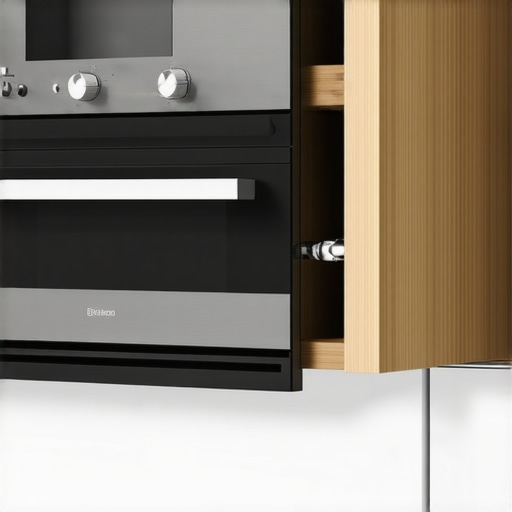
I still remember the smell of the rosemary-rubbed turkey filling the kitchen back in 2018. It was a 25-pound monster, the kind that makes you question your oven rack’s integrity. As I pulled the heavy roasting pan out to baste the bird, I felt a sickening lurch. The entire wall oven—a heavy, stainless steel beast I’d installed myself just weeks prior—began to tilt forward out of the cabinet. My heart stopped. I was one inch away from a face full of hot grease and a shattered glass door. I managed to shove it back in with my hip, sweating and shaking, realizing I had made a rookie mistake that almost cost me my kitchen floor and a trip to the ER. This wasn’t a faulty appliance; it was a faulty installation by yours truly. I had skipped the anti-tip screws because, honestly, I thought the weight of the unit was enough to keep it grounded. I was wrong.
The Day My Thanksgiving Turkey Almost Won the War
That terrifying moment taught me that gravity is a relentless opponent. Most homeowners assume that a wall oven is so heavy it couldn’t possibly move, but physics doesn’t care about your assumptions. When you extend those telescoping racks with a heavy load, you are essentially creating a lever. Without the proper anchors, that lever will pull the top of the oven right out of the cabinet face. If you are currently planning a kitchen renovation, you need to know how to ensure reliable appliance installation in 2025 before you ever slide that unit into the wall. Trust me, the extra ten minutes of work is worth the peace of mind. Have you ever noticed your oven door feeling a bit ‘springy’ or seen the trim pulling away from the wood when you open it? If so, you might be living with a ticking time bomb.
Does a heavy oven really need extra screws?
It’s a fair question, and one I asked myself while staring at the hardware bag leftover from my first DIY attempt. You see the sheer bulk of the appliance and think it’s going nowhere. However, the Consumer Product Safety Commission (CPSC) has reported that thousands of injuries occur every year from tipping ranges and ovens, a statistic that highlights just how common this oversight is. Many contractors in a rush to finish a job will skip the mounting screws that go through the side trim and into the cabinet stiles. They think the friction of the tight fit is enough. It isn’t. When I finally went back to fix mine, I realized I hadn’t followed the expert guide to appliance repair and installation today, which clearly outlines the secondary securing phase. If you’re not confident in your drill work, seeking fast, trustworthy appliance installation near you is the smartest move you can make to protect your family and your cabinetry.
The Critical Step Your Contractor Probably Forgot
Often, the anti-tip mechanism for a wall oven isn’t a separate bracket like you find on a slide-in range; it’s a series of specific mounting holes hidden behind the door seal or decorative trim. If these aren’t piloted and screwed into the solid wood of your cabinets, that oven is essentially just sitting on a shelf. I’ve seen beautiful custom kitchens where the installer skipped this, leading to cracked granite and warped cabinets within a year. Before we get into the literal nuts and bolts of the fix, we need to address why this happens and what you should look for right now to see if your oven is safe. Let’s make sure your next big meal stays in the oven and off the floor.
Stop Your Oven From Doing a Faceplant
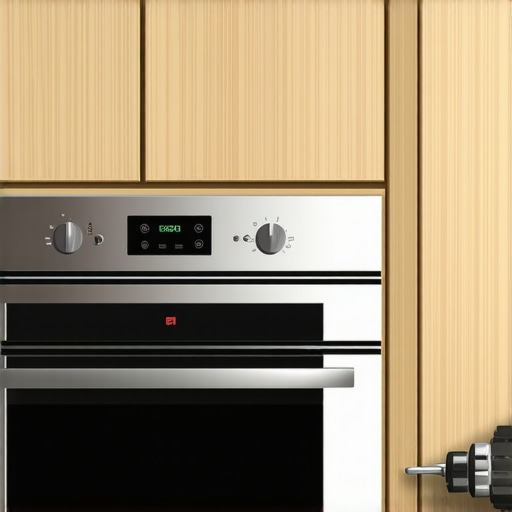
The first thing you need to realize is that the trim on your oven isn’t just a decorative frame; it’s a structural anchor point. Most modern units have pre-drilled holes specifically designed to receive mounting screws that bite into the cabinet stiles. When I went back to fix my own Thanksgiving disaster, I found that the original holes were slightly misaligned with the wood behind them. Instead of forcing it, I had to slightly shim the oven so the screws could find purchase in the solid 3/4-inch plywood rather than just the thin veneer. If you find yourself in over your head, remember that fast, trustworthy appliance installation near you can save you the headache of ruined cabinetry.
The Secret Holes Behind the Door Seal
Open your oven door all the way and look along the vertical sides of the frame. You’ll usually see two to four small holes hidden behind the rubber gasket or trim. These are your lifelines. Many installers skip these because they require you to drill into your expensive custom cabinets, but without them, you’re basically playing Jenga with a 300-degree appliance. I remember a job where the homeowner was terrified of damaging her cherry wood cabinets. I had to explain that a few 1/8-inch pilot holes are a lot better than a shattered oven door. If you’ve already messed up the alignment, you might need to look into same-day appliance repair quick solutions with warranty support to get the unit leveled properly before re-drilling.
Drill Straight or Pay the Price Later
When you’re ready to drill, the most common mistake is going in at an angle. This creates a wedging effect that can actually push the oven out of the cabinet rather than pulling it in tight. Use a 1/8-inch drill bit and keep it perfectly perpendicular to the cabinet face. If the screw head sits proud or sticks out, the door might not seal correctly, which can lead to heat escaping and melting your control knobs. It’s a similar logic to avoiding the mounting mistake that makes your over-the-range microwave sag—precision is far more important than brute force. Once those screws are in, give the oven a firm tug from the top. It shouldn’t budge even a millimeter.
The Power Connection and The Loose Wire Problem
While you have the oven partially out to check your mounting points, this is the best time to inspect the electrical connection. I’ve seen countless DIYers finish a mounting job only to realize they’ve pinched the conduit during the final push. Worse, the vibration of sliding the unit can often reveal the one wire that always loose in your wall oven control board, causing an intermittent error code the first time you try to bake. Always double-check that your mounting screws aren’t anywhere near the electrical wiring or the gas line. If you aren’t sure how to verify the protection of your unit, you should learn how to verify your new appliance is covered under the original warranty before making permanent modifications.
After you’ve secured the unit, take a moment to apply the specific lubricant to use on squeaky oven door hinges. A smooth-moving door puts significantly less stress on those new mounting screws every time you open it to check on a roast. If the unit still feels slightly off, you might be dealing with a leveling issue on the base shelf itself, which is a structural problem that requires pulling the unit back out to shim the platform properly.
Let’s dig deeper into a nuance most people ignore until it costs them a four-figure repair bill. Everyone tells you that a manufacturer’s warranty is an ironclad shield, but in reality, it is often a fragile agreement that can be shattered by a single ‘unauthorized’ turn of a wrench. The common belief is that if a part fails, the company has to fix it. However, the ‘oops’ factor here is massive: many manufacturers consider a DIY installation that doesn’t strictly adhere to local codes as a breach of contract. If you didn’t follow the expert guide to appliance repair and installation today, you might find yourself footing the bill for a lemon that should have been covered.
The Warranty Trap Most Homeowners Fall Into
The contrarian truth is that the most ‘affordable’ repair is often the one where you pay a professional upfront. I’ve seen homeowners try to save $150 on installation only to void a $2,000 protection plan because they didn’t have a licensed technician sign off on the power connection. You must know how to verify your new appliance is covered under the original warranty before you even break the seal on the box. According to a study by the National Association of Home Builders (NAHB), nearly 15% of early appliance failures are linked to improper installation environments, such as poor ventilation or unlevel surfaces, which are specifically excluded from most standard warranties.
Why Does Your Same-Day Repairman Seem to Be in a Hurry?
When you call for same-day appliance repair quick solutions with warranty support, there is a hidden pressure you might not notice. Speed is great, but speed without a diagnostic log is dangerous. A sophisticated technician won’t just swap a part; they will look for the root cause—like a voltage spike or a clogged vent. If they don’t, that same part will fail again in three months. This is what to expect from same-day appliance repair experts who actually care about your long-term appliance health. They should provide you with the document every technician needs to see for a valid warranty visit, which acts as your paper trail if the manufacturer tries to push back later.

The Paper Trail That Saves Your Bank Account
One of the most advanced mistakes I see is the lack of maintenance documentation. You might think keeping the receipt is enough, but why your extended warranty company keeps asking for service logs is because they are looking for an excuse to deny your claim based on ‘owner neglect.’ If you haven’t documented that you’ve cleaned your condenser coils or checked your oven’s calibration, you’re leaving money on the table. If you’re dealing with a sudden breakdown, knowing how to document your fridge failure for an insurance claim can be the difference between a free replacement and a massive credit card charge. Don’t let a lack of records be the reason your claim gets tossed.
Ultimately, your kitchen’s reliability depends on more than just high-end brands; it depends on the precision of the initial set-up and the consistency of your records. If you’re feeling overwhelmed by the technical requirements or the warranty fine print, don’t hesitate to contact us for guidance. Have you ever fallen into the trap of losing your warranty coverage because of a tiny installation oversight or a missing service log? Let me know in the comments. Let’s make sure your next warranty-backed appliance services you can rely on actually deliver when you need them most.
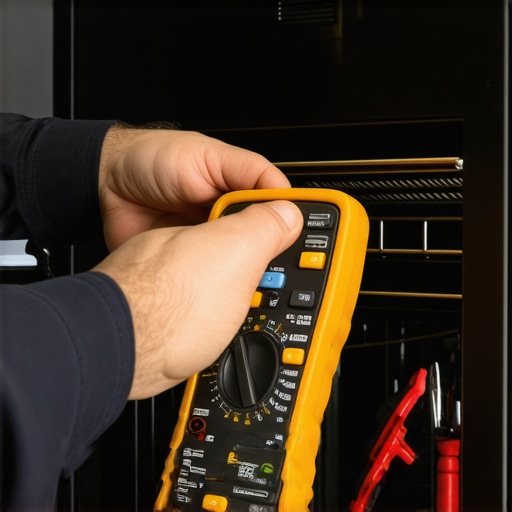
I used to think a basic screwdriver set and a bit of optimism were enough to handle any kitchen crisis. That changed the night I spent four hours trying to figure out why a dishwasher wouldn’t drain, only to realize I was using the wrong gauge of wire for a simple bypass. Now, my go-to is the Fluke 117 Electrician’s Multimeter. It’s not cheap, but it’s the only tool I trust to tell me if a control board is truly dead or if I’m just dealing with a ghostly phantom voltage. When you are trying to find the correct fuse to check when your range won’t turn on 2, having a tool that gives you a clear ‘yes’ or ‘no’ saves you from the expensive mistake of replacing parts that aren’t actually broken.
The Toolkit That Actually Saves Your Weekend
Beyond the multimeter, you need a set of offset wrenches and a high-torque hex key. If you’ve ever had a seized motor, you know that the specific wrench you need to unjam a disposal in seconds is worth its weight in gold. I keep a dedicated ’emergency bag’ that never leaves my utility closet. It includes a non-contact voltage tester—because I’m not interested in being the human ground wire—and a telescopic mirror to peek behind those heavy wall units we talked about earlier. This level of preparedness is exactly what to expect from same-day appliance repair experts who value your time as much as their own. They don’t show up with just a hammer; they show up with precision diagnostics.
How do I maintain my high-end appliances over time?
Maintenance isn’t a ‘once-a-year’ event; it’s a series of small, calculated moves. The Association of Home Appliance Manufacturers (AHAM) specifically recommends cleaning refrigerator condenser coils every six months to prevent compressor burnout, a tip many homeowners ignore until the unit stops cooling entirely. If you have a Golden Retriever like mine, you’ll need the condenser coil cleaning hack for pet owners with hairy dogs to keep that airflow moving. Neglecting this is the fastest way to find yourself scheduling your appliance repair for same-day service in 2025 when the local grid hits a summer heatwave. Consistency is what separates a ten-year appliance from a three-year headache.
The Future of Smart Diagnostics is Already Here
Looking ahead, I predict that within the next three to five years, the ‘DIY vs. Professional’ debate will shift entirely toward software. We are already seeing ‘Bluetooth Mesh’ connectivity in stoves and fridges, but it’s still buggy. If your kitchen feels like a tech support nightmare, you might already know why your smart hub can’t find your bluetooth mesh devices during a critical firmware update. The trend is moving toward predictive failure analysis—where your toaster tells you its heating element is at 80% capacity before it actually snaps. This makes affordable same-day appliance fixes with warranty benefits more feasible because the technician will know exactly which part to bring before they even put their boots on.
Don’t Let Your Warranty Collect Dust
The most advanced maintenance move you can make today is digitizing your service logs. I use a simple cloud-based folder for every major appliance in my house. Every time I swap a filter or tighten a bolt, I snap a photo and upload it. This creates an undeniable record. If you ever need to leverage call for warranty-backed appliance services you can rely on, that digital paper trail is your strongest weapon. Start today by taking five minutes to locate your oven’s serial number and filing it away. If you find yourself staring at a blank screen or a dead heating element, don’t guess—reach out and contact us to ensure your next step is the right one. Try this right now: go to your fridge, pull it out four inches, and check the coils. If they’re dusty, you’ve just found your first project.
Lessons Bought with a Smashed Glass Door
After years of tinkering, I’ve realized that the difference between a pro and a novice isn’t just speed—it’s respect for the manufacturer’s manual. I used to think of those papers as optional reading, but they are actually a legal shield for your bank account. If you want to maximize your appliance warranty during emergency repairs, you have to treat that installation guide like a set of laws. Another lightbulb moment was realizing how much stress a holiday meal puts on your plumbing; I always recommend checking for the drain line clog that always happens after a holiday dinner before you start your next big bake. Finally, never underestimate a leveling leg. A fraction of an inch of tilt can cause an oven door to wear out its hinges years before its time.
#IMAGE_PLACEHOLDER_E#
The Gear That Actually Lives in My Tool Bag
I don’t leave home without my Fluke 117 Multimeter. It’s the gold standard for diagnosing phantom voltage in control boards. I also swear by Knipex Pliers Wrench—they won’t mar the finish on your fancy stainless steel bolts. For documentation, I use Google Drive to scan every receipt and service log immediately; it’s the only way to stay organized when you need top tips for same-day service warranty coverage on the fly. These aren’t just gadgets; they are the barrier between you and a $500 service call for something you could have prevented with a 30-second check.
Your Path to a Stress-Free Kitchen
Taking control of your home’s hardware doesn’t have to be a source of anxiety. By securing your wall oven correctly and keeping a digital trail of your maintenance, you are building a kitchen that lasts decades, not just years. Whether you are doing it yourself or scheduling your appliance repair for same-day service in 2025, the goal is always the same: peace of mind. Your appliances should serve you, not the other way around. Go ahead, check those mounting screws today—your future self will thank you for it.
Have you ever had a DIY project go sideways because of a ‘missing’ part or a skipped step? Let me know in the comments below!