
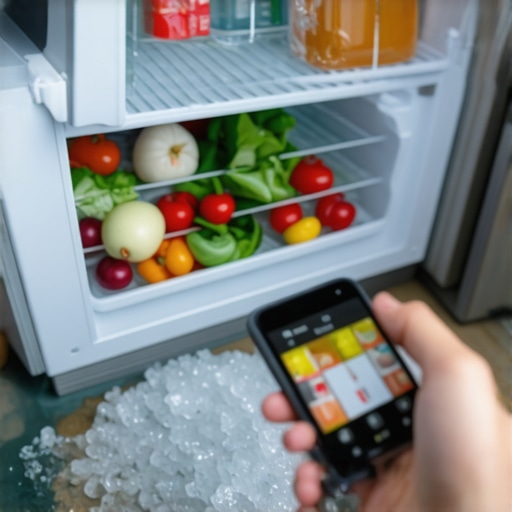
I walked into the kitchen at 2 AM for a glass of water, only to be met by a swampy, humid heat radiating from my stainless steel pride and joy. The silence was deafening. No hum, no click, just the sound of my expensive ribeye steaks slowly reaching room temperature. I realized right then that my fridge had given up the ghost, and my bank account was about to take a massive hit. Most of us just panic and start throwing things out, but that’s where I made my biggest mistake years ago. I tossed everything before taking a single photo, and when I filed my claim, the adjuster essentially laughed me off the phone. Today, I am going to show you exactly how to build an airtight case so you actually get reimbursed for every single ounce of spoiled food and the repair costs.
Your Insurance Claim Starts Before the Food Spoils
Getting a check from your insurance company isn’t about being right—it is about having the paper trail to prove it. When you are dealing with warranty-backed appliance services you can rely on, they often need the same level of detail as your home insurance provider. I used to think a quick snapshot of a warm milk carton was enough evidence. It was not. You need to document the model number, the temperature readings, and even the $20 part that usually fixes a fridge that wont cool if you happen to identify it early. According to the Insurance Information Institute, most standard homeowners policies cover food spoilage up to $500, but only if the cause of the failure is a covered peril like a power surge or a mechanical breakdown not caused by neglect.
Will the Insurance Company Actually Pay for My Groceries?
Most people are terrified that they will spend hours on hold just to be told their claim is denied because they did not have the document every technician needs to see for a valid warranty visit. It is a valid fear! Insurance companies are not in the business of handing out money easily. However, if you follow a specific photo-first workflow, you can learn how to avoid paying the service fee for a denied warranty claim by proving the failure was not your fault. Have you ever tried to file a claim only to realize you had already wiped away the evidence? Let me know, because I have been there, and it is a total gut punch. Let us dive into the specific way you need to photograph your appliance to ensure you do not get left out in the cold.
Capture the Evidence Before the Ice Melts
First, stop touching the thermostat. I know the instinct is to crank it to the coldest setting, but if the compressor is shot, you are just wasting energy and potentially masking the symptoms a tech needs to see. Open the doors and start snapping photos immediately. You need a wide-angle shot of the entire fridge to show the volume of food, followed by close-up shots of high-value items like organic meats or expensive cheeses. This documentation process is remarkably similar to the exact photo evidence needed for an hvac warranty claim. Insurance adjusters look for ‘depreciated value,’ but if you can show a clear brand label on a $50 brisket, they cannot argue with the math. I learned this the hard way during my second major fridge failure. I had a GE Profile stop cooling and I thought I was being organized by just creating a spreadsheet of the lost food. The adjuster called it a ‘wish list’ and denied half the value because I had no visual proof. Now, I never toss a single carton until the photo metadata confirms the date and time of the loss. 
Identify Exactly Where the Cooling Failed
You need to determine if the failure is total or partial. Is the freezer still freezing while the fridge section feels like a sauna? This specific detail is a massive clue for the repair technician and your claim. It helps determine if you are dealing with a fan motor or a damper issue, which is a very common reason why your fridge is getting warm but the freezer is fine. Be extremely careful about trying to ‘jumpstart’ the unit yourself. While it is tempting to poke around the back panel, the hidden costs of diy repairs on warranty covered items often include a voided policy. I once tried to ‘reset’ a control board using a trick I saw online and ended up frying the entire communication bus, turning a $150 relay fix into a $2,500 total loss that my warranty refused to cover because I had tampered with the wiring.
Get the Professional Diagnostic in Writing
Once you have your photos, you need a professional diagnostic report. When the technician arrives, you must ensure they write down the ‘proximate cause’ of the failure. If the invoice simply says ‘fridge broken,’ your insurance claim will die on the vine. You need them to specify ‘mechanical failure of the start relay’ or ‘compressor seized due to internal component failure.’ This is the document every technician needs to see for a valid warranty visit to ensure the manufacturer or the insurance company actually cuts the check. If the repair cost is hovering near the price of a new unit, do not just give up. You can learn how to negotiate a repair instead of a replacement with your warranty provider to ensure you get the maximum value out of your coverage without paying for a brand new appliance out of pocket.
Stop Blaming the Brand and Start Checking the Installer
Most homeowners obsess over whether to buy a Sub-Zero or a Bosch, thinking the brand name is a shield against failure. But here is the hard truth: the most expensive appliance in the world is only as good as the person who plugs it in. In my years of dealing with technicians, I have seen more units ‘die’ because of a sloppy setup than because of a factory defect. Many people assume that fast-trustworthy appliance installation near you just means the guy showed up on time and didn’t scratch the floor. In reality, advanced installation involves verifying the voltage drop and ensuring the unit is perfectly level to prevent the compressor from working overtime. I have seen countless claims denied because of the power cord error that voids your fridge warranty. If you use a thin gauge extension cord or an ungrounded outlet, you are essentially lighting your warranty on fire. Have you ever fallen into this trap by trying to ‘make it work’ with an old outlet? Let me know in the comments because I want to hear your horror stories.
Why Do High-End Electronics Give Up After Only Five Years?
It is the million-dollar question for anyone who just dropped three grand on a smart fridge. We used to have appliances that lasted thirty years because they were purely mechanical. Today, your fridge is basically a computer that happens to keep milk cold. According to a study by the Association of Home Appliance Manufacturers (AHAM), the increased complexity of sensors and control boards makes modern units more susceptible to power fluctuations. This is why learning how to ensure reliable appliance installation in 2025 is different than it was a decade ago. If your installer isn’t checking for a dedicated circuit, your high-tech motherboard is constantly being ‘browned out’ by other appliances, leading to those mysterious 2 AM failures I mentioned earlier.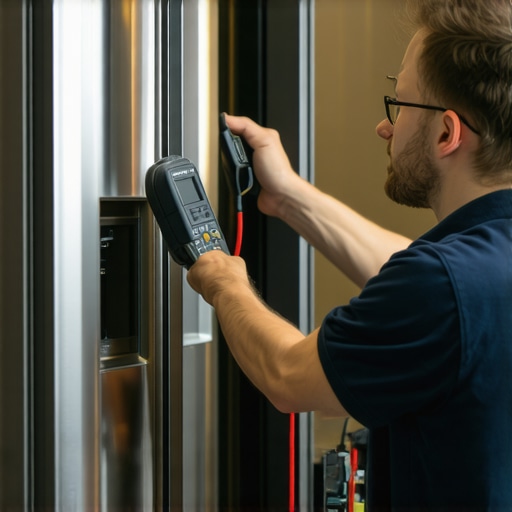
The ‘Same-Day’ Gimmick vs. The Reality of Mitigation
You see ads for scheduling your appliance repair for same-day service in 2025 and assume it is just about convenience. It isn’t. In the eyes of an insurance adjuster, you have a ‘duty to mitigate loss.’ If your fridge dies on a Monday and you wait until Thursday to call a pro, the insurance company can argue that the mold growth or secondary water damage was caused by your negligence, not the appliance failure. I always tell people to look for same-day appliance repair quick solutions with warranty support specifically to stop the clock on the damage. Another nuance people miss is the correct way to ground a gas stove during a kitchen reno. If you are remodeling, your contractor might be a great carpenter but a terrible electrician. A floating ground can send surges through your control board, and guess what? Your warranty provider will spot that in five seconds and deny your claim. To protect yourself, always ask for warranty-backed appliance services you can rely on that explicitly cover the labor and the installation integrity.I’ve realized over the years that owning a luxury fridge or a smart washer is like owning a high-maintenance sports car. You can’t just turn the key and ignore it. My secret weapon isn’t a wrench—it’s an infrared thermometer. I use a Fluke 62 Max specifically because it allows me to log temperature fluctuations without opening the door and losing cold air. When I show a warranty tech a log of temperatures swinging between 34 and 52 degrees, they stop guessing and start replacing parts. This level of detail is exactly what is covered in my expert guide to appliance repair and installation today. If you want to maximize your appliance warranty during emergency repairs, you need to provide data, not just feelings. 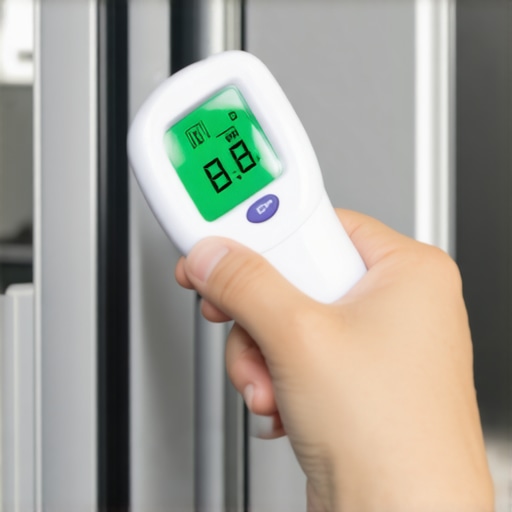
How do I keep my high-end appliances alive for the next decade?
It comes down to friction and airflow. For your oven, I stopped using standard oils years ago because they just gum up with the heat. Now, I only use the specific lubricant to use on squeaky oven door hinges that can withstand 500-degree temperatures without vaporizing. For the fridge, if you have a Golden Retriever like mine, you’re likely suffocating your compressor every single day. I’ve found that the condenser coil cleaning hack for pet owners with hairy dogs is the difference between a ten-year lifespan and a five-year catastrophic failure. Even your laundry room needs love; many people forget that the maintenance step that extends the life of your high efficiency washer is actually about preventing biofilm buildup that eats away at the drum seals from the inside out. The Association of Home Appliance Manufacturers (AHAM) recently noted in a technical bulletin that nearly 30% of electronic control board failures are secondary results of poor airflow causing localized overheating. I predict that by 2027, we won’t even be doing this manually. We are seeing a massive shift toward AI-integrated sensors that will predict a bearing failure months before it actually happens. Until then, you need to be the brain of your kitchen. Go grab a digital infrared thermometer right now and check your freezer floor—if there’s a sheet of ice, your drain is clogged, and your next warranty claim is already brewing.
Hard Truths I Learned While Staring at a Warm Fridge
After losing several hundred dollars in prime ribeye, I realized that the insurance company operates on data, not empathy. One of the biggest shocks was finding out that a mechanical failure does not always guarantee a payout if they can prove you skipped basic maintenance. Always keep a digital folder of your receipts and service logs. If you are dealing with a sudden breakdown, knowing how to avoid paying the service fee for a denied warranty claim can save you an extra $100 right off the bat. Another lightbulb moment for me was the realization that same-day does not just mean fast service—it means legal mitigation. By scheduling your appliance repair for same-day service in 2025, you are effectively proving to your insurer that you did everything in your power to save the food. This proactive stance makes your claim significantly harder for them to deny.
The Survival Kit for High-End Kitchens
I do not leave my appliance health to chance anymore. My toolkit now includes a few non-negotiables that have saved me thousands. First, I keep a high-quality infrared thermometer handy to catch temperature drifts before they become disasters. Second, I always keep a tube of the specific lubricant to use on squeaky oven door hinges to prevent mechanical strain on my range. For my fridge, I swear by a long-reach vacuum attachment—it is the core of the condenser coil cleaning hack for pet owners with hairy dogs that keeps my compressor from overheating during humid summer months. Finally, I always keep a copy of my expert guide to appliance repair and installation today bookmarked. It serves as my checklist whenever a technician visits, ensuring I get the right documentation for a valid claim. These tools are not just gadgets; they are my defense against the denied stamp.
Take Control of Your Kitchen Before the Next Spike
Appliances are getting smarter, but they are also getting more temperamental. You do not have to be a master electrician to protect your home. By being the proactive owner who documents everything and relies on warranty-backed appliance services you can rely on, you turn a potential $3,000 nightmare into a manageable hiccup. Don’t wait for the 2 AM silence to start your maintenance routine. Start today, and you will never have to worry about a warm steak again. Have you ever had an insurance claim denied because of a missing photo or a lack of documentation? Let me know in the comments below!