

I stood on my porch two years ago, clutching a soggy receipt while my dishwasher dumped three gallons of greywater onto my hardwood floor. The boutique shop where I’d bought it just six months prior had a giant ‘Going Out of Business’ banner draped across its windows the week before. I felt like a total sucker. I’d paid for the ‘gold-tier’ coverage, but now the people who sold it to me were gone. My first instinct was to panic and start looking for a replacement, but then I realized my biggest mistake: I had been treating the retail store like they were the ones who actually fixed the machines. That realization changed everything for me, and today, I’m going to show you how to navigate the messy world of post-closure claims so you don’t end up paying out of pocket for a manufacturer’s responsibility.
Your Warranty Doesn’t Vanish with the Storefront
Most homeowners don’t realize that their protection usually lives in two different worlds. You have the factory promise and the store’s add-on. I once spent four hours on hold with a disconnected local number before I finally dug into my files and learned the difference between a manufacturer warranty and a service contract. If the store closes, their ‘in-house’ perks might die with them, but the brand that built the machine—be it Samsung, LG, or Whirlpool—is still very much on the hook. You need to pivot your focus immediately to the manufacturer. When you find yourself in this spot, the goal is to secure warranty-backed appliance services you can rely on by going straight to the source. According to the Federal Trade Commission, the Magnuson-Moss Warranty Act ensures that manufacturers must honor their written warranties regardless of the retailer’s status, provided you can prove purchase and date. This is why it is so critical that you verify your new appliance is covered under the original warranty the moment you bring it home.
Does the manufacturer actually care about my ‘orphan’ appliance?
It is easy to feel like the manufacturer will find any excuse to blow you off, especially since you didn’t buy ‘direct.’ I’ve been there, arguing with a rep who couldn’t find my serial number in their system. But here is the secret: they want you to stay loyal to the brand even if the store failed. You just have to speak their language. If they try to push back, you should know how to negotiate a repair instead of a replacement with your warranty provider to get the best result. Don’t let them tell you that the store’s closure voids the mechanical coverage. Have you ever reached out to a brand for help only to be told you’re ‘out of luck’ because the dealer is gone? Let me know in the comments, because you might be surprised at the leverage you actually have. We are going to dive into the specific steps to find your hidden paperwork next, including how to avoid the deductible trap in most third-party appliance protection plans that can drain your wallet even when the repair is ‘free.’
Don’t Let a Closed Sign Cost You Thousands
The store might be a hollowed-out shell now, but your appliance’s birth certificate is still valid in the eyes of the people who actually built it. Think of the retailer as a middleman in a dating app; they set you up, but they aren’t responsible for the marriage. When that middleman vanishes, you have to go straight to the head of the family. The first thing you need to do is stop looking for the storefront and start looking for the silver sticker hidden on your machine. This label is your golden ticket. It contains the model and serial number that bypasses any retail record. Once you have that, you can move from being a victim of a business closure to an informed consumer with a valid legal claim.
Grab Your Serial Number Before You Dial
Before you even pick up the phone, you need to conduct a documentation audit. Most people fail because they don’t have the document every technician needs to see for a valid warranty visit. This isn’t just your receipt; it’s the proof of installation date and the specific machine identifiers. I remember when my dryer started thumping like a heavy heartbeat just weeks after my local appliance mart folded. I didn’t waste time calling a disconnected number. I pulled the unit out, snapped a high-resolution photo of the silver tag, and cross-referenced it with my digital receipt. This preparation meant that when I finally spoke to a manufacturer rep, I wasn’t just another complaining customer—I was a claimant with evidence. 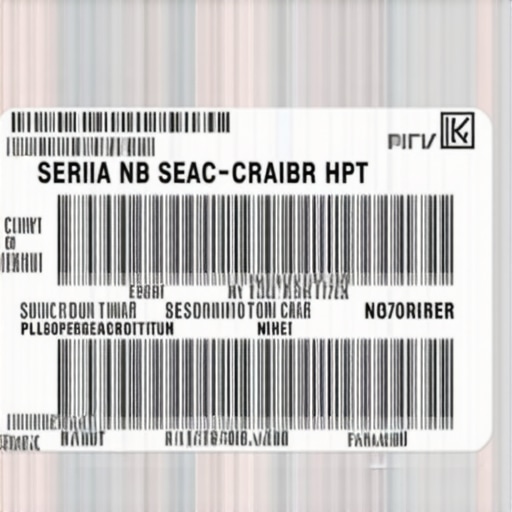
Force the Manufacturer to Honor the Contract
Manufacturers often use the retailer as a buffer to avoid direct service costs, but the law is on your side. You need to explicitly state that you are seeking coverage under the original factory warranty, not a third-party add-on. If you are dealing with a breakdown, you should maximize your appliance warranty during emergency repairs by insisting on an authorized service provider. Don’t let them send you to a random handyman who isn’t certified by the brand, as this could void the rest of your coverage. When you follow the expert guide to appliance repair and installation today, you’ll see that brand-authorized techs have direct access to the manufacturer’s parts catalog, which is vital when the store that usually stocks them is gone.
Demand a Service Tech Who Actually Shows Up
Speed is your best friend when a store closes because it prevents you from falling into a backlog of other ‘orphaned’ customers. You want to know what to expect from same-day appliance repair experts before they arrive. They should be able to verify your warranty status on-site. Be extremely wary of companies that ask for a diagnostic fee upfront without checking your coverage first. I once got burned by a technician who charged me $125 just to tell me he couldn’t process my warranty. Now, I always learn how to avoid paying the service fee for a denied warranty claim by getting the authorization code from the manufacturer before the van even pulls into my driveway. This shifts the financial risk back onto the brand where it belongs. Finally, stay vigilant about the deductible trap in most third-party appliance protection plans. If the store’s preferred insurer is still solvent, they might try to hit you with a ‘convenience fee’ for using a non-partnered shop. Refuse it based on the fact that their partner—the store—no longer exists.
Speed Is the Shiny Object That Blinds Homeowners
We live in a world of instant gratification, and when your fridge dies, you want it fixed yesterday. But here is my contrarian take: obsessing over 24-hour turnaround times is often a recipe for a repeat failure. Most people believe that the best technician is the one who can get there today, but in my years of dealing with ‘orphaned’ appliances, I have found that speed often masks a lack of preparation. A technician rushing through a packed schedule might miss the subtle signs of a failing control board or use a universal part that doesn’t quite meet the manufacturer’s specs. While you can find affordable same-day appliance fixes with warranty benefits, you must ensure that speed isn’t a substitute for a thorough diagnostic.
Why is your ‘repaired’ machine breaking down again after just one month?
The nuance most people miss involves the distinction between a ‘fix’ and a ‘solution.’ A fix gets the machine running; a solution addresses the root cause, which is often a hidden installation error. According to a study by the Association of Home Appliance Manufacturers (AHAM), nearly 25% of service calls for relatively new appliances are actually related to improper installation rather than mechanical failure. If you are looking for fast trustworthy appliance installation near you, you need to verify that the tech isn’t just plugging it in but actually checking the environment—like the water pressure or the circuit load. This is especially true if you are scheduling your appliance repair for same-day service in 2025, as modern smart appliances are far more sensitive to voltage fluctuations than the ‘dumb’ machines our parents owned.
The Fatal Installation Trap You Didn’t See Coming
The biggest ‘oops’ factor I see with DIYers and even some ‘pro’ installers is ignoring the physical geometry of the setup. Take dishwashers, for example. If you ignore the drain line slope rule for a silent dishwasher operation, you are setting yourself up for a pump failure within two years. The pump has to work twice as hard to push water up a poorly angled hose, and no warranty on earth will cover that because it’s considered an installation error, not a manufacturing defect. This is why you must how to ensure reliable appliance installation in 2025 by insisting on a post-install test run that monitors for vibration and drainage noise. If the installer leaves before the first cycle finishes, they haven’t finished the job. 
The Documentation Loophole That Denies Your Claim
Here is the advanced mistake that even savvy homeowners make: they assume the warranty starts when the machine is installed. In reality, many manufacturers start the clock the moment the unit leaves the warehouse or the retail floor. If your boutique store had a unit sitting in the back for six months before they sold it to you, your coverage might be shorter than you think. You need to maximize your appliance warranty during emergency repairs by providing the delivery receipt, not just the purchase order. Have you ever been denied a claim because of a date discrepancy? Let me know in the comments, because there is a specific way to challenge those denials using the retailer’s closing records as leverage. By following an expert guide to appliance repair and installation today, you can learn to spot these ‘hidden’ expiration dates before they cost you a $400 repair bill. Always remember that same-day appliance repair quick solutions with warranty support only work if your paperwork is as solid as the parts being installed.
The Three Tools I Keep in My Kitchen Drawer
I’ve realized that most “emergency” calls happen because we treat our appliances like magical boxes rather than mechanical systems. I don’t own a professional van, but I do keep three specific items in my utility drawer that have saved me thousands. First is a multimeter. If you want to know if your stove is dead or if it’s just a blown fuse, you need to test for continuity. I personally use a digital model because it’s rugged enough to survive a drop but simple enough for a non-electrician. Knowing how to check your HVAC blower capacitor without a multimeter is a great skill, but having the tool makes it definitive. Second is a hex key specifically for the sink. When the motor just hums, I reach for the specific wrench you need to unjam a disposal in seconds. It’s a $10 fix that avoids a $150 service call.
How do I maintain my high-efficiency machines over the long haul?
Maintenance isn’t about deep cleaning once a year; it’s about preventing the “slow death” caused by biofilm and debris. For my washer, I perform the maintenance step that extends the life of your high efficiency washer every thirty days: I pull the debris trap. Most people don’t even know it exists until their laundry room floods. According to the Appliance Standards Awareness Project (ASAP), modern high-efficiency machines rely on tighter tolerances, meaning even a tiny blockage in the pump can trigger a cascading electronic failure. I also make it a habit to check the debris trap location in your high-efficiency washing machine because finding a stray bobby pin there is much cheaper than replacing a pump. Don’t forget about the door seals, either; I’ve mastered the secret to deep cleaning a front load washer gasket to prevent that mildew smell that eventually eats through the rubber. 
Self-Healing Tech is the Future of Home Repairs
Looking ahead, the days of scratching our heads over flashing lights are numbered. I predict that by 2030, the “internet of things” will evolve into “autonomous repair networks” where your dishwasher identifies the pressure valve error that causes your dishwasher to overflow and automatically schedules a tech before the water hits your floor. We are already seeing this with smart diagnostics. If you have a modern range, you should learn how to read the error codes on your high-end induction cooktop via the manufacturer’s app. This data is the bridge between a “guessing game” and a precision fix. My challenge to you: Go to your laundry room tonight, find the access panel at the bottom of your front-loader, and clear that debris trap. You might find five dollars in change, but you’ll definitely save five hundred in future repairs.
The Expensive Truth About ‘Quick Fixes’ I Learned the Hard Way
After years of managing ‘orphaned’ appliances, I’ve realized that the most dangerous thing you can do is assume someone else is looking out for your interests. When a store folds, they take their customer service department with them, leaving you to fight the manufacturer alone. My biggest lightbulb moment was discovering that the serial number is actually more important than the paper receipt. If you have that silver sticker, you have a direct line to the factory. Another hard truth? Most ‘authorized’ technicians are just independent contractors. You have to be the manager of your own repair process. This is why I always tell people to look for the third-party warranty loophole that saves you hundreds on parts before they agree to any out-of-pocket costs.
My Personal Toolkit for Home Mastery
I don’t expect you to become a full-time repair person, but having a few specific resources will stop you from being intimidated by a flashing error code. First, I swear by a dedicated digital folder where I store the exact photo evidence needed for an hvac warranty claim and every appliance receipt. Second, always search online for the ‘Service Manual,’ not just the ‘User Manual.’ The service manual contains the diagnostic tree that professional techs use. Third, I keep a curated list of same-day appliance repair quick solutions with warranty support so I’m never scrambling when a leak starts at midnight. These resources transform you from a panicked homeowner into an informed advocate for your own property.
You Are Your Own Best Protection
A closed storefront can feel like a dead end, but it’s actually an opportunity to take control of your home’s mechanical ecosystem. By shifting your focus from the retailer to the manufacturer and staying organized, you ensure that your investments remain protected for their full lifespan. Don’t let a ‘Going Out of Business’ sign be the end of your peace of mind. Whether you are dealing with a faulty fridge or learning how to ensure reliable appliance installation in 2025, the real power is held in your digital documentation. Have you ever successfully forced a manufacturer to honor a warranty after a store closed? Let me know your story in the comments below!