
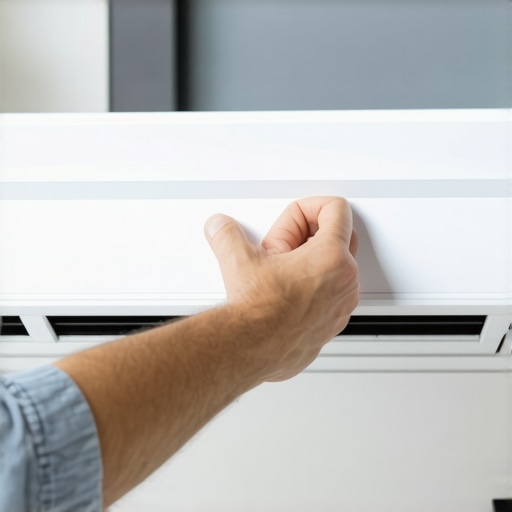
I remember standing in my hallway last July, sweat dripping down my neck, staring at my air conditioner like it was a traitor. Every time the compressor kicked on, a wave of what I can only describe as ‘damp gym bag’ rolled through the house. It was visceral—that heavy, humid scent that sticks to the back of your throat. It was embarrassing. I actually had a guest ask if I’d been forgetting to do my laundry. I did what most people do: I bought those expensive pleated filters, splurged on high-end candles, and even installed a dozen plug-in air fresheners. Nothing worked. I even considered calling for same-day appliance repair because I was convinced the internal motor was burning out or something equally expensive. But the smell persisted, mocking my efforts. It turns out, I was ignoring the one humble piece of plastic where bacteria loves to throw a thriving, smelly party. We’re going to stop that smell today, and it won’t cost you a fortune in professional fees or a full replacement.
That Funky Sock Smell Isn’t Just Your Imagination
When I first started DIYing my home maintenance, I made a massive mistake that I still cringe about today: I poured a gallon of straight bleach down the drain pan thinking it would sanitize everything in its path. All it did was create harsh fumes, corrode my metal components, and leave the house smelling like a neglected public pool for a week. I didn’t realize that the real culprit is a biological slime known in the industry as ‘dirty sock syndrome.’ This is caused by mold and bacteria colonies thriving on the evaporator coils and deep within the condensate line. It’s an incredibly common issue, especially in humid climates, but if you ignore it, you might eventually find yourself wondering why your ac is spitting water from the vents because that slime turned into a full-blown blockage. According to the Environmental Protection Agency (EPA), indoor air pollutants can be two to five times higher than outdoor levels, and a clogged, moldy AC drain is a primary contributor to this stagnant, toxic air. Have you ever felt like your AC was actually making you feel more stuffy or causing a headache the moment it turns on?
Does This DIY Maintenance Actually Work for Long-Term Odor Control?
You might be skeptical. After all, if a simple cleaning move could fix it, why wouldn’t the HVAC companies lead with that as their first suggestion? The truth is, they’d often rather sell you an expensive UV light system or a full chemical coil cleaning. While those advanced solutions have their place, mastering the drain line vacuum secret is often all it takes to clear the blockage and the odor in one fell swoop. If you’re worried about your protection plan or the fine print, just remember to keep the exact photo evidence needed for an hvac warranty claim before you start poking around with your tools. Today, I’m going to show you exactly how to flush that system so you can breathe easy again without spending a dime on a service call.
Suck Out the Sludge with a Wet-Dry Vac
To truly get rid of that damp smell, you have to treat your AC drain line like a clogged straw in a thick milkshake. Gravity and a little water won’t move that biological sludge once it’s settled. I learned this the hard way two years ago when I tried to blow out the line with a bicycle pump. Instead of clearing the clog, the pressure built up until a massive glob of gray, jelly-like bacteria shot back out of the pipe and splattered all over my utility room floor. It was a disgusting lesson in physics. The more effective, less messy method is to use suction from the outside. Locate your PVC condensate exit—usually a small white pipe near your outdoor condenser unit—and utilize the drain line vacuum secret for fixing ac drip leaks. Wrap a wet rag around the end of the pipe and your vacuum nozzle to create an airtight seal. Turn the vacuum on for 30 to 45 seconds. You’ll likely hear a ‘thunk’ as the clog clears, followed by a rush of stagnant water that’s been fueling that awful scent inside your home. 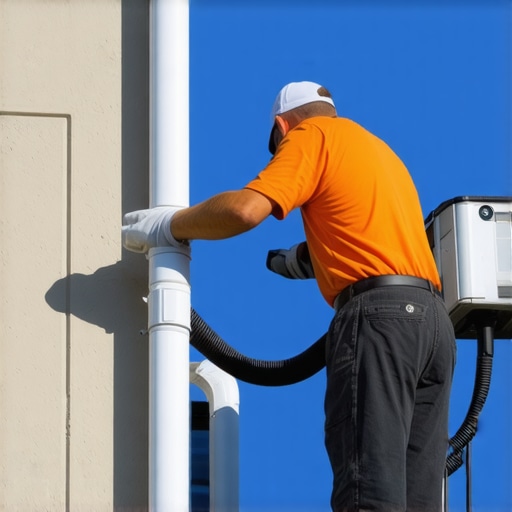
Kill the Odor at the Source with Vinegar
Once the physical blockage is gone, you need to sanitize the environment so the smell doesn’t return within a week. While I previously mentioned my disastrous bleach experiment, the safer and more effective solution is a simple 50/50 mix of distilled white vinegar and warm water. Vinegar is an acetic acid that breaks down the structural integrity of mold and algae without being corrosive enough to melt your PVC joints or damage the internal metal fins. If you bypass this step, you’re just waiting for the next colony to grow, which might lead you to search for same-day appliance repair when the unit eventually overflows. Pour about two cups of this mixture into the T-shaped vent pipe near your indoor air handler. Let it sit for 30 minutes before turning the AC back on. This dwell time is critical; it’s the difference between a surface rinse and a deep clean that keeps your air smelling crisp.
Check Your Drain Pan for Standing Water
If you’ve cleared the line but the smell persists, you might have a drainage slope issue. Water should never sit in the emergency drain pan located under your indoor unit. Think of it like a kitchen sink; if it doesn’t tilt toward the drain, you get stagnant pools. You can apply the drain line slope rule for an odor-free dishwasher to your HVAC setup; if the unit isn’t perfectly level or slightly pitched toward the exit, the water won’t move.
Document Your Work to Protect Your Warranty
Before you put the access panels back on, take a clear photo of the clean drain pan and the clear line. Most homeowners don’t realize that insurance and warranty providers often look for ‘negligent maintenance’ as a reason to deny a claim. Having the one maintenance record that saves your appliance warranty claim in your digital folder can save you thousands if your compressor fails later. If you are dealing with a newer unit that was recently installed and is already smelling, it’s worth reviewing how to ensure reliable appliance installation in 2025 to verify that the secondary drain port wasn’t plugged by a lazy installer. Keeping these records ensures you stay within the top tips for same-day service warranty coverage if a more serious mechanical issue arises.People often assume that having a protection plan means they are immune to repair costs, but in my experience, that is rarely the case. You need to distinguish between a manufacturer warranty and a third-party service contract. While the former covers factory defects, the latter is essentially an insurance policy where the fine print can be your worst enemy. If you haven’t looked into the difference between a manufacturer warranty and a service contract, you might be expecting a free fix for a problem caused by simple wear and tear. According to a study by Consumer Reports, a significant number of appliance owners find that their extended coverage actually excludes the very components that fail most often, like gaskets or plastic trim. This is where most homeowners get blindsided by the deductible trap in most third-party appliance protection plans. You might call for a repair thinking it is covered, only to find the service fee and deductible nearly match the price of a new unit. Have you ever fallen into this trap? Let me know in the comments.
Why Does Your Warranty Provider Keep Rejecting Valid Claims?
It usually comes down to proof of neglect. If you cannot show that you have been doing the basic work—like the AC flushing we just talked about—they have an easy out. This is exactly why your extended warranty company keeps asking for service logs whenever a major component like a compressor or a motor dies. They want to see that you did not let the system choke on its own sludge. If you are currently in the middle of a breakdown, you need to know how to maximize your appliance warranty during emergency repairs so you are not forced into a denied claim corner. The key is to document everything, from the original installation date to the last time you vacuumed those coils. If you are dealing with a company that is being difficult, you can often learn how to avoid paying the service fee for a denied warranty claim by challenging their assessment with your own photo evidence. 
Stop Paying for Problems You Could Have Avoided at Install
I’ve seen countless neighbors get a great deal on a new unit only to have it fail within eighteen months. Usually, the issue isn’t the machine; it is the setup. Many people think they can save a few bucks by hiring a general handyman, but failing to follow how to ensure reliable appliance installation in 2025 can lead to persistent drainage issues or electrical imbalances. A common mistake is a technician skipping the secondary drain line entirely, which is a recipe for mold. If you are looking for professional help, make sure you understand what to expect from same-day appliance repair experts—they should be checking the slope and the seals, not just plugging it in. Furthermore, remember that same-day service usually refers to the diagnostic visit; to ensure you are actually getting a solution, look into scheduling your appliance repair for same-day service in 2025 to understand how parts availability affects the timeline. Mastering these nuances is the difference between a house that smells like a spa and a house that feels like a money pit.
Upgrade Your Toolkit with These Professional Secrets
While the wet-dry vac is a great start, I’ve found that consistency is the real secret to avoiding a breakdown. I personally keep a stash of Nu-Calgon Pan-Treat tablets in my utility closet. These aren’t your typical grocery store cleaners; they are industrial-grade biocides that prevent the biological gel from forming in the first place. If you’re already seeing significant sludge build-up, you might need same-day appliance repair to clear the internal blockages, but these tablets are your long-term insurance policy. I also recommend picking up a dedicated AC flush kit with a CO2 canister if you have a particularly stubborn line that simple suction won’t fix. I also started using a dedicated digital HVAC maintenance log. It sounds nerdy, but keeping the one maintenance record that saves your appliance warranty claim has literally saved me $1,200 on a control board replacement last year because I could prove I wasn’t negligent. 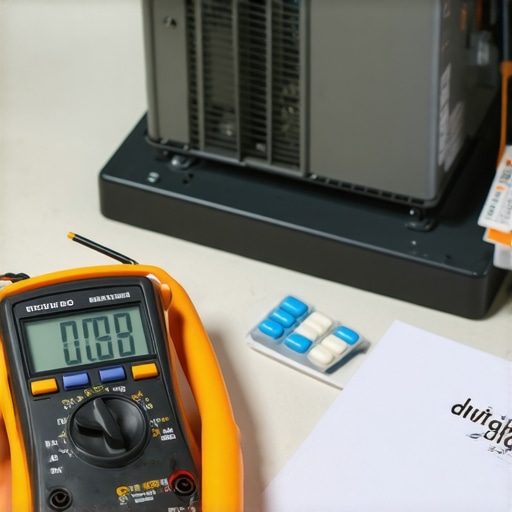
The Future of Home Repairs Is Getting Smarter
We are moving toward a world where you won’t have to guess if your drain is clogged. New systems are beginning to integrate IoT moisture sensors and ultrasonic flow meters that alert your phone before a single drop of water hits your floor. This shift toward predictive maintenance will change how we view the expert guide to appliance repair and installation today. Instead of reacting to a damp smell, your thermostat will likely send a push notification that it’s time for a vinegar flush. I expect that by 2027, most high-end units will come standard with automated self-cleaning drain cycles. Even then, knowing the basics like the condenser coil cleaning hack for pet owners with hairy dogs will remain essential as long as we have physical fans and coils that interact with the real world.
How Can I Keep My HVAC Efficient for the Next Decade?
It’s all about the airflow and the chemical balance. According to ASHRAE Standard 62.1-2022, failing to manage condensate properly is the number one cause of degraded indoor air quality in residential buildings. This means you need to be proactive rather than reactive. Beyond the drain line, check your filters every 30 days—no exceptions. A restricted filter puts undue stress on the blower motor, leading to premature failure and costly motor swaps. If you have a high-end unit, look for the maintenance contract clause that saves you on labor costs to ensure that a professional eyes your system at least once a year. This isn’t just about comfort; it’s about protecting a five-figure investment. My challenge to you: Go to your air handler right now and check the secondary drain pan. If there is even a millimeter of standing water, get that vacuum out and clear it before it becomes a crisis.I remember standing in my hallway last July, sweat dripping down my neck, staring at my air conditioner like it was a traitor. Every time the compressor kicked on, a wave of what I can only describe as ‘damp gym bag’ rolled through the house. It was visceral—that heavy, humid scent that sticks to the back of your throat. It was embarrassing. I actually had a guest ask if I’d been forgetting to do my laundry. I did what most people do: I bought those expensive pleated filters, splurged on high-end candles, and even installed a dozen plug-in air fresheners. Nothing worked. I even considered calling for same-day appliance repair because I was convinced the internal motor was burning out or something equally expensive. But the smell persisted, mocking my efforts. It turns out, I was ignoring the one humble piece of plastic where bacteria loves to throw a thriving, smelly party. We’re going to stop that smell today, and it won’t cost you a fortune in professional fees or a full replacement.
That Funky Sock Smell Isn’t Just Your Imagination
When I first started DIYing my home maintenance, I made a massive mistake that I still cringe about today: I poured a gallon of straight bleach down the drain pan thinking it would sanitize everything in its path. All it did was create harsh fumes, corrode my metal components, and leave the house smelling like a neglected public pool for a week. I didn’t realize that the real culprit is a biological slime known in the industry as ‘dirty sock syndrome.’ This is caused by mold and bacteria colonies thriving on the evaporator coils and deep within the condensate line. It’s an incredibly common issue, especially in humid climates, but if you ignore it, you might eventually find yourself wondering why your ac is spitting water from the vents because that slime turned into a full-blown blockage. According to the Environmental Protection Agency (EPA), indoor air pollutants can be two to five times higher than outdoor levels, and a clogged, moldy AC drain is a primary contributor to this stagnant, toxic air. Have you ever felt like your AC was actually making you feel more stuffy or causing a headache the moment it turns on?
Does This DIY Maintenance Actually Work for Long-Term Odor Control?
You might be skeptical. After all, if a simple cleaning move could fix it, why wouldn’t the HVAC companies lead with that as their first suggestion? The truth is, they’d often rather sell you an expensive UV light system or a full chemical coil cleaning. While those advanced solutions have their place, mastering the drain line vacuum secret is often all it takes to clear the blockage and the odor in one fell swoop. If you’re worried about your protection plan or the fine print, just remember to keep the exact photo evidence needed for an hvac warranty claim before you start poking around with your tools. Today, I’m going to show you exactly how to flush that system so you can breathe easy again without spending a dime on a service call.
Suck Out the Sludge with a Wet-Dry Vac
To truly get rid of that damp smell, you have to treat your AC drain line like a clogged straw in a thick milkshake. Gravity and a little water won’t move that biological sludge once it’s settled. I learned this the hard way two years ago when I tried to blow out the line with a bicycle pump. Instead of clearing the clog, the pressure built up until a massive glob of gray, jelly-like bacteria shot back out of the pipe and splattered all over my utility room floor. It was a disgusting lesson in physics. The more effective, less messy method is to use suction from the outside. Locate your PVC condensate exit—usually a small white pipe near your outdoor condenser unit—and utilize the drain line vacuum secret for fixing ac drip leaks. Wrap a wet rag around the end of the pipe and your vacuum nozzle to create an airtight seal. Turn the vacuum on for 30 to 45 seconds. You’ll likely hear a ‘thunk’ as the clog clears, followed by a rush of stagnant water that’s been fueling that awful scent inside your home.
Kill the Odor at the Source with Vinegar
Once the physical blockage is gone, you need to sanitize the environment so the smell doesn’t return within a week. While I previously mentioned my disastrous bleach experiment, the safer and more effective solution is a simple 50/50 mix of distilled white vinegar and warm water. Vinegar is an acetic acid that breaks down the structural integrity of mold and algae without being corrosive enough to melt your PVC joints or damage the internal metal fins. If you bypass this step, you’re just waiting for the next colony to grow, which might lead you to search for same-day appliance repair when the unit eventually overflows. Pour about two cups of this mixture into the T-shaped vent pipe near your indoor air handler. Let it sit for 30 minutes before turning the AC back on. This dwell time is critical; it’s the difference between a surface rinse and a deep clean that keeps your air smelling crisp.
Check Your Drain Pan for Standing Water
If you’ve cleared the line but the smell persists, you might have a drainage slope issue. Water should never sit in the emergency drain pan located under your indoor unit. Think of it like a kitchen sink; if it doesn’t tilt toward the drain, you get stagnant pools. You can apply the drain line slope rule for an odor-free dishwasher to your HVAC setup; if the unit isn’t perfectly level or slightly pitched toward the exit, the water won’t move.
Document Your Work to Protect Your Warranty
Before you put the access panels back on, take a clear photo of the clean drain pan and the clear line. Most homeowners don’t realize that insurance and warranty providers often look for ‘negligent maintenance’ as a reason to deny a claim. Having the one maintenance record that saves your appliance warranty claim in your digital folder can save you thousands if your compressor fails later. If you are dealing with a newer unit that was recently installed and is already smelling, it’s worth reviewing how to ensure reliable appliance installation in 2025 to verify that the secondary drain port wasn’t plugged by a lazy installer. Keeping these records ensures you stay within the top tips for same-day service warranty coverage if a more serious mechanical issue arises.People often assume that having a protection plan means they are immune to repair costs, but in my experience, that is rarely the case. You need to distinguish between a manufacturer warranty and a third-party service contract. While the former covers factory defects, the latter is essentially an insurance policy where the fine print can be your worst enemy. If you haven’t looked into the difference between a manufacturer warranty and a service contract, you might be expecting a free fix for a problem caused by simple wear and tear. According to a study by Consumer Reports, a significant number of appliance owners find that their extended coverage actually excludes the very components that fail most often, like gaskets or plastic trim. This is where most homeowners get blindsided by the deductible trap in most third-party appliance protection plans. You might call for a repair thinking it is covered, only to find the service fee and deductible nearly match the price of a new unit. Have you ever fallen into this trap? Let me know in the comments.
Why Does Your Warranty Provider Keep Rejecting Valid Claims?
It usually comes down to proof of neglect. If you cannot show that you have been doing the basic work—like the AC flushing we just talked about—they have an easy out. This is exactly why your extended warranty company keeps asking for service logs whenever a major component like a compressor or a motor dies. They want to see that you did not let the system choke on its own sludge. If you are currently in the middle of a breakdown, you need to know how to maximize your appliance warranty during emergency repairs so you are not forced into a denied claim corner. The key is to document everything, from the original installation date to the last time you vacuumed those coils. If you are dealing with a company that is being difficult, you can often learn how to avoid paying the service fee for a denied warranty claim by challenging their assessment with your own photo evidence.
Stop Paying for Problems You Could Have Avoided at Install
I’ve seen countless neighbors get a great deal on a new unit only to have it fail within eighteen months. Usually, the issue isn’t the machine; it is the setup. Many people think they can save a few bucks by hiring a general handyman, but failing to follow how to ensure reliable appliance installation in 2025 can lead to persistent drainage issues or electrical imbalances. A common mistake is a technician skipping the secondary drain line entirely, which is a recipe for mold. If you are looking for professional help, make sure you understand what to expect from same-day appliance repair experts—they should be checking the slope and the seals, not just plugging it in. Furthermore, remember that same-day service usually refers to the diagnostic visit; to ensure you are actually getting a solution, look into scheduling your appliance repair for same-day service in 2025 to understand how parts availability affects the timeline. Mastering these nuances is the difference between a house that smells like a spa and a house that feels like a money pit.
Upgrade Your Toolkit with These Professional Secrets
While the wet-dry vac is a great start, I’ve found that consistency is the real secret to avoiding a breakdown. I personally keep a stash of Nu-Calgon Pan-Treat tablets in my utility closet. These aren’t your typical grocery store cleaners; they are industrial-grade biocides that prevent the biological gel from forming in the first place. If you’re already seeing significant sludge build-up, you might need same-day appliance repair to clear the internal blockages, but these tablets are your long-term insurance policy. I also recommend picking up a dedicated AC flush kit with a CO2 canister if you have a particularly stubborn line that simple suction won’t fix. I also started using a dedicated digital HVAC maintenance log. It sounds nerdy, but keeping the one maintenance record that saves your appliance warranty claim has literally saved me $1,200 on a control board replacement last year because I could prove I wasn’t negligent.
The Future of Home Repairs Is Getting Smarter
We are moving toward a world where you won’t have to guess if your drain is clogged. New systems are beginning to integrate IoT moisture sensors and ultrasonic flow meters that alert your phone before a single drop of water hits your floor. This shift toward predictive maintenance will change how we view the expert guide to appliance repair and installation today. Instead of reacting to a damp smell, your thermostat will likely send a push notification that it’s time for a vinegar flush. I expect that by 2027, most high-end units will come standard with automated self-cleaning drain cycles. Even then, knowing the basics like the condenser coil cleaning hack for pet owners with hairy dogs will remain essential as long as we have physical fans and coils that interact with the real world.
How Can I Keep My HVAC Efficient for the Next Decade?
It’s all about the airflow and the chemical balance. According to ASHRAE Standard 62.1-2022, failing to manage condensate properly is the number one cause of degraded indoor air quality in residential buildings. This means you need to be proactive rather than reactive. Beyond the drain line, check your filters every 30 days—no exceptions. A restricted filter puts undue stress on the blower motor, leading to premature failure and costly motor swaps. If you have a high-end unit, look for the maintenance contract clause that saves you on labor costs to ensure that a professional eyes your system at least once a year. This isn’t just about comfort; it’s about protecting a five-figure investment. My challenge to you: Go to your air handler right now and check the secondary drain pan. If there is even a millimeter of standing water, get that vacuum out and clear it before it becomes a crisis.
Everything I Wish Someone Told Me Before My AC Smelled Like a Gym Bag
The biggest mistake I ever made wasn’t skipping a service call—it was assuming my warranty would cover the consequences of my own laziness. I’ve since learned that biological film doesn’t just smell; it acts as a corrosive agent that eats away at your system’s efficiency from the inside out. If you’re ever in doubt about whether your unit’s struggle is electrical or environmental, knowing how to check your hvac blower capacitor without a multimeter can help you rule out mechanical failure before you start deep-cleaning. Most importantly, if you are setting up a new home, demand fast trustworthy appliance installation near you to ensure your drainage is pitched perfectly from day one.
My Personal Survival Kit
To keep my air crisp and my warranty intact, I never let my utility closet run low on these three essentials: a high-powered wet-dry vacuum, industrial-grade condensate tablets, and a digital log of every action I take. I also keep this expert guide to appliance repair and installation today bookmarked for those moments when a simple vinegar flush isn’t enough to solve the problem. These tools are the barrier between a healthy home and a thousand-dollar repair bill. #IMAGE_PLACEHOLDER_E#
Ready to Breathe Fresh Air Again?
You don’t need a degree in mechanical engineering to keep your home smelling like a spa. By taking twenty minutes every few months to vacuum your lines and treat the pan, you are doing more for your home’s longevity than most homeowners do in a decade. Your AC is a workhorse, but even the strongest horse needs a clean stable. Did your drain line thunk when you finally applied the vacuum, or was it surprisingly clear? Let me know your results in the comments below!