
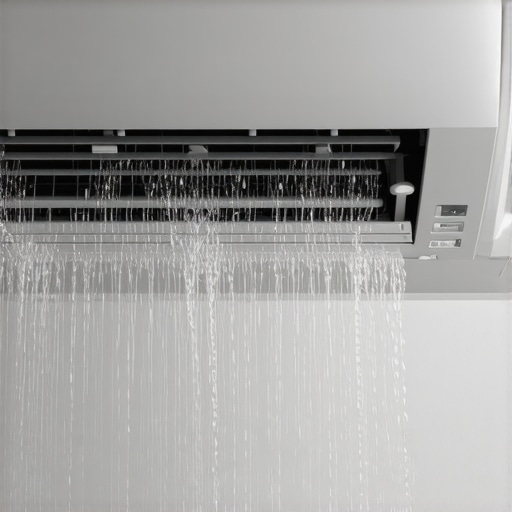
There I was, mid-July, lounging on the couch after a long day when a cold drop of water hit my forehead. Then another. I looked up at the vent, expecting a leaky pipe, but no—my air conditioner was literally spitting at me. It felt like my house was crying, and honestly, with the potential repair bill flashing before my eyes, I wanted to cry too. This wasn’t just a little condensation; it was a mini-monsoon right in my living room. If you are seeing droplets flying out of your registers, you are likely panicking about the cost of a new unit. I have been in those exact damp shoes. Early on, I made the classic rookie mistake of just sticking a bucket under the drip and ignoring it for a week, thinking it was just ‘humidity.’ That move almost cost me a fortune in mold remediation and drywall repair. Today, I am going to walk you through exactly why this happens and how we can stop the spray before it ruins your flooring. We will dive into the simple fixes you can do yourself and when it is time to call for professional same-day appliance repair to save your sanity.
That Moment I Realized It Was Raining in My Living Room
Most people assume that water coming out of a vent means the machine is dying, but usually, it is just a cry for help from a system that is choked up. When I finally stopped mopping and started investigating, I found that my evaporator coil was a frozen block of ice. According to the Department of Energy, even a small amount of dirt on a coil can reduce system efficiency by 21%, leading to the very freezing and spitting issues you are seeing now. If your unit is acting up, you should first check the HVAC filter direction to ensure you aren’t accidentally suffocating your blower motor. A starved system gets too cold, freezes over, and eventually, that ice melts and gets kicked out by the fan. It is a messy cycle, but one we can definitely break.
Will this require a total system replacement?
I know the fear. You hear a gurgle, see a splash, and immediately start browsing for new units. But hold on. Often, the culprit is a simple blockage. I once spent hours stressing over a replacement only to realize I just needed the drain line vacuum secret to clear out a clump of algae. Before you assume the worst, check your records; having the one maintenance record that saves your warranty can be the difference between a free fix and a massive invoice. We are going to look at everything from why your AC lines are sweating to the simple physics of airflow. Have you noticed the water getting worse when the humidity spikes outside, or is it a constant spray regardless of the weather? Let me know in the comments, because that detail matters more than you think.
Stop the Sludge Before It Drowns Your Ceiling
If your vents are spitting, your condensate drain pan is likely full to the brim. Normally, moisture drips off the evaporator coils into a specialized pan and slides down a PVC pipe to the exterior of your home. However, algae, dust, and microbial growth love to create a thick, jelly-like ‘slug’ that blocks the exit. When I first encountered this, I thought my drain pan was cracked and spent forty minutes with a flashlight and a mirror only to realize the water was backing up and being pulled into the blower fan. That fan acts like a high-speed paddle wheel, catching the standing water and spraying the overflow right into your ductwork. It is a messy situation that can lead to permanent water damage if you do not act quickly.
Clear the Clog with a Vacuum
To fix this without a massive service bill, you need the drain line vacuum secret. You head outside, find the PVC exit—usually a white pipe near the foundation—and use a wet-dry shop vac to suck the blockage out. I once tried to clear a line by blowing into it with a garden hose; do not do that. I ended up with a face full of gray swamp water and a bigger mess inside the unit. Instead, wrap a wet rag around the vacuum hose and the pipe to create a tight seal. You will hear the vacuum motor strain for a few seconds, and then—thwack—a nasty chunk of gunk hits the canister. It is the sound of saving hundreds of dollars. #IMAGE_PLACE_HOLDER_B#
Check for Ice and Airflow Issues
If the vacuum trick does not immediately solve the spray, peek at your evaporator coils located inside the air handler. If they look like a solid block of ice, your system is literally suffocating. This is often caused by the HVAC filter direction error that chokes the motor. Low airflow makes the coils too cold, freezing the moisture that should be draining away. When that ice starts to melt partially, the fan catches the heavy droplets and flings them through the register. You might also be dealing with the evaporator fan obstruction issues where a failing motor is not spinning fast enough to move the air, leading to the same icy buildup. Be extremely careful when inspecting these aluminum fins; they are as delicate as a house of cards and can be crushed by a single misplaced finger.
Protect Your Wallet and Your Warranty
Before you start tearing the entire cabinet apart, remember that aggressive DIY ‘surgery’ can be risky. You need to understand the wear and tear clauses that might void your warranty. If you accidentally break a sensitive pressure sensor or a wire while poking around, the manufacturer might deny your next legitimate claim. For those with active coverage, it is worth checking what an extended warranty really covers when your AC quits. Sometimes, a professional intervention is fully covered, giving you access to warranty-backed appliance services that guarantee the fix for months to come. Knowing what to expect from same-day appliance repair experts can help you decide if the risk of a DIY mistake is worth the potential savings. If the spray persists after clearing the line, scheduling your appliance repair for same-day service in 2025 is the safest way to prevent mold from taking root in your attic or crawlspace.
Let’s dig deeper into the mechanics of your HVAC system. Most people assume that once the drain line is clear, the spitting should stop instantly. However, here is a contrarian take: sometimes, the very act of over-cleaning or using high-pressure air can dislodge internal insulation that then blocks the secondary drain port, making the problem worse. You might think you are being proactive, but without an expert guide to appliance repair and installation today, you might be treating the symptom rather than the systemic pressure issue. Have you ever fallen into the trap of fixing one thing only to have two more break? Let me know in the comments.
Is the water spray a sign of a failing compressor or just a pressure imbalance?
This is the question that separates the amateurs from the pros. While a clog is the usual suspect, advanced technicians look at the static pressure. If your ductwork is undersized for your unit’s blower motor, it creates a vacuum effect that literally pulls water out of the drain pan and into the air stream. According to the Air Conditioning Contractors of America (ACCA), improper equipment sizing and duct design can lead to chronic moisture carry-over, which no amount of vacuuming will fix. If you are seeing this, you need to look at how to ensure reliable appliance installation in 2025 to verify your system was actually set up for your home’s specific layout.
The ‘Oops’ factor often happens when homeowners try to ‘recharge’ their own coolant using those DIY cans from the hardware store. This is a massive trap. Overcharging a system leads to liquid refrigerant entering the compressor—a phenomenon known as ‘slugging’—which can cause the unit to shake, spit, and eventually die. Instead of a simple fix, you are looking at a massive replacement cost. This is exactly why what to expect from same-day appliance repair experts includes a professional manifold gauge test, not a guess-and-check approach.
Protect Your Coverage While Fixing the Leak
Before you grab the pipe wrench, check your paperwork. Many homeowners do not realize that opening the sealed refrigerant loop or modifying the cabinet can trigger the wear and tear clauses that might void your warranty. If you are in a panic, it is better to maximize your appliance warranty during emergency repairs by calling a certified tech who can document the failure as a mechanical issue rather than ‘user interference.’ Watch out for the deductible trap in most third-party appliance protection plans; sometimes the service fee is higher than the actual part, making it smarter to opt for affordable same-day appliance fixes with warranty benefits directly from a local specialist. #IMAGE_PLACE_HOLDER_C# Knowing the top tips for same-day service warranty coverage ensures that when the pro arrives, you are not paying out of pocket for a factory defect.
To stop the spray permanently, you need more than just a shop-vac. I personally keep a stainless steel fin comb in my utility drawer. Unlike the plastic multi-tools that often snap or skip, a metal comb allows you to straighten the evaporator fins with surgical precision. This ensures that moisture doesn’t get trapped in bent aluminum and blown out by the high-velocity fan. If you have already checked the HVAC filter direction error that strains your motor, this tool is your next logical step in ensuring laminar airflow across the coils.
Grab These Tools to Keep Your Air Dry
According to technical maintenance bulletins from Trane, a global leader in HVAC manufacturing, failing to maintain a clean condensate drain pan is the leading cause of secondary property damage in residential cooling systems. They recommend using specialized pan tablets like Nu-Calgon Pan-Treat to prevent the white slime—a resilient bacterium called Zoogloea—from forming a jelly-like blockage. I drop two of these tablets into the pan every spring. It is the best five-dollar investment I have ever made to keep my affordable same-day appliance fixes with warranty benefits from becoming an annual emergency. #IMAGE_PLACE_HOLDER_D#
How do I maintain my AC drainage system over the long term?
Consistency is the secret sauce to a dry living room. Every six months, I perform a gravity test where I pour a gallon of warm water into the primary pan to ensure it exits the house foundation within thirty seconds. If the water lingers or gurgles, you are looking at a potential backup that will eventually hit the blower motor. Documenting these flushes is essential for how to prove periodic maintenance to keep your warranty valid. If you are not comfortable opening the internal cabinet to access the pan, scheduling your appliance repair for same-day service in 2025 is the most efficient way to have a pro perform the heavy lifting while creating a paper trail for your records.
The Future of Leak Prevention
I predict that by 2026, we will see a massive shift toward integrated ultrasonic flow sensors in residential units. These sensors will be able to detect a micro-clog by measuring the change in sound frequency as water passes through the PVC, shutting down the compressor before a single drop ever hits your flooring. Until that tech becomes standard, you need to be your own advocate. Make sure you have the warranty document you must save before discarding the box safely filed away. If you want to take action today, go out and buy a dedicated wet-dry vac adapter specifically for 3/4-inch PVC pipe. It creates an airtight seal that makes the suction method actually work instead of just whistling air. If you are still seeing moisture after a deep clean, consult an expert guide to appliance repair and installation today to check for mechanical faults in the pan slope.
What My Soaked Carpet Taught Me About HVAC Health
Looking back at that mid-summer monsoon in my living room, the biggest lesson wasn’t just about plumbing; it was about paying attention to the whispers before they became screams. I learned that a tiny hiss from a vent or a slight musty smell is the system’s way of asking for a filter change. More importantly, I realized that many homeowners skip the most critical step: verifying the how to ensure reliable appliance installation in 2025 protocols to make sure their drain lines were pitched correctly from day one. If the pipe doesn’t have a natural slope, gravity won’t help you, no matter how much you vacuum.
Another lightbulb moment was realizing that my DIY pride shouldn’t get in the way of my wallet. Sometimes, the risk of triggering the wear and tear clauses that might void your warranty is too high. It is far better to have a pro handle the high-voltage components while you focus on the simple maintenance. Lastly, never underestimate the power of a paper trail. Keeping the one maintenance record that saves your appliance warranty claim in a dedicated folder is the only way to win a dispute with a manufacturer if a major component fails prematurely.
The Toolkit for a Drip-Free Summer
If you want to avoid the spitting vent syndrome, I highly recommend building a small HVAC emergency kit. First, get a dedicated wet-dry vacuum with a custom PVC adapter; it’s the only way to get a true seal on those 3/4-inch lines. Second, invest in a set of pan tablets to kill algae before it becomes a slug. I also swear by the stainless steel fin comb for keeping airflow laminar and efficient. #IMAGE_PLACE_HOLDER_E# If you’re ever in doubt about a more complex issue, I always refer back to an expert guide to appliance repair and installation today to ensure I’m not making a rookie mistake that could lead to a ceiling collapse.
For those who prefer a set it and forget it approach, look into warranty-backed appliance services you can rely on. Having a professional come out once a year to flush the lines and check refrigerant levels is significantly cheaper than a midnight emergency call. I also suggest bookmarking top tips for same-day service warranty coverage so you know exactly what to say to the dispatcher to get priority service during a heatwave.
Confidence Over Condensation
You don’t have to live in fear of the next water drop hitting your forehead. By understanding the relationship between airflow, drainage, and pressure, you’ve already taken the biggest step toward home mastery. Whether you choose to clear the line yourself or decide on scheduling your appliance repair for same-day service in 2025, you are now equipped to handle the moisture before it handles you. Stay cool, stay dry, and remember that a well-maintained system is the quietest, most invisible luxury in your home.
Have you ever found a mysterious puddle under your vents or heard a strange gurgle coming from your walls? Let me know what the culprit was in the comments below!