
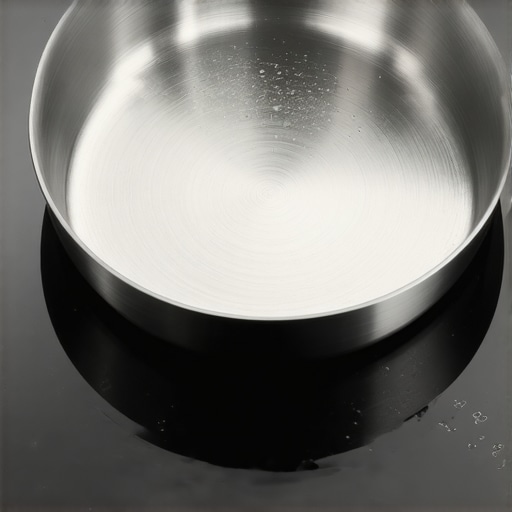
I’ll never forget the first night I hosted a dinner party with my brand-new induction cooktop. I was halfway through a delicate reduction when this piercing, high-pitched squeal erupted from the glass surface. It sounded like a digital mosquito trapped in a megaphone. My guests stopped talking, my dog started howling, and I stood there frantically pushing buttons, feeling like I’d just wasted thousands of dollars on a lemon. It turns out, that noise—while bone-chilling—is rarely a sign of a dying appliance. I’ve spent years tinkering with high-end kitchens and helping folks through an expert guide to appliance repair and installation today, and I can tell you that most of the time, the fix is simpler than you think. Today, I’m going to walk you through why that sound happens and how to silence it forever.
Stop the Noise Before It Drives You Crazy
If you’re hearing a whistle or a squeal, you’re not imagining it. Induction technology uses electromagnetic fields to heat your cookware directly. It’s incredibly efficient, but it also creates a phenomenon called magnetostriction. According to scientific research on electromagnetic induction, these magnetic coils vibrate at incredibly high frequencies. When these vibrations hit a certain resonance with your cookware, you get that lovely orchestral screech. Early in my DIY journey, I actually made the expensive mistake of calling out a tech for same-day appliance repair quick solutions with warranty support, thinking my internal board was fried. I felt like a total amateur when he showed me that the squeal was just my multi-layered pan vibrating against the glass.
Is my expensive new stove actually broken?
This is the first thing everyone asks when they hear that sound. You worry that you’ve bought a defective unit or that the wiring is failing. Rest assured, unless the stove is throwing an error code or refusing to heat, the squeal is usually a mechanical vibration, not an electrical failure. Before you go down the rabbit hole of filing claims for warranty-backed appliance services you can rely on, check your pan first.
Why your pots and pans are likely the culprits
Most people do not realize that induction-compatible does not always mean induction-silent. If your pan is made of multiple layers of metal bonded together, those layers can vibrate at different rates, creating a friction-based squeal. I’ve found that heavy, solid cast iron or high-quality carbon steel almost never makes this noise. Have you ever noticed the sound gets louder when you use the Boost or high-heat settings? That’s because the frequency of the magnetic field is at its peak. If you’re still hearing it, you might want to check why your new induction stove is making a buzzing sound to see if the symptoms overlap. Have you ever had to abandon a meal because the noise was just too much to handle? Let us dive into the settings and hardware tweaks that can quiet things down once and for all.
Switch Your Pan Before You Call a Pro
The quickest way to diagnose that annoying squeal is the “swap test.” If you’re using multi-clad cookware—those pans made of sandwiched layers of stainless steel and aluminum—the layers are likely vibrating against each other. I once spent an hour trying to level a client’s stove, convinced it was an installation error, only to realize their thin-bottomed copper pan was the culprit. Swap it for a single-piece cast iron or carbon steel skillet. If the noise vanishes, your stove is fine, but your cookware is essentially acting as a tuning fork. Before you assume the worst, knowing the difference between a manufacturer warranty and a service contract is vital, as many standard warranties won’t cover noise caused by external accessories like pans. 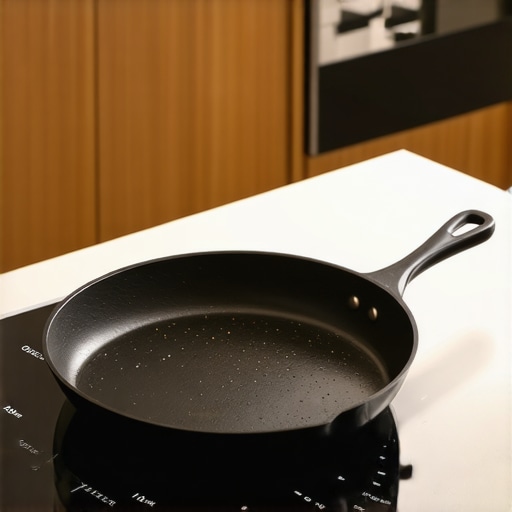
Weight is Your Best Friend
Lightweight pans are the most common offenders in the world of induction noise. Think of your cooktop like a high-powered speaker; a light piece of paper on that speaker will rattle and buzz, while a heavy brick stays silent. If you can’t part with your multi-clad pans, try to find ones with a significantly thicker base. This adds the necessary mass to resist the high-frequency vibrations of the magnetic field. If the noise persists even with heavy iron, you might be facing a deeper mechanical issue. Before you jump into a complex fix, consider the hidden costs of diy repairs on warranty covered items to ensure you don’t accidentally void your expensive coverage.
Why You Should Dial Back the Boost Setting
Most of us use the “Boost” or “Power” mode to boil water in sixty seconds flat. While impressive, this is when the electromagnetic coils are working their hardest. It creates a massive amount of energy that forces the pan to vibrate at its maximum resonance. I’ve found that simply dropping the power level from a 10 down to an 8 often cuts the noise by 70% while only adding a minute to your cook time. It’s a small trade-off for your peace of mind. If you are worried about the electronics struggling at high power, check out top tips for same day service warranty coverage to see how usage impacts your protection.
Align Your Cookware to Silence the Vibration
Placement matters more than you think. If the pan is even slightly off-center from the induction ring, the magnetic field becomes uneven. This imbalance can cause the pan to “dance” almost invisibly on the glass, creating a high-pitched friction sound. I learned this during a chaotic holiday meal where my large stockpot was screaming like a tea kettle. I nudged it half an inch to the left, centering it perfectly over the coil, and the sound stopped instantly. If your unit was recently put in, you should verify how to ensure reliable appliance installation in 2025 to confirm the internal coils are seated correctly.
Check for Loose Internal Components
Sometimes the squeal isn’t the pan at all, but a loose internal cooling fan or a vibrating mounting bracket. If the noise happens when the cooktop is on but no pan is present, or if it continues after the pan is removed, the cooling fan is likely the source. This is a common situation where homeowners seek out same-day appliance repair quick solutions with warranty support. A technician can often tighten a single screw on the fan housing to stop the rattle. Just remember that if you go the professional route, you need to keep the one maintenance record that saves your appliance warranty claim handy so you can get the service visit covered.Most people assume that if their high-end induction cooktop starts making a racket, the only move is to call the manufacturer’s corporate line. I’m going to tell you something controversial: that’s often the slowest path to a quiet kitchen. In my experience, manufacturer-certified techs are trained primarily to look for “hard failures”—meaning the stove won’t turn on or it isn’t heating properly. When it comes to the complex physics of magnetostriction and acoustic resonance, many factory-level training programs barely scratch the surface. They will likely tell you “it’s normal operation” and leave you with a hefty service bill. Instead, you need someone who understands expert guide to appliance repair and installation today practices to look at the structural mounting of the induction coils themselves.
Can I really fix this without voiding my protection?
It is the question that keeps many DIYers up at night. The nuance lies in the specific legal difference between “adjustment” and “repair.” Tightening a mounting screw or adjusting a vibrating cooling fan bracket usually does not trigger a breach of terms, but swapping internal power boards or soldering components definitely will. If you are ever unsure, always check the hidden costs of diy repairs on warranty covered items before you pick up a screwdriver. According to a technical study by the Association of Home Appliance Manufacturers (AHAM) regarding induction acoustics, up to 15% of perceived “electronic failures” are actually related to improper cabinet ventilation or mounting tension.
Avoid the No Fault Found Service Trap
The biggest mistake I see homeowners make is calling for same-day appliance repair quick solutions with warranty support without being able to reproduce the sound on demand. If the tech arrives and the stove is silent, you are stuck paying a diagnostic fee for a “No Fault Found” result. This is a common hurdle when trying to maximize your appliance warranty during emergency repairs. You must record the sound on your phone and note exactly which pans and settings, like the Boost mode, triggered the screech. 
The Truth About Same-Day Service Promises
Everyone wants a fix right now, but “same-day” does not always guarantee the specific part is on the truck. Real expertise means the technician arrives with the right diagnostic tools, not just a generic toolkit. If you are scheduling your appliance repair for same-day service in 2025, ask specifically if they have experience with induction harmonics and coil resonance. If you get a blank stare, move on to another provider. A bad installation can also be the root cause; always verify how to ensure reliable appliance installation in 2025 protocols were followed, particularly regarding the clearance between the cooktop and the wall or the oven below. Have you ever fallen into this trap of paying for a repair only to be told nothing is wrong? Let me know in the comments. If you need more specific help for your situation, you can always contact us for personalized advice.If you are ready to move beyond basic troubleshooting and really master the long-term health of your kitchen gear, you need to look at the tools that professionals use to diagnose invisible issues. I highly recommend investing in a set of high-quality silicone induction mats. I personally use the 10-inch Silpat mats because they create a thin, heat-resistant barrier that absorbs those micro-vibrations without blocking the magnetic field. It is the most effective low-tech tool in my kit for silencing a ‘screaming’ pan. For the real tech geeks, I suggest downloading an accelerometer app like ‘Physics Toolbox Sensor Suite.’ Place your phone on the counter directly adjacent to the cooktop while it is running; it will show you exactly which burner is causing the most chassis resonance. This data is invaluable when you are determining what to expect from same-day appliance repair experts because you can provide empirical evidence that the vibration isn’t just a figment of your imagination.
How can I keep my induction stove quiet for the long haul?
Sustained silence depends entirely on airflow. Most induction units begin to develop louder fan noises or electronic ‘whines’ because of thermal throttling. This happens when the internal cooling fans have to work at 100% capacity because the cabinet below is too cramped. I always refer to the expert guide to appliance repair and installation today to verify that the ventilation gap beneath the unit meets the industry-standard 2-inch minimum requirement. 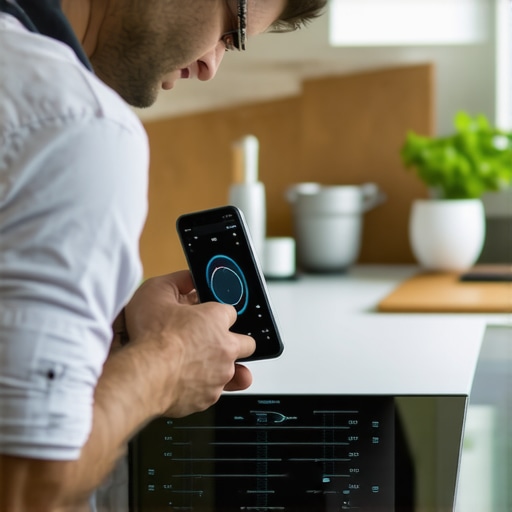 You should also keep a detailed log of your cleaning schedule. Using the one maintenance record that saves your appliance warranty claim is the best way to ensure that if a fan motor eventually burns out, the manufacturer cannot claim the failure was due to dust buildup or neglect.
AI is Coming for Your Silent Kitchen
Looking ahead, I predict that by 2028, we will see ‘Active Noise Cancellation’ integrated directly into high-end cooktops. Much like your favorite noise-canceling headphones, the internal coils will be able to emit an out-of-phase magnetic frequency to neutralize the audible squeal of lower-quality pans. Until then, you have to be your own technician. If you are struggling with a persistent whine that won’t go away, try this advanced tip: apply a tiny drop of food-grade mineral oil to the bottom of your pan before cooking. It changes the surface tension just enough to stop the microscopic ‘slippage’ that creates high-frequency harmonics. Before you attempt any internal adjustments, remember top tips for same day service warranty coverage and check if your unit was properly leveled by reviewing how to ensure reliable appliance installation in 2025. According to research published in the IEEE Transactions on Industry Applications, electromagnetic resonance is often a symptom of poor structural mounting, so don’t be afraid to ask your installer to double-check the tension on the mounting brackets. If you are still worried about the risks of tinkering, always weigh the hidden costs of diy repairs on warranty covered items before you proceed.
Lessons from the Quietest Kitchens I Have Ever Built
After years of troubleshooting, I’ve realized that price tags don’t buy silence. I once saw a five-thousand-dollar unit scream louder than a budget model simply because of the countertop material it was mounted in. Resonance travels through granite differently than quartz, and sometimes a simple bead of high-temp silicone under the lip of the unit is all it takes to dampen the vibration. I also learned that cookware maturity is real. Brand-new pans often squeal more than those that have been heat-cycled a few dozen times. The internal layers of multi-clad steel tend to settle and bond more tightly after repeated expansion and contraction. If your new set is noisy, give it two weeks of heavy use before you give up on it. The biggest revelation for me was that most perceived defects are actually just physics. Understanding the one maintenance record that saves your appliance warranty claim is vital, but so is realizing that your stove isn’t an enemy—it’s just a very powerful electromagnet that needs the right dance partner.
The Quiet Cook’s Toolkit
If you want to move beyond guessing, these are the three things I keep in my own kitchen to manage induction noise. First, heavy-gauge cast iron is the gold standard; its single-piece construction offers no internal layers to vibrate against one another. Second, I swear by fiberglass-reinforced silicone mats. They act as a physical muffler between the glass and the pan without reducing heating efficiency. Finally, always keep a copy of an expert guide to appliance repair and installation today bookmarked. It helps you distinguish between a pan that is singing and a fan motor that is actually failing. Using these tools has saved me from dozens of unnecessary service calls over the years.
Reclaim the Peace in Your Kitchen
You didn’t upgrade your kitchen to live with a constant digital headache. By choosing the right cookware and ensuring your unit has the breathing room it needs, you can enjoy the precision of induction without the acoustic tax. If you ever feel overwhelmed by a technical glitch, knowing how to ensure reliable appliance installation in 2025 will give you the confidence to talk to pros as an equal. You have the power to fix this—don’t let a little magnetostriction ruin your love for cooking. When you do need professional help, make sure you know what to expect from same-day appliance repair experts so you get the results you deserve and keep your kitchen running silently. Have you found a specific brand of cookware that finally silenced your induction stove? Let me know in the comments below!