
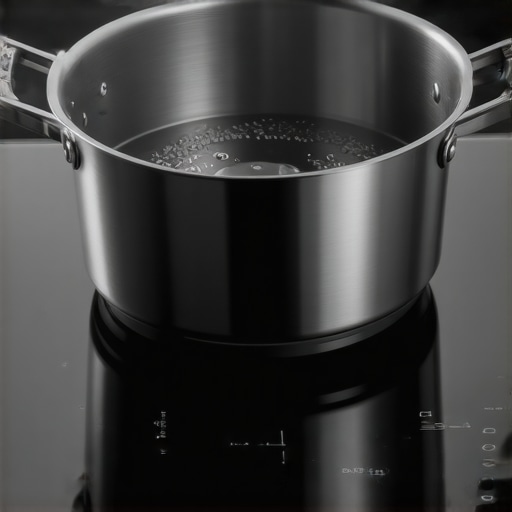
I remember the first night I finally got my sleek new induction range installed. I was ready to sear a perfect ribeye, feeling like a professional chef in my own kitchen. I clicked the power, turned it to ‘Boost,’ and instead of the silent magic I expected, I heard this low, rhythmic buzzing. My heart sank. I immediately thought I had botched the appliance installation or that I had been sold a lemon. I spent the next hour frantically looking for my paperwork, ready to demand warranty coverage for a broken unit. It turns out, I wasn’t dealing with a mechanical failure at all, but rather a simple physics lesson I learned the hard way. Today, I want to pull back the curtain on these strange noises so you don’t lose sleep like I did. We are going to figure out exactly which sounds are normal and which ones actually require a call to the pros.
That Weird Hum Isn’t Just in Your Head
The first thing you need to know is that induction cooking is essentially an electromagnetic dance. Unlike gas or traditional electric, induction uses copper coils to create a magnetic field that excites the molecules in your pan. This process can cause the metal layers in your cookware to vibrate rapidly, which creates that buzzing or humming sound. When I first heard it, I was convinced the internal electronics were melting. I even considered calling for same-day appliance fixes because I was so sure the vibration would lead to a fire. A surprising fact from Consumer Reports notes that the intensity of this noise often depends more on the construction of your pans than the stove itself—heavy, magnetic stainless steel is usually quieter than cladded pans with multiple layers. Have you noticed the sound getting louder when you use specific pots, or does it happen with every single meal?
Is your expensive new stove actually a lemon?
It is a fair question to ask when you’ve invested thousands of dollars into a kitchen upgrade. My biggest mistake early on was ignoring the ‘vibration factor’ of my lightweight pans and assuming the stove was at fault. If you are hearing a fan noise, that is just the unit cooling its internal components, which is vital for longevity. However, if the sound is a harsh grinding or a rhythmic clicking, you might actually be looking at a genuine component issue. Before you panic and think about emergency repair services, we need to walk through a few diagnostic steps together. Let’s look at how to tell the difference between ‘normal magnetic chatter’ and a real cry for help from your appliance’s control board.
Try the simple lift test right now
The fastest way to figure out if your stove is broken or if your pans are just talkative is what I call the ‘Lift Test.’ Start by placing your usual pan on a burner and turning the heat to a medium-high setting. Once that familiar buzzing starts, carefully lift the pan about an inch off the glass surface. If the noise stops the very instant the pan leaves the glass, you can breathe a sigh of relief. This confirms the sound is physical vibration between the pan layers and the magnetic field, meaning you don’t need to worry about scheduling your appliance repair for same-day service in 2025. If the noise continues even while the pan is in the air, or if it sounds like it’s coming from deep inside the chassis, then you might be dealing with a loose internal component or a cooling fan issue.
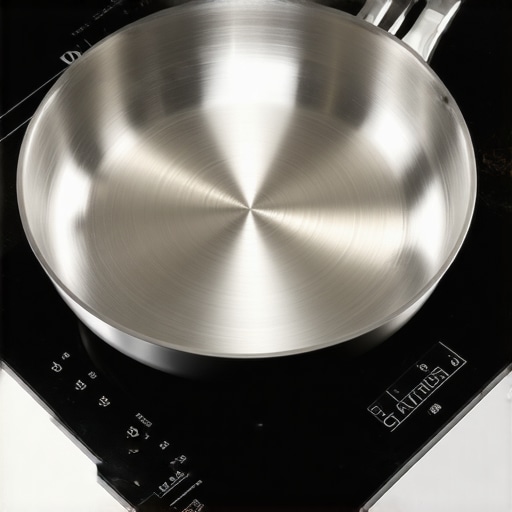
Pick the right pans to silence the chatter
Not all magnetic cookware is created equal. Think of a high-end cladded pan like a multi-layered sandwich; if those layers aren’t bonded perfectly, the magnetic field makes them slap against each other thousands of times per second. This is where the noise comes from. To get a silent kitchen, you want to use heavy, single-metal pans like cast iron or thick enameled steel. These materials are solid blocks that don’t have layers to vibrate. When I first switched to induction, I had a set of expensive copper-core pans that whistled like a tea kettle. I swapped them for a heavy cast-iron skillet and the silence was immediate. Making this switch is a much cheaper ‘fix’ than chasing warranty-backed appliance services you can rely on for a stove that is actually performing exactly as it should.
The difference between a cooling fan and a failing board
You need to be able to distinguish the ‘breathing’ of your stove from a cry for help. Every induction range has internal fans to protect the sensitive electronics from the heat generated by the coils. These fans should sound like a soft, consistent whir—much like a laptop fan. However, if you start hearing a sharp, rhythmic clicking or a loud grinding sound, you aren’t just dealing with normal physics. I once went to help a friend who thought her stove was ‘possessed’ because it was clicking even when turned off. It turned out to be a relay issue on the board, often related to the grounding error that makes your smart stove controls glitch. If the clicking persists or the touch controls become unresponsive, that is your signal to check the signs of a failing range control board before the unit stops working entirely.
Why a level stove is a quiet stove
It sounds too simple to be true, but a slightly tilted range can turn a tiny vibration into a loud rattle. During a particularly messy Sunday brunch, I realized my range was vibrating so hard it was actually moving my lightweight pans across the burner. I felt like a failure, thinking I had messed up the how to ensure reliable appliance installation in 2025 protocol. I grabbed a spirit level and realized the back-left leg had settled into a grout line. A quick adjustment to the leveling legs stopped the rattle instantly. Before you assume the worst and start looking for expert-guide-to-appliance-repair-and-installation-today, ensure your range is perfectly flat on the floor. A stable base prevents the internal cooling fans from hitting their housings and keeps your cookware from ‘dancing’ on the glass.
Why your factory warranty might already be worthless
While leveling your stove is a great first step, there is a much bigger dragon to slay: the technicality of the install itself. Most people assume that if their new range starts humming like a beehive, the manufacturer is obligated to fix it. In my experience, this is the biggest myth in the appliance world. If a technician arrives for scheduling your appliance repair for same-day service in 2025 and finds that your home uses an older 40-amp breaker when the manual specifies 50-amps, they can void your coverage on the spot. This isn’t just about power; it’s about electrical ‘noise.’ According to the Association of Home Appliance Manufacturers (AHAM), inconsistent voltage can actually amplify the physical vibration of the induction coils. I have seen countless homeowners face the reason your warranty claim was denied simply because their electrical ‘foundation’ wasn’t as modern as the appliance they bought. You must ensure reliable appliance installation in 2025 by having a pro verify your dedicated circuit capacity before you even slide the unit into place.
The hidden power draw that fries control boards
Here is the ‘oops’ factor I see most often: ignoring the ‘micro-tripping’ of underpowered circuits. Induction ranges pull massive amounts of current in short bursts to maintain temperature. If your wiring is thin or your outlet is loose, this creates heat at the connection point rather than in the pan. This heat migrates back into the range, slowly cooking the sensitive electronics. You might think you are just hearing a loud fan, but you are actually listening to the system struggling to stay cool. To avoid needing emergency repairs and maximizing your appliance warranty, always check your wire gauge. Using the wrong gauge is the fastest way to trigger the signs of a failing range control board, which is an incredibly expensive out-of-pocket fix once the warranty is voided.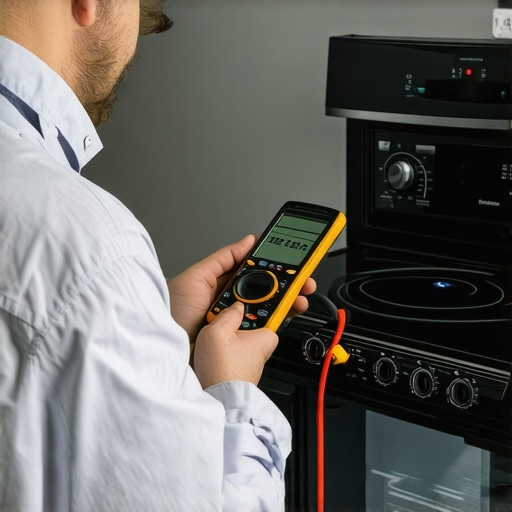
Why does the buzzing intensify when you use two burners at once?
This is a phenomenon known as ‘interference beating’ or cross-talk. If you have two burners set to the same high-frequency power level, the magnetic fields can essentially ‘clash,’ creating a rhythmic, low-pitched throb that sounds like a heartbeat. Advanced users often mistake this for a mechanical failure, but it is actually a sign that your stove is working exactly as intended. To silence this, you don’t need expert-guide-to-appliance-repair-and-installation-today; you simply need to stagger your power settings. Setting one burner to ‘9’ and the other to ‘8’ shifts the frequencies just enough to cancel out the resonance. It’s a nuance that most manuals don’t explain, but it will save you a frantic call to a technician. Don’t be fooled by ‘no-name’ extended protection plans either; knowing how to spot a fake extended protection coverage offer is vital when you are dealing with high-tech induction components. Have you ever fallen into this trap or been told a noise was ‘normal’ when you were sure it wasn’t? Let me know in the comments. If you’re still unsure, you can always prove periodic maintenance to keep your warranty valid by getting a certified diagnostic check once a year.Maintaining an induction stove isn’t just about wiping away grease; it’s about protecting the delicate synergy between magnets and electronics. I’ve learned that a single deep scratch on the glass doesn’t just look bad—it can actually harbor food particles that carbonize and trap heat, potentially leading to a localized hotspot that cracks the ceramic. To prevent this, I swear by the Cerama Bryte scraper tool. Using a razor at a 45-degree angle feels terrifying the first time, but it is the only way to remove burnt-on sugar without abrasive pads that dull the finish. This level of care is exactly how to prove periodic maintenance to keep your warranty valid if a technician ever questions the unit’s condition during a service call.
Ditch the generic sprays for specialized scrapers
If you are still using glass cleaner with ammonia, you are slowly stripping the protective coating off your cooktop. I’ve seen beautiful ranges lose their luster in months because of ‘easy’ cleaning habits. Instead, use a dedicated induction cleaner and a fresh microfiber cloth every single time. Beyond the surface, the real maintenance happens underneath. Every six months, I pull my range out—carefully—to vacuum the cooling intake vents. If these get clogged with pet hair or dust, the internal fans have to work twice as hard, which is the leading cause of the signs of a failing range control board. According to technical bulletins from the International Association of Certified Home Inspectors (InterNACHI), proper clearance and airflow are the two most ignored factors in appliance longevity. If your cabinetry is too tight, you are essentially suffocating your stove.
How can I make my induction range last for a decade?
The secret to a ten-year lifespan is stable power. I recommend every homeowner invest in a high-quality surge protector specifically rated for major appliances. A ‘brownout’ or a minor spike during a storm can do more damage to an induction coil than five years of heavy cooking. If you ever notice the lights on your display flickering, don’t wait for a total failure. Look into scheduling your appliance repair for same-day service in 2025 to have a tech check the terminal block connections. A loose wire back there can arc and melt the plastic housing, turning a $50 tightening job into a $1,000 replacement.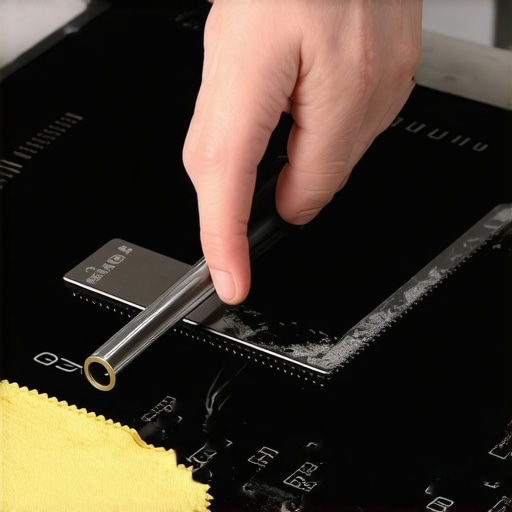
The future of induction technology is predictive
In the next few years, I expect we will see ‘self-diagnostic’ ranges that use built-in microphones to listen for the specific frequency shifts I mentioned earlier. Imagine your stove sending a notification to your phone saying, ‘Left Rear Fan bearing is at 80% wear—order part now.’ Until that happens, we have to be the sensors. I suggest using a non-contact infrared thermometer to occasionally check your burner accuracy. If you set it to 300 degrees and it’s hitting 450, your temp sensor is drifting. Catching this early allows you to get affordable same-day appliance fixes with warranty benefits before you ruin an expensive copper-core pan. My advanced tip for you today: pull your range out this weekend and check the power cord for any signs of discoloration; it’s the most honest ‘health check’ your appliance can give you.
Lessons I Learned the Hard Way About My Stove
Reflecting on my own journey, the biggest takeaway wasn’t about the technology itself, but about the environment I put it in. First, I realized that high-quality cookware is an investment in silence. If your pots aren’t heavy enough, they will always sing. Second, never assume your home’s electrical panel is ‘ready’ just because the plug fits. And finally, if the noise shifts from a hum to a repetitive beep, you should check out why your induction range beeps when nothing is on before panic sets in. These nuances make all the difference between a stressful kitchen and a professional one.
The Gear That Keeps My Range Running Like New
I don’t rely on luck to keep my stove quiet. I keep a few specific tools in my cabinet that I trust implicitly. I use heavy-bottomed cast iron for most searing because the density absorbs the magnetic vibrations. For maintenance, the Cerama Bryte kit is my only choice for surface care. If I ever hear a sound I can’t explain with the lift test, I look for same-day appliance repair quick solutions with warranty support to ensure I’m not voiding my long-term protection. I also keep the contact info for a certified electrician handy, as stable voltage is the lifeblood of induction coils.
You Are Now the Master of Your Kitchen Physics
Now that you know the difference between the ‘vibration dance’ and a genuine hardware failure, you can cook with confidence. You don’t have to jump every time the fan kicks on or the pans start to chatter. You have the diagnostic tools and the knowledge to protect your investment. If you ever do need professional help, knowing how to spot a shady appliance repair quote will keep your bank account as safe as your stovetop. Go forth and sear that steak—you’ve got this! Which sound is your induction range making right now—a soft hum or a loud buzz? Let me know in the comments below!