
I remember standing in my hallway at 2 AM, the silence of the night broken by a steady, rhythmic ‘thwack’ against the floorboards. My flashlight beam hit the ceiling, revealing a bloated, yellowing bubble of drywall that looked ready to burst. I had spent hundreds on professional service calls the previous summer, yet here I was again, watching my house literally melt from the inside out. I felt like a total failure as a homeowner. In my early days, I even tried the ‘coat hanger method’ to clear the blockage, which was a disastrous mistake that nearly punctured my drain pan. If you have ever stared at a water spot on your ceiling and felt that cold pit of dread in your stomach, you are not alone. Today, I am going to show you exactly how to stop those leaks forever using nothing more than a common wet-dry vacuum and a little bit of neighborly know-how.
That Sinking Feeling When Your Ceiling Starts Sweating
When you see why your ac lines are sweating and drip through the ceiling, your first instinct is usually to panic-search for an emergency technician. I get it. I used to be that guy. But most AC drip leaks aren’t caused by a mechanical meltdown; they are caused by a ‘slime snake’ of algae and dust clogging your primary condensate line. It is a gross, gooey reality of living with air conditioning. While you might be tempted to call for scheduling your appliance repair for same-day service in 2025, there is a secret tool in your garage that can fix this in five minutes. The vacuum method is not just a ‘hack’—it is the most effective way to clear the entire length of the pipe without damaging the delicate seals inside your unit.
Is it actually safe to use a shop vac on my expensive HVAC?
I hear this skepticism all the time from my neighbors. They worry that the suction will rip some internal component or burn out the motor. Let me put those fears to rest: your AC is built to handle significantly more pressure than a standard vacuum can produce. In fact, a shocking report from the U.S. Department of Energy notes that neglecting basic condensate maintenance can lead to a 15% drop in system efficiency and eventually cause the entire unit to shut down to prevent a flood. By using the vacuum at the exterior exit point of the drain line, you are creating a localized pressure differential that pulls the clog out safely. It is far less invasive than poking around with wires or using high-pressure CO2 cartridges that can actually blow the PVC joints apart if you aren’t careful.
Why a Simple Wet-Dry Vac is Your New Best Friend
The beauty of the vacuum secret is that it addresses the root cause rather than just treating the symptom. When you just pour bleach down the line, you might kill the algae, but the physical mass of the clog stays right where it is. If you’ve ever wondered why your fridge is leaking water on the floor, you know that gravity and gunk are a bad combination. The same rules apply to your AC. My lightbulb moment came when I realized that trying to push a clog out from the top is like trying to push a wet noodle through a straw. You have to pull it. Have you ever tried to clear your drain and ended up with a bigger mess than you started with? That is exactly why we are switching tactics today. Before we dive into the step-by-step process, it is important to understand that your vacuum needs a tight seal to work its magic, and I am going to show you how to build one for about fifty cents using stuff you already have in your junk drawer.
Find the Exit Point Before You Start Digging
First, walk around the exterior of your home. You are looking for a small PVC pipe—usually three-quarters of an inch wide—poking out from your siding or near the foundation. It is often near your outdoor condenser unit. If you cannot find it, it might be tied into a larger plumbing drain, which is a bit trickier, but most of the time, it is right there waiting for you. I remember my first time doing this; I spent twenty minutes looking for a ‘pipe’ only to realize it was hidden behind a massive overgrown hosta plant. Once you find it, clear away any dirt or mulch. This is the same logic you would use if you were trying to figure out the hidden drain in your dishwasher that needs cleaning; you have to find the exit before you can clear the path.
Build a Fifty-Cent Seal That Actually Works
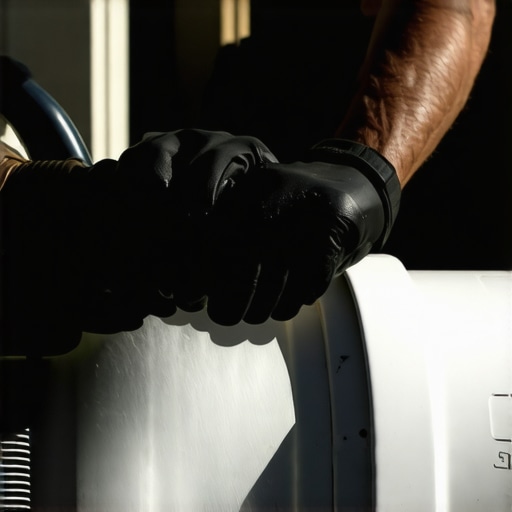
Your vacuum is useless if air is leaking out the sides of the connection. Grab a wet rag or some old duct tape. I prefer the wet rag method because it is faster. Wrap the rag around the end of the vacuum hose until it is thick enough to wedge firmly into the PVC pipe. When I first tried this, I did not use a rag and just held the hose against the pipe. It did absolutely nothing. The second I stuffed a damp microfiber cloth in there to create a gasket, the vacuum motor pitched up, and I knew I had a vacuum lock. If you are worried about whether this DIY approach affects your coverage, it is worth checking what an extended warranty really covers when your ac quits, but generally, clearing a drain line is considered standard homeowner maintenance.
#IMAGE_PLACE_HOLDER_B#
The Moment of Truth with the Shop Vac
Flip the switch on your wet-dry vac and let it run for about two full minutes. Do not be surprised if you hear a disgusting ‘slurp’ sound—that is the sound of success. I will never forget the time I did this after a three-month neglect period. I opened the vacuum canister and found a grey, gelatinous mass the size of a bratwurst. It was horrifying, but my AC immediately stopped leaking. If the suction feels weak, you might have a hvac filter direction error that strains your motor, causing the internal pressure to fluctuate, so make sure your filters are clean first. If you still get nothing but air, the clog might be crystallized, requiring you to learn how to deep clean your ac evaporator coils safely to ensure the pan itself is not the problem.
What to Do When the Pipe Stays Bone Dry
If you run the vacuum for five minutes and the bucket is dry, the clog is either too solid or it is located further up near the evaporator coil. At this point, you do not want to keep pushing the machine. This is where you might need scheduling your appliance repair for same-day service in 2025 to have a pro use a nitrogen purge. However, before you give up, go back inside and check the primary drain pan. If it is overflowing, try pouring a cup of distilled white vinegar down the vent pipe and let it sit for thirty minutes before trying the vacuum one last time. It is a lot like troubleshooting why your fridge is leaking water on the floor; sometimes you just need to break down the slime before the vacuum can grab hold of it.
Clearing that drain line yourself is a massive win for your weekend productivity, but it opens a much larger conversation about where the DIY line ends and professional liability begins. Many homeowners believe that once the water stops dripping, the crisis is over. However, the nuance of modern HVAC systems is that a clog is often a secondary symptom of a larger airflow issue or a failing evaporator coil. If you find yourself doing the ‘vacuum trick’ more than once a season, you aren’t fixing the problem; you are just resetting the clock. This leads to a common trap: the addiction to speed over substance.
Stop Chasing the Clock with Same-Day Fixes
In our ‘I need it now’ culture, we often prioritize scheduling your appliance repair for same-day service in 2025 above everything else. While I love efficiency, there is a contrarian truth you need to hear: the fastest technician isn’t always the best one. In my experience, ’emergency’ technicians are often under immense pressure to finish a call in under thirty minutes. This leads to what I call ‘bandage repairs’—clearing the pipe but ignoring the fact that your blower motor is pulling in dust because of a seal gap. When you look at what to expect from same-day appliance repair experts, ensure they are looking at the why, not just the what. A rushed job today often leads to a catastrophic component failure next month.
#IMAGE_PLACE_HOLDER_C#
Will Using Non-OEM Parts Kill My Service Contract?
This is the question that keeps savvy homeowners up at night. If you or a cut-rate technician replaces a failing part with a ‘universal’ alternative to save time, you might be handed a nasty surprise later. According to a report by the Association of Home Appliance Manufacturers (AHAM), using non-certified parts can reduce the lifespan of the appliance by up to 30% and is one of the leading reasons for claim rejections. I have seen folks save forty dollars on a generic capacitor only to find the reason your warranty claim was denied was that very ‘savings’ move. If your unit is still under a manufacturer plan, always insist on Original Equipment Manufacturer (OEM) parts, even if it means waiting an extra day for shipping. Your long-term bank account will thank you.
The Paperwork Trap That Voids Your Protection
The most sophisticated mistake I see isn’t technical—it’s administrative. You can be the best DIYer in the world, but if you cannot prove you have been maintaining the unit, your extended coverage is basically a piece of scrap paper. Most people don’t realize that why your extended warranty might not cover that control board often boils down to a lack of a maintenance log. You need to know how to prove periodic maintenance to keep your warranty valid. I keep a physical folder clipped to my furnace where I staple every receipt for filters, every date I vacuumed the lines, and every professional inspection report. When the big-ticket items like the compressor fail, that folder is your ‘get out of jail free’ card. Without it, the adjuster will simply claim ‘owner neglect’ and walk away.
Taking ownership of your home’s health is about more than just tools; it’s about understanding the ecosystem of warranties and professional standards. Whether you are using an expert guide to appliance repair and installation today or doing a quick vacuum fix, keep your documentation tight and your parts authentic. Have you ever fallen into this trap and had a claim denied for a silly reason? Let me know in the comments—I’d love to hear your stories so we can all avoid those same pitfalls.
Moving from a reactive homeowner who panics at every drip to a proactive one who anticipates failures requires a shift in your toolkit. You cannot expect professional results with a ten-dollar toolkit from a big-box checkout lane. I personally swear by the Klein Tools MM400 multimeter for all my electrical troubleshooting; it is rugged enough to survive a drop from a ladder and precise enough to tell me exactly when a motor is drawing too much current. If you have ever wondered the capacitor test that saves your ac compressor, you know that having the right readings is the difference between a five-minute fix and a two-thousand-dollar replacement. This level of precision is exactly what separates the survivors from the folks who end up overpaying for fast trustworthy appliance installation near you because they misdiagnosed a simple wiring issue.
Ditch the Cheap Multimeter for Something That Lasts
When I started out, I used the cheapest tools I could find, thinking I was being frugal. I was wrong. A cheap tester once told me a circuit was dead when it was actually live—a mistake that almost cost me a trip to the ER. According to the NATE (North American Technician Excellence) technical guide, over 70% of HVAC failures are attributable to airflow restrictions and electrical component degradation that could have been caught early with proper diagnostic equipment. If you are handling your own setups, like learning how to properly ground a new garbage disposal install, you need a non-contact voltage tester as a backup. It is about building layers of safety and accuracy so that your repairs actually hold up over the long haul.
How do I maintain my high-end appliances without calling a pro every month?
The secret is ‘micro-maintenance.’ Instead of a giant annual overhaul, spend ten minutes every month checking the vitals. For your fridge, it is about cleaning the coils; for your washer, it is checking for the lid switch fault that prevents your washer from spinning before the part actually snaps. This rhythm of care makes your system predictable. When you do eventually need a professional for something complex, you will be in a much better position to appreciate warranty-backed appliance services you can rely on because you aren’t calling them in a state of total desperation. You are calling them to perform a surgical strike on a problem you have already identified.
#IMAGE_PLACE_HOLDER_D#
The Future of Home Care Is Sensing Not Guessing
Looking ahead to 2025 and beyond, we are moving toward a world of predictive sensors. I have already started installing vibration sensors on my laundry units and smart leak detectors under every sink. This technology allows you to how to calibrate your smart thermostat for better efficiency while the system monitors itself for anomalies. Eventually, the manual vacuum trick for AC lines will be replaced by automated purge valves, but until then, your best defense is a sharp eye and a consistent logbook. Even as the tech gets smarter, the fundamental physics of water and electricity don’t change. You still need to know is a manufacturer extended plan actually worth the monthly cost for the expensive logic boards that these smart features rely on. My advice? Buy the high-quality multimeter today, learn your machine’s baseline sounds, and never ignore a new rattle. Go grab a basic voltage tester this afternoon and check your outdoor disconnect; it is the first step in taking real control of your home’s mechanical destiny.
The Painful Lessons That Turned Me Into a Proactive Homeowner
Reflecting on my early years of home ownership, I realized that I was constantly reacting to disasters instead of preventing them. The biggest lightbulb moment was understanding that a clog in your AC line is rarely an isolated incident; it is a signal that your system’s environment needs a change. I used to think I was saving money by skipping professional inspections, but I eventually learned that a small maintenance fee is far better than a total coil replacement. Another hard lesson: never assume a repair is done just because the water stops dripping. Always check the secondary pan and the filter seal to ensure you aren’t just delaying the next flood. Finally, I learned that speed is the enemy of quality; taking the time to do it right beats the fastest technician every time.
The Three Tools I Refuse to Live Without
If you are serious about moving past the vacuum trick and actually managing your home, you need a specific kit. First, a high-capacity wet-dry vacuum is non-negotiable—not just for the AC, but for when you need to know how to get an emergency fridge repair before your food spoils by clearing a defrost drain. Second, a reliable multimeter allows you to spot the signs of a failing range control board before it goes dark. Finally, keep a dedicated maintenance logbook. Whether you are tracking filter changes or reviewing top tips for same-day service warranty coverage, having your data in one place is the only way to win a dispute with a warranty provider.
Your Journey Toward Mechanical Independence Starts Now
Taking control of your home’s systems is incredibly empowering. It stops the panic of the 2 AM leak and replaces it with the calm of a person who has a plan. By mastering the vacuum method and learning why some extended warranty plans are better than others, you are no longer at the mercy of the first technician who shows up in a van. You are the expert of your own domain, capable of maintaining the complex machinery that keeps your family comfortable. Go grab your tools and start your first inspection today. Have you ever tried the vacuum trick and found something truly disgusting in the pipe? Let me know in the comments below!