
I still remember the cold, squelching sensation between my toes before I even had my first sip of coffee. My kitchen floor wasn’t just damp; it was a shallow lake, and the source was my expensive, high-tech refrigerator. My heart sank. I immediately assumed the worst: a cracked compressor or a total system failure that would cost me a month’s mortgage. I almost panicked and called for a replacement right then. But I’ve learned the hard way that a puddle doesn’t always mean a dead appliance. Sometimes, it is just a cry for help from a machine that hasn’t been properly maintained. We are going to stop the flood and save your sanity today.
Get That Water Off the Floor and Save Your Hardwood
The first time this happened, I made a massive mistake. I grabbed a wire hanger and started poking around the back of the freezer like a madman. I ended up puncturing the plastic housing, turning a simple clog into a nightmare that required emergency fridge repair before my groceries turned into science experiments. Don’t be like me. Most leaks stem from a few very specific, very fixable culprits. Often, it is just the clogged drain line that decided to freeze over because the temperature was set just a hair too low. If you aren’t careful, though, these small leaks can lead to massive floor damage. I have seen friends lose entire sections of laminate flooring because they ignored a tiny drip for a week.
Can a Normal Human Actually Fix This Without a Plumber?
You might be skeptical. I get it. We are told these modern appliances are basically computers with doors, and if you touch the wrong thing, you will break the whole deal. It is true that the fine print that voids your protection plan can be scary, but most basic maintenance is actually encouraged. According to the National Association of Home Builders, a standard fridge should last about 13 years, yet many fail much sooner because of simple debris buildup. If you keep a solid maintenance log for your warranty policy, you are ahead of 90% of homeowners. We are going to walk through the most common causes today, from blocked defrost drains to loose water lines. Have you ever stepped into a kitchen puddle and felt that immediate how much is this going to cost me dread? Before you start ripping things apart, you might want to look into scheduling same-day service if the water is gushing rather than dripping.
Attack the Most Likely Suspect First
Most of the time, the water pooling on your floor isn’t a sign of a mechanical death rattle; it is just a drainage issue. Inside your freezer, hidden behind the back panel, is a small hole designed to carry melt-water away during the defrost cycle. If a stray frozen pea or a bit of dust gets stuck there, the water has nowhere to go but out the front door or under the crisper drawers. If you notice the freezer ice build-up that is killing your efficiency, you are likely looking at the primary source of your leak. I remember standing in my kitchen with a turkey baster and a bowl of steaming water, feeling like a DIY surgeon. I had ignored a tiny drip for days, and the drain had turned into a solid block of ice. My biggest mistake was getting impatient—I tried using a high-heat hair dryer and nearly melted the plastic lining of the freezer. Stick to warm water and slow, steady flushes to clear the path. 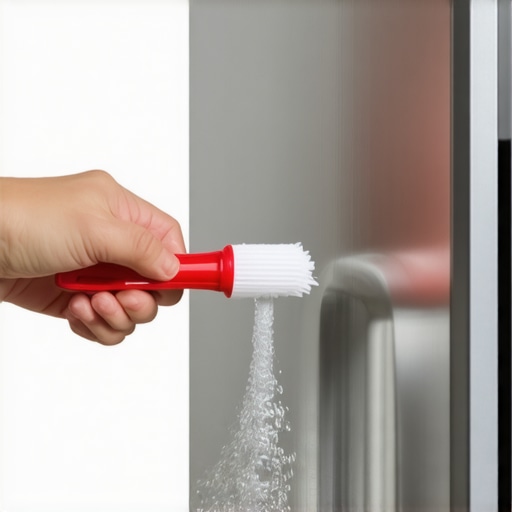
Trace the Water Line Like a Detective
If the water is appearing behind the fridge rather than inside it, you need to check the water inlet valve. This component is the gatekeeper for your ice maker and water dispenser. Over time, the plastic housing can crack or a fitting can vibrate loose. Think of it like a garden hose with a pinhole leak; it does not look like much until it has been spraying a fine mist against your drywall for ten hours. I once spent an entire Saturday morning mopping because I thought a mysterious hissing sound was a gas leak, only to find the inlet valve was spraying the compressor. If you find a crack, do not try to tape it. This is where reliable appliance installation standards matter; replacing the line with a braided stainless steel version is the only way to sleep soundly at night.
Stop the Sweat Before it Becomes a Puddle
Sometimes the water on your floor is not a leak at all—it is condensation. If your door seal, also known as the gasket, is torn or caked with spilled food, warm kitchen air crawls inside and meets the frigid air. This creates ‘sweat’ that eventually drips down the frame and pools on your hardwood. You can easily learn how to stop your fridge from sweating in high humidity by cleaning the gasket with warm, soapy water and checking for gaps with the ‘dollar bill test.’ If you can slide a bill through the closed door, your seal is failing.
Check Your Tilt to Keep Drains Flowing
Your refrigerator should not actually be perfectly level; it needs to lean back just a hair. This slight tilt allows the doors to swing shut on their own and ensures that water flows toward the back drain instead of out the front. If your floor has settled and the fridge is leaning forward, water will bypass the clogged drain line and end up on your tiles. If the leveling legs are stuck or rusted, it might be time to get same-day appliance repair. Digging into these fixes can be intimidating, but it is the best way to ensure warranty-backed appliance services remain a safety net rather than a constant necessity. For those who aren’t comfortable handling live water lines, seeking expert appliance repair and installation is the smartest move to prevent a small drip from becoming a structural nightmare.Most homeowners view an extended warranty as a get-out-of-jail-free card for any appliance disaster. In my experience, that is a dangerous assumption. You cannot just ignore your fridge for three years and expect the manufacturer to foot the bill when the compressor dies from overheating. The harsh reality is that why third party warranty companies deny legitimate claims often boils down to a lack of maintenance records. If you cannot prove you have been doing the basics, they will call it consumer neglect. This is why I always tell people to keep the maintenance log that saves your fridge warranty policy tucked right next to their manual. According to the Association of Home Appliance Manufacturers (AHAM), failing to clean your condenser coils can increase energy consumption by 30% and is a leading cause of premature component failure. If you have not mastered the refrigerator coil trick that slashes your electric bill, you are essentially paying the power company to kill your appliance.
Does Same-Day Service Actually Guarantee a Permanent Fix?
When you are staring at a puddle and panicked about your steaks thawing, you will be tempted to click the first express link you find. But here is the nuance: what to expect from same-day appliance repair experts is not always a finished job on the first visit. Sometimes, same-day means same-day diagnosis. The trap many fall into is assuming that a technician carries every single motherboard and specialized valve in their van. To get the best results, you need to provide the exact model number before they arrive to maximize your appliance warranty during emergency repairs. One of the biggest oops factors I see involves the water system itself. People spend thousands on a smart fridge and then try to save twenty bucks on a generic water filter. I have seen these off-brand filters cause internal pressure spikes that crack the secondary water valve, leading to a slow, silent leak behind the unit. This is why you should never use third party water filters in your fridge—it is not just a marketing ploy; it is about physical tolerances. Similarly, if you shoved your fridge too tight into the cabinetry, you have likely ignored the critical clearance gap for a refrigerator in a nook. Without airflow, the heat has nowhere to go, and your leak might actually be massive internal condensation from an overworked cooling system. To really win at this, you have to learn how to file a successful appliance warranty claim without the headache by documenting every weird noise and drip early. Have you ever fallen into the cheap parts trap and ended up with a bigger repair bill later? Let me know in the comments.
The Three Tools That Stop the Flood Before It Starts
I don’t just guess when a fridge acts up; I use a specific set of tools that separate the hobbyists from the people who actually save their hardwood. First on my list is a 24-inch flexible condenser brush. Most people buy the short, stiff ones from the grocery store, but they can’t reach the back of the compressor housing where the heavy dust blankets the coils. According to technical documentation from the Association of Home Appliance Manufacturers (AHAM), even a 1/10th-inch layer of dust can increase energy consumption by 10% and force the compressor to run hot, leading to the internal condensation issues we discussed earlier. If you are tired of DIY, searching for fast trustworthy appliance installation near you is the best way to ensure your unit is set up for airflow from day one. I also swear by a digital multi-meter. If your defrost heater is dead, no amount of hot water flushes will clear that drain line for more than a day. Testing for continuity takes thirty seconds and saves you the frustration of a recurring puddle.
How Can I Keep My Refrigerator Running for 15 Years?
Long-term survival for your appliances isn’t about luck; it is about consistent, documented action. Every six months, I pull my unit out, vacuum the coils, and inspect the water line fittings for ‘crust’—that white mineral buildup that signals a slow, creeping leak. You need to keep every single maintenance receipt you must save for future claims in a dedicated folder. This is the only way to effectively maximize your appliance warranty during emergency repairs. If a tech sees that you have professionally cleaned the unit or replaced the filters on schedule, they are much less likely to flag the repair as ‘consumer neglect.’ This level of care is what makes affordable same-day appliance fixes with warranty benefits actually possible, because you are providing the technician with a clean slate to work on.
The Shift Toward Predictive Kitchen Tech
We are moving toward a world where your fridge will be smarter than your phone. Within the next few years, I predict that moisture-sensing floor mats integrated with smart home hubs will become standard. These sensors will cut the water supply at the valve the second a drip is detected, long before you step into a puddle. For now, we still rely on physical checks. If you are struggling with a unit that seems to have a mind of its own, it might be time to look into is a manufacturer extended plan actually worth the monthly cost to cover those expensive control boards. When the tech arrives, make sure you have the document most people forget before calling service ready on the counter: your original installation date and model serial number. This allows for same-day appliance repair quick solutions with warranty support that doesn’t involve three return trips for parts. My advanced tip for today? Swap out your plastic water supply line for a braided stainless steel one tonight. It is a ten-minute job that eliminates the most common cause of catastrophic kitchen floods.
What I Finally Realized After Three Flooded Kitchens
Through years of trial and error, I’ve found that most major appliance failures are actually quiet cries for help that were ignored for too long. My biggest lightbulb moment was realizing that a small drip isn’t just an annoyance; it’s a symptom of a system working at 110% capacity. Here are a few hard truths I live by now:
- Maintenance is cheaper than emergency response: Spending twenty minutes cleaning coils saves hundreds on scheduling your appliance repair for same-day service in 2025 later.
- Trust your eyes, not the marketing: If the door doesn’t feel right, check the gasket. No smart feature replaces a good physical seal.
- Paper trails are power: If you want to maximize your appliance warranty, you need to prove you weren’t the cause of the problem.
The Essential Save-My-Floor Toolkit
If you want to keep your kitchen dry without calling a pro every week, you need these three items in your junk drawer. First, a 24-inch condenser brush—the long, flexible kind that actually reaches the dust bunnies hiding in the dark. Second, a digital multimeter; it’s the only way to know if your heater is dead before you waste hours defrosting ice manually. Finally, throw away the plastic tubes and get braided stainless steel water lines. I trust these because they don’t brittle with age, which is the leading cause of the hidden flood behind the fridge. For those who want the peace of mind of a professional setup, look into reliable appliance installation to ensure everything is level from the start.
Own Your Kitchen Again
The dread of a wet floor doesn’t have to be your morning routine. By taking these small, proactive steps, you aren’t just fixing a machine; you are protecting your home’s foundation and your own peace of mind. Whether you handle the fix yourself or decide to seek expert appliance repair and installation, the key is to act before the drip becomes a deluge. You’ve got the knowledge now—go ahead and check those coils. Have you ever tried to fix a leak yourself only to realize it was something much simpler than you feared? Let me know your story in the comments below!