
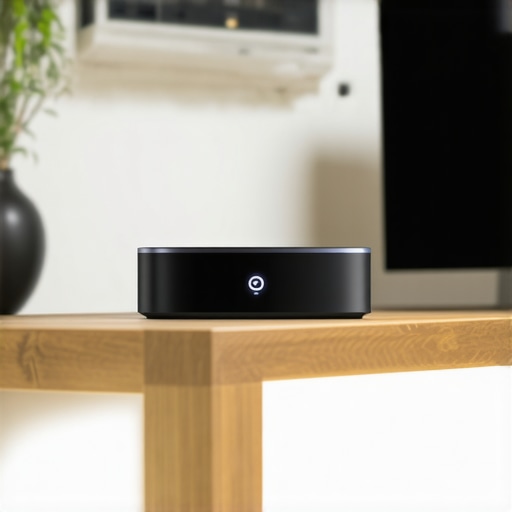
It was ninety-five degrees in the shade, and I was sweating through my favorite shirt while staring at a spinning loading icon on my phone screen. I had just finished paying for a professional fast-trustworthy-appliance-installation-near-you, and I was ready to command my new AC to turn my living room into an ice box from the comfort of my couch. But the hub? It acted like the AC did not even exist. It is that sinking feeling when the ‘smart’ part of your home feels incredibly dim. If you have ever wanted to throw your router out the window after a long day of scheduling your appliance repair for same-day service in 2025, I feel your pain. Today, I am going to pull back the curtain on why these digital handshakes fail and how you can actually get your devices talking again without losing your cool. [image placeholder]
Your Hub is Ignoring Your New AC for a Specific Reason
Most people think a strong Wi-Fi signal is the only ingredient needed for a smart home. I made the classic rookie mistake early on by assuming that because my fridge and my lights were working perfectly, the AC would just ‘click’ into the ecosystem automatically. I did not realize that something as simple as the smart thermostat wiring error that blows your hvac fuse can mirror the same frustrating ‘device not found’ errors we see in software. Sometimes, it is not a hardware failure; it is a digital dialect issue. According to the IEEE, protocol interference in the crowded 2.4 GHz band is the leading cause of IoT discovery failure in dense residential areas, often drowning out new devices before they can introduce themselves to the hub. Before you assume you bought a lemon, you need to verify your new appliance is covered under the original warranty and then look at your network’s handshake settings.
Is All This Smart Connectivity Actually Worth the Hype?
I get it. You spent good money on a top-tier unit, and now you are wondering if you should have just stuck with a manual dial and a window unit. You are worried you will need a computer science degree just to lower the temperature by two degrees. But trust me, once you audit your smart home privacy after a major install and bridge that initial connection gap, the energy savings and convenience are undeniable. Have you ever found yourself shouting at a smart speaker that refuses to acknowledge your brand-new air conditioner? It is a common hurdle, but the fix is usually simpler than a full system reset. We are going to look at the exact settings that act as the ‘secret handshake’ for your HVAC system.The first hurdle is usually your router’s ego. Most modern routers try to be ‘smart’ by merging the 2.4GHz and 5GHz bands into one single name (SSID). This is great for your laptop, but it is often a death sentence for your AC. Think of 2.4GHz as a wide, slow country road and 5GHz as a narrow, high-speed toll way. Your AC is essentially a tractor; it physically cannot drive on the toll way. To fix this, you need to log into your router settings and ‘split’ the bands. Give the 2.4GHz network a distinct name. I once spent three hours wrestling with a smart dryer that refused to pair because the router kept trying to shove it into the 5GHz lane. The moment I isolated the bands, the connection was instant. This step is a foundational part of how to ensure reliable appliance installation in 2025 and prevents future drops. 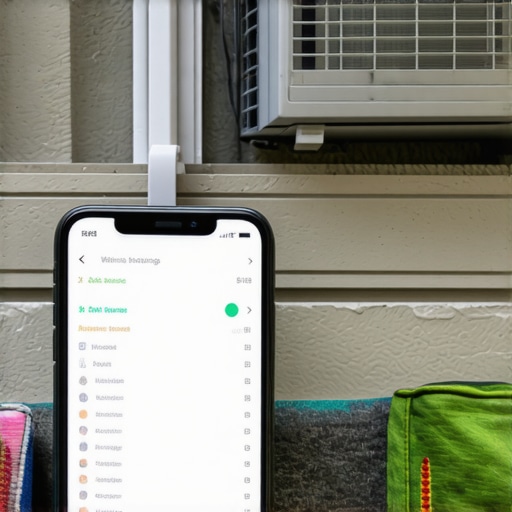
Clear the Digital Cobwebs with a Hard Power Cycle
Sometimes the hardware just needs a ‘brain wipe.’ If your AC is powered on but the hub refuses to see it, the internal Wi-Fi chip might be stuck in a boot loop. Do not just turn the unit off with the remote; that only puts the device into a standby state. You need to cut the power at the source to drain the capacitors completely. This is the perfect time to try the hvac breaker reset that actually works when the unit trips. I remember a humid Tuesday when my own system went ‘ghost’ on the app. I flipped the breaker, waited exactly sixty seconds—do not cheat the clock—and flipped it back. That surge of fresh power forced the AC to broadcast its setup signal again. If you have ever seen why your smart lights flashing red means a conflict with your hub, you know that devices often get ‘stuck’ trying to authenticate with old, cached data that no longer exists.
Test Your Signal Strength at the Unit
We often forget that HVAC units are encased in metal and surrounded by heavy insulation—the ultimate Wi-Fi killers. If your smartphone only shows one or two bars of Wi-Fi while you are standing next to the AC, the AC’s internal antenna is likely getting nothing. Before you assume you need what to expect from same-day appliance repair experts, try moving your router or adding a mesh node. I once fixed a ‘broken’ smart AC just by moving a decorative metal tray that was sitting directly between the router and the wall unit.
Document the Failure Before Calling for Backup
If these DIY resets do not bridge the gap, you are going to need a technician, but you should not go in empty-handed. Manufacturers are notoriously picky about what they consider a ‘hardware failure.’ You need to have your digital trail ready. This includes the document every technician needs to see for a valid warranty visit. When my smart control board fried last summer, having a timestamped screenshot of the ‘Device Not Found’ error and my original installation receipt saved me from a hefty service fee. It proves the issue is with the unit’s communication module and not your home network.Let’s dig deeper into the actual mechanics of getting these things fixed. Most people chase the dream of ‘same-day service’ like it’s a magic wand, but here is the contrarian truth: in the world of high-end IoT, a technician showing up at your door today rarely means your AC is cooling tonight. We have entered the era of the ‘diagnostic-first’ visit. Because modern smart components are so specialized, even what to expect from same-day appliance repair experts often involves a two-step process where the first day is just for identification. If you are scheduling your appliance repair for same-day service in 2025, you are paying for the speed of the diagnosis, not necessarily the closure of the ticket. The real pro move is to provide the technician with the specific error code from your app before they even leave their shop. This turns a guessing game into a targeted strike, potentially leading to affordable same-day appliance fixes with warranty benefits where the correct part is already on the truck. One major ‘oops’ factor I see constantly is the failure to account for power quality. We protect our expensive laptops with surge protectors, but then we plug a $3,000 smart fridge or oven directly into a wall outlet that hasn’t been updated in twenty years. I’ve seen the voltage issue that kills your new oven control board happen in a heartbeat. This is exactly why your new smart oven needs a dedicated circuit; modern microprocessors cannot handle the same ‘dirty’ power that an old-school coil range could. 
Same-Day Service is Rarely a Same-Day Fix
Why is my warranty claim being denied for ‘environmental factors’?
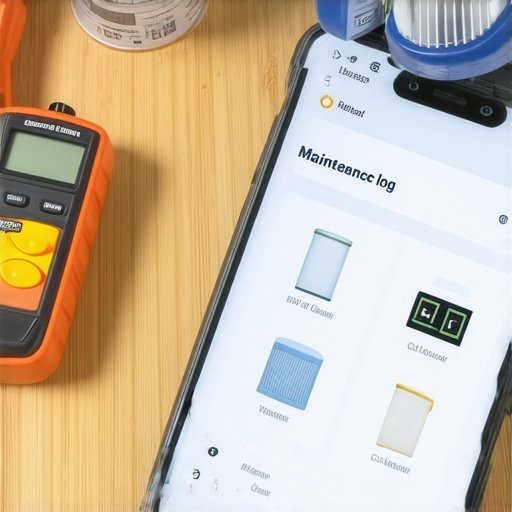
This is the nuanced trap that leaves even the most prepared homeowners fuming. When you call for a repair, the manufacturer is looking for any excuse to classify the breakdown as ‘preventable.’ If a technician finds that your smart system failed because it was ‘choked’ by excessive dust or improper airflow, they will deny the claim. You must how to prove you maintained your hvac for a warranty claim by keeping a meticulous digital log of filter changes and sensor cleanings. If you lack this, you’ll be stuck trying to figure out how to avoid paying the service fee for a denied warranty claim. Furthermore, beware of the hidden risk of third-party parts for smart fridges. While the third-party warranty loophole that saves you hundreds on parts is great for mechanical components like handles or shelves, using a non-OEM communication module can permanently brick your hub connectivity. According to a Consumer Reports analysis, software and sensor-related issues now account for nearly 20% of all smart appliance repair calls, many of which are caused by using incompatible generic components. To ensure everything stays synced, always verify with warranty-backed appliance services you can rely on before swapping a board. Have you ever fallen into this trap? Let me know in the comments.
Building a resilient smart home isn’t just about the initial setup; it is about creating a paper trail that the manufacturer cannot argue with. I personally use a dedicated cloud folder where I upload a photo of my clean filters and the display panel of my HVAC unit every quarter. This habit is exactly how to prove you maintained your hvac for a warranty claim without breaking a sweat when a technician asks for proof. If you are not documenting, you are essentially gambling with your coverage. Bryan Orr, the founder of HVAC School and a leading industry expert, often emphasizes that airflow restriction from neglected maintenance is the number one killer of expensive control boards. By keeping those pathways clear, you are not just saving energy; you are protecting the brain of your appliance. This level of diligence is a core part of an expert guide to appliance repair and installation today. Even if you secured affordable same-day appliance fixes with warranty benefits, preventing the failure in the first place is always the cheaper route.
The Gear That Separates Pro Homeowners from Amateurs
You do not need a massive toolbox, but three specific items changed the game for me. First, a non-contact voltage tester. This tiny device lets you verify if a circuit is truly dead before you touch a wire, helping you avoid the voltage issue that kills your new oven control board. Second, a simple digital hygrometer placed near your indoor unit. If you see humidity spiking above 60%, your smart AC is working too hard and is likely to freeze up. Third, a can of self-rinsing evaporator coil cleaner. Applying this annually is the one maintenance move that stops your ac from smellling like mildew and keeps the heat exchange efficient. These tools allow you to spot problems before they require scheduling your appliance repair for same-day service in 2025.
How Do I Keep My Smart Appliances Happy Years Later?
Maintenance for smart machines is twofold: mechanical and digital. Mechanically, you need to be consistent. For example, performing the maintenance step that extends the life of your high efficiency washer—like cleaning the drain pump filter—prevents the logic board from throwing ‘long drain’ error codes that can eventually lead to a permanent lockout. Digitally, you need to stay on top of firmware. We are moving toward a future where the ‘Matter’ protocol will allow different brands to talk to each other more fluidly, but until then, you must ensure your hub stays updated to prevent security vulnerabilities. Looking ahead, I predict we will see more ‘self-healing’ appliances that can run their own diagnostic cycles and even order their own replacement parts. Until that day comes, your best bet is how to ensure reliable appliance installation in 2025 by following the manufacturer’s specific clearance and power requirements to the letter. Don’t wait for a breakdown to learn your system’s quirks; I highly recommend you go to your breaker box right now and clearly label exactly which switch controls your HVAC and your kitchen hub. It sounds simple, but in a crisis, it is the difference between a quick fix and a total meltdown. Try the ‘split-band’ Wi-Fi trick I mentioned earlier this evening if you’re still seeing connection drops—it is the most effective advanced tip in my arsenal.
The Hardest Lesson I Learned While Syncing My HVAC
I’ve learned that the ‘smart’ in smart home doesn’t just refer to the devices; it refers to the homeowner’s persistence. One of the biggest myths is that a high-speed internet plan solves all connection problems. In reality, your AC needs stability and specific frequency bands, not just raw speed. I spent a whole summer fighting a connection drop before realizing that my ‘smart’ router was actually bullying my AC off the network. Another lightbulb moment for me was realizing that maximizing your appliance warranty during emergency repairs starts months before the emergency happens. By keeping digital logs of every filter change and firmware update, you create an airtight case that manufacturers cannot ignore. It is not just about having the latest tech; it is about proving you are its responsible guardian.
Tools That Saved My Sanity and My Wallet
I swear by a few specific resources that bridge the gap between amateur frustration and professional mastery. First, the ‘Matter’ protocol documentation—it is dry, but it finally explains why different brands are starting to cooperate. Second, I always keep a link to top tips for same-day service warranty coverage bookmarked for when things go sideways. Lastly, never underestimate a simple non-contact voltage tester; it is the first step in diagnosing why a smart board won’t power up, potentially saving you from the voltage issue that kills your new oven control board. These tools transform you from a reactive user into a proactive expert who understands the expert guide to appliance repair and installation today.
Take Back Control of Your Smart Ecosystem
You now have the digital and mechanical roadmap to turn a frustrating ‘Device Not Found’ error into a fully optimized, cooling home. Whether you are performing a DIY fix or overseeing a fast-trustworthy-appliance-installation-near-you, remember that you are the architect of your own comfort. Don’t let the technology intimidate you; it is designed to serve you, provided you know the ‘secret handshakes’ of modern networking. By applying these strategies, you ensure that your investment remains protected and your living space stays perfectly chilled. Have you ever had a smart appliance simply refuse to acknowledge your Wi-Fi router despite being three feet away? Let me know your workaround below.