
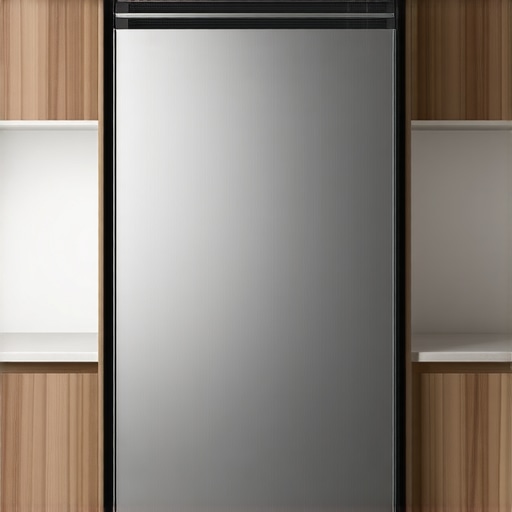
I remember the day my seamless kitchen dream turned into a literal $300 puddle on my hardwood floors. I had finally saved up for that gorgeous, panel-ready built-in refrigerator. It looked like a million bucks—hidden perfectly behind custom cabinetry, flush with the surrounding walls. But three months in, the humming started. Then the clicking. Then the silence. When I pulled the unit out, the back was hot enough to fry an egg. I had made the classic rookie mistake: I prioritized the aesthetic of a tight fit over the basic physics of heat exchange. I basically wrapped my expensive appliance in a thermal blanket and wondered why it was struggling to stay cool.
Give Your Expensive Refrigerator Some Room to Breathe
The truth is, built-in and integrated refrigerators are marvels of engineering, but they are also incredibly sensitive to how they vent heat. Unlike a freestanding unit that has plenty of space around it, a built-in fridge relies on specific, narrow channels to move hot air away from the compressor. If you block those channels, the compressor works overtime, the internal temperature spikes, and eventually, the whole system collapses. This is exactly why reliable appliance installation in 2025 focuses so heavily on precision measurements rather than just making things look pretty. According to the U.S. Department of Energy, improper airflow can increase energy consumption by over 10% and significantly shorten the lifespan of the cooling system. I learned this the hard way after my first DIY install led to a total compressor failure that wasn’t even covered by my initial claim because I hadn’t followed the manual’s clearance specs. Today, we are going to fix that. I am going to show you exactly how to audit your clearance gaps so you don’t end up needing the 20 dollar part that usually fixes a fridge that wont cool after the damage is already done.
Is a Two-Inch Gap Really Worth the Ugly Shadow Line?
I get it. You want that sleek, zero-clearance look. But is it actually worth the risk of a $2,000 repair bill? Most people think that as long as the door opens, the fridge is fine. That is a dangerous assumption. Many high-end models require a specific intake at the kickplate and an exhaust at the top or back. If your contractor or cabinet maker filled those gaps with decorative trim, you’ve essentially put a plastic bag over your fridge’s head. When I was starting out, I once ignored a half-inch discrepancy in a cabinet plan, thinking it was ‘close enough.’ It wasn’t. Within a year, the customer was calling for warranty-backed appliance services because the motherboard had literally fried from the trapped heat. Have you ever noticed your fridge sides feeling unusually hot to the touch, or heard it running for hours without ever reaching a quiet state? Let me know in the comments if you’ve seen these red flags. Before you reach for the phone to book same-day appliance repair, we need to look at the three critical zones where your fridge is likely gasping for air.
Think of your refrigerator like an elite athlete running a marathon in a tuxedo. It looks great on the outside, but underneath, it is generating a massive amount of heat that needs to go somewhere. If that heat can’t escape, the internal components start to cook. To avoid a disaster, you need to think like a thermal engineer for a moment and look at your kitchen layout through the lens of air movement.
Locate the Hidden Lungs of Your Appliance
The first step in your audit is identifying the intake and exhaust points. Most high-end built-in units pull cool air in through the toe-kick—that little recessed area at the floor level. I once visited a client who had spent thousands on a custom kitchen only to have her fridge die within eighteen months. The culprit? A beautiful, solid marble baseboard that a designer had installed right across the vent because it ‘ruined the lines’ of the cabinetry. By blocking that intake, they had effectively put the fridge on life support. This is why fast trustworthy appliance installation near you isn’t just about moving heavy boxes; it’s about understanding the specific breathing requirements of the model. If your kickplate is covered by decorative trim, you need to swap it for a perforated grate immediately.
Clear the Path Above the Cabinetry
Heat naturally rises, and in a built-in setup, it needs a chimney effect to escape. If your cabinets go all the way to the ceiling without a dedicated vent or a recessed channel, that hot air just sits on top of the unit like a heavy lid. I remember a particularly messy job where the heat build-up was so intense it actually warped the veneer on the overhead cabinets. We had to pull the entire unit out and cut a two-inch ventilation slot into the top of the cabinet box. Following the how to ensure reliable appliance installation in 2025 guidelines means checking for at least 40 to 50 square inches of unobstructed exhaust area. Without this, your compressor stays in a constant state of high-pressure stress, which is the primary reason people end up searching for expert guide to appliance repair and installation today when their milk starts spoiling prematurely.
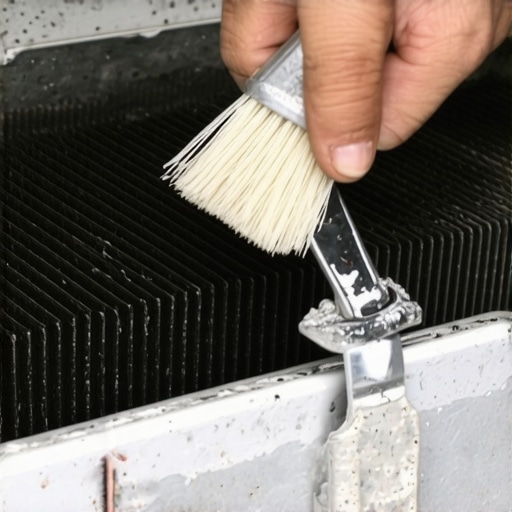
Beyond the structural gaps, you have to account for the ‘insulation’ you didn’t buy: dust and pet hair. Even with perfect clearance, a clogged condenser coil will kill a fridge just as fast as a blocked vent. I make it a habit to use a long, flexible coil brush every six months. I once pulled enough fur out of a neighbor’s fridge to knit a small scarf, and the difference was night and day—the humming stopped, and the sides of the cabinet cooled down instantly. This simple the condenser coil cleaning hack for pet owners with hairy dogs can save you from a denied claim later. If a technician sees that your coils are packed with debris, they may document it as a lack of maintenance, which is why you must know how to maximize your appliance warranty during emergency repairs by keeping your service logs and cleaning habits up to date.
The Paper Test for Proper Ventilation
If you aren’t sure if your fridge is breathing, try the paper test. Take a single sheet of tissue paper and hold it near the bottom intake vent while the compressor is running. It should gently pull toward the grate. Then, hold it at the top exhaust point; it should flutter away. If the paper stays still, your airflow is stagnant. Stagnant air leads to localized overheating, which can fry the delicate sensors on the motherboard. This is often the hidden cause behind those phantom errors that lead homeowners to seek affordable same day appliance fixes with warranty benefits. Precision in your installation today prevents the frantic emergency calls of tomorrow.
Most homeowners think that same-day is the gold standard for any repair. I used to believe that too until I saw a generalist tech try to service a high-end integrated unit with a basic multimeter and no service manual. The truth is, for luxury built-ins, speed can be a trap. A technician rushing to meet a same-day quota might miss the subtle vibration in a fan motor that signals a failing control board. I’ve seen cases where affordable same day appliance fixes with warranty benefits were prioritized over the deep diagnostic work these machines require. Sometimes, waiting 24 hours for a specialist who understands the the difference between a factory warranty and a service contract is the only way to avoid a repeat failure next week. The obsession with scheduling your appliance repair for same-day service in 2025 often overlooks the reality of part availability. For a standard fridge, any tech has the parts. But for your integrated model? A same-day tech who arrives without the specific OEM control board is just a diagnostic fee with no resolution. Real expertise means knowing when to maximize your appliance warranty during emergency repairs by demanding a tech who has serviced your specific brand before. I’ve seen emergency fixes turn into month-long nightmares because a non-certified tech accidentally tripped a proprietary sensor that only the factory could reset. Don’t get lured in by the promise of a one-hour arrival window if it means compromising on the depth of the repair. Instead, look for warranty-backed appliance services you can rely on that emphasize specialized training over sheer speed. This is especially true if you are trying to how to ensure reliable appliance installation in 2025 during a complex remodel where tolerances are measured in millimeters.
Does Your Installation Receipt Actually Protect You?
Here is the oops factor that catches even the most meticulous homeowners: the lack of a signed ventilation checklist. According to the Association of Home Appliance Manufacturers (AHAM), nearly 25% of premature compressor failures in built-in units are linked to installation environments that don’t meet the thermal load requirements. Even if you paid for fast trustworthy appliance installation near you, if the tech didn’t document the exact clearance measurements on the work order, the manufacturer can blame environmental factors to deny a massive parts claim.  You need to how to verify your new appliance is covered under the original warranty by keeping a paper trail of perfection. This includes photos of the vent gaps before the decorative panels went on. I’ve helped dozens of clients how to claim your warranty when the manufacturer denies you 2 simply by producing these photos. Have you ever had a warranty claim denied because of a technicality like this? Let me know in the comments—I’m curious to see how many of you have faced the improper install loophole. Before you get too deep into the paperwork, make sure you know the document every technician needs to see for a valid warranty visit. Understanding what to expect from same-day appliance repair experts includes knowing that the best ones will ask about your model number before they even leave the shop.If you want to move beyond the paper test and actually diagnose your appliance like a professional, you need to invest in a decent digital multimeter. I personally swear by the Fluke 116. It is designed specifically for HVAC and appliance technicians because it includes a microamp setting that is crucial for testing sensors and capacitors. I have seen homeowners try to save twenty dollars by buying a generic no-name meter, only to have it give a false reading that led them to replace a perfectly good five-hundred-dollar control board. When you are looking for affordable same day appliance fixes with warranty benefits, knowing the exact voltage entering your unit can tell you if the problem is the fridge or a loose wire in your wall. I once found a client whose integrated fridge was ‘dying’ every Tuesday afternoon; it turned out to be a massive voltage drop caused by their neighbor’s old pool pump kicking on. Without a high-precision tool, we would have been guessing for weeks.
How do I maintain my integrated refrigerator over time?
Long-term health for these machines comes down to a strict six-month cadence. You cannot treat a built-in unit with the ‘set it and forget it’ mentality of a garage fridge. Every half-year, you should be pulling the toe-kick and using a high-velocity vacuum with a narrow crevice tool. If you have golden retrievers or long-haired cats, you need to double that frequency. This is where the condenser coil cleaning hack for pet owners with hairy dogs becomes your best friend. Beyond cleaning, you should be inspecting the door gaskets for any signs of ‘crustiness’ or loss of suction. A failing gasket causes the compressor to run 30% longer than necessary, which is the primary reason people end up needing warranty-backed appliance services you can rely on long before the ten-year mark. According to the Sub-Zero 600 Series Service Manual, failure to clean the condenser in a high-pet-hair environment is the single most common reason for vacuum switch failure, a repair that can easily cost several hundred dollars in labor alone.
The Future of Appliance Longevity
I predict that by 2027, ‘Digital Twin’ technology will be standard for all high-end kitchen installs. Your fridge won’t just tell you the temperature; it will simulate its own thermal performance against the original factory specs and alert you via an app when it detects a 5% drop in airflow efficiency. We are moving away from reactive repairs and toward predictive maintenance. This means what to expect from same-day appliance repair experts will shift from them fixing a broken part to them arriving to prevent a failure that hasn’t even happened yet. Until that technology is in every home, you have to be the ‘brain’ of the operation. Check your installation paperwork and make sure you have the document every technician needs to see for a valid warranty visit ready in a kitchen drawer. My advanced tip for today: go to your breaker panel and label the specific circuit for your refrigerator. If it ever trips, you need to know immediately if it is a dedicated line or if it is sharing a load with a high-draw appliance like a toaster or microwave, which is a common cause of mysterious control board ‘glitches.’
The Most Expensive Lesson I Learned from a 50-Cent Dust Bunny
Reflecting on a decade of kitchen mishaps, I’ve realized that the greatest threat to your high-end appliance isn’t a power surge—it’s neglect. I once saw a $10,000 integrated unit die because a single piece of packing foam was left in the intake vent. Here is what I’ve learned: first, aesthetics are temporary but physics is forever. If your fridge can’t breathe, it will fail, regardless of how much you paid for the cabinetry. Second, your warranty is only as strong as your maintenance log. When you seek top tips for same-day service warranty coverage, the number one tip is always ‘prove you cleaned the coils.’ Finally, trust your ears. If that hum changes pitch, don’t wait for a puddle. Knowing how to maximize your appliance warranty during emergency repairs starts with catching the problem while it’s still a noise and not a total system failure.
Tools That Saved My Fridge and My Sanity
I don’t expect you to become a full-time technician, but having a few specific items in your utility drawer will save you thousands. I never go into a kitchen without a flexible condenser coil brush; it’s the only way to reach the back of narrow integrated vents without pulling the whole unit out. I also recommend a digital Bluetooth thermometer that logs temperature spikes—this data is gold when you are trying to how to document your fridge failure for an insurance claim 2. Lastly, a simple microfiber cloth and warm water for the simple gasket cleaning that stops fridge door sweating 2 is the most underrated maintenance move in the book. These aren’t just gadgets; they are your frontline defense against premature appliance death.
The Peace of Mind That Comes from a Proactive Kitchen
Your kitchen is the heart of your home, and an integrated refrigerator is its most hardworking resident. By taking these small steps—checking those air gaps, cleaning those coils, and keeping your documentation in order—you aren’t just maintaining a machine; you’re protecting your lifestyle. If you ever feel overwhelmed by a sudden breakdown, remember that warranty-backed appliance services you can rely on are just a call away to help you get back on track. Your journey toward a more reliable kitchen starts with that first audit of your ventilation gaps. Have you ever checked behind your toe-kick and been shocked by what you found? Let me know in the comments below!