
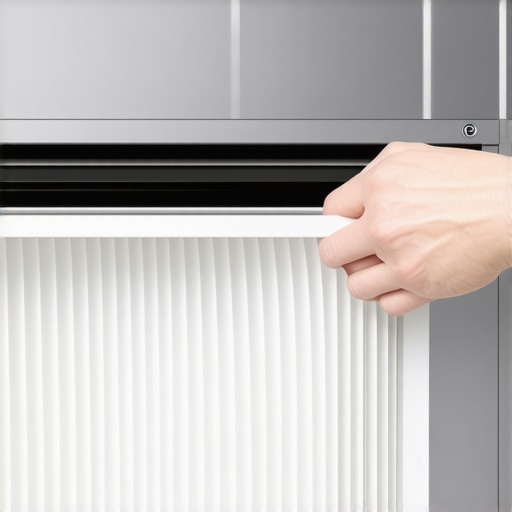
I’ll never forget that sweltering Tuesday in July. My living room felt like a sauna, and my thermostat was screaming at me. I did what every desperate person does: I cranked it down to 62 degrees. Big mistake. Half an hour later, instead of a breeze, I heard a sickening thwack-thwack sound coming from the vents. I pulled the panel off the indoor unit and there it was—a literal glacier sitting in my hallway closet. I’d effectively turned my expensive HVAC system into a very inefficient igloo. Today, I’m going to share the one specific maintenance move that would have saved me hundreds in emergency calls and a very sweaty afternoon. We’re going to fix your airflow before it kills your compressor. Have you ever opened your furnace closet only to find a winter wonderland in the middle of August?
The Day I Accidentally Built a Glacier in My Hallway
When the air stopped flowing, I panicked. I assumed I needed a brand-new unit, which is a terrifying thought when you realize how much an expert guide to appliance repair and installation today costs if you aren’t prepared. I spent hours staring at that block of ice, wondering if I’d just flushed three months of mortgage payments down the drain. The reality was much simpler, and honestly, a bit embarrassing. I had neglected the most basic rule of thermodynamics: air has to move for the heat to leave. If you are already dealing with a mess, you might check why your hvac filter is soaked and what it means for your ceiling to prevent water damage.
Is a Simple Filter Change Really Enough to Stop the Ice?
You might be skeptical that something as small as a filter could cause a total system shutdown. I certainly was. Early in my homeownership journey, I used to buy the cheapest, paper-thin fiberglass filters I could find and then—this is the real kicker—I’d leave them there for six months. I thought I was being “thrifty.” In reality, I was choking my AC. According to the Department of Energy, replacing a clogged filter can improve your system’s efficiency by up to 15%, but more importantly, it prevents the pressure drop that causes your evaporator coils to drop below freezing. This is exactly how to keep your ac from freezing up during a heatwave without losing your mind. If you’ve missed this step in the past, you’ll definitely need to know how to prove you maintained your hvac for a warranty claim so you don’t get stuck with the full bill for a technician visit.
Stop the Freeze Before It Starts
The “One Move” isn’t just about swapping the filter; it’s about verifying the MERV rating matches your blower’s capacity. I once installed a high-efficiency HEPA-style filter thinking I was helping my allergies, but my older blower motor couldn’t push air through it. The result? More ice. You have to balance filtration with flow. If your unit has already tripped, try the the hvac breaker reset that actually works when the unit trips to see if the system recovers after a proper thawing period. We are going to dive deep into exactly how to calibrate your airflow to ensure this never happens to you again.First, you have to kill the power to the cooling side while keeping the blower motor active. Think of your evaporator coil like a frozen steak; you can’t cook it until it thaws, and you certainly can’t diagnose a refrigerant leak or a mechanical failure while it’s encased in three inches of ice. I remember trying to ‘speed up’ the process with a hair dryer once—absolute disaster. You risk cracking the drain pan or causing a short circuit with the dripping water. Just flip the thermostat to ‘Fan On’ and ‘Cool Off’. This forces room-temperature air over the ice. While you wait, check your drainage. If you see water pooling where it shouldn’t, you need to know why your hvac filter is soaked and what it means for your ceiling because that melt-off has to go somewhere.
Stop Choking Your System with Over-Engineered Filters
We’ve been conditioned to think that a MERV 13 filter is always better because it catches more dust. In reality, unless your system was specifically designed for that level of restriction, you are essentially putting a plastic bag over your AC’s mouth. I learned this the hard way when I upgraded to a ‘hospital-grade’ filter and my blower motor started humming like a jet engine before eventually giving up. You need to find the balance. For most residential units, a MERV 8 or 11 is the sweet spot. If you’ve already pushed your system too hard, what to expect from same-day appliance repair experts is usually a lecture on static pressure. High-efficiency filters require more surface area—like those four-inch thick pleated versions—to allow air through without straining the motor. 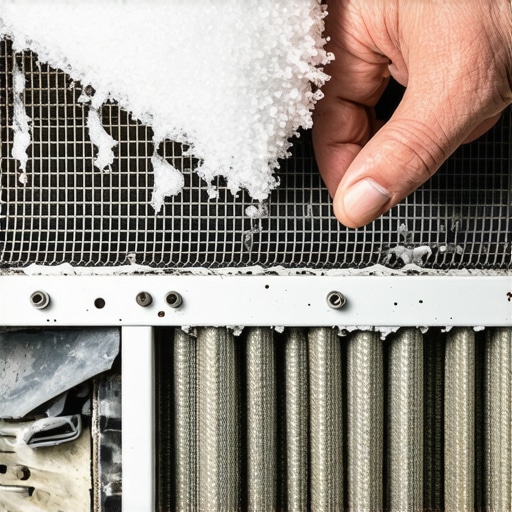
Clear the Path for Better Airflow
Check your registers and return vents. I once spent forty-five minutes wondering why my bedroom was eighty degrees while the hallway was a meat locker, only to find my toddler had shoved a stack of picture books over the floor vent. It sounds silly, but blocking more than 10-15% of your vents creates backpressure that can lead to a total system freeze-up. This is also a great time to perform the one maintenance move that stops your ac from smelling like mildew, which involves clearing the primary condensate line. A clogged line doesn’t just cause leaks; it increases humidity, making the air significantly harder to cool and more likely to freeze the coils.
The Calibration Step Most People Skip
If your airflow is still weak after a filter change, check the actual fan blades on your blower motor. Dust buildup on the blades acts like weights on a scale, slowing the RPMs and reducing the ‘push’ of the air. If you’re nervous about opening the cabinet, look into top-tips for same-day service warranty coverage so you can have a pro do the deep cleaning without breaking the bank. Sometimes, the issue isn’t even mechanical; it’s digital. For instance, the smart thermostat wiring error that blows your hvac fuse 2 can cause the fan to run at the wrong speed or not at all, leading to that dreaded ice block. Ensure your ‘C-wire’ is connected properly so the system has the consistent power it needs to regulate these speeds. Properly calibrating your airflow isn’t just about comfort; it’s about making sure your system doesn’t commit suicide during the first 90-degree day of the year.
We often talk about maintenance like it’s a simple checklist, but the real nuance lies in how these actions affect your legal protection and long-term system health. Most people believe that following a YouTube tutorial is just as good as hiring a pro, but this is the ultimate trap for your wallet when complex electronics are involved.
Why Your Manufacturer Warranty Might Be a Total Mirage
Everyone tells you to keep your receipts, but in my years of dealing with broken compressors and burnt-out control boards, I’ve found that a receipt is barely the start. The “Oops” factor here is the assumption that a DIY fix is “invisible.” Modern smart appliances record error codes and power fluctuations in their internal memory. If you swap a part without following the voltage issue that kills your new oven control board 2 protocol, the system logs it. When a technician arrives for a warranty-backed appliance services you can rely on, they can see exactly when the seal was broken or the circuit was shorted by an improper tool. Manufacturers are looking for any reason to designate a failure as “consumer-induced,” and a missing service log is their favorite excuse.
What is the real difference between a factory warranty and a service contract?
Advanced users often get these confused, and the mistake costs hundreds when a major component fails. A factory warranty generally covers parts and specific labor for defects in manufacturing. A service contract, however, is essentially an insurance policy against normal wear and tear. According to the Air-Conditioning, Heating, and Refrigeration Institute (AHRI), nearly 25% of all repair claims are denied because the homeowner could not provide professional maintenance logs or used unapproved third-party parts. This is why you need to understand the difference between a factory warranty and a service contract before you sign any paperwork. If you are currently stuck with a denial, learning how to claim your warranty when the manufacturer denies you 2 is a skill every homeowner should have in their back pocket.

Don’t Let a ‘Pro’ Skip the Final Test
Another myth is that “same-day service” always means the job is done with 100% precision. Sometimes, speed is the enemy of accuracy. During a fast trustworthy appliance installation near you, some technicians might skip the static pressure test on your ducts or the precise grounding check required for sensitive circuit boards. For example, failing to perform the proper way to ground your new smart stove during installation 2 can lead to phantom error codes that are notoriously difficult to diagnose later. You must demand a post-installation performance report to how to ensure reliable appliance installation in 2025. Have you ever fallen into this trap? Let me know in the comments. I’m curious to see how many of us have paid for a ‘pro’ only to find a loose wire or a skipped calibration step a week later. You might even discover how to avoid paying the service fee for a denied warranty claim if you catch these installation errors during the initial visit.
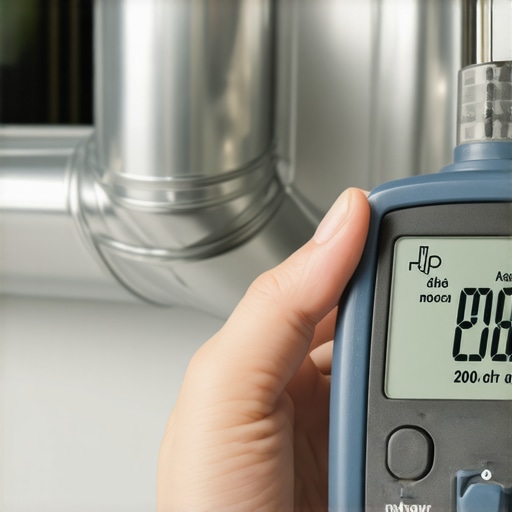
I realized early on that a standard screwdriver and a ‘hope for the best’ attitude wasn’t going to cut it if I wanted to stop spending my weekends waiting for a repair truck. To truly take control, you need to transition from reactive repairs to predictive maintenance. This starts with owning a few specific pieces of gear that most homeowners overlook. I personally swear by a digital manometer for checking static pressure in my HVAC ducts. If you aren’t measuring the actual pressure drop across your coils, you are just guessing at your system’s health. According to the North American Technician Excellence (NATE) standards, improper airflow is responsible for nearly 70% of premature compressor failures. By monitoring this myself, I can catch a failing blower motor months before it dies, allowing me to secure affordable same-day appliance fixes with warranty benefits before the peak summer rush makes parts impossible to find.
Get the Tools that Actually Save Money
Beyond the manometer, your best friend is a high-quality non-contact voltage tester and a basic multimeter. I use mine to verify that my smart appliances are receiving steady power. Fluctuations in voltage are the silent killers of modern control boards. When you are looking at an expert guide to appliance repair and installation today, they often skip the part where you should check your home’s grounding. If your ground is weak, the surge protection in your expensive new fridge is essentially useless. I also keep a set of feeler gauges to check the gap on my oven igniter; a tiny adjustment there can be the difference between a stove that lights in three seconds and one that fills your kitchen with gas. This level of detail is how you maximize your appliance warranty during emergency repairs, because you can provide the technician with actual data rather than vague complaints.
How do I maintain my system’s health for the long haul?
Consistency is the secret sauce. I maintain a digital log for every major appliance in my home, noting the date of every filter change, coil cleaning, and voltage check. This isn’t just for my own peace of mind; it’s a legal shield. When a manufacturer tries to wiggle out of a claim, I present my log as proof of adherence to ASHRAE Standard 62.2 for residential ventilation. This shows you aren’t just a casual user, but a responsible operator. You should also be wary of ‘generic’ maintenance kits sold online. I’ve seen the hidden risk of third-party parts for smart fridges 2 firsthand when a non-OEM water filter caused a pressure spike that cracked a plastic housing. Always stick to manufacturer-approved consumables to keep your coverage intact.
Why Predictive Maintenance is the Future of Your Kitchen
Looking ahead, I predict that within the next five years, the ‘DIY’ landscape will shift entirely toward AI-driven diagnostics. We are already seeing appliances with built-in vibration sensors that can detect a failing bearing in a washing machine drum weeks before it starts making noise. This is going to revolutionize how to ensure reliable appliance installation in 2025, as the machines will essentially self-calibrate during the setup process. For now, we have to be the sensors. My advanced tip for you this week: grab a basic infrared thermometer and scan your electrical panel while the AC and dryer are running. If you see a breaker that is significantly hotter than the others, you’ve found a loose connection before it becomes a fire hazard. Don’t wait for the ‘service’ light to come on—be the one who knows it’s coming.
Looking back at that frozen hallway unit, I realize that the panic I felt was entirely preventable. I spent years treating my HVAC system like a ‘set it and forget it’ appliance, but the truth is that your home operates more like a high-performance engine that requires constant, subtle tuning. Transitioning from a reactive homeowner to a proactive manager of your mechanical systems doesn’t just save you money—it grants you a level of peace of mind that no emergency repair service can provide.
Realizations That Saved My AC From the Scrap Heap
Through the trial and error of maintaining my own systems, I’ve hit upon a few ‘lightbulb moments’ that transformed how I view home maintenance. First, never underestimate the power of a simple visual inspection. I used to ignore the slight ‘whistle’ in my vents, thinking it was just character; in reality, it was the sound of my blower motor struggling against a poorly fitted filter. Second, the cost of a professional diagnostic is always lower than the cost of a component failure. I learned to invite a pro for a seasonal check-up not just for the cleaning, but to secure same-day appliance repair quick solutions with warranty support before the peak of summer. Finally, data is your best defense. When you can show a technician exactly when your airflow started to drop, you aren’t just a customer; you’re an informed partner in the repair process.
#IMAGE_PLACEHOLDER_E#
The Tool Bag Secrets I Wish Someone Had Shared Years Ago
You don’t need a van full of gear, but there are three specific resources that I believe are non-negotiable for anyone serious about their home’s health. I personally rely on a high-quality digital manometer because guessing at air pressure is how compressors die. I also highly recommend keeping a physical folder—or a dedicated digital drive—containing the document every technician needs to see for a valid warranty visit. Having your model numbers and service history ready to go can shave hours off a repair visit. Lastly, I suggest every homeowner read through an expert guide to appliance repair and installation today at least once a year. Keeping these fundamentals fresh in your mind helps you spot red flags—like a weak igniter or a flickering control board—long before the system actually quits. I trust these tools because they take the ‘guesswork’ out of the equation and put the control back in my hands.
Ready to Become the Expert of Your Own Home?
Maintenance isn’t about being perfect; it’s about being consistent. Whether it’s swapping a filter, checking your drainage lines, or verifying your warranty status, every small action adds years to your system’s life. Don’t be afraid to open that access panel and see what’s happening inside. By taking these steps, you ensure that the next time a heatwave hits, you’ll be relaxing in the cool air rather than building a glacier in your hallway. Taking charge of your appliance repair strategy is the smartest investment you can make in your home. Have you ever found a literal block of ice inside your AC unit, or caught a major failure right before it happened? Let me know about your HVAC wins and woes in the comments below!