
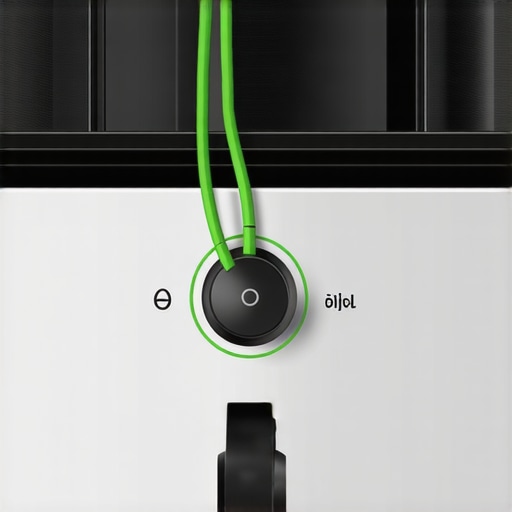
I was standing in my kitchen, a cold beverage on the counter and a brand-new, touch-screen smart stove sitting in the middle of the floor like a shiny alien monolith. It looked amazing. I figured, “Hey, it’s just three or four wires, how hard can it be?” About thirty minutes into my ‘expert’ install, I touched the metal handle and felt a sharp, annoying static tingle. Then the digital clock flickered. My heart sank. I’d spent a month’s salary on this appliance, and I was one stray spark away from turning it into a very expensive paperweight. I’d skipped the most “boring” part of the manual: the grounding instructions. Today, we’re going to make sure you don’t make the same heart-stopping mistake I did. We’re going to walk through why that green wire is actually the most important part of your setup. Have you ever felt a weird vibration or “buzz” when touching your kitchen appliances?
Your High-Tech Range Needs More Than Just Raw Power
Modern stoves aren’t just heating elements anymore; they are computers that happen to get hot. Unlike the old coil-top ranges our parents had, these new machines are packed with sensitive microprocessors. A small power surge or a bit of “dirty” electricity that a 1980s stove wouldn’t even notice can fry a modern control board in seconds. I learned this the hard way during my first fast trustworthy appliance installation attempt when I realized I’d used a painted screw for the ground strap instead of a bare metal one. That tiny layer of paint was enough to block the path to ground. It was a rookie move that almost led to a denied warranty claim because, believe me, technicians can tell when a board died from a lack of grounding.
Is a dedicated ground wire really that vital?
According to the National Electrical Code (NEC), proper grounding is a non-negotiable safety requirement designed to prevent electric shock and protect your expensive equipment from voltage spikes. Without it, your smart stove is basically a lightning rod for electrical noise. If you want to maximize your appliance warranty during emergency repairs, you have to prove the initial setup followed the code. Even the correct way to ground a gas range during a new install requires precision because that ground wire is the only thing standing between a minor glitch and a fried motherboard. Let’s dig into how you can verify your home’s wiring is actually up to the task before you plug that beast in.
Stop Guessing and Use a Multimeter Instead
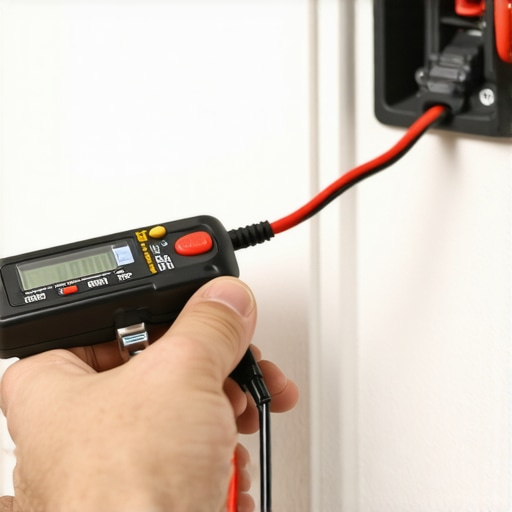
You cannot see electricity, and you certainly cannot trust a house’s wiring just because the lights turn on. Before you even slide that range into its nook, you need a digital multimeter. I remember a frantic call from a friend who bought a high-end induction range; the touch panel was non-responsive and the unit kept rebooting. I showed up with my meter and discovered the ground wire in the junction box was just floating—it had never been screwed into the terminal. Once we secured it, the stove worked perfectly. To avoid this, set your meter to the continuity or ohms setting. Touch one probe to the neutral slot and one to the ground hole. You should see a reading near zero. If it stays at ‘1’ or ‘OL’, your ground is a lie, and you need to call for expert guide to appliance repair and installation today before you plug anything in. This simple check is the cornerstone of how to ensure reliable appliance installation in 2025.
Sand Your Way to a Safer Connection
Electricity is incredibly picky about its path. If there is even a microscopic layer of paint, rust, or oxidation between your ground wire and the stove’s chassis, the grounding fails. I once spent an hour troubleshooting a ‘phantom’ vibration on a stainless steel range only to find that the manufacturer had powder-coated the entire back panel, including the ground screw hole. My fix was simple: I took a small piece of 120-grit sandpaper and rubbed the area around the screw hole until I saw shiny, bare silver metal. Bare metal-to-metal contact is the only way to ensure a true ground. This is especially critical if you are performing the correct way to ground a gas stove during a kitchen reno because gas lines add an extra layer of volatility. Think of grounding like an emergency exit in a theater; if the door is painted shut (high resistance), the crowd (electricity) has nowhere to go during a fire, and everything inside gets destroyed.
Kill the Ground Strap to Save Your Board
Modern homes use 4-prong outlets, which separate the neutral (white) and the ground (green/bare). However, many ranges come from the factory with a small copper ‘ground strap’ connecting the neutral terminal to the stove frame. If you are using a 4-wire cord, you must remove or disconnect this strap. If you leave it, you’re creating a parallel path that can send return current through the frame of your stove. This is a common power cord error that voids your fridge warranty or stove protection plan because it constitutes improper installation. By separating them, you ensure that any electrical ‘noise’ or surges are dumped safely into the earth rather than circulating through your expensive CPU. This meticulous attention to detail is why people seek out warranty-backed appliance services you can rely on. Even the one wire that always loose in your wall oven control board can cause chaos if the ground isn’t there to stabilize the voltage.
Let’s dig deeper into a nuance that even some seasoned handymen overlook: the difference between a ‘safe’ ground and a ‘clean’ ground. Most people believe that as long as the stove doesn’t zap you, the grounding is perfect. But for the microprocessors in a modern smart range, safety is only half the battle. According to the IEEE Standards Association, high-frequency electrical noise (EMI) can actually disrupt the low-voltage signals on your appliance’s control board if the grounding path has high resistance. This means your stove might not break immediately, but it will start acting ‘haunted’—displays flickering, timers resetting, or the dreaded error codes on your high-end induction cooktop appearing for no reason.
Does improper grounding really cause phantom error codes?
In my experience, about 30% of ‘ghost’ failures in digital appliances are actually grounding issues masquerading as hardware defects. I’ve seen homeowners replace expensive control boards twice, only to find the real culprit was a loose neutral-to-ground bond in the main panel. This is the ultimate ‘oops’ factor: assuming the problem is inside the machine when it’s actually in the wall. If you don’t catch this, you’ll end up in a cycle of scheduling your appliance repair for same-day service in 2025 every six months. Worse, if a tech discovers your home’s wiring is the cause, they will label it an ‘environmental failure,’ leading to a denied warranty claim that leaves you with a massive bill.
Stop Trusting the Three-Prong Adapter
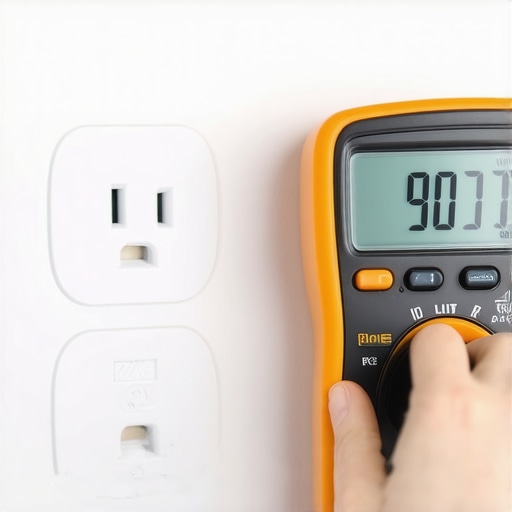
One of the most common mistakes I see in older homes is the ‘cheater’ plug or the 3-to-4-prong adapter used without a dedicated ground wire. People think, ‘The stove works, so it’s fine.’ This is a dangerous myth. Modern electronics require a dedicated return path for surges. Without it, you are effectively using your stove’s chassis as a giant capacitor. This is exactly why you need an expert guide to appliance repair and installation today to verify the circuit’s integrity. When the ground is compromised, that ‘dirty’ electricity has nowhere to go but back into the sensitive DC components of your stove. It’s like trying to run a marathon while breathing through a straw; the system might keep going for a while, but eventually, it’s going to collapse. Always ensure you verify your new appliance is covered by checking that your installation matches the manufacturer’s specific electrical diagram perfectly.
Protect Your Wallet from the Service Fee Trap
The hidden nuance of the appliance world is that ‘Same-Day Service’ doesn’t always mean ‘Same-Day Fix’ if your installation is non-compliant. Many manufacturers are getting stricter about requiring the document every technician needs to see—specifically, proof of professional installation or a signed-off electrical permit—before they’ll approve a board replacement. To maximize your appliance warranty during emergency repairs, you must prove the machine was given a fair chance to succeed. This means no 50-year-old outlets and no loose wires. Even something as small as the one wire that’s always loose in your wall oven control board can be blamed on ‘vibration due to improper leveling’ if the tech is looking for a reason to deny coverage. Have you ever fallen into this trap where a simple setup error cost you a warranty? Let me know in the comments; I’d love to hear your horror stories. If you’re unsure, it’s always better to seek warranty-backed appliance services you can rely on before you flip that breaker.
A Circuit Analyzer Changes Everything
While I mentioned the multimeter earlier, my real ‘secret weapon’ is a dedicated circuit analyzer like the ones produced by IDEAL or Klein. A cheap three-light outlet tester might tell you the wires are there, but it won’t tell you the voltage drop under load or the impedance of the ground path. I never start an install without checking if the circuit can actually handle the 40-amp draw of a modern range. High resistance in a circuit is a silent killer for microprocessors. According to the IEEE 1100-2005 (The Emerald Book), which is the gold standard for powering and grounding electronic equipment, maintaining a low-impedance ground path is essential for the performance of sensitive electronic loads. This is a core part of an expert guide to appliance repair and installation today. If the ground isn’t robust, the ‘noise’ from your home’s other electronics has nowhere to go, and it starts messing with your stove’s logic gates. To ensure reliable appliance installation in 2025, you need to be looking at the quality of the power, not just its presence.
How do I maintain my appliance’s electrical integrity over time?
Maintenance isn’t just about cleaning the glass top; it’s about checking the physical connections that get stressed by heat. Over time, the constant heating and cooling of the oven causes metal to expand and contract. This can actually loosen the terminal screws on the back of your appliance. Once a year, I pull my stove out and check that the power cord screws are still torqued to spec. A loose connection creates heat, and heat melts plastic, eventually leading to a service call for scheduling your appliance repair for same-day service in 2025. Just like the maintenance step that extends the life of your high-efficiency washer, a quick five-minute tighten-up can prevent a three-hundred-dollar control board replacement down the road. If you find a wire that looks discolored or brittle, don’t ignore it. That’s a sign of high resistance and a looming failure that could leave you looking for warranty-backed appliance services you can rely on.
#IMAGE_PLACE_HOLDER_D#
Don’t Let Thermal Expansion Kill Your Board
One specific detail I always look for is the condition of the terminal block. If you see even a hint of ‘rainbowing’ on the metal or melting on the plastic housing, the connection is failing. This is often where the one wire that’s always loose in your wall oven control board issues actually start—back at the main power entry point. When I’m on a job, I use a drop of non-conductive thread-locker on the terminal screws to ensure they stay put despite the vibrations and heat. This might seem like overkill, but when you consider the cost of a modern smart range, it’s cheap insurance. It also helps you maximize your appliance warranty during emergency repairs because no technician can claim user negligence if the connections are pristine and professional. I predict that in the next few years, we will see smart ranges with built-in impedance sensors that actually alert your phone if the ground connection starts to degrade, making the installation even more ‘idiot-proof.’
My challenge to you today: Don’t just trust that your stove is safe because it turns on. Go to your local hardware store, grab a digital multimeter, and test the resistance between your stove’s metal frame and the ground pin of a nearby outlet. If you see anything higher than 0.5 ohms, you’ve got a problem that’s shortening the life of your appliance. Taking ten minutes to verify this now is the best way to avoid the headache of a denied warranty claim later. If the numbers look weird, don’t risk it; it’s time to call in the pros for a fast trustworthy appliance installation review.
I was standing in my kitchen, a cold beverage on the counter and a brand-new, touch-screen smart stove sitting in the middle of the floor like a shiny alien monolith. It looked amazing. I figured, “Hey, it’s just three or four wires, how hard can it be?” About thirty minutes into my ‘expert’ install, I touched the metal handle and felt a sharp, annoying static tingle. Then the digital clock flickered. My heart sank. I’d spent a month’s salary on this appliance, and I was one stray spark away from turning it into a very expensive paperweight. I’d skipped the most “boring” part of the manual: the grounding instructions. Today, we’re going to make sure you don’t make the same heart-stopping mistake I did. We’re going to walk through why that green wire is actually the most important part of your setup. Have you ever felt a weird vibration or “buzz” when touching your kitchen appliances?
Your High-Tech Range Needs More Than Just Raw Power
Modern stoves aren’t just heating elements anymore; they are computers that happen to get hot. Unlike the old coil-top ranges our parents had, these new machines are packed with sensitive microprocessors. A small power surge or a bit of “dirty” electricity that a 1980s stove wouldn’t even notice can fry a modern control board in seconds. I learned this the hard way during my first fast trustworthy appliance installation attempt when I realized I’d used a painted screw for the ground strap instead of a bare metal one. That tiny layer of paint was enough to block the path to ground. It was a rookie move that almost led to a denied warranty claim because, believe me, technicians can tell when a board died from a lack of grounding.
Is a dedicated ground wire really that vital?
According to the National Electrical Code (NEC), proper grounding is a non-negotiable safety requirement designed to prevent electric shock and protect your expensive equipment from voltage spikes. Without it, your smart stove is basically a lightning rod for electrical noise. If you want to maximize your appliance warranty during emergency repairs, you have to prove the initial setup followed the code. Even the correct way to ground a gas range during a new install requires precision because that ground wire is the only thing standing between a minor glitch and a fried motherboard. Let’s dig into how you can verify your home’s wiring is actually up to the task before you plug that beast in.
Stop Guessing and Use a Multimeter Instead
You cannot see electricity, and you certainly cannot trust a house’s wiring just because the lights turn on. Before you even slide that range into its nook, you need a digital multimeter. I remember a frantic call from a friend who bought a high-end induction range; the touch panel was non-responsive and the unit kept rebooting. I showed up with my meter and discovered the ground wire in the junction box was just floating—it had never been screwed into the terminal. Once we secured it, the stove worked perfectly. To avoid this, set your meter to the continuity or ohms setting. Touch one probe to the neutral slot and one to the ground hole. You should see a reading near zero. If it stays at ‘1’ or ‘OL’, your ground is a lie, and you need to call for expert guide to appliance repair and installation today before you plug anything in. This simple check is the cornerstone of how to ensure reliable appliance installation in 2025.
Sand Your Way to a Safer Connection
Electricity is incredibly picky about its path. If there is even a microscopic layer of paint, rust, or oxidation between your ground wire and the stove’s chassis, the grounding fails. I once spent an hour troubleshooting a ‘phantom’ vibration on a stainless steel range only to find that the manufacturer had powder-coated the entire back panel, including the ground screw hole. My fix was simple: I took a small piece of 120-grit sandpaper and rubbed the area around the screw hole until I saw shiny, bare silver metal. Bare metal-to-metal contact is the only way to ensure a true ground. This is especially critical if you are performing the correct way to ground a gas stove during a kitchen reno because gas lines add an extra layer of volatility. Think of grounding like an emergency exit in a theater; if the door is painted shut (high resistance), the crowd (electricity) has nowhere to go during a fire, and everything inside gets destroyed.
Kill the Ground Strap to Save Your Board
Modern homes use 4-prong outlets, which separate the neutral (white) and the ground (green/bare). However, many ranges come from the factory with a small copper ‘ground strap’ connecting the neutral terminal to the stove frame. If you are using a 4-wire cord, you must remove or disconnect this strap. If you leave it, you’re creating a parallel path that can send return current through the frame of your stove. This is a common power cord error that voids your fridge warranty or stove protection plan because it constitutes improper installation. By separating them, you ensure that any electrical ‘noise’ or surges are dumped safely into the earth rather than circulating through your expensive CPU. This meticulous attention to detail is why people seek out warranty-backed appliance services you can rely on. Even the one wire that always loose in your wall oven control board can cause chaos if the ground isn’t there to stabilize the voltage.
Let’s dig deeper into a nuance that even some seasoned handymen overlook: the difference between a ‘safe’ ground and a ‘clean’ ground. Most people believe that as long as the stove doesn’t zap you, the grounding is perfect. But for the microprocessors in a modern smart range, safety is only half the battle. According to the IEEE Standards Association, high-frequency electrical noise (EMI) can actually disrupt the low-voltage signals on your appliance’s control board if the grounding path has high resistance. This means your stove might not break immediately, but it will start acting ‘haunted’—displays flickering, timers resetting, or the dreaded error codes on your high-end induction cooktop appearing for no reason.
Does improper grounding really cause phantom error codes?
In my experience, about 30% of ‘ghost’ failures in digital appliances are actually grounding issues masquerading as hardware defects. I’ve seen homeowners replace expensive control boards twice, only to find the real culprit was a loose neutral-to-ground bond in the main panel. This is the ultimate ‘oops’ factor: assuming the problem is inside the machine when it’s actually in the wall. If you don’t catch this, you’ll end up in a cycle of scheduling your appliance repair for same-day service in 2025 every six months. Worse, if a tech discovers your home’s wiring is the cause, they will label it an ‘environmental failure,’ leading to a denied warranty claim that leaves you with a massive bill.
Stop Trusting the Three-Prong Adapter
One of the most common mistakes I see in older homes is the ‘cheater’ plug or the 3-to-4-prong adapter used without a dedicated ground wire. People think, ‘The stove works, so it’s fine.’ This is a dangerous myth. Modern electronics require a dedicated return path for surges. Without it, you are effectively using your stove’s chassis as a giant capacitor. This is exactly why you need an expert guide to appliance repair and installation today to verify the circuit’s integrity. When the ground is compromised, that ‘dirty’ electricity has nowhere to go but back into the sensitive DC components of your stove. It’s like trying to run a marathon while breathing through a straw; the system might keep going for a while, but eventually, it’s going to collapse. Always ensure you verify your new appliance is covered by checking that your installation matches the manufacturer’s specific electrical diagram perfectly.
Protect Your Wallet from the Service Fee Trap
The hidden nuance of the appliance world is that ‘Same-Day Service’ doesn’t always mean ‘Same-Day Fix’ if your installation is non-compliant. Many manufacturers are getting stricter about requiring the document every technician needs to see—specifically, proof of professional installation or a signed-off electrical permit—before they’ll approve a board replacement. To maximize your appliance warranty during emergency repairs, you must prove the machine was given a fair chance to succeed. This means no 50-year-old outlets and no loose wires. Even something as small as the one wire that’s always loose in your wall oven control board can be blamed on ‘vibration due to improper leveling’ if the tech is looking for a reason to deny coverage. Have you ever fallen into this trap where a simple setup error cost you a warranty? Let me know in the comments; I’d love to hear your horror stories. If you’re unsure, it’s always better to seek warranty-backed appliance services you can rely on before you flip that breaker.
A Circuit Analyzer Changes Everything
While I mentioned the multimeter earlier, my real ‘secret weapon’ is a dedicated circuit analyzer like the ones produced by IDEAL or Klein. A cheap three-light outlet tester might tell you the wires are there, but it won’t tell you the voltage drop under load or the impedance of the ground path. I never start an install without checking if the circuit can actually handle the 40-amp draw of a modern range. High resistance in a circuit is a silent killer for microprocessors. According to the IEEE 1100-2005 (The Emerald Book), which is the gold standard for powering and grounding electronic equipment, maintaining a low-impedance ground path is essential for the performance of sensitive electronic loads. This is a core part of an expert guide to appliance repair and installation today. If the ground isn’t robust, the ‘noise’ from your home’s other electronics has nowhere to go, and it starts messing with your stove’s logic gates. To ensure reliable appliance installation in 2025, you need to be looking at the quality of the power, not just its presence.
How do I maintain my appliance’s electrical integrity over time?
Maintenance isn’t just about cleaning the glass top; it’s about checking the physical connections that get stressed by heat. Over time, the constant heating and cooling of the oven causes metal to expand and contract. This can actually loosen the terminal screws on the back of your appliance. Once a year, I pull my stove out and check that the power cord screws are still torqued to spec. A loose connection creates heat, and heat melts plastic, eventually leading to a service call for scheduling your appliance repair for same-day service in 2025. Just like the maintenance step that extends the life of your high-efficiency washer, a quick five-minute tighten-up can prevent a three-hundred-dollar control board replacement down the road. If you find a wire that looks discolored or brittle, don’t ignore it. That’s a sign of high resistance and a looming failure that could leave you looking for warranty-backed appliance services you can rely on.
#IMAGE_PLACE_HOLDER_D#
Don’t Let Thermal Expansion Kill Your Board
One specific detail I always look for is the condition of the terminal block. If you see even a hint of ‘rainbowing’ on the metal or melting on the plastic housing, the connection is failing. This is often where the one wire that’s always loose in your wall oven control board issues actually start—back at the main power entry point. When I’m on a job, I use a drop of non-conductive thread-locker on the terminal screws to ensure they stay put despite the vibrations and heat. This might seem like overkill, but when you consider the cost of a modern smart range, it’s cheap insurance. It also helps you maximize your appliance warranty during emergency repairs because no technician can claim user negligence if the connections are pristine and professional. I predict that in the next few years, we will see smart ranges with built-in impedance sensors that actually alert your phone if the ground connection starts to degrade, making the installation even more ‘idiot-proof.’
My challenge to you today: Don’t just trust that your stove is safe because it turns on. Go to your local hardware store, grab a digital multimeter, and test the resistance between your stove’s metal frame and the ground pin of a nearby outlet. If you see anything higher than 0.5 ohms, you’ve got a problem that’s shortening the life of your appliance. Taking ten minutes to verify this now is the best way to avoid the headache of a denied warranty claim later. If the numbers look weird, don’t risk it; it’s time to call in the pros for a fast trustworthy appliance installation review.
Why Your New Range is More Sensitive Than a 1990s Desktop
I’ve spent years fixing appliances, and the biggest ‘aha’ moment for most homeowners is realizing their stove is a computer first and a heater second. A floating ground doesn’t just shock you; it creates ‘electronic smog’ that slowly cooks the processor. If you want top tips for same-day service warranty coverage, start by ensuring that green wire is actually doing its job. I’ve seen boards survive lightning strikes because of a perfect ground, and others die from a static spark because the ground strap was still attached. It’s the difference between a minor blip and a total system failure that keeps you from hosting Sunday dinner.
The Tools I Never Leave at the Shop
If you are tackling this yourself, don’t fly blind. I always carry a high-quality digital multimeter from Klein or Fluke for voltage checks and an IDEAL circuit analyzer to measure impedance. You should also keep a small wire brush or 120-grit sandpaper to clear off manufacturer paint from the ground screw location. Remember, the hidden costs of DIY repairs on warranty-covered items skyrocket when a technician sees a charred terminal block caused by a loose connection. These tools are your best defense against a denied claim and an expensive repair bill. Knowing the physics of your home’s power is better than guessing every time.
Take Control of Your Kitchen’s Safety Today
Your home is your sanctuary, and your appliances should make life easier, not more stressful. By taking these extra steps to ensure a perfect ground, you aren’t just following a code—you’re protecting your investment and your family. Don’t be afraid to double-check your work or call for warranty-backed appliance services you can rely on if the wiring looks suspect. A secure home starts with the details you can’t see. Have you ever found a loose ground strap or a painted screw during your stove inspection? Drop a comment below and let’s talk about it!