
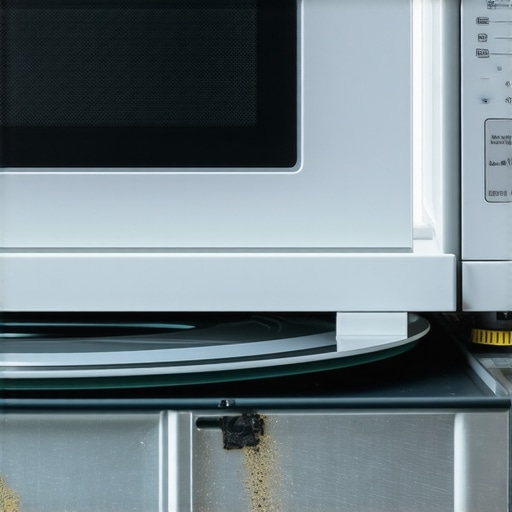
It was 7:00 PM on a Tuesday, and I’d just popped a bowl of leftover lasagna into the microwave for a quick dinner. I hit the 30-second button, but instead of the gentle, familiar hum, I heard it: a harsh, metal-on-metal scouring sound. It was like someone was dragging a wire brush across a chalkboard right in my kitchen. I froze. My first thought was that my trusty appliance was about to turn into a very expensive paperweight. It’s a gut-sinking feeling when your daily routine is interrupted by a noise that sounds like a mechanical death rattle. I’ve been there, and I know exactly how much you want to just ignore it and hope it goes away. Spoiler alert: it won’t, but the fix might be easier than you think.
Your Kitchen Shouldn’t Sound Like a Machine Shop
That gritty, scouring noise usually points to a few specific culprits that I’ve dealt with more times than I care to admit. Often, it’s just the turntable assembly crying out for help. If the roller ring is misaligned or caked with spilled soup from three weeks ago, it’ll create that rhythmic scraping. I once made the mistake of using a heavy-duty abrasive pad to clean the interior, thinking I was being thorough. In reality, I scratched the finish so badly that it started catching on the roller wheels, creating the exact noise I was trying to prevent. If your unit is struggling to spin, you might find that the reason your microwave turntable is jerking is the same reason it’s making that awful racket. Don’t ignore it, because letting it grind away can eventually burn out the motor entirely.
Do I really need to buy a brand new one?
Many homeowners assume a loud noise means the end of the road, but most scouring sounds are mechanical rather than electrical. However, if that sound is accompanied by a burnt smell or sparks, you could be looking at a magnetron fault that makes your microwave spark, which is a much bigger deal. According to the repair experts at Consumer Reports, nearly 25% of microwave issues can be resolved with simple cleaning and part replacement rather than a full unit haul-away. If you aren’t comfortable taking the casing off, looking for same-day appliance repair is a smart move to save your sanity and your leftovers. Have you ever felt that moment of panic when a simple reheat turned into a noisy disaster? Let’s look at how to diagnose if this is a five-minute cleaning job or if you need to call in the pros for a real fix.
Cut the Power Before You Touch Anything
Before you even think about poking around the interior, pull that plug out of the wall. Microwaves aren’t like a toaster; they contain high-voltage capacitors that can hold a nasty charge even after being unplugged for hours. Safety isn’t just a suggestion here; it’s the difference between a successful fix and a trip to the emergency room. Once the power is disconnected, give the unit a few minutes to settle. Think of it like letting a hot engine cool down before you start checking the oil.
The Secret to a Silent Spin
Start your investigation with the most obvious culprit: the turntable glass and the roller ring hidden underneath. I remember one Saturday morning when I was absolutely convinced my motor had died because every time the tray moved, it let out a screech that would wake the neighbors. I pulled the tray out and found a single, charred kernel of popcorn wedged under one of the tiny plastic wheels. That one little piece of carbon was acting like a brake pad against the ceramic floor. If your unit is making noise and struggling to rotate, the reason your microwave turntable is jerking is often just physical debris. Scrub the ring in warm soapy water and wipe the floor of the microwave until it is smooth as glass. This basic maintenance is very similar to the simple cleaning move that stops your microwave from arcing; eliminating friction prevents mechanical failure.
When the Problem Is Deeper Than Just Dirt
If the noise persists after a deep clean, it is time to look at the drive coupler. This is the small plastic piece that pokes through the floor of the microwave and grips the glass tray. Over time, heat and heavy dishes can cause this part to crack or strip out entirely. 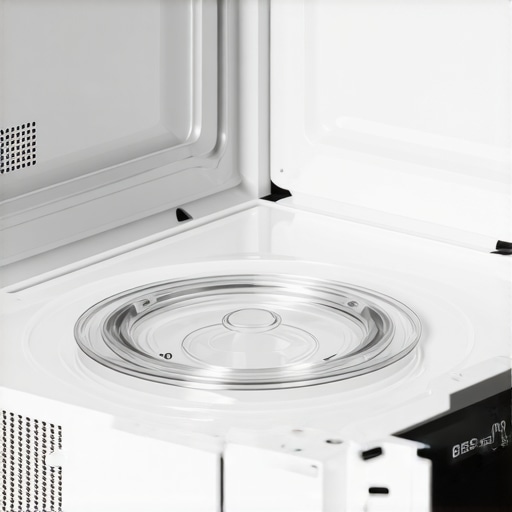
Inspect the Plastic Drive Coupler
Remove the tray and the roller ring, then gently tug the coupler upward. On most models, it should pop right off. Check the ‘D’ shaped hole in the bottom. If it is rounded out, the motor shaft is just spinning uselessly inside the coupler, creating that scouring, vibrating sound. I once tried to ‘rig’ a stripped coupler with some electrical tape to save a few dollars—please, do not do that. The heat eventually melts the adhesive and creates a sticky mess that is much harder to clean. Replacing this five-dollar part is a much better strategy than needing affordable same-day appliance fixes with warranty benefits later on because the motor burned out.
Testing the Turntable Motor
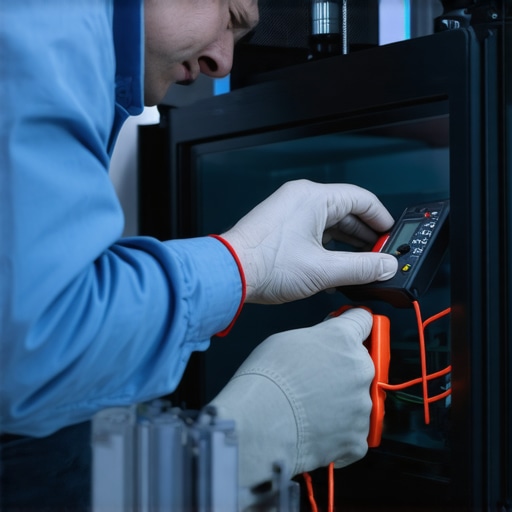
If the coupler looks perfectly fine, the noise is likely coming from the motor itself, which is located under the bottom panel of the unit. You can usually access this by removing a small metal plate on the underside. If you hear a grinding noise coming from the base of the machine, the internal gears of the motor are likely stripped or the bearings have failed. At this point, you have to decide if you are comfortable using a multi-meter or if it is time to consult an expert guide to appliance repair and installation today. Replacing a motor isn’t rocket science, but if you are still within your coverage period, you should definitely learn how to verify your new appliance is covered under the original warranty before you start unscrewing the chassis. A DIY fix on a warrantied unit can sometimes void your future protection, which is a headache nobody needs during a kitchen emergency.
When your microwave starts sounding like a blender full of gravel, the instinctual reaction is to find the fastest help possible. However, I’ve seen homeowners fall into a massive trap: prioritizing speed over certification. The popular belief is that ‘same-day service’ is the gold standard of quality. In reality, speed can sometimes be a red flag. A truly high-demand, expert technician is rarely sitting by the phone waiting for a 2:00 PM call. Most ‘instant’ services are dispatching generalists who might solve the scouring noise but inadvertently trigger a much bigger headache down the road. If you are rushing, you need to know top tips for same-day service warranty coverage to ensure your ‘quick fix’ doesn’t become a permanent problem.
The Same-Day Repair Trap You Didn’t See Coming
Here is the contrarian truth: a technician who promises to fix everything in sixty minutes without seeing the model number is someone you should be wary of. In my experience, a ‘fix’ is only as good as the diagnostic that preceded it. Often, a tech will arrive, swap a motor, and leave—only for the noise to return because the underlying cause (like a warped chassis) wasn’t addressed. You should prepare yourself for what to expect from same-day appliance repair experts, which includes a thorough multi-point inspection, not just a part-swap. According to a study by the Association of Home Appliance Manufacturers (AHAM), appliances repaired with non-OEM (Original Equipment Manufacturer) parts have a 15% higher failure rate within the first twelve months. If your ‘same-day’ guy uses a generic part to save time, he might have just set a timer on your microwave’s remaining life.
Can I Trust a Third-Party Tech Without Losing My Factory Coverage?
This is the question that separates the amateurs from the pros. Most homeowners don’t realize that simply opening the outer casing of a high-end microwave can void your manufacturer’s protection if the person doing it isn’t ‘authorized.’ There is a massive difference between a factory warranty and a service contract, and knowing which one you are operating under is vital. If you call a local handyman because he’s cheap and fast, you are essentially gambling the entire value of your appliance. I’ve seen $600 units become unrepairable because a well-meaning DIYer or an uncertified tech broke a security seal or used the wrong gauge of wire. To protect yourself, always have the document every technician needs to see for a valid warranty visit ready before they even step into your kitchen.
Stop Hunting for Your Receipt and Start Looking for the Seals
The ‘Oops’ factor in appliance repair isn’t usually the repair itself—it’s the paperwork. I once worked with a client who had a valid warranty claim denied because they couldn’t prove the unit hadn’t been tampered with previously. Most modern appliances have small, heat-sensitive or brittle stickers over critical screws. If these are broken, the manufacturer assumes ‘unauthorized entry.’ Before you let anyone touch your machine, ask them if they are bonded and if their work preserves the factory seal. Learning how to avoid paying the service fee for a denied warranty claim is a skill that will save you hundreds over your lifetime as a homeowner. Don’t let the stress of a noisy kitchen lead you into a bad financial decision. Have you ever fallen into this trap of hiring for speed and regretting it later? Let me know in the comments.
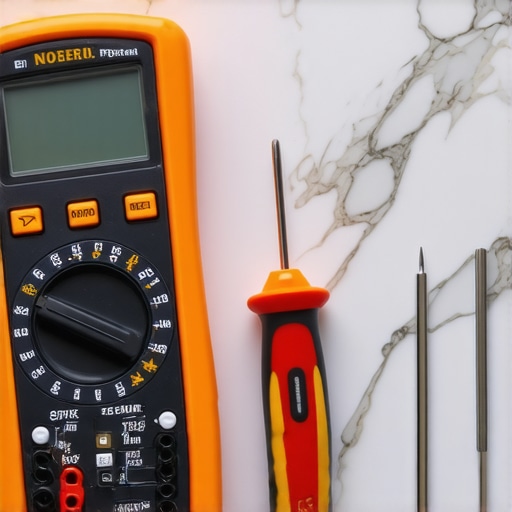
When I’m not chasing down rogue popcorn kernels, I’m usually refining my home maintenance toolkit. You don’t need a warehouse full of gadgets, but there are three things I never tackle a repair without. First is a high-quality digital multimeter. I use a Fluke 117 because it has a low-impedance mode that prevents false readings from ‘ghost voltage.’ This is non-negotiable for diagnosing whether that scouring noise is a motor failing or a voltage drop from a bad outlet. Second is a set of insulated screwdrivers. According to the National Fire Protection Association (NFPA) 70E standards, using the right insulated tools isn’t just about the tool—it’s about creating a boundary of safety against arc flashes. Finally, I keep a tube of food-grade silicone lubricant. Using the wrong grease near your food is a rookie mistake I see too often. If you’ve just moved in, following an expert guide to appliance repair and installation today will tell you that the right tools are half the battle.
How do I maintain my kitchen fleet over time?
Maintenance isn’t a one-and-done event; it’s a rhythm. I’ve started treating my kitchen like a small data center. Every six months, I pull the microwave and oven out to check for airflow blockages. This is where how to ensure reliable appliance installation in 2025 comes into play—making sure those clearances are still clear. I also run a ‘load test’ on my washer and dryer. If you notice a slight change in performance, the maintenance step that extends the life of your high-efficiency washer is usually a simple gasket clean or a filter flush. I track all of this in a simple spreadsheet: date of purchase, model number, and the last time I checked the seals. It sounds obsessive until you’re the only person on the block who doesn’t need fast trustworthy appliance installation near you because your ten-year-old fridge is still humming perfectly.
The End of Guesswork is Coming
Looking ahead, the trend is moving away from reactive repairs toward predictive diagnostics. In the next five years, I expect microwaves and ranges to ship with built-in vibration sensors that alert you to a failing motor weeks before the scouring sound even starts. We are entering an era where scheduling your appliance repair for same-day service in 2025 will be done automatically by the machine itself. For now, the best thing you can do is be proactive. My advanced tip for you today: Take five minutes to pull your microwave forward and vacuum the rear intake vents. It lowers the operating temperature of the magnetron and can literally double the lifespan of the unit. Try it tonight and feel how much cooler the chassis stays during your next 2-minute reheat.
The Reality Check Behind That Scouring Sound
Over the years, I’ve realized that a microwave’s scouring noise is rarely a random act of mechanical rebellion; it is a conversation the machine is trying to have with you. The biggest ‘lightbulb moment’ for me was discovering that most motor failures are actually caused by the owner’s cleaning habits. If you use too much water, it seeps down the drive shaft and rusts the bearings. Another hard lesson is that speed often masks incompetence. When you are scheduling your appliance repair for same-day service in 2025, always ask if they stock the specific motor for your model number. If they don’t, that ‘same-day’ visit is just an expensive way to get a quote you could have gotten over the phone. Lastly, remember that how to avoid paying the service fee for a denied warranty claim starts with knowing when to stop your DIY efforts. If you see a security screw with a painted seal, put the screwdriver down and call a pro.
#IMAGE_PLACEHOLDER_E#
A Pro’s Minimalist Toolkit for Microwave Maintenance
You don’t need a garage full of equipment to keep your appliances silent. I personally rely on a few specific items to keep my kitchen running smoothly. First, a simple telescopic mirror is essential for looking under the turntable lip without straining your back. Second, I always keep a small bottle of high-temp, food-grade grease. Knowing the specific lubricant to use on squeaky oven door hinges is a game changer, and it works wonders on microwave roller rings too. For those who want to dive deeper into technical standards, I highly recommend the AHAM (Association of Home Appliance Manufacturers) consumer guides. They offer much more detail than your standard user manual. If you’re ever in doubt about a part, checking an expert guide to appliance repair and installation today will save you from buying the wrong voltage motor off a random auction site.
Reclaim Your Quiet Kitchen Today
That harsh, grinding sound doesn’t have to be the soundtrack to your dinner prep. Whether it is a simple cleaning of the roller ring or a professional motor replacement, taking action now prevents a total appliance meltdown later. By focusing on quality parts and maintaining your documentation, you ensure that your microwave stays a reliable part of your daily routine for years to come. Don’t be afraid to reach out for warranty-backed appliance services you can rely on if the job feels too big for a Sunday afternoon. Your leftovers deserve better than a noisy, struggling machine. Have you ever found a surprising object stuck under your microwave turntable? Let me know in the comments below!