
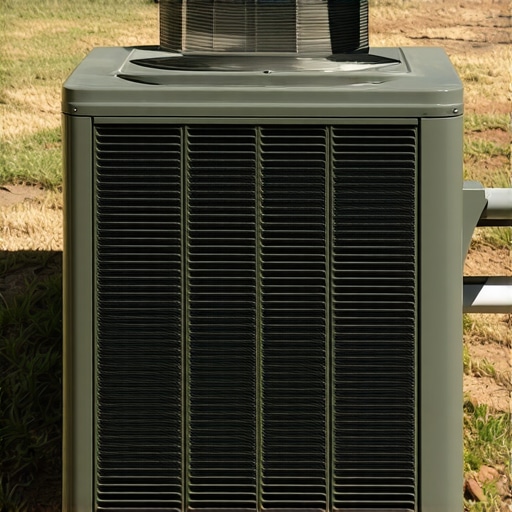
I still remember the “Great Melt” of last July. It was 104 degrees, the kind of heat that makes the asphalt feel like a sponge. I woke up at 2 AM to a rhythmic drip, drip, drip coming from the utility closet. My AC unit wasn’t a cooling machine anymore; it was a five-thousand-dollar block of Arctic ice, and my carpet was soaking wet. I’d made the classic rookie mistake: I thought if I just cranked the dial down to 60, the house would cool faster. Instead, I choked the system until it literally froze solid.
The Night I Turned My Living Room Into a Swamp
Living through a heatwave without air conditioning is a special kind of misery, but seeing your unit turn into a glacier is even worse. Most homeowners assume that if the air feels weak, they just need to push the system harder. I learned the hard way that why your HVAC filter is soaked usually has everything to do with restricted airflow rather than the temperature setting. If you’ve ever looked at your evaporator coils and seen a frost pattern, you’re minutes away from a total shutdown. Today, I’m going to walk you through exactly how to keep that airflow moving so you don’t end up desperately searching for fast trustworthy appliance installation near you in the middle of a record-breaking heatwave.
Wait, is a frozen AC actually a death sentence?
You might be worried that those ice crystals mean your compressor is fried, but often, it’s just a simple maintenance hiccup you can handle. Early in my DIY journey, I once called a technician out just to have him point at a dusty filter—it was embarrassing, and the service fee hurt. According to the U.S. Department of Energy, replacing a clogged filter can improve your system’s efficiency by up to 15%. I didn’t know that then, and I nearly lost my coverage because I hadn’t kept up with the basics. If you want to avoid that headache, you need to know how to prove you maintained your HVAC for a warranty claim before the inspector arrives. We’re going to cover the essential habits—like coil cleaning and vent checks—that keep the ice at bay and your house comfortable. Have you ever walked into your utility room only to find a puddle of water where your furnace should be? It is a sinking feeling, but we can fix this.
Fix Your Airflow Before the Ice Takes Over
Think of your air conditioner like a pair of lungs. If you try to run a marathon while breathing through a cocktail straw, you’re going to collapse. Your AC does the same thing when the air filter is packed with dust or pet hair. When the air cannot move across the evaporator coils, the temperature of those coils drops below freezing, and the moisture in the air turns into a solid sheet of ice.
Replace Your Filter Every Thirty Days
This is the simplest fix, but it is the one everyone skips. I once worked on a unit for a friend who complained his house felt like a sauna. I pulled out a filter that looked like a wool rug. It was so thick that the blower motor was screaming in protest. If your unit is struggling, you should also learn how to check your HVAC blower capacitor without a multimeter because a weak capacitor cannot give the motor the kick it needs to push air through even a clean filter.
Clean the Coils to Save the Compressor
The evaporator coils are the heart of the heat exchange process. If they are covered in a layer of gunk, they cannot absorb heat from your home. This leads to that ‘dirty sock’ smell and, eventually, a frozen block of aluminum. I use a soft-bristle brush and a specialized foaming cleaner. Last spring, I spent twenty minutes doing this, and it was the one maintenance move that stops your AC from smelling like mildew for the rest of the season.
Flush the Condensate Drain Line
That rhythmic dripping I heard during my own ‘Great Melt’ was the result of a clogged drain line. Dust and algae love to grow in the warm, wet environment of your AC’s drain pan. I now use a wet-vac to suck out the line from the outside of the house once a year. It prevents the water from backing up and soaking your floor or ceiling. If you find yourself in a situation where the water has already caused damage, you might need to look for affordable same day appliance fixes with warranty benefits to handle the electrical fallout.
Reset Your Breaker the Right Way
If your system shuts down completely, do not just keep flipping the thermostat on and off. You could cause a massive power surge. I learned this the hard way when I kept forcing my frozen unit to run. I eventually tripped the main breaker and had to hunt down the HVAC breaker reset that actually works when the unit trips. Give the system at least thirty minutes to thaw out with the power off before you attempt a restart. This ‘patience’ step is what separates a $20 DIY fix from a $2,000 emergency replacement. If the unit will not kick back on even after a reset, it might be time to consult what to expect from same-day appliance repair experts so you are not walking into a service call blind. Consistency in these small tasks is the only way to keep your house cool without breaking the bank.
It is easy to get caught up in the panic of a broken appliance and prioritize speed above everything else. We have been conditioned to think that ‘same-day’ is the ultimate gold standard of service. However, if you want to protect your investment, you need to look past the marketing. While speed is great, the nuance lies in the difference between a technician who shows up fast and one who shows up prepared. In my years of dealing with various contractors, I have learned that a rushed repair often leads to the use of ‘universal’ parts that might keep the machine running for a week but fail to meet the specific demands of your high-end unit.
Stop Chasing the Clock When Your AC Dies
Everyone says you should call the first person who answers the phone during a heatwave, but in my experience, that is how you end up with a ‘patch’ rather than a ‘fix.’ When you demand immediate arrival, you might be bypassing specialized experts for a generalist who happens to be nearby. According to research from the National Association of Service Managers, the ‘first-time fix rate’—the holy grail of appliance repair—is significantly higher when a technician has time to review your model number and error codes before arriving. If you want a result that lasts, you need to understand what to expect from same-day appliance repair experts regarding their diagnostic process versus just their travel time.
Is it better to wait for a specialist or grab the first available appointment?
The ‘oops’ factor here is huge. I once accepted a same-day slot for a smart fridge repair, and the tech used a generic control board. It worked for three days before the whole interface fried. That is the hidden risk of third-party parts for smart fridges that most homeowners ignore in the heat of the moment. If your unit is under a manufacturer agreement, using non-certified parts can void your entire coverage. Instead of just asking ‘how fast can you get here?’, start asking ‘do you carry OEM parts for my specific brand?’. Relying on warranty-backed appliance services you can rely on ensures that even if the repair takes an extra four hours of waiting, it won’t cost you thousands in the long run.
The Paperwork Trap That Voids Your Protection
Here is the most common mistake I see: homeowners think that having a warranty means they are automatically covered. This is a dangerous myth. When a technician arrives, the first thing they look for isn’t the broken part; it’s proof that you didn’t cause the breakage through neglect. If you cannot produce a maintenance log, the service provider can categorize the failure as ‘owner-induced.’ To avoid this, you must have the document every technician needs to see for a valid warranty visit ready on the counter. I keep a folder in my utility room with every filter receipt and coil cleaning date. Without it, you might find yourself in a frustrating battle over how to avoid paying the service fee for a denied warranty claim after the work is already done. Have you ever fallen into this trap of missing paperwork during an emergency? Let me know in the comments below.
Beyond just the paperwork, you need the right gear if you are going to act as the first line of defense for your home. I do not just mean a screwdriver and a prayer. If you want to play in the big leagues of home maintenance, you need a thermal imaging camera. I personally use a compact FLIR attachment for my smartphone. Why? Because it allows me to see exactly where cold air is leaking from my ducts or which circuit breaker is running too hot before it actually trips. This is not just gadgetry; it is about finding the ‘invisible’ failures that lead to those 2 AM emergencies. When you can show a technician a heat map of a failing motor, you are not just a customer; you are an informed partner in the repair process. This level of detail is exactly what we discuss in our expert guide to appliance repair and installation today.
How do I maintain my home systems over time?
Consistency beats intensity every single time. You do not need a PhD in engineering; you just need a calendar and a bit of discipline. I follow the ‘Seasonal Switch’ method. Every time the clocks change, I do a deep dive into my utility room. For my AC, that means using the condenser coil cleaning hack for pet owners with hairy dogs to clear out the winter’s debris that can choke the compressor. For my smart home tech, it means checking the smart thermostat calibration step most diyere skip during setup. If your thermostat is off by even two degrees, your compressor is working 10% harder than it needs to. Over five years, that is the difference between a system that lasts and one that dies an early, expensive death. According to the Air Conditioning Contractors of America (ACCA) Standard 4, failure to verify these small technical specs can lead to a 30% reduction in equipment lifespan. #IMAGE_PLACE_HOLDER_D# I predict that in the next few years, we are going to see ‘Predictive Maintenance’ modules become standard in every high-end appliance. Your fridge will not just stop cooling; it will send an alert to your phone saying the compressor vibration pattern has changed and a failure is likely in fourteen days. Until then, we have to be the sensors. This is why I am so adamant about how to ensure reliable appliance installation in 2025—you have to set the baseline on day one. If the initial setup is flawed, no amount of cleaning will save the motor from burning out. When you do run into a wall, make sure you know how to maximize your appliance warranty during emergency repairs. Do not let a service technician rush you into a decision without checking your logs first. Take ten minutes right now to download a thermal imaging app or order a basic infrared thermometer. Scan your vents while the AC is running. If you see a five-degree difference between two vents in the same room, you have just found a duct leak that has been stealing your money for years. Go check it now—you will be surprised what you find.
The Hard Truth About Waiting for the Best Technician
Over the years, I have realized that the panic of a heatwave often leads us to make the worst financial decisions for our homes. It is easy to grab the first person who answers the phone, but here are a few hard-won lessons from my own DIY journey. First, specialization always trumps speed. Waiting an extra morning for a technician who specializes in your specific brand is consistently cheaper than hiring a generalist who arrives in twenty minutes and guesses the problem. Second, I have learned that maintenance is the only insurance that actually works. Most ‘unfixable’ issues I have encountered were actually just safety sensors doing their job to prevent a fire. If you keep the sensors clean, the machine keeps running. Finally, use the diagnostic time wisely. The service fee you pay is not just a travel cost; it is an investment in professional insight. Use that time to learn from the pro, which is a core part of our top-tips for same-day service warranty coverage.
My Personal Toolkit for Stress-Free Home Ownership
If you want to move from being a reactive homeowner to a proactive one, you need a few reliable resources in your corner. I personally rely on these specific tools and habits every single season to avoid a system failure. I keep a physical Digital Maintenance Log in a bright orange folder in my utility room. Having every receipt for filters and coil cleaners ready is the only way to maximize your appliance warranty during emergency repairs without a stressful debate with an inspector. I also suggest using a high-quality MERV 8 filter. Do not go for the hyper-expensive filters that claim to stop every microscopic particle; they often choke the airflow of residential blowers. A MERV 8 is the ‘Goldilocks’ of filters—it protects the equipment without causing the ice-ups I experienced during my July disaster. Lastly, keep a link to the scheduling your appliance repair for same-day service in 2025 guide on your phone, so you are never starting from zero when a real emergency strikes.
Turning Your Utility Room Into a Source of Pride
You do not have to be a master mechanic or a licensed engineer to have a home that runs like a Swiss watch. It starts with one simple filter change, one quick coil cleaning, and a little bit of disciplined curiosity. By taking these small, consistent steps, you are not just saving money on utility bills; you are buying yourself peace of mind for the hottest days of the year. Next time the outdoor temperature climbs into the triple digits, you will not be the one listening for a frantic drip in the closet. You will be the one relaxing in the cool air, knowing you have mastered the expert guide to appliance repair and installation today. Your home is your biggest investment—treat its mechanical heart with the respect it deserves. Have you ever had a warranty claim denied because of a missing receipt or a maintenance oversight? Let me know in the comments below.