
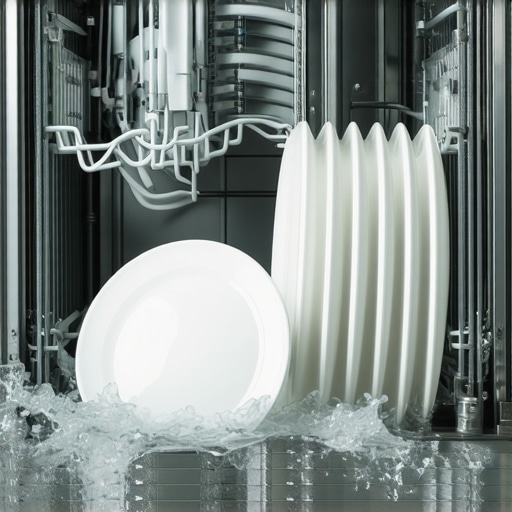
I remember standing in my kitchen last Tuesday, socks soaking wet because I’d just opened the dishwasher door to a miniature, greasy lake. It’s that visceral moment of defeat—the cycle finished, the light is green, yet there’s three inches of murky soup staring back at you. If you’ve ever had to bail out your appliance with a Tupperware container while muttering under your breath, you know exactly the frustration I’m talking about. It usually happens right after a big meal when you’re already exhausted. You expect the machine to do the heavy lifting, but instead, it hands you a plumbing project.
That Sinking Feeling in Your Kitchen Sink
When you see that standing water, your mind immediately goes to the worst-case scenario: a total pump failure or a massive repair bill. But here is the good news: I’ve spent enough time elbow-deep in greywater to know that most of the time, your dishwasher isn’t dead. It’s just choked. Today, I’m going to walk you through exactly how to diagnose why your dishwasher still has water at the bottom after a cycle so you can get back to your life without the smell of stagnant dishwater lingering in the air. We will look at filters, hoses, and those little hidden components that most people ignore until it’s too late.
Will a Professional Repair Cost More Than the Dishwasher?
It’s a valid fear. Many homeowners worry that by the time they pay for affordable same-day appliance fixes, they might as well have bought a new unit. According to data from the Association of Home Appliance Manufacturers, a significant percentage of service calls for drainage issues are actually caused by preventable maintenance oversights rather than mechanical failure. You don’t always need a whole new machine; sometimes you just need to know which secret switch inside your dishwasher has been tripped or where a stray popcorn kernel is hiding.
The Amateur Mistake I Made So You Don’t Have To
A few years back, I was convinced my drain pump had burnt out. I ordered the expensive part, waited three days, and spent two hours on my knees swapping it out. The result? The water stayed exactly where it was. It turns out, I had a simple drain line clog that always happens after a holiday dinner. I’d ignored the basics and jumped straight to the expensive stuff. We’re going to look at everything from the drainage trick for a gurgling kitchen sink to checking your internal filters. Have you ever opened your dishwasher only to find it looking more like a swimming pool than a cleaning machine? If so, don’t panic—the fix is often simpler than you think.
Clear the Sludge Out of Your Filter First
The first thing you need to do is reach into that murky water and pull out the filter. Most modern dishwashers have a cylindrical filter that twists and lifts out. I’ve seen filters that looked less like machine parts and more like a soggy compost heap. If this is clogged, the water physically cannot reach the drain pump. Think of it like trying to drain a bathtub with a towel draped over the plug—it just isn’t going to happen. I remember one Sunday afternoon helping a neighbor who was ready to buy a whole new unit. I pulled her filter out, and it was encased in a thick, grey layer of grease and what looked like old kale. We scrubbed it with a toothbrush and hot soapy water, and the machine drained perfectly on the next try. Before you assume you need a motor replacement, give that filter a deep clean.
Finding the Hidden Debris in the Sump
Once the filter is out, look into the hole where it sat. This is the sump. Use a small sponge or a turkey baster to remove the remaining water so you can see clearly. You are looking for things like broken glass, cherry pits, or those tiny plastic ties from bread bags. Even a single toothpick can jam the impeller—the little spinning fan that pushes water out. If you feel something hard, be careful; I once sliced my finger on a piece of a ramekin that had shattered weeks prior. If you discover a mechanical blockage here, you might have found the secret switch inside your dishwasher that stops the overflow by simply clearing the path. 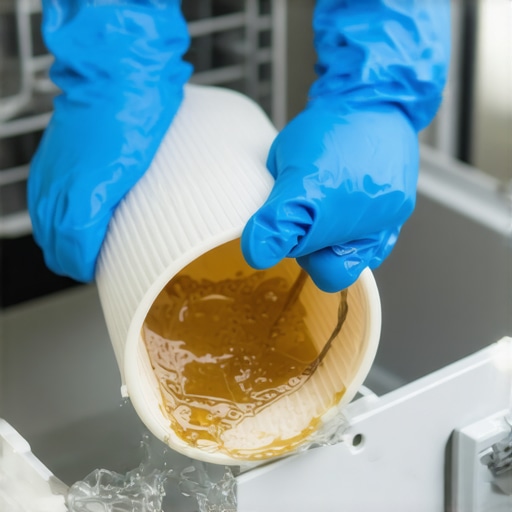
Check the Geometry of Your Drain Hose
If the filter is clean and the water still won’t budge, the problem is likely in the exit path. Your dishwasher doesn’t just let water fall out; it has to pump it up and away. This is where the drain line slope rule for an odor-free dishwasher becomes critical. The hose should ideally come off the dishwasher, loop up higher than the sink’s water level (this is called a ‘high loop’), and then connect to your drain or disposal. Without this loop, gravity works against you. Dirty water from your sink can actually flow backward into your dishwasher. It’s like trying to push a boulder uphill; if the hose is sagging or kinked, the pump will eventually give up the ghost. Check under your sink to ensure that hose is secured high up against the cabinet wall.
Why the High Loop is Non-Negotiable
A sagging hose is a primary reason why your new canton kitchen remodel might be choking the dishwasher drain. Often, during a renovation, the plumbers or installers focus on the aesthetics of the cabinetry and forget to secure the appliance lines properly. If your sink gurgles when the dishwasher runs, that’s a red flag that your drainage geometry is off. You want a clear, unobstructed path for that water to escape. If you find a kink in the hose, you might be able to straighten it out, but if the hose is old and brittle, it’s better to replace it entirely rather than risk a flood later.
Clear Out the Garbage Disposal Connection
Believe it or not, your garbage disposal is often the culprit for dishwasher drainage drama. These two appliances are joined at the hip. If you just installed a new disposal and the dishwasher isn’t draining at all, there is a 99% chance the ‘knockout plug’ is still inside the disposal’s nipple. I’ve made this mistake myself—it’s a rite of passage for DIYers. You have to take a screwdriver and a hammer, pop that plastic plug out, and fish it out of the disposal chamber. If the disposal isn’t new, the connection point can still get clogged with pulverized food waste. Disconnect the dishwasher hose from the disposal and poke around inside the connector with a screwdriver to ensure it’s clear. Ensuring this connection is solid is a key part of how to ensure reliable appliance installation in 2025. If these DIY steps feel overwhelming, you can always look into expert guide to appliance repair and installation today for professional backup. Sometimes, same-day appliance repair quick solutions with warranty support are the only way to handle a stubborn pump that refuses to prime after a major clog.
While clearing a filter or looping a hose can solve many drainage issues, there’s a deeper level to appliance maintenance that most homeowners completely miss. We often assume that if a machine is under warranty, we are 100% protected. But here is a contrarian take: your warranty is only as good as your paperwork. Most people believe that calling for service is the first step, but the real work starts weeks before the breakdown happens. If you cannot prove you performed the basic maintenance outlined in the manual, your provider might find a loophole to deny coverage. I have seen claims rejected simply because a homeowner didn’t have a record of cleaning their internal components.
Why Your Same-Day Service Request Might Fail Before It Starts
Everyone wants their kitchen back to normal instantly, which is why scheduling your appliance repair for same-day service in 2025 is so popular. However, the biggest mistake I see is homeowners ‘helping’ by resetting the machine or clearing error codes before the technician arrives. You might think you’re being proactive, but you’re actually erasing the digital footprints the pro needs to find the ghost in the machine. Modern dishwashers and fridges store historical data; when you pull the plug to ‘reset’ it, you often wipe that history. If you want same-day appliance repair quick solutions with warranty support, leave the error code blinking on the screen so the tech can see exactly what triggered the failure.
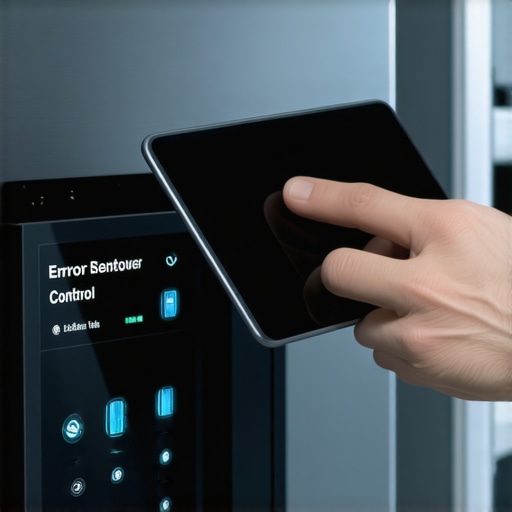
Another nuance is the dreaded ‘no-fault-found’ service fee. If a technician comes out and finds that the only problem was a clogged filter you could have cleaned yourself, you’ll likely be on the hook for the visit. Learning how to avoid paying the service fee for a denied warranty claim is about knowing where the DIY line ends and professional expertise begins. According to the Association of Home Appliance Manufacturers (AHAM), a significant portion of ‘broken’ appliances are actually just suffering from sensor errors caused by lack of routine maintenance. They suggest that keeping a simple log of when you cleaned filters or descaled the unit can be the difference between a free repair and a $200 bill.
The Hidden Trap in Third-Party Protection Plans
If you bought an extra protection plan from a big-box store, you need to watch out for the deductible trap in most third-party appliance protection plans. Unlike the manufacturer’s original coverage, these plans often have ‘per-incident’ fees that can rival the cost of the part itself. It is vital to how to verify your new appliance is covered under the original warranty before you let a third-party company take over. I’ve talked to many neighbors who paid for a plan only to realize they still had to pay $100 just for someone to knock on their door. Always check the fine print to see if ‘labor’ is truly included or if there is a hidden service gatekeeper.
Can a Software Glitch Mimic a Total Hardware Failure?
In the age of smart kitchens, the answer is a resounding yes. Sometimes your dishwasher won’t drain not because the pump is dead, but because the control board has a logic glitch. This is where expert guide to appliance repair and installation today becomes invaluable. A pro might use a specialized tablet to reflash the firmware rather than tearing out the plumbing. If you are dealing with a high-end unit, ensure you are getting warranty-backed appliance services you can rely on from people who understand the digital side of the machine. Have you ever fallen into the trap of clearing an error code and regretting it later? Let me know in the comments. We can all learn from those ‘oops’ moments to keep our kitchens running smoother.
To truly escape the cycle of constant repairs, you need more than just a screwdriver and a prayer. I personally keep a dedicated ‘Kitchen Rescue Kit’ in my pantry because I’ve learned that having the right tools is the difference between a ten-minute fix and a three-day headache. For example, I swear by a high-quality multimeter for testing continuity. Why? Because guessing if a thermal fuse has blown is a total waste of your Saturday. If you aren’t ready to probe live circuits, at least grab the specific wrench you need to unjam a disposal in seconds. It has saved me from calling a plumber at 9 PM on a Sunday more times than I can count. Most people wait for a breakdown to act, but the real power lies in having your gear ready before the water starts leaking.
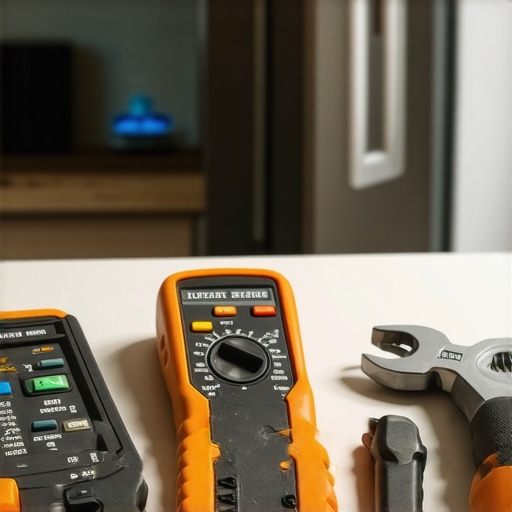
Stop Guessing and Get the Right Gear
Looking ahead, the way we maintain our homes is shifting toward a predictive era. I suspect that within the next few years, your dishwasher won’t just fail; it will send a notification to your phone stating the impeller is 85% obstructed. This kind of telemetry is already creeping into high-end units, which is why how to ensure reliable appliance installation in 2025 now often includes setting up a stable Wi-Fi mesh in your laundry room just for your machines to communicate. Embracing these smart tools now can help you catch a small clog before it burns out a $200 pump.
Keep Your Paperwork as Clean as Your Filters
The secret to long-term appliance health is a two-pronged approach: physical cleaning and digital documentation. You should be performing the maintenance step that extends the life of your high-efficiency washer every three months without fail. But you must also keep what I call a ‘Digital Asset Folder.’ Whenever a technician comes out for what to expect from same-day appliance repair experts, take a clear photo of their work order and any parts they replaced. This is crucial because why your extended-warranty company keeps asking for service logs is often a strategy to find gaps in your maintenance history. By having a timestamped photo of a clean filter, you remove their leverage to deny a future claim.
How can I keep my kitchen running smoothly for the long haul?
Beyond the internal components, don’t ignore your ventilation. The National Fire Protection Association (NFPA), specifically in their NFPA 211 standards, notes that failure to clean dryer vents is a leading cause of home appliance fires. It’s not enough to just clean the lint trap; you need to know how to tell if your dryer vent is a fire hazard by checking the external exhaust velocity. If the air feels weak, your machine is working double-time, and even an expert guide to appliance repair and installation today won’t save a motor that has been overheating for years. If you want to be proactive, try this today: Pull your dishwasher out just six inches and check the tension of the drain line. If it’s tight or rubbing against a sharp cabinet edge, you’re looking at a future flood. Adjusting it now takes five minutes and zero dollars.
Lessons from the Appliance Graveyard
Over the years, I have learned that the difference between a minor annoyance and a $500 invoice is often just thirty minutes of focused attention. One thing I always tell my friends is that a quiet machine isn’t always a healthy one; mechanical whispers often precede a total breakdown. If your dishwasher has started making a slight humming or rhythmic vibration, you should check the leveling secret for a silent dishwasher cycle before the internal components start to shake themselves loose. Another hard truth? Most homeowners unintentionally void their own protections by trying to be too helpful. Before you reach for the ‘reset’ button on a failing control board, read up on top tips for same-day service warranty coverage so you don’t accidentally erase the very digital error codes the technician needs to see.
My Survival Kit for Modern Kitchens
I don’t expect you to become a full-time plumber, but having a few specific tools in your junk drawer will fundamentally change your relationship with your home. First, never be without the specific wrench you need to unjam a disposal in seconds; it is the fastest way to fix a drainage backup without calling for expensive backup. Second, I highly recommend keeping a dedicated digital folder on your phone with timestamped photos of every serial number and maintenance receipt. It is the only reliable way to maximize your appliance warranty during emergency repairs when a claims adjuster starts asking tough questions. Finally, always keep a link handy to an expert guide to appliance repair and installation today so you aren’t scrolling through unreliable forums while your floor is getting wet.
Claim Your Victory Over the Greywater Lake
It is easy to feel defeated when your kitchen rhythm is broken, but remember that most modern appliances are just logical puzzles waiting for a solution. Whether you are tackling a stubborn clog yourself or scheduling same-day appliance repair quick solutions with warranty support, the goal is the same: a home that works for you rather than against you. You now have the insider knowledge to check the filters, loop the hoses, and how to verify your new appliance is covered under the original warranty like a seasoned pro. Don’t let a few inches of standing water ruin your week—you’ve got the tools to handle it. Have you ever successfully fixed a major appliance only to find one ‘extra’ screw left over at the end? Let me know about your DIY wins or funny mishaps in the comments below!