
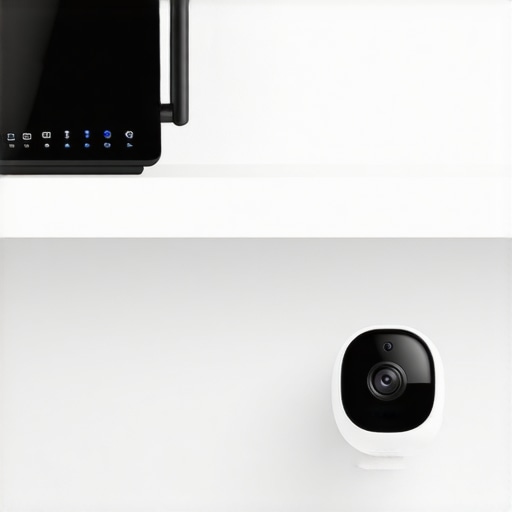
I’ll never forget the Tuesday afternoon I almost threw my two-hundred-dollar smart doorbell into the neighbor’s flowerbed. I was expecting a critical delivery, the notification chirped on my phone, and all I got was a spinning wheel and a “Reconnecting…” message that felt like it lasted a lifetime. By the time the video feed actually loaded, the delivery truck was a puff of exhaust in the distance and I was left staring at a pixelated view of an empty porch. It wasn’t just the doorbell, either. My indoor cameras were stuttering through every motion alert like a scratched DVD from the nineties. I was convinced I needed a more expensive internet plan or a mesh system that would cost me a fortune, but the real culprit was much closer to home and, honestly, a bit embarrassing.
Stop Blaming Your Camera for That Annoying Lag
Most of us treat our Wi-Fi routers like unsightly appliances that need to be hidden away from guests. When I first set up my home network, I tucked my router deep inside a heavy wooden media console, right next to a thick stack of books and a decorative metal basket. I thought I was being tidy. In reality, I was suffocating the signal before it could even reach the hallway. This is a classic smart device connectivity mistake that I see my neighbors make all the time. We focus so much on the specs of the camera—the 4K resolution or the night vision—that we completely ignore the invisible highway the data has to travel on. According to data from the Wi-Fi Alliance, physical obstructions like heavy furniture and thick walls can degrade signal strength by more than 50%, which is why your high-definition feed often looks like a blurry mess.
Is Moving Your Router Really Going to Change Anything?
I get the skepticism because I felt it too. It sounds far too simple to be a real fix. You might be thinking that your fiber-optic speed should be enough to punch through a few walls, but the problem usually isn’t your raw bandwidth; it’s the interference. I used to think my hardware was just buggy, much like how homeowners assume they need a brand-new unit when they see a shaking washing machine, when a simple adjustment is the actual answer. Your smart cameras rely on a consistent, low-latency stream. If your router is sitting on the floor or buried in a corner, that signal has to fight through copper pipes, electrical wiring, and floorboards just to reach your front door. Have you ever noticed that your camera works perfectly when you’re setting it up in the living room, but fails the second you mount it outside? That is your signal crying for help.
My High-Tech Home Was Drowning in Dead Zones
The big realization happened when I finally stopped staring at the app and started looking at the physical path of my Wi-Fi signal. I had placed my router in the worst possible spot: the basement utility room, surrounded by concrete and metal ductwork. I was trying to save my “aesthetic” while sacrificing every bit of actual performance. If you have ever dealt with Wi-Fi connection issues, you know the frustration of “ghost” signals where your phone shows full bars but nothing actually loads. I spent way too much time resetting my cameras and almost called for same-day tech support, only to realize the fix didn’t require a technician. It just required a shelf. By lifting the router five feet off the ground and moving it away from the metal, my camera lag vanished. Have you ever sat through a three-minute loading screen just to see a delivery driver walk away? Share your tech horror stories with us on our contact page while we get ready to dive into the exact placement strategy.
Get Your Router Off the Floor and Into the Air
To fix a lagging camera, you have to stop thinking about your router as a “box” and start thinking about it as a source of light. Imagine your router is a glowing lantern. If you place it on the floor behind a heavy oak desk, the light is barely going to reach the other side of the room, let alone the driveway. I learned this the hard way when I moved into my current place. I had my router sitting on a bottom shelf, shadowed by a metal filing cabinet. My outdoor floodlight camera kept dropping to 360p resolution and stuttering constantly. I spent two hours looking for an expert guide to appliance repair and installation today, thinking the camera’s internal antenna was loose or faulty. The “fix” was literally putting the router on top of the cabinet instead of inside it. By gaining just four feet of elevation, the signal could clear the furniture and head straight for the exterior wall without hitting a dozen obstacles first. 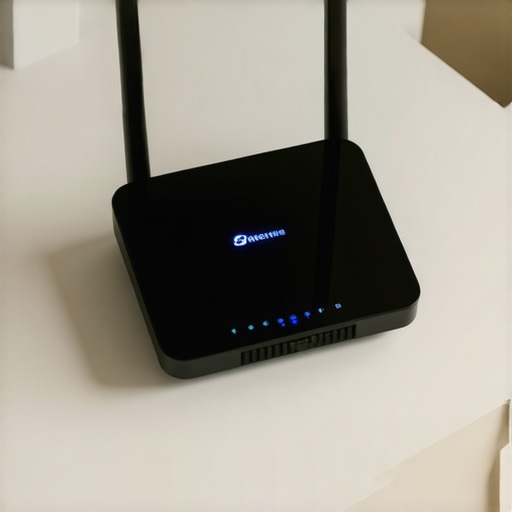
Pick the Frequency That Actually Reaches the Porch
Most modern routers are “dual-band,” meaning they broadcast on 2.4GHz and 5GHz. Here is the trap: 5GHz is much faster, but it is a absolute weakling when it comes to physical obstacles. If your camera has to communicate through brick, siding, or heavy insulation, 5GHz will likely fail you or provide a very unstable link. I once insisted on connecting my doorbell to the 5GHz band because I wanted that crisp 4K stream for my recordings. It worked great for ten minutes while the door was open, then the connection died every time the front door closed. To ensure a stable connection, you need to treat this like any high-stakes tech setup, similar to how you would ensure reliable appliance installation in 2025 by strictly following the manufacturer’s environmental specs. For outdoor cameras, 2.4GHz is almost always the superior choice because its longer waves can wrap around corners and penetrate solid objects far better than its high-speed sibling.
Clear the Path of Kitchen Signal Killers
You might not realize it, but your kitchen is a literal minefield for Wi-Fi signals. If your router is in the living room and your camera is on the porch, but the kitchen is in between them, you are in for a world of frustration. Specifically, your microwave is a notorious Wi-Fi jammer. It operates on the same 2.4GHz frequency as your home network. I remember a specific Tuesday when I was trying to watch a live feed of a contractor arriving while I was heating up a bowl of chili. The second I hit “Start” on the microwave, the video feed turned into a gray screen of death. This kind of interference is a common hurdle, much like how why your microwave turntable stops spinning while cooking can disrupt your kitchen routine. Even something as technical as the critical airflow distance your built-in microwave requires matters for the appliance’s health, but for your network, it’s about maintaining a clear “line of sight.” If you can’t move the router, try to shift your camera’s angle slightly so the signal path doesn’t cut directly through the dense metal of your stove or fridge.
The Power Problem Disguised as Signal Lag
Sometimes, the lag isn’t wireless at all—it is the power delivery. If you are using a wired doorbell or a camera that draws power from an existing chime, a weak transformer can cause the Wi-Fi chip to underperform or constantly reboot. This is remarkably similar to the one wire that always fails in your smart thermostat and causes the whole system to glitch. If the device isn’t getting a steady 16V-24V AC, it will struggle to maintain a high-bitrate connection, leading to that dreaded spinning wheel. I spent an entire week troubleshooting my doorbell’s “poor signal” before realizing my 30-year-old transformer was only putting out 12V. Upgrading that ten-dollar part fixed my “Wi-Fi” problem instantly without me having to touch the router settings again.Let’s dig deeper into why we often fail at the ‘smart’ part of smart home maintenance. We usually think of appliance repair as a reactive emergency—something you deal with once the smoke starts pouring out or the floor is flooded. But here is the contrarian truth: waiting even 24 hours to save a few bucks on a service call is almost always a financial mistake. People think ‘same-day service’ is just for the impatient, but in the world of modern machinery, a minor fault in a pump can lead to an electrical short in the control board within hours. If you know what to expect from same-day appliance repair experts, you realize that the speed isn’t just about convenience; it’s about containment. Have you ever fallen into the trap of waiting for a ‘convenient’ time while the damage got worse? Let me know in the comments.
Stop Treating Same-Day Service Like a Luxury
I used to think I was being frugal by waiting until the weekend to call a technician. That changed when a slow dishwasher leak turned into a three-thousand-dollar subfloor replacement. High-end appliance experts often note that the ‘labor cost’ is fixed, but the ‘damage cost’ is exponential. This is why scheduling your appliance repair for same-day service in 2025 is becoming the standard for savvy homeowners. By getting a pro on-site before the secondary systems fail, you’re effectively buying insurance against a much larger bill.
Your Warranty Has a Hidden Expiration Date
Then there is the warranty trap. Most homeowners operate under the delusion that a warranty is a ‘get out of jail free’ card. It’s not. I’ve seen countless people get hit with a denied claim because of the wear and tear clauses that might void your warranty. Manufacturers distinguish between ‘mechanical failure’ and ‘environmental damage.’ If your fridge fails because you never cleaned the coils, that’s on you. According to a study by Consumer Reports, nearly 30% of new appliances are likely to develop a fault within the first five years, yet a staggering number of claims are rejected simply because the owner didn’t have the one maintenance record that saves your appliance warranty claim. 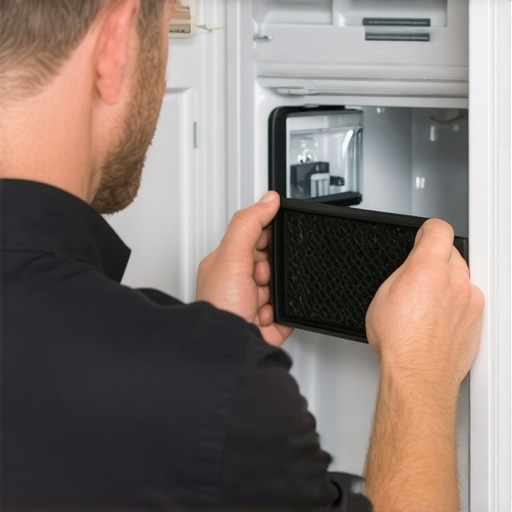
Can You Actually Prove You Maintained Your Fridge?
If a technician arrives and sees a layer of dust an inch thick on your compressor, your ‘comprehensive’ plan likely won’t cover the bill. This is the nuance most people miss: warranties are contracts of mutual responsibility. You must ensure reliable appliance installation in 2025 by following every environmental spec—ventilation, leveling, and grounding—or you’re just handing the manufacturer a reason to say no. I once lost out on a range replacement because the installer (me) didn’t use the anti-tip bracket every range installation needs. It had nothing to do with the electronics, but the ‘improper installation’ tag was enough to kill the claim. Always know the reason your warranty claim was denied before you argue, because nine times out of ten, the proof was in the manual you threw away with the box. If you’re currently staring at a broken machine, don’t just guess at the fix—check out our expert guide to appliance repair and installation today to see if your problem is a common ‘out-of-warranty’ quirk or a legitimate factory defect.I spent years thinking a toolbox was only for emergencies. I was wrong. A real toolkit is for preventing the break in the first place, and if you want to keep your high-end gear running, you need more than just a hammer. I personally never travel to a friend’s house-warming without a digital multimeter in my bag. It sounds obsessive, but knowing the refrigerator thermostat test every diyer should know has saved me hundreds in spoiled groceries. Most “broken” fridges are just victims of a five-dollar sensor that lost its mind.
Why a Cheap Multimeter is Your Best Defense
I use a basic digital multimeter because it provides the precision needed to check the continuity of heating elements and sensors. If your dryer isn’t heating, five minutes with a probe can tell you if you need a new unit or just a thermal fuse. This isn’t just about DIY pride; it’s about having leverage. When you call for warranty-backed appliance services you can rely on, being able to say “the heating element has no continuity” ensures the tech brings the right part on the first trip. According to technical documentation from the IEEE Power & Energy Society, even minor voltage fluctuations can degrade the sensitive capacitors in your smart fridge’s control board, making these periodic electrical checks essential for long-term component survival.
How do I maintain my smart appliances over time?
Maintenance isn’t a one-and-done event; it’s a paper trail. I keep a digital folder with photos of every filter change and coil cleaning I perform. This is the only way to satisfy the “duty of care” clauses found in most modern service contracts. If you want to know how to prove periodic maintenance to keep your warranty valid, start by taking a timestamped photo of your clean AC coils and dryer vents every spring. It takes ten seconds but can be the difference between a covered repair and a denied claim during a busy season. 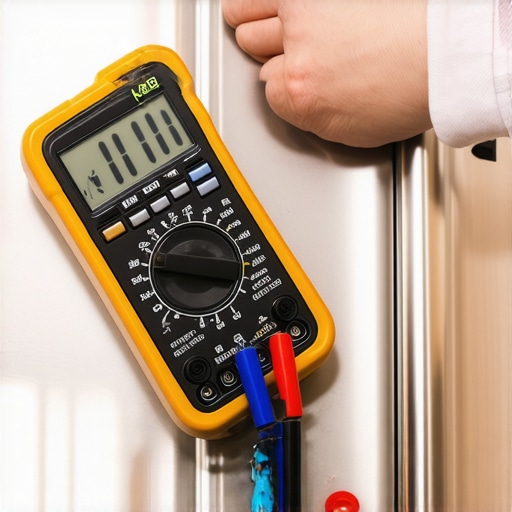
Stop the Vibration Before It Kills Your Washer
Another tool I swear by is a simple torpedo level. Most people think “close enough” is fine when installing a laundry pair. It isn’t. A washer that is even slightly off-kilter will eventually destroy its own bearings and suspension rods. I’ve seen homeowners spend a fortune on structural repairs when the one screwdriver turn that levels a rattling washer was all they really needed. If the vibration gets out of hand, you might end up needing the 15 part that fixes a shaking washing machine, but why wait for the drum to start screaming?
Predictive Tech Is the Next Big Wave
Looking ahead, I suspect we are moving toward a world where your appliances will tell you they are failing before you even notice a symptom. Brands are already integrating AI that monitors compressor cycles and water flow patterns in real-time. This “predictive maintenance” will eventually make top-tips for same-day service warranty coverage a thing of the past because the technician will show up at your door before the machine actually stops working. Until that day comes, the best tool you have is your own eyes and a solid maintenance log. **My challenge to you today:** Go find your washing machine, place a cup of water on top, and run a spin cycle. If that water is jumping out of the cup, grab your level and fix it before your floor becomes a swimming pool.
Three Mistakes That Almost Cost Me a New Fridge
I used to believe that if a machine was running, it was healthy. That is like saying a car is fine simply because it hasn’t run out of gas yet. The biggest lesson I learned was that ignoring a slow fridge leak isn’t just a minor cleaning chore; it is often a structural emergency in the making. Secondly, I realized that many homeowners unknowingly provide the manufacturer a way out of their obligations because they don’t understand the reason your warranty claim was denied often boils down to preventable neglect or missing logs. Finally, I learned that ‘smart’ does not mean ‘self-healing.’ Your devices need physical calibration and environmental care just as much as they need digital firmware updates.
Tools That Save My Saturday Mornings
You do not need a van full of commercial gear to keep your home running, but you do need the right data to make informed decisions. I swear by my digital multimeter for running the refrigerator thermostat test every diyer should know. It turns a frustrating guessing game into a five-minute diagnostic check. I also keep a digital folder on my phone because having the one maintenance record that saves your appliance warranty claim is better than any third-party insurance policy. Lastly, your smartphone is your best diagnostic tool—I use mine to record the sounds my machines make when they are healthy so I have a clear baseline for when a bearing starts to fail. #IMAGE_PLACEHOLDER_E#
Take Control of Your Home’s Health
Your smart home should serve you, not the other way around. By taking these small, proactive steps—lifting your router, leveling your washer, and ensuring reliable appliance installation in 2025—you reclaim your time and your peace of mind. High-quality appliance repair and maintenance isn’t just about fixing what is broken; it is about building a household ecosystem that actually works when you need it most. If you find yourself stuck with a glitching device, don’t wait for total hardware failure; consider scheduling your appliance repair for same-day service in 2025 to catch those small issues before they become expensive nightmares. Have you ever ignored a strange noise only for it to turn into a major repair? Let me know in the comments below.