
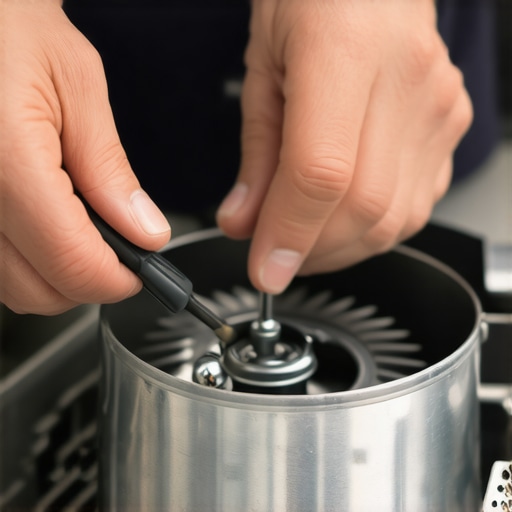
I’ll never forget the sound of my first high-end dishwasher failing me. It didn’t just quit; it screamed. It was a rhythmic, metal-on-plastic grinding that made my living room feel like a construction zone. I was ready to call in for appliance installation near me and just start over. But then I remembered a tip from an old timer: the pump is often just a victim of circumstance, not a failed part. Today, we’re going to tackle that noise head-on without the expensive price tag of a total replacement.
Stop Tossing Your Cash Down the Drain
When that grinding starts, your first instinct is panic. You think about the wear and tear clauses and wonder if you’re even covered. I made the massive mistake once of ordering a $150 replacement pump before even opening the machine. When the new part arrived, I pulled the old one out only to find a single, calcified cherry pit wedged in the housing. That was my ‘aha’ moment. You don’t always need a pro; you just need a bit of patience and the right path forward. Most people assume the worst because they don’t see the hidden drain in the dishwasher that catches all that debris. If you aren’t careful, that tiny bit of glass or bone can burn out a motor that was otherwise perfectly healthy.
Can a simple cleaning really save me hundreds?
It sounds too good to be true, doesn’t it? We’ve been conditioned to believe modern appliances are disposable. However, a study by Consumer Reports indicates that many appliance issues are actually just maintenance hurdles disguised as mechanical failures. If your machine still cycles water but sounds like a blender, the motor is likely fine—it’s just obstructed. Before you worry about whether you have warranty-backed appliance services, you need to check the impeller. Have you ever felt pressured to replace an appliance when you suspected it was an easy fix? Let me know in the comments. We’re going to walk through the exact steps to clear the line and check the plastic gasket that might be causing internal vibration. It’s easier than you think, and your wallet will thank you.
Kill the Power Before You Touch a Screw
Safety isn’t just a buzzword; it’s the difference between a successful DIY project and a trip to the ER. Before you even think about opening the pump housing, unplug the unit or flip the breaker. I remember a buddy of mine who tried to ‘quickly’ clear a jam while the unit was live; the pump kicked on unexpectedly, and let’s just say he’s lucky he still has all ten fingers. If you’re working on a newer unit, you want to make sure you know how to ensure reliable appliance installation in 2025 so you don’t accidentally disturb the electrical seating during your repair. Proper grounding is essential, especially when water and electricity are inches apart.
Strip it Down to the Sump
You can’t fix what you can’t see. Start by pulling out the bottom rack and setting it aside. Most dishwasher noise originates in the ‘sump’—the reservoir at the bottom where the water collects. You’ll likely see the lower spray arm held in by a simple plastic nut or a clip. Spin it off with a firm counter-clockwise twist. If your dishes haven’t been coming out clean lately, this is a great time to check the arm’s spray holes for clogs, as I’ve detailed in the secret to fixing a dishwasher that won’t spray water. Accumulation here causes uneven pressure, which can actually make the motor work harder and louder. 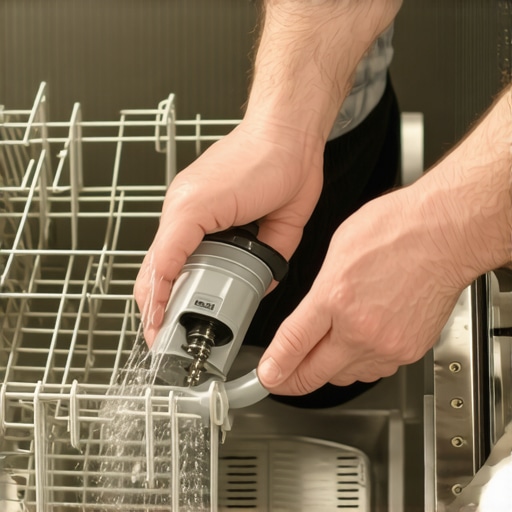
Hunt for the Hidden Debris
Once the arm is out, you’ll see the filter assembly. This is where things get messy and where most mechanical ‘failures’ are actually just garbage pile-ups. I once found a shard of a broken wine glass wedged perfectly against the impeller blade of my own machine. Every time the motor spun, it sounded like a chainsaw hitting a metal fence. Use a sponge or a small shop vac to remove the standing water. This allows you to see into the hidden drain in your dishwasher. Feel around the impeller—the little plastic fan—with a gloved hand. If it doesn’t spin freely, you’ve found your culprit. Removing a tiny pebble or a piece of hard plastic here can save you from searching for affordable same-day appliance fixes with warranty benefits.
Check the High Loop and Vibration Points
Sometimes the noise isn’t inside the pump at all, but rather the plumbing vibrating against the cabinet because of poor support. Check the drain hose high loop that stops dishwasher backflow. If that hose is loose or lacks proper tension, it will rattle against the side of your sink cabinet like a drum. While you’re down there, inspect the plastic gasket around the pump motor. If that gasket has hardened or slipped, the motor’s natural vibration will turn into a loud, low-frequency hum that resonates through the entire kitchen floor. It’s a simple fix that most people overlook before calling for an expert guide to appliance repair and installation today. I once spent two hours tearing apart a motor only to realize the mounting screw had just vibrated loose by a quarter turn. One twist of the screwdriver, and the ‘broken’ machine was silent again.Most homeowners assume that once they get a pro on the phone, the hard part is over. But here is the contrarian truth: speed is often the enemy of a quality repair. We’ve all seen the flashy ads for same-day appliance repair experts, but in my experience, the ‘same-day’ part often covers the visit, not the resolution. If a technician rushes in and immediately suggests a motor swap without checking the pump housing for debris first, they are likely following a script rather than diagnosing a problem. This is where you need to know what to expect from same-day appliance repair experts before you sign the work order. A true expert won’t just replace parts; they look for the environmental cause, like hard water buildup or improper drainage loops. A common mistake I see is people hiring for speed without checking for ‘van stock.’ In the world of repair, the real pros treat their vans like mobile warehouses. If a tech arrives without a basic array of gaskets or thermal fuses, you aren’t getting a same-day fix—you’re getting a same-day invoice for a second visit next week.
The Warranty Trap Nobody Warns You About
I’ve seen dozens of people get their hearts broken when a $600 repair bill isn’t covered because of a technicality. The biggest ‘oops’ factor? Documentation. Most extended warranties have a ‘maintenance clause’ buried in the fine print. According to a 2023 study by J.D. Power, nearly 20% of major appliance warranty claims are rejected due to lack of proof regarding ‘routine owner maintenance.’ If you can’t prove you’ve been cleaning that filter every six months, they can claim the failure was ‘avoidable.’ This is exactly why you need the one maintenance record that saves your appliance warranty claim. Without it, you’re at the mercy of the adjuster’s mood. Have you ever fallen into this trap? Let me know in the comments.
Does a same-day diagnosis actually guarantee a faster fix?
Not necessarily. In fact, rushing for an emergency repair can sometimes lead to ‘part-guessing.’ A technician under pressure to finish five calls before noon might misdiagnose a faulty sensor as a dying compressor. If you find yourself in a bind, you need to know the tricks for maximizing your appliance warranty during emergency repairs to ensure you aren’t paying for their speed with your wallet. Real expertise involves verifying the voltage at the control board before condemning the hardware. It’s the difference between a permanent fix and a band-aid that fails two weeks later. When you are scheduling your appliance repair for same-day service in 2025, always ask if the technician carries common OEM parts on their truck. Understanding the reason your warranty claim was denied often comes back to these initial moments. If you want affordable same-day appliance fixes with warranty benefits, you have to be the one asking the tough questions about diagnostic procedures before the screwdriver ever touches the chassis.
Once you’ve mastered the art of questioning the pros, it’s time to build your own diagnostic arsenal so you aren’t flying blind. If you’re going to take this DIY journey seriously, you need to stop guessing and start measuring. My most trusted tool isn’t a fancy wrench; it’s my Fluke 116 multimeter. While most people are out there looking for affordable same-day appliance fixes with warranty benefits, I’m sitting on my kitchen floor checking for electrical continuity. According to the Association of Home Appliance Manufacturers (AHAM), improper voltage or grounding issues are leading causes of premature control board failure. But here’s the kicker: many ‘dead’ boards are just suffering from a blown $10 thermal fuse or a loose wire. You won’t know that unless you test it yourself before the repairman arrives.
Stop the Guesswork with Real Data
Most DIYers fail because they replace parts based on ‘vibes’ or a YouTube video that might not even feature their specific model. I remember trying to fix a dryer that wouldn’t heat; I almost bought a $200 element before the multimeter told me the circuit was fine, but the thermostat was open. By checking the resistance, I saved $190 and three days of waiting. This level of precision is exactly what you should expect from an expert guide to appliance repair and installation today. In the very near future, I suspect we will see ‘digital twin’ apps where you can point your phone at a machine and see a live overlay of internal health, but for now, the multimeter is king. 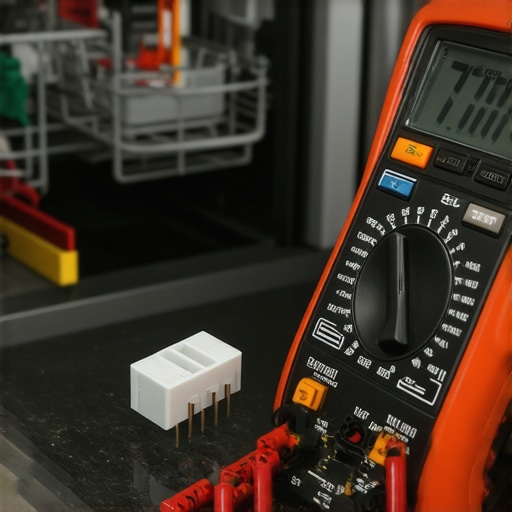
How do I maintain my appliance fleet over time?
It’s not about a once-a-year deep clean; it’s about micro-habits and digital paper trails. Knowing how to prove periodic maintenance to keep your warranty valid is essentially an insurance policy for your bank account. I keep a dedicated folder on my cloud storage with photos of clean dishwasher filters and dated receipts for specialized cleaning tablets. It sounds overboard until you’re trying to maximize your appliance warranty during emergency repairs and an insurance adjuster asks for proof of care. Using the one maintenance record that saves your appliance warranty claim is the difference between a free repair and a total loss.
Upgrade Your Venting to Save Your Heating Element
One advanced move that scales the life of your machines is looking at the infrastructure, not just the unit. If you’re dealing with laundry issues, why your dryer vent needs a hard pipe upgrade is a conversation you need to have today. Flexible foil vents are fire hazards and massive efficiency killers because they trap lint in every ridge. Switching to a rigid metal duct reduces the workload on your blower motor and heating element. This ensures that when you focus on how to ensure reliable appliance installation in 2025, you’re building a system that lasts a decade, not just a few years. My big challenge for you this week: go grab a basic multimeter and watch a video on how to test for continuity. It’s the single most empowering skill you can have in a modern home.
Hard Truths from the Kitchen Floor
Spending years fixing my own appliances taught me that the loudest sound usually comes from the smallest object. The hardest lesson I learned is that ‘broken’ is often just a state of neglect; most pumps are resilient, but they cannot fight against a calcium-crusted cherry pit or a shard of glass. I also discovered that speed is a trap. If you are scheduling your appliance repair for same-day service in 2025, you must demand a diagnostic that goes beyond a surface-level glance. My ‘lightbulb moment’ was realizing that the reason your warranty claim was denied is almost always linked to a lack of maintenance records. If you don’t document the cleaning of your sump and filter, you are handing the insurance company an excuse to say no.
My Go-To Kit for Keeping Machines Humming
I don’t believe in buying every tool in the aisle, but three things are non-negotiable for my kitchen repairs. First, a high-quality multimeter like the Fluke 116 is essential; it stops the guessing game and tells you exactly if a motor has continuity. Second, I swear by a dedicated long-reach magnet tool for fishing out metal debris without dismantling the entire housing. Finally, keep a digital folder of your manuals and receipts; this acts as your personal expert guide to appliance repair and installation today. I trust these tools because they provide data and documentation—the two things that prevent expensive mistakes.
#IMAGE_PLACEHOLDER_E#
Take Back Control of Your Kitchen Today
You don’t have to be at the mercy of a grinding motor or a confusing contract. By understanding the mechanical heart of your home, you shift from a frustrated consumer to an empowered owner. Whether you are performing a DIY fix or looking for same-day appliance repair quick solutions with warranty support, your knowledge is your best defense. Don’t be afraid to get your hands a little dirty to save a lot of money. Have you ever found something bizarre wedged inside your dishwasher pump housing? Let me know your weirdest finds in the comments below!