
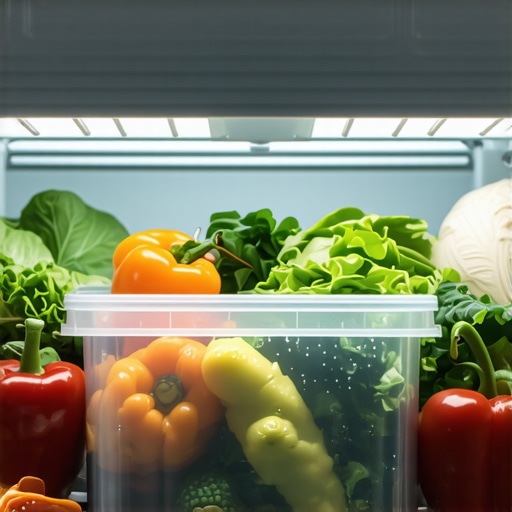
I remember staring at a bag of organic kale that had turned into a weeping, yellow mess just three days after I brought it home. It felt like I was throwing money straight into the compost bin. My first instinct was to panic and start searching for emergency fridge repair because I was certain my expensive French-door unit had finally kicked the bucket. I was convinced the compressor was failing or the thermostat was lying to me. But here is the embarrassing truth: the fridge was fine. I was the problem. I had inadvertently built a wall of milk cartons and leftovers right in front of the main air vents, creating a stagnant, warm pocket where my veggies went to die. Today, I am going to show you exactly how to tear down that invisible airflow barrier and keep your produce crisp for weeks, not days. We are going to look at why your fridge layout matters more than the brand name on the door and how to fix your cooling zones without spending a dime on a technician. Have you ever opened your crisper drawer only to find it filled with mysterious standing water? You are not alone, and it is almost certainly an airflow issue.
Stop Killing Your Kale with This One Simple Layout Fix
A few years ago, I made the classic mistake of thinking more is better. I crammed every inch of my shelves with bulk-buy groceries, thinking I was being efficient. What I actually did was choke the life out of my appliance. When you block the internal vents, the cold air cannot circulate, leading to “hot spots” that invite bacteria and rot. I even went as far as checking my warranty-backed appliance services because I thought the internal fans had stopped spinning. It turns out, I just needed to leave about two inches of breathing room around the back wall. According to the USDA, Americans waste nearly a pound of food per person every day, and a huge chunk of that is due to improper home storage. Beyond just moving your milk, you need to ensure the critical clearance gap behind the unit is clear too, or the heat has nowhere to go. I learned the hard way that even cleaning your refrigerator coils won’t save your spinach if the air inside can’t move.
Is a high-tech fridge actually worth the hype for freshness?
Many people think they need a $3,000 smart fridge with dual evaporators to keep lettuce from wilting. I used to be one of them. But honestly, even the most basic unit can perform miracles if you respect the air vents. The skepticism is real—we are told we need more features, but we really just need better habits. If you are struggling with weird temperatures, before you call for same-day appliance fixes, try the “flashlight test” on your vents to see what you are obstructing. In the next section, I will break down the specific zones of your fridge so you never have to wonder where the celery belongs again.
Master the Invisible Airflow Highway
Think of your refrigerator as a high-speed highway where the commuters are molecules of cold air. When you shove a massive pot of Sunday night chili directly against the back wall, you are essentially creating a multi-car pileup. The air hits that pot, stops, and begins to swirl in a useless circle, leaving the items at the front of the shelf in a stagnant, warm dead zone. I learned this the hard way when I tried to fit a three-tier birthday cake into my old unit without adjusting the shelves. I pushed it all the way back, unknowingly sealing off the main air tower. By morning, the top of the cake was a melted mess, while the back of the box was literally frozen to the plastic liner. This lack of circulation is often the clogged capillary tube making your fridge run constantly as it struggles to regulate temperature. To avoid this, imagine every item in your fridge needs its own ‘personal space’ bubble of at least one inch.
Give Your Rear Vents Room to Breathe
The golden rule of fridge organization is the two-inch gap. Your refrigerator’s lungs are the vents usually located at the top or back of the interior. If you can’t see the vents, you’ve failed. Pull your groceries forward just enough so you can see the plastic slats. This isn’t just about internal organization; it starts with how the unit sits in your kitchen. If you have a built-in model, ensure you’ve respected the critical clearance gap for a refrigerator in a nook. Without that external space, the heat removed from your food has nowhere to go, forcing the internal fans to work double time. 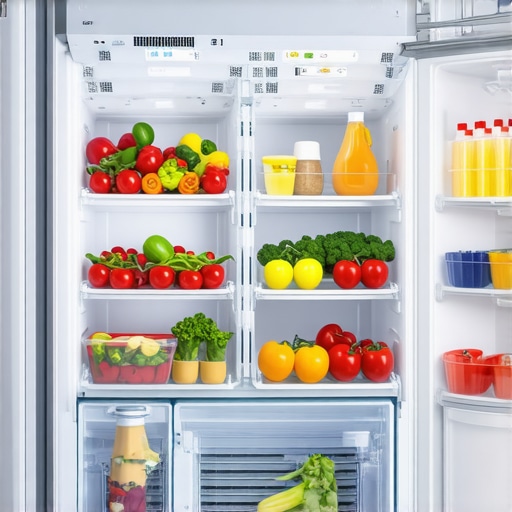
Stop Building Walls with Your Leftovers
We all have a tendency to stack containers like we are playing a high-stakes game of Tetris. However, when you stack flat containers, you create a solid wall that prevents air from moving vertically between the shelves. I once spent an entire Saturday afternoon wondering why your fridge is leaking water on the floor, only to realize that my wall of Tupperware had caused moisture to condense on the ceiling and drip down the back. Use wire racks or leave intentional ‘alleys’ between your milk cartons and juice jugs. These alleys act as bypasses for the cold air, ensuring the bottom crisper drawer stays just as cool as the top shelf. If your layout is perfect but you still see frost, it might be the freezer ice build-up that is killing your efficiency, which often migrates from a poorly packed freezer compartment into the fridge’s airway.
Check the Seal Before You Check the Thermostat
Before you assume your compressor is dead and start searching for affordable same-day appliance fixes with warranty benefits, look at your door gaskets. If air can leak out, warm, humid kitchen air can leak in. This is exactly why your freezer is frosting up around the door and causing those weird temperature swings in the fridge section. Take a dollar bill, close the door on it, and pull. If it slides out easily, your ‘air highway’ has a massive exit ramp that shouldn’t be there. Keeping these seals clean and ensuring food isn’t physically bumping the door open from the inside is the easiest way to maintain the pressure needed for proper airflow.I’ve spent years talking to technicians, and if there is one thing I’ve learned, it is that a ‘same-day’ promise is often the most misunderstood phrase in the industry. Most homeowners assume that if they call for expert appliance repair and installation, a van will roll up with every possible spare part in the back. In reality, same-day service usually means a same-day diagnosis. The technician identifies the failure, but if you need a specific control board or a proprietary compressor, you are still waiting for shipping. This is where people fall into the ‘shady quote’ trap. They get so desperate for a fix that they don’t know how to spot a shady appliance repair quote that overpromises speed but under-delivers on quality. Have you ever fallen into this trap of paying a ‘diagnostic fee’ only to be told the part is backordered for three weeks? Let me know in the comments.
Stop assuming your warranty covers everything
The biggest myth in the appliance world is that a warranty is a comprehensive insurance policy. It isn’t. Most manufacturer plans are specifically designed to cover ‘defects in materials or workmanship,’ not ‘user error’ or ‘environmental factors.’ If your fridge dies because you shoved it into a tight nook without the critical clearance gap I mentioned earlier, the manufacturer can—and will—deny your claim. They will point to the wear and tear clauses that might void your warranty and walk away. I have seen claims denied simply because the homeowner didn’t use a surge protector on a high-end smart fridge. According to the Federal Trade Commission (FTC), the Magnuson-Moss Warranty Act protects consumers, but it doesn’t excuse us from following the installation manual to the letter. 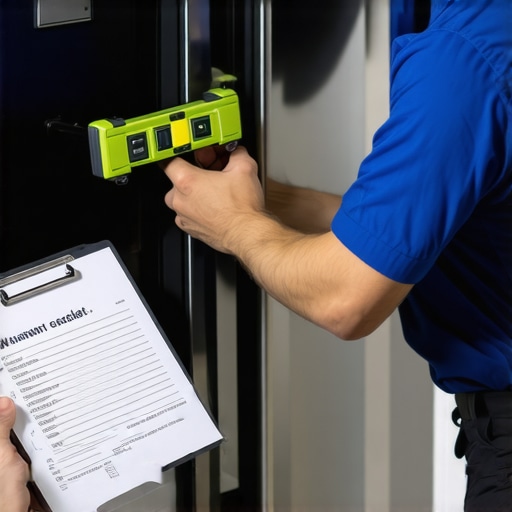
Can same-day service actually fix your fridge before the ice melts?
It depends entirely on your preparation. If you want to know what to expect from same-day appliance repair experts, you need to understand that the ‘fix’ starts with you. When you call, have your model and serial number ready. This is the document most people forget before calling service, and without it, the tech can’t even look up the part diagrams before they arrive. If you provide that info upfront, the chances of them having the part on the truck go from 10% to 60%. Don’t just settle for a window of time; ask if they stock common components for your specific brand.
The one document that saves your claim from a denial
The ‘Oops’ factor that kills most long-term warranty benefits is the lack of a paper trail. If your compressor fails in year four of a five-year plan, the first thing the adjuster will ask for is proof of maintenance. Did you clean the coils? Did you check the seals? If you can’t produce the maintenance receipt you must save for future claims, they can argue the failure was due to neglect rather than a defect. I keep a physical folder inside my kitchen cabinet for this exact reason. It’s not just about the repair; it’s about proving you were a responsible owner. Treating your appliance like a ‘set it and forget it’ machine is the fastest way to lose hundreds of dollars when things inevitably go sideways.
Moving beyond the paperwork, I have found that physical maintenance is what actually keeps those emergency calls at bay. My personal maintenance kit is not just a junk drawer of old screwdrivers; it is a strategic collection. I swear by a high-sensitivity digital multimeter and a 26-inch flexible coil brush. If you want to master the refrigerator thermostat test every diyer should know, you need to be able to read resistance, not just guess based on how cold your beer feels. I remember a neighbor who spent $400 on a control board replacement that he did not need, simply because he did not have a $20 meter to check his sensors first. This is where expert appliance repair and installation expertise pays for itself—knowing which tool to trust before you start tearing panels off.
The Minimalist Tool Kit for Modern Kitchens
I do not expect you to become a full-time tech, but a few specific items will save your sanity. A telescoping mirror is my secret weapon for checking the drain pan without pulling the whole unit out and potentially scratching my hardwood floors. When I am helping friends with how to ensure reliable appliance installation in 2025, I always emphasize leveling. A fridge that is tilted forward even a fraction of a degree will prevent the door from sealing properly, leading to that dreaded frost buildup. Use a standard spirit level on the top of the casing, not the doors, to get an accurate reading. If you are already seeing issues, don’t wait until your food is lukewarm to seek out same-day appliance repair quick solutions with warranty support, as catching a failing start relay early can save the much more expensive compressor.

How can I maintain my fridge for the next decade?
The secret is consistency, not intensity. Every six months, I perform what I call the ‘Great Breathing Reset.’ I pull the unit out, vacuum the rear coils, and wipe down the gaskets with warm, soapy water. According to the Association of Home Appliance Manufacturers (AHAM) HRF-1 standard, even a minor accumulation of dust or frost can force the system to run significantly longer cycles, increasing energy wear and tear. I also suggest keeping a digital log of these cleanings. Having the maintenance receipt you must save for future claims is great, but a timestamped photo of a clean coil is even better evidence if a warranty provider tries to claim neglect. If you are currently facing a warm fridge, follow my guide on how to get an emergency fridge repair before your food spoils to minimize your losses.
Why the Smart Fridge of 2030 Won’t Need You at All
Looking ahead, I predict the ‘repair’ industry will shift almost entirely toward predictive software. We are already seeing high-end units that can sense a drop in refrigerant pressure and automatically alert a technician before the homeowner even notices a temperature change. In the future, what to expect from same-day appliance repair experts will likely be a remote software patch or a pre-emptive part delivery rather than a frantic 9 PM phone call. For now, we still rely on our eyes and ears. My challenge to you today: go into your kitchen, grab a flashlight, and check those rear vents. If you cannot see the back wall, move one item forward. That tiny bit of space is the difference between a fridge that lasts fifteen years and one that dies in five.
What the Tech Won’t Tell You About Your Repair Bill
After years of managing household appliances, I’ve realized that the biggest expense isn’t the parts—it is the lack of preparation. When we talk about top tips for same-day service warranty coverage, the secret is that most technicians are limited by what is on their truck. If you don’t provide the exact model number during the initial call, that ‘same-day’ promise turns into a ‘next-week’ delivery. I’ve also seen countless homeowners lose out on coverage because of simple paperwork errors. Often, the reason your warranty claim was denied isn’t a complex mechanical failure; it is simply because the owner couldn’t prove they followed the basic maintenance schedule outlined in the manual. My biggest lightbulb moment? Realizing that a level fridge is just as important as a clean one. If the unit isn’t perfectly straight, the doors won’t seal, and your compressor will work itself to death trying to fight the humidity of your kitchen.
My Go-To Toolbox for Kitchen Sanity
You don’t need a professional workshop to keep your appliances running, but there are four things I never live without. First, a flexible coil brush is non-negotiable for reaching the dust bunnies that choke your condenser. Second, I keep a digital folder with photos of every serial number and receipt; maximize your appliance warranty during emergency repairs by having this data ready before the technician even knocks. Third, a simple spirit level ensures your door gaskets are actually making contact. Finally, I always check a reliable guide when scheduling your appliance repair for same-day service in 2025 to ensure the company I am calling actually has the infrastructure to support a quick turnaround. I trust these tools because they move the needle from reactive panic to proactive management.
Taking Control of Your Kitchen’s Heartbeat
It is easy to feel intimidated by the humming machine in your kitchen, but remember that you are its best advocate. By respecting the airflow highway and keeping your maintenance records organized, you are doing more for your home’s efficiency than any expensive smart gadget ever could. Don’t wait for a puddle on the floor to start caring for your vents. A few minutes of organization today can prevent a $500 appliance repair bill tomorrow. You have the knowledge now to keep your food fresh and your warranty intact—so go ahead and pull that fridge out just a couple of inches. Have you ever cleared out a crowded shelf only to find your fridge suddenly started cooling better? Let me know your experience in the comments below!