
The sink was a mountain of lasagna-crusted plates, and I just wanted to go to bed. I shoved the rack in, swung the door shut, and waited for that satisfying click. Instead, I got a hollow metallic rattle. The door just bounced back at me like a stubborn toddler. I tried again, harder this time—which was mistake number one. I spent the next forty minutes hand-washing glasses while staring at a machine that was supposed to be doing the heavy lifting for me. If you’re standing in your kitchen right now, shoving your hip against the dishwasher door just to get the cycle started, I feel your pain. It’s one of those tiny mechanical failures that can derail an entire evening and make you question why we ever gave up sponges in the first place.
Stop Slamming the Door Before You Break the Strike Plate
I learned the hard way that brute force is the enemy of modern appliances. Early in my DIY journey, I assumed a sticky latch just needed more muscle. I ended up bending the metal strike plate so badly I had to look into scheduling your appliance repair for same-day service in 2025 just to get the door to stay closed at all. Most of the time, the issue is much subtler than a broken part. According to research by Consumer Reports, door latch issues are among the most frequent mechanical complaints for dishwashers, often resulting from simple misalignment or debris rather than a motor failure. Today, we are going to stop the slamming and figure out exactly why that mechanism is fighting you. We will look at everything from blocked racks to internal spring tension, ensuring you get back to your post-dinner relaxation faster.
Is a Broken Latch Actually Worth Fixing Yourself?
You might be worried that messing with the door will lead to a flood on your hardwood floors. It’s a valid fear. I’ve seen cases where a poorly seated door causes the hidden gasket leak most dishwasher owners ignore, turning a minor latch annoyance into a major insurance claim. However, most latch assemblies are surprisingly accessible with just a screwdriver and a bit of patience. If you’ve ever researched how to fix a broken microwave door latch yourself, you’ll find the mechanics are remarkably similar. Before you call in the pros, you need to check the basics. Is the dishwasher level? Is the tub sagging? Have you checked the expert guide to appliance repair and installation today to see if your unit was mounted correctly from the start? Often, the house settling can throw the whole frame out of whack, making the latch miss its mark by just a fraction of an inch. Have you ever found yourself propping a heavy kitchen chair against the dishwasher just to keep the sensor engaged and the water running? Let me know in the comments—I need to know I wasn’t the only one desperate enough to try it.
Look for the Silverware Saboteur First
Before you start tearing the door apart, check the simplest culprit: the racks. I once spent twenty minutes cursing a ‘broken’ latch only to realize a single wooden spoon had slipped through the basket and was acting like a deadbolt. Ensure the bottom rack is seated firmly on its tracks and that nothing is poking out toward the door. While you’re down there, it’s worth checking the hidden drain in your dishwasher that needs cleaning. A buildup of debris can sometimes cause the rack to sit slightly forward, preventing the door from making that necessary contact with the switch.
Align the Metal Before Buying New Parts
The strike plate is that little metal loop at the top of the dishwasher tub. If your machine isn’t perfectly square, the latch will hit the side of the plate instead of going through the hole. Think of it like trying to close a door in an old house where the frame has shifted—you have to lift the handle just to get it to click. If you see scrape marks on the metal, your alignment is off. You can often loosen the mounting screws and nudge the plate back into position. If the plate is snapped or severely warped, you might need scheduling your appliance repair for same-day service in 2025 to get a professional to re-square the entire unit.
The Screwdriver Test for Your Door Latch
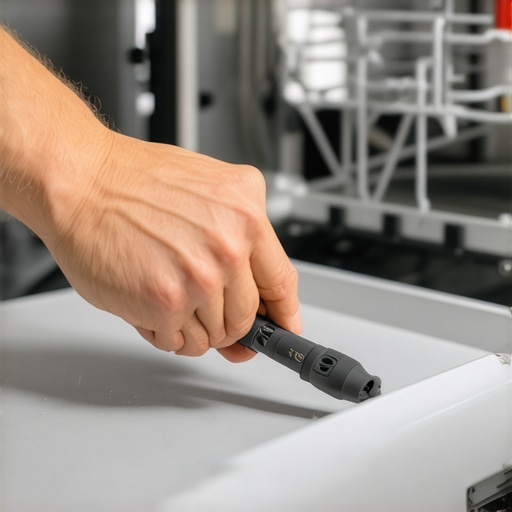
If the alignment looks fine but the click feels ‘mushy,’ the internal spring or the microswitch might be dead. This requires opening the inner door panel. I remember the first time I did this; I was so confident I didn’t even turn off the power. Halfway through, I dropped a T-15 Torx screw directly into the dark abyss of the bottom basin. I had to fish it out with a magnet for an hour while lying on my side. Learn from my mistake: turn off the breaker first. Once the panel is off, you can see the plastic housing. If the plastic is cracked or the spring doesn’t snap back when you flick it with a finger, the assembly is toast. Checking your expert guide to appliance repair and installation today can help you identify if your specific model uses a mechanical or electronic locking solenoid.
Leveling Is the Secret to a Perfect Click
If you recently moved the machine or had a new floor put in, the dishwasher might be leaning. A tilted dishwasher is a warped dishwasher. When the tub isn’t level, the door doesn’t meet the frame at a 90-degree angle, which puts massive stress on the latch. Most people make the mistake of just tightening the front legs, but there’s a right way and the wrong way to level a professional kitchen range or appliance. Use a bubble level on the open door and adjust the rear leveling leg—usually accessible via a long screw at the bottom front—until the tub sits perfectly flat. This tiny adjustment can solve ‘broken’ latch issues in seconds without costing a dime in parts.
Check the Gasket for Hidden Resistance
Sometimes the latch is fine, but the rubber seal is fighting back. If the gasket has pulled out of its channel, it creates a cushion that prevents the latch from reaching the strike plate. This often happens if you’ve recently performed maintenance and didn’t seat the rubber correctly. It’s a common oversight, much like the one shipping bolt you must remove before using your new washer. Run your thumb along the entire perimeter of the seal to make sure it’s pushed deep into the groove. If the rubber feels stiff or brittle, it might be preventing the door from compressing enough to engage the lock.
Many people treat ‘same-day service’ as a luxury or a marketing ploy designed to squeeze extra cash out of a panicked homeowner. In my experience, waiting even 48 hours to fix a latch is the quickest way to ruin your kitchen subfloor. When a door doesn’t seal perfectly, steam escapes silently, saturating the underside of your countertop. This is why scheduling your appliance repair for same-day service in 2025 isn’t just about convenience; it’s about preventative maintenance. According to data from the Association of Home Appliance Manufacturers (AHAM), even a 2mm gap in an appliance seal can force the unit to work 15% harder to maintain internal temperatures, leading to premature motor burnout. If you’ve been putting off a repair because it seems ‘minor,’ you’re likely paying for it in hidden energy costs and structural wear.
Why DIY Latch Repairs Might Void Your Protection Plan
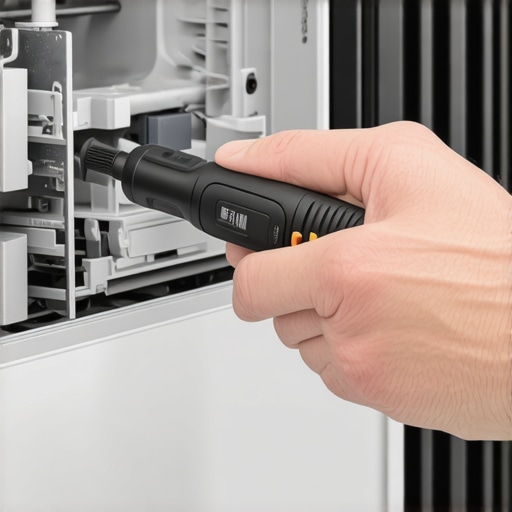
Here is the trap most homeowners fall into: they think that because a latch is a ‘user-serviceable’ part, they can swap it out without consequence. However, if you don’t keep the maintenance log that saves your fridge warranty policy (or your dishwasher one), the manufacturer can argue the failure was caused by ‘unauthorized tampering.’ I’ve seen countless cases where a simple spring replacement led to the reason your warranty claim was denied because the owner used a non-OEM part. Always check the fine print that voids your fridge protection plan or appliance coverage before you start unscrewing panels. Most people assume ‘warranty’ covers everything, but it actually requires you to prove you haven’t made the problem worse through amateur tinkering.
Can a Loose Latch Secretly Spike Your Electric Bill?
The nuance many miss is the relationship between the mechanical latch and the electronic control board. Most modern dishwashers won’t even start the heating element if the sensor doesn’t detect a ‘hard’ lock. If your latch is loose, the machine might cycle water but fail to reach the sanitizing temperature, leaving you with greasy dishes and a wasted hour of electricity. This is where how to ensure reliable appliance installation in 2025 becomes critical—if the unit was never leveled properly during the first week, the latch will never seat correctly, and your ‘high efficiency’ machine will perform like a relic from the 90s. Have you ever noticed your dishwasher running for hours without ever getting truly hot? You might be falling into the trap of ‘good enough’ alignment. Have you ever fallen into this trap? Let me know in the comments—I’d love to hear how you handled the realization that a 10-cent screw was costing you 10 dollars a month in power.
The Proactive Fix vs. The Emergency Panic
If you find yourself needing same-day appliance repair quick solutions with warranty support, it’s usually because a small issue was ignored for too long. Don’t wait for the handle to fall off in your hand. If the click sounds different, or if you have to lift the door slightly to get it to catch, your alignment has already failed. Use expert guide to appliance repair and installation today to re-index your unit before the stress cracks the plastic housing of the latch assembly itself. Trust me, a level and a screwdriver are much cheaper than a whole new door panel.
Ditch the Butter Knife for These Real Tools
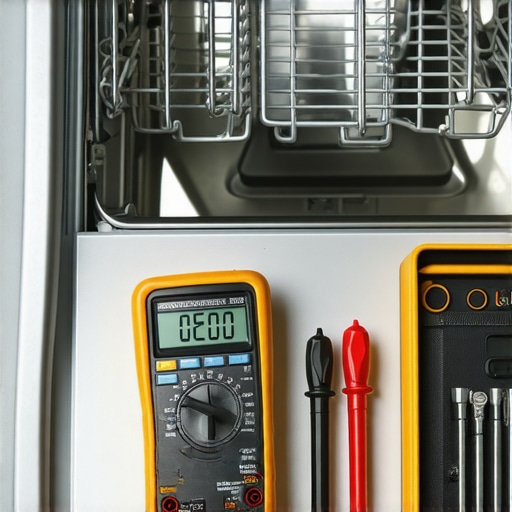
I used to be the guy who tried to fix everything with a flathead screwdriver and a prayer. But when it comes to the precision required for a modern dishwasher latch, that just doesn’t cut it. To keep your machine running without calling for affordable same-day appliance fixes with warranty benefits, you need a dedicated Torx T-15 driver and a digital multimeter. I use the Torx set because almost every major brand like Bosch or Samsung uses these star-shaped screws to prevent stripping, which is a nightmare if you ever need to access the control board later. The multimeter is non-negotiable for me because it allows me to test the ‘continuity’ of the door switch. If the switch doesn’t show a completed circuit when pressed, it doesn’t matter how hard you slam that door; the machine will never start. Knowing this saves you from buying a $50 latch when the issue is actually a $5 wire.
How do I keep my dishwasher latch from failing again?
Maintenance isn’t just about cleaning filters; it’s about structural integrity. Every six months, I perform what I call the ‘resistance check.’ I open the door and apply light pressure to the sides of the tub. If there is any flex, your mounting brackets are loose. In the official service bulletins from Whirlpool (Job Aid #4317371), technicians are specifically warned that latch failure is often a symptom of cabinet pressure or improper mounting rather than a faulty switch. To prevent this, ensure your fast-trustworthy appliance installation near you included side-mount brackets if you have stone countertops. Furthermore, I recommend a tiny dab of food-grade silicone grease on the strike plate once a year. This reduces the friction that causes the plastic housing to crack over time, ensuring you won’t need to maximize your appliance warranty during emergency repairs due to a snapped handle.
The Future of Latching Is Actually Invisible
As we move toward 2026, I predict we will see the end of mechanical latches entirely. We are already seeing high-end models move toward Hall-effect sensors—magnetic sensors that detect the door’s position without any physical contact. This trend toward ‘soft-close’ magnetic seals will eliminate the ‘broken handle’ syndrome but will make how to ensure reliable appliance installation in 2025 even more critical, as magnetic alignment requires a perfectly level chassis to function. For now, stay diligent with your documentation. Always keep the maintenance receipt you must save for future claims in a digital folder. When you can prove you’ve done the work, you are in a much better position to negotiate if a major component fails. I want you to try one thing tonight: take a single sheet of paper, close it in the dishwasher door, and try to pull it out. If it slides out easily, your gasket is compressed, and your latch is working too hard. Tighten those leveling legs and see if that ‘click’ doesn’t feel a whole lot more satisfying tomorrow.
Hard-Earned Truths from My Kitchen Floor
Over the years, I’ve realized that a dishwasher latch isn’t just a mechanical switch; it’s the gatekeeper of your kitchen’s structural integrity. One major realization I had is that silence can be expensive. If your dishwasher starts closing with a muffled thud instead of a crisp click, the plastic housing is likely under stress from a misaligned frame. Another lightbulb moment occurred when I realized that most ‘electronic’ failures are actually mechanical. If the door doesn’t seat perfectly, the sensor won’t trip, making you think the control board is dead when you actually just need to turn a leveling leg half a rotation. Finally, never underestimate the power of paperwork. Understanding the reason your warranty claim was denied often comes down to a lack of maintenance records, so keep the maintenance receipt you must save for future claims in a digital folder accessible at all times.
#IMAGE_PLACEHOLDER_E#
The Toolkit That Keeps Me Sane
I don’t go into any appliance repair without three specific items. First, a magnetic parts tray is essential; I’ve lost too many T-15 screws to the ‘abyss’ beneath the kickplate during a repair. Second, I always keep a tube of food-grade silicone grease on hand. A tiny dab on the strike plate every year prevents the friction that leads to cracked latch assemblies. Third, if you want to avoid the guesswork, a digital multimeter is your best friend for testing switch continuity. For those who aren’t ready to dive into the wiring, I highly recommend reading up on top tips for same-day service warranty coverage to ensure you’re prepared if a professional needs to step in.
Get Back to Your Post-Dinner Peace
Repairing a stubborn latch might seem like a small win, but it’s the difference between a relaxing evening and a midnight floor-mopping session. By taking the time to align your machine correctly, you aren’t just fixing a door; you are performing essential maintenance that ensures how to ensure reliable appliance installation in 2025 becomes a permanent standard for your home. Don’t be afraid to get down on the floor with a level and a screwdriver—it’s the best way to truly know your machine and save money in the long run. Whether you decide to DIY or end up scheduling your appliance repair for same-day service in 2025, the key is to act before the escaping steam damages your expensive countertops. Have you ever discovered a ‘secret’ tool or a simple adjustment that made your dishwasher door finally behave? Let me know in the comments below!