
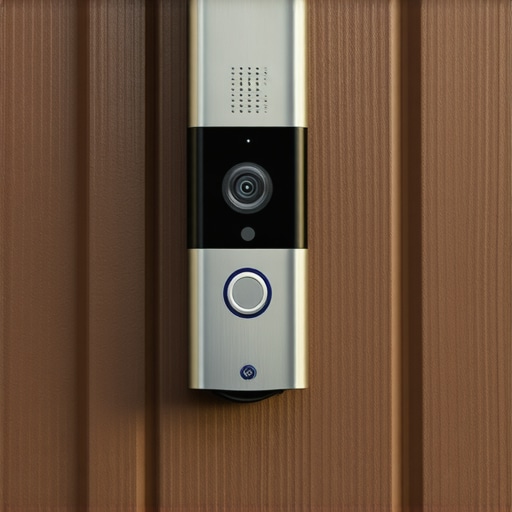
It was 3:00 AM when my phone shrieked like a banshee on my nightstand. I scrambled for my glasses, heart hammering, convinced someone was prying at the front door. I checked the live feed, squinting through the blue light, only to see a plastic grocery bag tumbling down the sidewalk. My brand-new smart doorbell had alerted me for the tenth time that night because of a slight breeze. This wasn’t security; it was a nuisance. I realized then that I had completely botched the setup. If you have ever felt like throwing your expensive tech into the bushes because it won’t stop buzzing your pocket, I have got your back. Today, we are going to fix that frustrating field of view and finally master the smart doorbell angle that prevents false alarms.
The Error That Kept Me Up All Night
When I first unboxed my device, I wanted it to look perfect. I mounted it flush against the siding, perfectly centered, and felt like a pro. I even skipped the little plastic wedges included in the box because they looked clunky and broke the clean lines of my entryway. That was a rookie move. By mounting it flat, I was catching every car driving by and every neighbor walking their dog across the street. I spent hours looking into the simple grounding fix for erratic smart doorbells thinking it was an electrical glitch. It wasn’t. It was just a bad perspective. If you want to know how to ensure reliable appliance installation in 2025, you have to start with the physical positioning before you ever touch the software settings. Have you ever had a smart device drive you absolutely crazy with constant, useless notifications? I bet you have. According to research from the University of North Carolina at Charlotte, nearly 60% of burglars consider a different target when they see a camera, but that utility drops to zero if the homeowner eventually disables the alerts out of sheer frustration.
Does a wider field of view actually make you safer?
We often think that seeing more is always better. We want to see the whole street, the neighbor’s driveway, and the sky. But for a doorbell, that is a recipe for a digital headache. The goal isn’t to be a traffic cam; it is to see the person standing on your porch or the package on your mat. When you work with fast trustworthy appliance installation near you, they will tell you that the sweet spot is usually angling the lens downward and toward the center of your entryway. This cuts out the horizon—where the sun and cars live—and focuses purely on the hot zone of human activity. By using a 15 or 30-degree wedge, you can eliminate about 80% of those phantom alerts without losing an ounce of real security. It turns your doorbell from a frantic tattletale into a reliable guardian.
Angle Your Lens to Stop the Noise
Think of your doorbell lens like a flashlight in a pitch-black room. If you point it straight ahead, you illuminate everything in the distance, but you miss the trip hazard right at your feet. To stop the 3:00 AM sirens, you need to force the camera to look down. This is where those plastic wedge kits become your best friend. Most people toss them, but they are the difference between a functional security tool and a digital paperweight. When I finally installed my 15-degree wedge, I realized I could see the porch floor where packages actually land, while completely cutting out the street traffic that was previously triggering my motion sensor. If you are struggling with a unit that seems to possess a mind of its own, you might want to look into the simple grounding fix for erratic smart doorbells to ensure the hardware isn’t fighting an electrical battle behind the scenes.
Shrink the Detection Zone to What Matters
Software is your second line of defense, but it cannot fix a bad physical perspective. Once the wedge is in place, open your app and look for ‘Motion Zones’ or ‘Activity Zones.’ You want to draw a box that strictly covers your walkway and the immediate area in front of the door. A common mistake is letting the zone bleed over into the sidewalk. I once helped a neighbor who was ready to throw his device in the trash because it alerted him every time a jogger passed by. We found his zone was set to ‘Maximum,’ effectively monitoring the entire neighborhood. We pulled the zone back to just three feet from his door, and the silence was instantaneous. For those managing a whole suite of connected devices, remember that the firmware update that keeps your smart washer from crashing is just as important as keeping your doorbell app updated to ensure these zone settings actually save correctly.
Check Your Wiring Before You Tighten the Screws
Mechanical stability is the unsung hero of reliable tech. If your doorbell vibrates even slightly when the wind blows or the door slams, the camera interprets that pixel shift as motion. I spent two weeks chasing ‘ghost’ movements before realizing my mounting screws were a quarter-turn loose. When you are performing a DIY install, ensure the bracket is flush against the siding. If your entryway is uneven, don’t just crank the screws down; use a shim to keep the bracket flat. This prevents the internal circuit board from flexing, which can lead to the same type of connectivity drops described in the hidden reason your smart oven keeps losing connection. A rock-solid mount ensures the only thing moving in the frame is a visitor.
Ensure Power Consistency for Reliable Streaming
Even a perfectly angled camera will fail if it isn’t getting steady juice. If your doorbell is hardwired, those old chime wires can be brittle and prone to signal noise. While you have the unit off the wall to adjust the angle, take five minutes to strip back the wires and create fresh, clean connections. If you find the wires are corroded or the transformer is huming, it might be time to look into warranty-backed appliance services you can rely on to handle the electrical upgrades. I once ignored a frayed wire during a ‘quick fix’ and ended up with a dead unit three days later during a rainstorm. Taking the time to do it right the first time saves you from scheduling your appliance repair for same-day service in 2025 when you could be enjoying your weekend instead.
Let’s dig deeper into the world of smart home reliability because, quite frankly, most people think a warranty is a ‘get out of jail free’ card. I used to believe that if my tech failed, the manufacturer would just make it right. However, I learned the hard way that there is a massive difference between a mechanical failure and what they call ‘environmental factors.’ For instance, many homeowners are shocked to find the fine print that voids your fridge protection plan often applies to smart doorbells too. If you didn’t follow the exact installation height or used an unshielded wire, you’ve essentially handed the warranty company an excuse to walk away.
The Warranty Fine Print That Will Leave You Stranded
Everyone says a protection plan is a waste of money, but in my experience, the plan itself isn’t the problem—it is the execution. The biggest ‘oops’ factor I see is homeowners losing their leverage by failing to document the initial setup. Before you even tighten the first screw, you need to know the document most people forget before calling service. Without a timestamped photo of your wiring or a receipt for the specific transformer you bought, proving a manufacturer’s defect becomes an uphill battle. This is why why third-party warranty companies deny legitimate claims so frequently; they rely on your lack of evidence.
Can Your Home’s Power Grid Actually Kill Your Tech?
Here is an advanced nuance that most DIY guides skip: ‘dirty power.’ Modern smart devices are essentially tiny computers strapped to your siding. Unlike an old-school doorbell that could handle a voltage spike, modern boards are delicate. According to the Electrical Safety Foundation International (ESFI), power surges—often internal ones from your AC or fridge kicking on—account for significant premature failures in smart electronics. If you haven’t considered the grounding mistake that fries smart fridge control boards, you are likely making the same error with your doorbell. A tiny fluctuation can scramble the firmware, leading to those ‘ghost’ notifications that no amount of software resetting can fix. This is why I always suggest checking if is a manufacturer extended plan actually worth the monthly cost specifically for its coverage of electrical surges.
Why Same-Day Repairs Sometimes Lead to Next-Day Headaches
We live in an age of instant gratification, but when it comes to sophisticated tech, speed can be a trap. While you might be tempted by what to expect from same-day appliance repair experts, the best technicians often need a day to source OEM parts rather than using generic ‘will-fit’ components. Using a generic power supply or a non-standard bracket might get you back online by dinner, but it sets you up for a total system failure in six months. Expertise means knowing when to slow down. Have you ever fallen into this trap? Let me know in the comments.
Stop Trusting the App and Start Using a Multimeter
If you really want to graduate from a hopeful DIY-er to a home tech master, you need a digital multimeter. I personally keep a Klein Tools MM300 in my kitchen drawer specifically for these projects. Why? Because your smartphone app might tell you your device is ‘offline,’ but it won’t tell you that the voltage at the screw terminals has dropped to 14V because of a corroded wire. When you are looking for an expert guide to appliance repair and installation today, the first thing any pro will do is verify the power source. Modern doorbells are notoriously picky. According to Ring’s technical documentation, most of their video doorbells require a consistent 16V-24V AC; if your transformer is outputting even 15.5V, the camera might work during the day but fail the second the infrared night vision kicks in and draws more power. This is the stuff that drives people to call for same-day appliance repair quick solutions with warranty support when a simple five-minute voltage check could have solved it.
How do I maintain my smart doorbell over time?
Maintenance isn’t just about software updates; it is about physical integrity. Every six months, I take a microfiber cloth and a bit of specialized lens cleaner to the doorbell face. Dust and pollen build-up can create a ‘haze’ that the camera interprets as motion, leading to more of those annoying false alarms. While you are out there, check the silicone seal around the mounting bracket. If it’s cracking, moisture is getting in, and that leads to the ‘ghosting’ issues I mentioned earlier. I also make it a point to keep a digital folder of every interaction. This includes the maintenance receipt you must save for future claims. If you ever need to maximize your appliance warranty during emergency repairs, having a log of your bi-annual voltage checks and cleaning schedule makes you look like the responsible homeowner you are, making it much harder for a company to deny your claim based on ‘neglect.’
What the Next Five Years of Smart Security Look Like
The trend is moving away from the cloud and toward ‘Edge AI.’ In the very near future, your doorbell won’t need to send a video of a tumbling plastic bag to a server in Virginia to realize it isn’t a person; the chip inside the doorbell will do that locally. This means faster response times and fewer data privacy concerns. However, more powerful on-device processing means these units will run hotter and demand even more stable power. This is why learning the basics now is so critical. Just like the maintenance move that extends your washer life for years, a well-cooled, well-powered doorbell will outlast three generations of ‘slap-it-on-the-wall’ installations. If your current unit is already showing signs of age, you should check how to renew your appliance protection plan before it expires to ensure you are covered when the next generation of hardware drops. My advanced tip for you today: Grab a multimeter and check your doorbell voltage while someone actually presses the button—if the voltage dips significantly during the ring, your transformer is dying. Replace it now before it takes the doorbell with it.
The Lessons Only a 3 AM Siren Can Teach You
I learned the hard way that ‘done’ is better than ‘perfect,’ but only if ‘done’ means the device actually works without making you jump out of your skin. My biggest lightbulb moment was realizing that the hardware is only 50% of the battle; the other 50% is how you manage the power and protection. If you are dealing with a faulty unit that refuses to behave after an adjustment, you should look into how to spot a shady appliance repair quote before letting a stranger touch your wiring. I also realized that never underestimating the power of a physical shield is key; sometimes a simple rain guard does more for motion detection accuracy than any software update ever could. Most importantly, keep your evidence ready. If you ever find yourself in a dispute over a failing unit, knowing why some extended warranty plans are better than others can save you hundreds in replacement costs.
My Personal Tech Armor Kit
To keep my setup running, I rely on a few specific tools that haven’t let me down. First, the Klein Tools MM300 multimeter is non-negotiable for verifying that my doorbell is getting the consistent 16V-24V it needs. I also swear by a physical ‘Home Tech Diary’ where I store every maintenance receipt you must save for future claims. This log is my insurance against companies that try to claim homeowner neglect. For anyone truly nervous about the electrical side of the install, I always suggest reading an expert guide to appliance repair and installation today to understand the fundamentals of home circuits before you start stripping wires. These resources turn a guessing game into a repeatable science.
Claim Back Your Peace of Mind
You bought this technology to feel safe, not stressed. By taking these small, deliberate steps—angling the lens properly, checking your voltage, and keeping meticulous records—you are turning a simple gadget into a long-term security investment. It is time to stop the phantom alerts and start enjoying the quiet of your home again. Mastering your smart doorbell angle is the final piece of the puzzle for a smarter, more reliable entryway. If you ever feel overwhelmed by the process, remember that maximize your appliance warranty during emergency repairs is always an option if the hardware itself fails you. Have you ever had a smart device go rogue and keep you up at night with endless notifications? Let me know your horror stories in the comments below!