
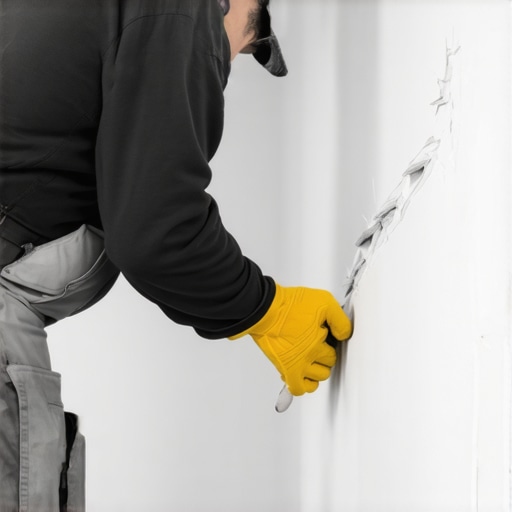
The Hidden Painting Prep Step Most Canton Contractors Skip
There is a specific kind of heartbreak that only a Michigan homeowner knows: watching a fresh, expensive coat of paint begin to bubble, crack, or peel after just one harsh winter. You’ve spent weeks selecting the perfect shade of “Greige” for your living room or a bold navy for your exterior, only to see the investment literally flake away. As a professional painter serving the Central Michigan area for decades, I, Brian Massaway, have seen this scenario play out far too often in homes across Canton, Livonia, and Novi.
The truth is, while many INTERIOR PAINTERS NEAR ME promise “premium quality” and “satisfaction guaranteed,” they are often skipping a critical micro-step in the preparation process. This isn’t just about moving furniture or laying down drop cloths; it’s about the chemical chemistry of your walls. Most budget contractors focus on speed to keep their quotes low, but in doing so, they neglect the “hidden” preparation steps – specifically chemical deglossing and TSP cleaning – that determine whether your paint job lasts two years or twenty.
Why “Clean” Isn’t Enough: The Science of Paint Adhesion
To the untrained eye, a wall might look perfectly fine for a new coat of paint. It’s been wiped down, the dust is gone, and the holes are patched. However, in the world of professional residential painting and drywall finishing, “looking clean” and being “chemically ready” are two very different things. Paint failure isn’t usually a problem with the paint itself; it’s a failure of adhesion. Industry research consistently shows that 80% of paint failures are attributed to poor surface preparation, primarily due to residual surface contaminants or a lack of “tooth” for the new paint to grab onto.
When we talk about adhesion, we are talking about the mechanical and chemical bond between the substrate (your wall or trim) and the coating. If you are painting over an old layer of semi-gloss or high-gloss paint – common on trim, doors, and in kitchens – the surface is naturally slick. It is designed to repel stains and moisture. Unfortunately, that same slickness also repels new paint. This is where the “hidden step” of Chemical Deglossing (or Dulling) comes in.
Chemical deglossers, often referred to as “liquid sandpaper,” are solvents that microscopically etch the surface of the old paint. This creates a profile that allows the new coat to “bite” into the old one. Without this step, the new paint essentially sits on top of the old layer like a sheet of plastic. When the humidity shifts during a humid Michigan summer or the temperature drops in January, the two layers expand and contract at different rates. Because there is no bond, the top layer shears off. Most contractors skip this because it requires extra time, specialized chemicals, and meticulous labor, but it is the difference between a professional finish and a DIY-looking disaster.
The Kitchen & Bathroom Crisis: Why Canton Remodels Fail Early
The stakes are even higher when we look at KITCHEN REMODELING CANTON MI and BATHROOM REMODELING LIVONIA MI. These are the two most high-traffic, high-stress environments in any home. In a kitchen, years of cooking release microscopic aerosolized oils into the air. These oils settle on every surface – walls, ceilings, and especially the cabinetry. Even if you can’t feel the grease, it is there, forming an invisible film that acts as a release agent for paint.
Similarly, in a BATHROOM REMODELING TROY MI or BATHROOM REMODELING FARMINGTON HILLS MI project, surfaces are coated in a fine layer of hairspray, perfumes, and soap scum. If a painter simply “scuff sands” these surfaces, they are often just grinding those oils and chemicals deeper into the substrate. This is a common pitfall in KITCHEN REMODELING LIVONIA MI projects where the painting is treated as an afterthought rather than a technical discipline.
I often tell my clients that painting is the final, most visible stage of a renovation, but it is deeply connected to the structural integrity of the room. Just as the one installation move most Canton kitchen remodels skip for new appliances can lead to premature mechanical failure, skipping the chemical cleaning phase in painting leads to premature aesthetic failure. You wouldn’t install a high-end range on an unlevel floor; why would you apply premium paint to a greasy, glossy wall?
The “Brian Massaway” 5-Step Prep Protocol
Over my years of specializing in interior/exterior residential painting and faux finishes, I’ve developed a non-negotiable protocol that I use for every project in the Greater Central Michigan area. If you want a finish that stands up to the local climate, these five steps are essential:
- 1. Pressure Washing & Deep Scrub: For EXTERIOR PAINTING NOVI MI, we don’t just “hose it down.” We use a calculated pressure to remove oxidation and “chalking” from old paint. On the interior, this involves a deep scrub of high-touch areas to remove skin oils and grime.
- 2. TSP (Trisodium Phosphate) Wash: This is the gold standard for heavy-duty cleaning. TSP is an inorganic chemical compound that cuts through heavy grease and soot like nothing else. It is essential for kitchen walls and ceilings near the stove.
- 3. Mechanical Sanding: While chemical prep is vital, mechanical sanding is still necessary to level out imperfections and “profile” the surface. We use HEPA-filtered vacuum sanders to keep your home dust-free – a step many budget LIVONIA HOUSE PAINTERS skip to save on equipment costs.
- 4. Chemical Deglossing: This is our “hidden step.” We apply a high-quality deglosser to all glossy trim, doors, and cabinetry. This ensures that the primer and topcoat fuse with the existing finish at a molecular level.
- 5. Moisture Testing: Michigan is notorious for high humidity. We use moisture meters to ensure that wood and drywall are within the acceptable range (usually below 12%) before a single drop of paint is applied. Painting over damp wood is a guaranteed recipe for blistering and rot.
This protocol takes more time. It requires more materials. But it ensures that when I leave a home in Oak Park or Novi, that paint job is there to stay. My specialty in drywall finishing and faux painting has taught me that the final 5% of the look depends entirely on the first 95% of the prep.
How to Spot a “Shortcut Contractor” in Livonia and Oak Park
When you are searching for LIVONIA HOUSE PAINTERS or OAK PARK HOUSE PAINTERS, the quotes you receive will vary wildly. It is tempting to go with the lowest bidder, but in the painting world, you are almost always paying for the prep work you don’t see. Here is how to identify a contractor who is planning to skip the essential steps:
Red Flag #1: The “One-Day” Promise. If a contractor claims they can prep and paint a large interior project or a full EXTERIOR PAINTER NEAR ME job in a single day, they are skipping the cleaning and drying times. TSP washes and deglossers need time to work and dry before paint can be applied.
Red Flag #2: Missing Equipment. When the crew arrives, do they have buckets, sponges, and chemical cleaners? Or do they just have brushes, rollers, and a ladder? If you don’t see cleaning agents on-site, they aren’t cleaning your walls.
Red Flag #3: Quotes That Are 40% Lower. Paint costs roughly the same for every contractor. Labor is the variable. If a quote is significantly lower, they are cutting labor hours. The easiest place to cut hours is in the “hidden” prep work like deglossing and sanding. A cheap INTERIOR PAINTING NOVI MI job will cost you twice as much when you have to pay a professional to strip the peeling paint and do it right three years later.
Beyond the Brush: Coordinating with Your Remodel
Painting is rarely an isolated event. It is usually part of a larger vision, whether you are doing a KITCHEN REMODELING CANTON MI or a full basement finish. A professional painter should be an active participant in the renovation timeline. For instance, in KITCHEN REMODELING LIVONIA MI, the sequence of painting, appliance installation, and cabinetry is vital.
I always coordinate with other trades to ensure that new assets are protected. If you are following an expert guide to appliance repair and installation today, you know that modern appliances are sensitive to dust and overspray. A “shortcut contractor” will slap paint around a new refrigerator, leaving visible lines or, worse, getting droplets on the stainless steel finish. A professional takes the time to mask, shield, and even move appliances to ensure the “hidden” areas are as well-protected and well-painted as the focal points.
Furthermore, in complex projects like a BATHROOM REMODELER NEAR ME would handle, ventilation is a major factor. Just as the one ventilation step most Long Island kitchen remodels skip for island ranges is crucial for air quality, proper airflow during the painting process is essential for the curing of the paint. Without proper ventilation and humidity control, even the best-prepped surface won’t allow the paint to cure to its maximum hardness.
Conclusion: Investing in Longevity
At the end of the day, a home in the Central Michigan area is one of your most significant investments. Whether you are looking for INTERIOR PAINTERS NEAR ME to refresh a bedroom or an EXTERIOR PAINTER NEAR ME to boost curb appeal before a sale, the quality of the work is measured in years, not days.
The “hidden step” of chemical deglossing and deep TSP cleaning is what separates a 2-year paint job from a 10-year or 15-year one. It is the signature of a craftsman who understands that paint is more than just color – it is a protective barrier for your home. By insisting on these technical steps, you ensure that your KITCHEN REMODELER NEAR ME or BATHROOM REMODELER NEAR ME delivers a result that is as durable as it is beautiful.
Don’t settle for a contractor who views your home as a “quick flip.” If you want a consultation that prioritizes the science of prep work and the longevity of your finish, contact me, Brian Massaway. Let’s make sure your next painting project is done once, done right, and built to last through every Michigan season.