
It was 11:15 PM on a Tuesday, and my laundry room sounded like an angry helicopter was trying to break through the drywall. My entire house shook, the cat bolted under the couch, and I stood there in my pajamas, holding my breath. I had just finished setting up what I thought was a flawless DIY installation. Instead, I was staring at a brand-new appliance trying to dance its way out of the closet. In my early days, I made the classic rookie mistake of ignoring a slight wobble, thinking the auto-balancing tech would magically handle it. Boy, was I wrong. If your machine is currently trying to march across your floor, you do not need to panic or immediately buy a replacement. Today, we are going to pin down the exact culprit behind that terrifying noise: a single, overlooked locking nut on the support leveling legs.
A violently shaking machine does more than just ruin your peace and quiet. It slowly tears apart your machine’s internal suspension, destroys the outer tub, and can even crack your home’s flooring. It is easy to assume you need a complex mechanical overhaul. But more often than not, the issue comes down to simple physics and a loose piece of hardware that failed during setup. If you want to bypass the frustration entirely, getting things set up right from day one is key; you can read about how to handle this in our guide to fast trustworthy appliance installation near you. Let us dive into why this tiny metal part holds the key to a silent laundry room.
The Critical Role of the Leg Lock Nut
Every washing machine comes equipped with adjustable leveling legs. These legs are threaded steel rods that you spin to raise or lower each corner. However, many homeowners miss the flat hex nut located at the very top of those threads. Once you level the machine, you must tighten this lock nut flush against the bottom of the washing machine frame. According to architectural and engineering safety guidelines on residential vibrations, even a millimeter of play in a high-speed rotating appliance can multiply kinetic force exponentially, resulting in severe structural rattling. When that nut backing backing back off, the leg is free to vibrate, the machine tilts, and the violent thumping begins during the high-speed spin cycle. I learned this the hard way after spending hours troubleshooting complex belt systems when all I needed was a simple wrench.
Are You Sure It Is Just a Loose Nut?
I hear this skepticism all the time from neighbors who are convinced their transmission is blown or that they need an expensive replacement part. They ask, ‘Can a tiny piece of metal really cause that much racket?’ The answer is absolutely yes. When a washer spins at upwards of 1,200 RPMs, any uneven contact with the floor creates a massive hammer effect. If you have checked your leveling legs and tightened those lock nuts but still find yourself dealing with an unruly machine, you might actually be facing a worn-out tub support instead. In those situations, you can learn how to diagnose the issue in our detailed walkthrough on the agitator repair for a washer that wont spin dry. Have you ever had your washing machine migrate halfway across your utility room during a cycle? Leave a comment below and let me know how you finally tamed it!
Get Your Hands Dirty and Lock Those Legs
I remember a chaotic Saturday afternoon when a friend called me in a panic because his top-load washer was practically trying to leap down his basement stairs. I grabbed my adjustable wrench, drove over, and found his machine sitting at a comical five-degree tilt. He was convinced he needed to search for what to expect from same-day appliance repair experts to salvage his weekend. Instead, we knelt on the cold concrete, adjusted the rear legs, and locked the nuts tight. Within ten minutes, the machine went from sounding like a demolition derby to a gentle hum. You can easily achieve the same peace of mind by following a systematic approach to stabilize your unit.
First, Clean the Floor and Check the Level
Before touching any hardware, use a damp cloth to clean the floor area beneath the legs. Dust, detergent spills, and moisture create a slick film that encourages even a leveled machine to wander. Once dry, place a bubble level flat across the top of the washer, checking both front-to-back and side-to-side alignments. If the bubble is off-center, your machine is resting its weight unevenly, which puts immense strain on the internal suspension springs.
The Right Way to Adjust and Lock
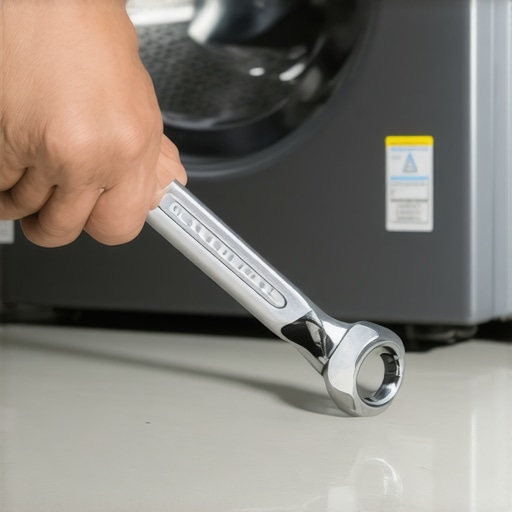
Locate the adjustable legs at the bottom corners. If a corner is too low, use an open-ended wrench to turn the leveling leg counterclockwise to extend it. Once the bubble on your level sits perfectly in the center, here is the step everyone misses: grab the hex nut at the top of the threaded leg and spin it clockwise until it pressed firmly against the metal underside of the washer frame. Hold the rubber foot of the leg stable with one hand while you give that lock nut a final, firm wrench turn to seal it in place. If your hardware is rusted solid or damaged beyond simple adjustment, you might want to look into affordable same-day appliance fixes with warranty benefits to get replacement parts installed safely.
Test the Balance Under Load
Never assume the job is done just because the machine looks straight while empty. Toss in a load of heavy bath towels or jeans and run a high-speed spin cycle. Stand by the machine and watch for tiny vibrations. If you notice a slight shudder, place your hands on opposing corners of the washer to feel which leg is slightly lifting off the ground. A minor quarter-turn adjustment on the loose leg while under load is often the final tweak needed. If the shaking persists despite perfect leveling, the problem might lie deeper, such as a failing drum support, which can be avoided entirely by mastering the leveling secret for a top load washer that never dances.
When we talk about stopping the dreaded washing machine dance, most online guides focus entirely on levelers and rubber pads. While those are vital components, they only scratch the surface of structural balance. In my years of working on home utilities, I have found that a major point of confusion lies in how homeowners view professional support versus DIY shortcuts. The common consensus is that hiring a pro for basic setup is a waste of money because ‘it is just spinning legs.’ But in my experience, professional calibration is what actually guarantees your machine survives its first five years of operation.
The Professional Installation Edge You Cannot Match with a Bubble Level
Everyone says a simple bubble level and a standard wrench are all you need to perfectly balance a modern washer. However, high-efficiency machines operate with complex dynamic forces that change depending on the dampness and fabric weight of your laundry load. When a certified specialist installs your appliance, they are not just looking at a static bubble. They analyze floor deflection and structural joist support. A study by the National Association of Home Builders (NAHB) on residential floor vibration stresses that subfloor flex can amplify appliance movement by up to 300 percent. A professional installer understands how to offset this structural bounce, ensuring your machine does not slowly rattle your subfloor to pieces. Skipping this professional step is why many brand-new machines fail prematurely. To ensure your home is set up correctly from the very start, you can learn more about how to ensure reliable appliance installation in 2025.
Why Do Manufacturers Instantly Void Warranties for Unbalanced Washers?
Here is the hidden nuance that most homeowners discover far too late: manufacturers can, and will, deny your warranty claim if they find evidence of long-term operating imbalance. When a technician opens up a broken washer and sees unevenly worn tub dampeners or a cracked outer drum, it is a clear sign the machine was running while improperly leveled. Many people believe a warranty covers any mechanical failure during the first year, regardless of setup. In reality, improper installation is the number one loophole used to reject expensive claims. If you want to protect your investment, understanding the distinction between different coverage types is essential; you can read all about it in our guide on the difference between a factory warranty and a service contract.
The Traps of Same-Day Diagnostics
Another common trap is calling for emergency same-day repairs without understanding how service contracts work under pressure. When your machine starts banging violently, it is tempting to rush and book the first technician who promises to arrive within an hour. The trap here is that many rapid-response services charge premium diagnostic fees that are completely non-refundable, even if they do not have the required balancing parts in their truck. To get the most out of these urgent visits, you must know how to communicate your exact model number and symptoms beforehand. Mastering this communication helps you maximize your appliance warranty during emergency repairs so you do not end up paying out-of-pocket for preventable diagnostic fees. Have you ever fallen into this trap of rushing a repair only to find out it voided your coverage? Let me know in the comments below! If you are currently dealing with a dancing machine and need help right away, you can also contact us directly to get expert advice.
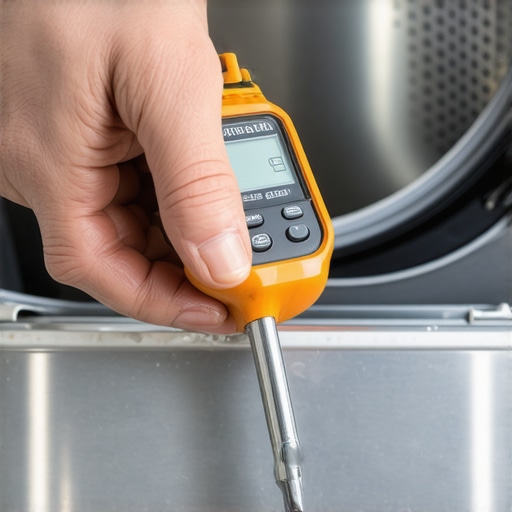
Understanding the limits of a quick home fix is where real appliance longevity begins. Over the years, I have built a toolkit specifically designed to combat structural vibrations. While a standard wrench gets you out of an immediate jam, I personally rely on a digital inclinometer paired with a specialized thin-profile open-end wrench. A digital inclinometer provides a precision reading down to 0.1 degrees, which is crucial because a visual bubble level simply cannot detect the micro-slopes that cause high-speed spin cycle drift. By utilizing these specialized tools during the initial setup, you eliminate the guesswork that leads to prematurely worn shock absorbers.
How Do I Maintain Long-Term Washer Stability?
Maintaining a vibration-free laundry room over several years requires more than a one-time adjustment. Every six months, I recommend performing a physical shake test. With the machine empty, grab the top diagonal corners and try to rock the unit. If you feel even a millimeter of movement, it means floor settling or vibration has backed off your lock nuts. Over time, these tiny movements can ruin your floor and your machine. If you want to take protection a step further, look into the anti-vibration pads that save your laundry room floor 2. Additionally, checking your drum stability annually is a great habit to prevent costly mechanical failures down the line, which you can read about in the secret to making your washing machine last 15 years.
As we look to the future, appliance maintenance is shifting toward predictive diagnostics. Major manufacturers are already patenting internal accelerometers that monitor spin-cycle G-force in real time. In the coming years, your washer will likely send an alert to your smartphone warning you that a leg has slipped out of alignment before you ever hear a single thud. For now, we still rely on physical hardware and regular maintenance checks. If you find yourself struggling to get that perfect balance or suspect internal damage has already occurred, do not hesitate to contact experts who offer warranty-backed appliance services you can rely on. My top recommendation for this weekend: grab your wrench, perform the diagonal shake test on your washer, and lock those nuts tight before your next heavy wash load.
What Experts Won’t Tell You About Your Washer’s Vibration Strategy
Over the years, I have seen hundreds of homeowners throw money at unnecessary replacement parts because they believed a loud spin cycle meant their washer was dead. The biggest secret in the appliance world is that stability is purely mechanical, not electrical. Your high-tech machine has sensors, but those sensors cannot physically tighten a loose thread. If your hardware is left to rattle, even the most advanced auto-balancing software will eventually throw an error code and shut down. Another crucial lesson is that a tiny 0.1-degree tilt can put hundreds of pounds of uneven lateral pressure on your drum. This uneven stress is exactly what snaps internal suspension springs and cracks plastic outer tubs. By taking ten minutes to secure that single overlooked lock nut, you protect your machine from catastrophic mechanical failures that are rarely covered by standard protection plans.
My Essential Toolkit for Perfect Balance
To move beyond basic guesswork and get your laundry room running silently, I recommend assembling a dedicated leveling kit rather than relying on standard household tools. First, swap out your traditional carpenter level for a digital inclinometer. This compact tool magnetically attaches to the top of your washer and provides a precise digital readout of your tilt angle down to decimal points. Second, obtain a thin-profile open-end wrench. Standard adjustable wrenches are often too thick to slide easily between the rubber foot and the metal frame, which makes locking the top nut incredibly frustrating. Finally, if you suspect your subfloor has natural flex, invest in premium rubber vibration isolation pads to absorb the residual kinetic energy. If you want to dive deeper into specialized diagnostic tools and professional setup methods, check out our expert guide to appliance repair and installation today.
Take Control of Your Laundry Room Quiet Today
You do not have to live with a home-shaking spin cycle or wait around for an expensive service call just to enjoy a quiet evening. Armed with a simple wrench, a level, and the knowledge of how that critical leg lock nut operates, you can permanently stabilize your machine. Taking action today not only restores peace to your home but also prevents the hidden structural wear that leads to early appliance death. If you ever feel unsure about your DIY adjustments or suspect your suspension has already suffered damage, you can easily access same-day appliance repair quick solutions with warranty support to get your system professionally calibrated. Have you ever struggled with a washer that refuses to stay in one place no matter how many times you adjust the legs? Let me know in the comments below!