
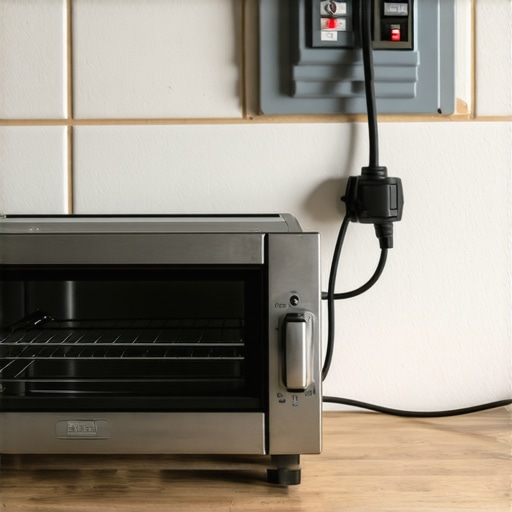
I was standing in my pajamas, clutching a half-buttered bagel, when the kitchen suddenly fell into a haunting silence. One second, my toaster oven was humming along, promising a golden-brown crunch; the next, the fridge stopped humming, the microwave clock vanished, and I was left in the dim morning light. I’d just tripped the breaker. Again. It’s a frustrating dance we do: walking to the garage or the basement, flipping that heavy black switch, and hoping this time the toast actually finishes. If you are dealing with this right now, I feel your pain. I spent weeks playing a game of ‘musical outlets,’ thinking I could just outsmart my home’s wiring. Spoiler: the wiring won every time. We are going to fix that today. I’ll show you exactly why your kitchen is staging a walkout and how to get your appliances back in harmony without a headache.
The Morning My Breakfast Killed the Power
Early in my journey of home maintenance, I made a classic mistake: I assumed all wall outlets were created equal. I figured if the plug fit, the power would flow. I even tried using a thick extension cord to run my toaster oven from the living room circuit, which is a massive safety ‘no-no’ I deeply regret now. It turns out that [the proper way to ground your new smart stove during installation](https://discountappliancehub.com/the-proper-way-to-ground-your-new-smart-stove-during-installation-2) and other high-heat appliances is vital for a reason. Toaster ovens are essentially small space heaters that happen to cook food. They can pull 1,200 to 1,500 watts of power the moment those coils turn orange. According to the National Fire Protection Association, electrical distribution or lighting equipment is a leading cause of home fires in the U.S., often due to overloaded circuits just like the one I was abusing. This is precisely [why your new smart oven needs a dedicated circuit](https://discountappliancehub.com/why-your-new-smart-oven-needs-a-dedicated-circuit), and your high-powered toaster oven often needs its own breathing room too. If your refrigerator compressor kicks on at the exact same moment your toaster reaches peak temp, your circuit breaker does its job and cuts the flow before the wires in your walls start to cook.
Do I really need a professional for such a small appliance?
You might be skeptical. It’s just a toaster, right? But if your breaker is tripping every time you want a snack, the problem is rarely the appliance itself; it’s the infrastructure. When I finally stopped being stubborn and looked into an [expert guide to appliance repair and installation today](https://discountappliancehub.com/expert-guide-to-appliance-repair-and-installation-today), I realized my kitchen was wired for a 1970s lifestyle, not a 2025 array of gadgets. Have you ever had your coffee maker and your toaster oven go on strike at the same time? It’s a clear signal that your home is trying to tell you something important about its limits. Let’s get into the nitty-gritty of how to balance that load.
Get Your Kitchen Back Online Without the Sparks
To stop the cycle of running to the breaker box, you need to think of your kitchen’s electrical system like a highway. When you plug in a toaster oven, an air fryer, and a coffee maker on the same line, you are essentially trying to cram three semi-trucks into a single-lane alley. The first thing I do now—and what I learned the hard way after nearly scorching my backsplash—is a manual load audit. You need to look at the ‘Amps’ or ‘Watts’ listed on the back of your gadgets. Most standard kitchen circuits are rated for 15 or 20 amps. If your toaster pulls 12.5 amps and your microwave pulls 10, running them simultaneously is a guaranteed ticket to a dark kitchen. Understanding this balance is the first step in an expert guide to appliance repair and installation today. I remember one specific Saturday when I tried to host a brunch; I had the waffle iron and the espresso machine going at once. The resulting ‘pop’ didn’t just kill the lights; it actually caused the voltage issue that kills your new oven control board because the sudden drop and surge stressed the sensitive electronics. 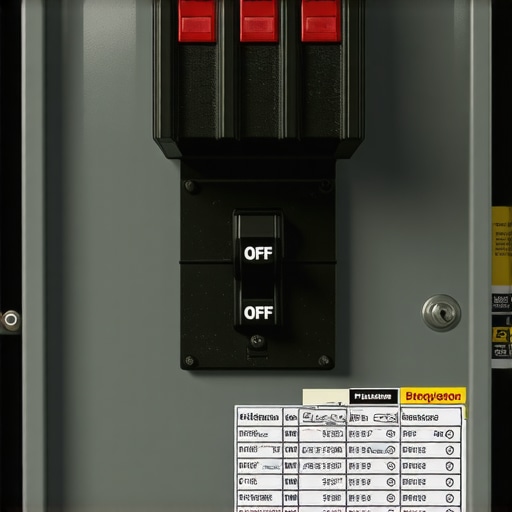
Look for the Ghost in the Machine
Before you assume the house needs a full rewire, check the physical connections. I once spent three hours troubleshooting a ‘broken’ dishwasher only to find that the vibration from the motor had slowly backed out a wire nut in the junction box. If you see flickering lights when an appliance kicks on, it is often the one wire that always loose in your wall oven control board or the outlet itself. This creates resistance, which generates heat and trips the breaker even if you aren’t technically ‘overloading’ the circuit by the numbers. It is a subtle safety feature, but a vital one. If you’re not comfortable poking around behind the faceplate, knowing what to expect from same-day appliance repair experts can save you a lot of anxiety. They can use a multimeter to see if the outlet is drawing more juice than it should, which is often a sign of a failing internal component in the appliance itself.
Give Your Heavy Hitters a Lane of Their Own
The ultimate fix for a modern kitchen is the dedicated circuit. If you’ve upgraded to a high-end range or a smart fridge, you cannot expect them to share power with a blender. This is specifically why your new smart oven needs a dedicated circuit; it’s not just about the power it uses, but the ‘clean’ signal it requires to keep its computer chips happy. When I finally installed a separate 20-amp line for my countertop oven, the tripping stopped instantly. It was like finally giving that semi-truck its own dedicated lane on the highway. If you are in the middle of a crisis and can’t cook dinner, look into scheduling your appliance repair for same-day service in 2025 to get a pro to verify your current load. They can often bridge the gap between a simple repair and a necessary electrical upgrade, ensuring your warranty remains intact while your bagels finally get toasted in peace.Most homeowners live in fear that touching their own machine—or calling a local expert—will instantly void their protection plan. I used to be the same way, waiting three weeks for a factory-authorized tech while my groceries spoiled in a warm fridge. But here is the contrarian truth: you don’t always have to wait. Under the Magnuson-Moss Warranty Act, manufacturers generally cannot void your warranty just because you used a third-party service or part, unless they can prove that specific part or service caused the failure. This is exactly where the third-party warranty loophole that saves you hundreds on parts becomes a game-changer. Instead of being held hostage by a brand’s backlogged schedule, you can often find same-day appliance repair quick solutions with warranty support that keeps your kitchen running without the legal headache.
Can a Third-Party Tech Actually Save Your Manufacturer’s Warranty?
The answer is a resounding yes, provided you know how to verify your new appliance is covered under the original warranty before the tools come out. The biggest ‘oops’ factor I see isn’t the repair itself; it’s the lack of paper trails. If you don’t have the document every technician needs to see for a valid warranty visit, you are essentially flying blind. I once saw a neighbor lose out on a $400 control board replacement because they couldn’t produce a simple installation receipt. Professionals who provide warranty-backed appliance services you can rely on will actually help you document the failure correctly so the manufacturer has no choice but to honor the claim. 
Why Same-Day Service is More Than Just a Quick Fix
We often view ‘same-day’ as a luxury or an emergency-only tax, but in the world of high-end appliances, it’s actually a preventative strategy. According to data from the Federal Trade Commission, timely maintenance is the number one factor in avoiding catastrophic ‘cascading’ failures. For example, if you ignore a slight clicking, you might eventually need affordable same-day appliance fixes with warranty benefits before that small noise turns into the voltage issue that kills your new oven control board. By getting a pro through the door early, you aren’t just stopping a leak; you’re ensuring your reliable appliance installation in 2025 stays optimized for the long haul. Have you ever fallen into the trap of waiting weeks for a ‘factory’ tech while your life was on hold? Let me know in the comments. If you’re currently staring at a broken stove, don’t wait—look into scheduling your appliance repair for same-day service in 2025 to protect your investment and your sanity.I realized that if I was going to stop calling the pros for every little ‘hiccup,’ I needed to stop guessing and start measuring. The turning point for me was buying a digital multimeter. I personally use the Klein Tools MM400 because it’s rugged enough to survive being dropped on a tile floor, and it’s remarkably accurate for testing everything from a blown thermal fuse to the one wire that always loose in your wall oven control board. When you can physically see that a heating element has zero continuity, the mystery of why your oven won’t heat simply evaporates. It moves you from a state of ‘hoping’ to a state of ‘knowing.’
Stop Guessing with a Digital Multimeter
Investing in a few specialized tools changed the way I look at my house. Beyond the multimeter, I’ve started using a cheap thermal imaging camera attachment for my phone. It’s incredible for seeing exactly where heat is escaping from a fridge seal or finding a hot spot in a breaker panel before it actually trips. This level of precision is part of how to ensure reliable appliance installation in 2025. If you can see a loose electrical connection glowing bright orange on a thermal screen, you’ve just prevented a fire. According to the Association of Home Appliance Manufacturers (AHAM), sensors and diagnostic feedback in modern appliances can now detect over 80% of component failures before they result in a total breakdown, but only if you have the tools to read the data.
How do I maintain my high-tech kitchen over time?
Long-term reliability isn’t about one big fix; it’s about the micro-habits. For example, the maintenance step that extends the life of your high-efficiency washer is as simple as cleaning the internal filter every ninety days. In the kitchen, I’ve made it a rule to vacuum my refrigerator condenser coils twice a year. Dust is the silent killer of compressors; it forces the motor to run hotter and longer, which is a leading cause of early death for even the most expensive units. I also recommend checking your dishwasher’s mesh screen frequently to avoid the filter error that makes your modern dishwasher stop mid-cycle. Keeping these small pathways clear ensures that the water pressure and drainage stay within the factory-intended specs. 
The Future of Kitchen Diagnostics is Already Here
I predict that within the next five years, we won’t even need multimeters for basic troubleshooting. We are moving toward a ‘predictive maintenance’ model where your smart fridge will send a notification to your phone—and your local repair shop—saying its evaporator fan is pulling too many milliamps and will likely fail in three weeks. We’re already seeing the beginnings of this with Wi-Fi-enabled diagnostics. However, the hardware still needs physical care. Even the smartest oven in the world needs the proper way to ground your new smart stove during installation to protect its delicate logic boards from static and surges. Don’t let the ‘smart’ labels fool you into thinking these machines are maintenance-free. If you want to get ahead of the game, I challenge you to do one thing today: find your dishwasher’s filter, pull it out, and give it a good scrub with an old toothbrush. You’ll be shocked at what’s been sitting there, and your machine will run noticeably quieter tonight. Also, if you’re noticing odd smells, don’t ignore them; look into the one maintenance move that stops your ac from smell like mildew to keep your whole home’s air quality in check while you work.
What I Finally Learned After My Third Power Surge
Looking back at my toasted bagel disaster, I’ve realized that the biggest mistake isn’t a lack of technical skill; it’s a lack of awareness about how your home actually functions. One lightbulb moment for me was discovering that manufacturers often use complex language to scare you, but you can actually maximize your appliance warranty during emergency repairs if you just keep your receipts and hire licensed help. Another hard-earned truth? Don’t let a corporate customer service agent bully you. Knowing how to claim your warranty when the manufacturer denies you is a skill every homeowner needs in their back pocket. Finally, I learned that a 15-amp circuit is not a suggestion; it is a hard boundary that, when crossed, will cost you an oven control board sooner or later.
My Go-To Kit for a Resilient Kitchen
If you want to move from being a victim of your appliances to being their master, I recommend starting with a few reliable resources. First, keep a digital folder of every manual and installation receipt; you’ll need it because the fine print in your home warranty that denies every claim usually hinges on a missing date or a ‘lack of maintenance’ clause. Second, invest in a quality multimeter like the Klein Tools MM400—it’s the only way to know if a part is actually dead without guessing. Lastly, bookmark a source for fast trustworthy appliance installation near you so you aren’t forced to do a rush job yourself when a new machine arrives during a holiday week.
Take Control of Your Kitchen Before It Takes Your Morning
You don’t have to be an electrician to have a kitchen that works every single time you press the start button. It starts with small steps—cleaning a filter, listening for a new click, or finally running that dedicated line for your high-end oven. Don’t be afraid to dive into your machine’s settings or call in a pro when the math doesn’t add up. Proper appliance repair and maintenance are investments in your sanity, not just your home. Have you ever had a warranty claim denied for a reason that seemed totally unfair? Let me know in the comments below!