
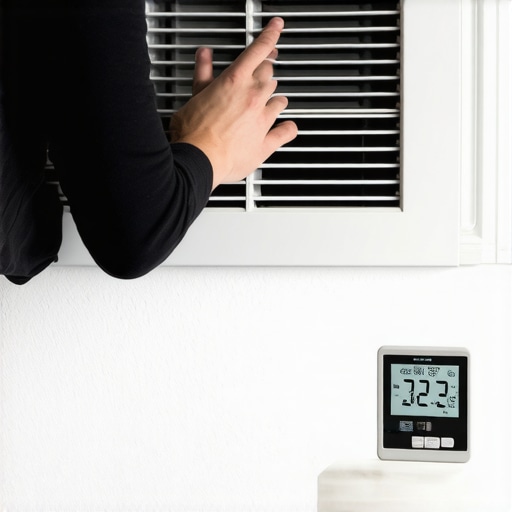
Last February, I found myself sitting on my sofa wrapped in two wool blankets while my thermostat insisted the house was a balmy 72 degrees. The problem? That 72 degrees was only happening in the hallway. My living room was a popsicle stand, and the master bedroom felt like a humid jungle. I nearly called for a full system replacement before I realized I was making a classic rookie mistake. I assumed that if the air was blowing, the job was done. It turns out, I was starving half my house of airflow because I didn’t understand the delicate pressure balance of my own ductwork.
Stop Paying for Heat You Never Feel
It’s incredibly frustrating when you’re paying utility bills that look like mortgage payments, yet you’re still shivering in the kitchen. Most of us just crank the thermostat higher, which is exactly like trying to fill a leaky bucket by turning the tap on harder. Before you go hunting for an expert guide to appliance repair and installation today, you need to look at your registers. I once spent $200 on a service call only to have the technician point out that my oversized sectional was sitting directly on top of the main floor register. Talk about embarrassing. We’re going to fix those annoying hot and cold spots today without you having to crawl into the attic or spend a dime. We will look at how to redirect that air so your furnace actually does what you pay it to do. If you have ever dealt with why your ac is blowing room temperature air, you already know that airflow is the lifeblood of home comfort.
Is This Actually Better Than Using a Space Heater?
I get the skepticism. A space heater is a quick $40 fix at the local hardware store, right? But here is the kicker: space heaters are notoriously inefficient and often stay on far longer than they should. According to the U.S. Department of Energy, proper air distribution and sealing can save homeowners up to 15% on heating and cooling costs annually. That is real money back in your pocket. Plus, when you balance your vents, you reduce the static pressure on your blower motor. I learned the hard way that the hvac filter direction error that strains your motor is just one way to kill your system early; poor vent management is another silent killer. Have you ever had one specific room that just refuses to stay comfortable no matter what you do? I’d love to hear about your most stubborn room in the comments—I bet I’ve dealt with the same thing.
The Airflow Balancing Act You Can Do Yourself
The first thing I had to learn was that your HVAC system is a closed loop. If you close a vent in the guest room, that air doesn’t just vanish into thin air. It gets pushed elsewhere, increasing pressure in the remaining ducts. My big mistake early on was closing too many vents at once, thinking I was being efficient. In reality, I was just making my furnace work twice as hard to squeeze air through the remaining gaps. You might also want to learn how to calibrate your smart thermostat for better efficiency once we get the physical air moving correctly, because even a balanced system needs an accurate brain to run it effectively.
Track the Drafts Before You Touch the Thermostat
To get this right, you need to stop guessing where the air is going. I spent a whole Saturday morning with a single sheet of two-ply toilet paper to map my house. It sounds ridiculous, but if you hold a tissue up to each vent, you get an immediate visual of the output. In my case, the master bedroom vent was barely twitching, while the bathroom vent was trying to blow the tissue out of my hand. This is the literal leak in your comfort bucket. If you notice zero movement at all, you might be looking at a disconnected duct or a failed blower motor. Before you panic and search for fast trustworthy appliance installation near you, check the physical dampers first.
Locate Your Metal Levers
Go to your furnace and look at the large metal pipes branching off the main unit; these are your supply ducts. Most systems have small metal handles called dampers. Think of these like the nozzle on a garden hose. If the handle is parallel to the pipe, it’s wide open. If it’s perpendicular, it’s closed. I found out that the previous owner of my house had turned the damper to the off position for the guest wing, which was why my bedroom felt like an icebox. Once you identify these, start the two-finger adjustment. Move them in tiny increments—no more than a quarter-inch at a time—and then go back upstairs to check your tissue test again.
Work With the System Not Against It
While you are tweaking the physical air path, remember that your equipment has limits. Pushing too much air into one small room can create a back-pressure that sounds like a high-pitched whistle. If your system starts making a whine after you adjust the dampers, you’ve gone too far. This kind of strain is exactly why you should read about the hvac filter direction error that strains your motor, as both issues force your equipment to work in a high-resistance environment that leads to early failure.
Save Your Warranty With Good Habits
If you find that your adjustments aren’t helping, you may have a deeper mechanical issue like a failing capacitor or a seized fan. This is where your paperwork becomes your best friend. I keep a folder on top of my water heater with every receipt. Knowing the one maintenance record that saves your appliance warranty claim can be the difference between a free repair and a massive bill. If you do have to call in a pro, make sure they are warranty backed appliance services you can rely on so you don’t void your manufacturer coverage during the fix. I once had a guy try to fix my blower by bypass-wiring it, which immediately killed my 10-year parts warranty. Don’t let that happen to you. Ensure you know how to ensure reliable appliance installation in 2025 before letting anyone take a wrench to your main trunk lines. Balancing is a DIY job, but internal mechanical repair usually requires that professional paper trail to keep your coverage intact.
Why Same-Day Service Doesn’t Always Mean a Fixed Furnace
Let’s get real about ’emergency’ repairs. Most homeowners believe that calling for same-day service is a magic wand. You see the advertisement, you book the slot, and you expect the house to be warm by dinner. But here is the professional reality: ‘same-day’ usually refers to the dispatch, not the resolution. In my experience, a technician arriving at 4:00 PM on a Friday is rarely carrying the specific control board your 2012 furnace requires. If you aren’t prepared for the diagnostic-only visit, you’ll end up frustrated. Knowing what to expect from same-day appliance repair experts saves you from that emotional roller coaster. I once waited three days for a ‘same-day’ fix because the part was stuck in a warehouse two states away. It is better to treat the first visit as an information-gathering mission rather than a final solution.
Can You Actually Lose Your Warranty by Tinkering?
This is the million-dollar question for the DIY crowd. There is a common myth that if you so much as open the cabinet of your furnace or dishwasher, your warranty is instantly vaporized. This is largely false due to the Magnuson-Moss Warranty Act of 1975. Federal law generally prohibits manufacturers from conditioning a warranty on the use of a specific brand of parts or service, unless they provide them for free. However—and this is a big however—if your DIY ‘balancing’ or ‘cleaning’ results in actual damage to a component, the manufacturer is well within their rights to deny the claim. This is often the reason your warranty claim was denied: not because you touched it, but because your touch caused a secondary failure.
The Paperwork Mistake That Costs Thousands
The biggest trap I see people fall into isn’t the repair itself, but the documentation. I’ve seen claims for $1,200 compressors rejected simply because the homeowner couldn’t prove they had changed their filters regularly. To the manufacturer, a clogged filter is ‘neglect,’ not a defect. You need to understand the wear and tear clauses that might void your warranty before you even pick up a screwdriver. It’s also why I’m obsessed with keeping every slip of paper. You might think that cardboard box is just recycling, but the warranty document you must save before discarding the box often contains the only copy of your specific extended coverage code. Without that serial number and registration date, you are at the mercy of the manufacturer’s database, which is rarely in the customer’s favor.
Always Get the ‘Cause of Failure’ in Writing
If you are looking for affordable same-day appliance fixes with warranty benefits, always ask the technician to note the ’cause of failure’ in writing on your invoice. This is a nuance most people overlook. If they write ‘normal use’ or ‘mechanical defect,’ you’re gold for a warranty claim. If they write ‘lack of maintenance’ or ‘external damage,’ you’re paying out of pocket. Beyond just the paperwork, a common mistake is failing to verify the technician’s credentials against the manufacturer’s ‘authorized’ list. I once hired a local guy who was brilliant, but because he wasn’t on the specific brand’s registry, the subsequent $800 part claim was rejected. It felt like a gut punch. Always double-check your policy before scheduling. Have you ever fallen into this trap where a simple fix turned into a warranty nightmare? Let me know in the comments.
Tools That Make Me Look Like a Pro
I’ve spent thousands over the years on shiny new gadgets, but the best money I ever spent was $40 on a digital anemometer. While the toilet paper trick is great for a quick check, this little tool tells me exactly how many feet per minute are coming out of my registers. I use it to build a baseline for my home’s health. If my living room vent drops from 400 fpm to 250 fpm over a month, I know my filter is clogging or a duct has come loose before the house even gets uncomfortable. This is how you stay ahead of the curve. You also need a non-contact infrared thermometer. I use mine to scan the surface of my furnace cabinet. If I see a localized hot spot near the control board, I know I might be dealing with the one wire that always fails in your smart thermostat or a failing relay before it causes a total shutdown. 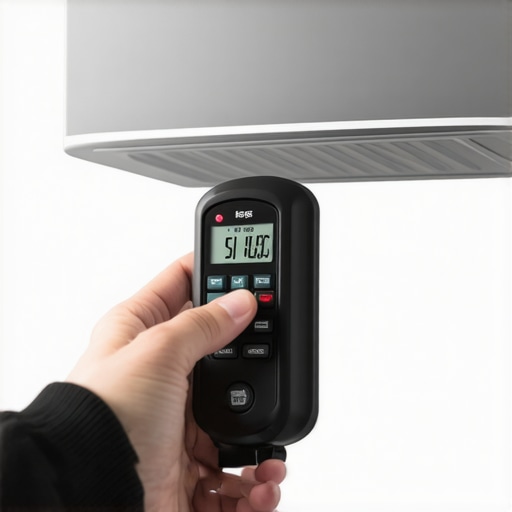
How can I keep my HVAC system running for twenty years?
The secret isn’t just buying the best unit; it’s the meticulous documentation of your care. Most manufacturers look for any excuse to walk away from a claim. According to the Air Conditioning Contractors of America (ACCA) standards for residential maintenance, improper airflow and lack of regular testing are the leading causes of premature compressor failure. By using a simple digital log to show how to prove periodic maintenance to keep your warranty valid, you’re essentially building a legal defense for your future self. I even go as far as performing the capacitor test that saves your ac compressor every spring. If the microfarad reading is more than 10% off the rated value, I swap it out immediately. It’s a $15 part that prevents a $2,000 motor burn-out. In the coming years, I expect we will see AI-driven ‘smart’ sensors integrated into every duct that handle this balancing and diagnostic work automatically, but for now, the responsibility is on us.
Predicting Failures Before They Happen
If you find yourself in a pinch, scheduling your appliance repair for same-day service in 2025 is becoming much more accessible thanks to real-time technician tracking. However, even with same-day appliance repair quick solutions with warranty support, you are always better off catching the rattle before it becomes a snap. My advanced tip for you today is this: go grab a cheap infrared thermometer and scan your electrical panel and your furnace while they are running. If you find a breaker or a wire that’s significantly hotter than the others, you’ve just caught a fire hazard or a pending failure before it became an emergency. This proactive habit is what separates a comfortable homeowner from one who is constantly stressed by repair bills.
The Costly Myths I Had to Unlearn About My Vents
I used to think that closing vents in unused rooms was like turning off a light switch—instant savings. In reality, I was just choking my blower motor and risking a repair bill. Here is the truth: your system is engineered for a specific volume of air. Static pressure is your invisible enemy, and forcing air through fewer holes is like trying to run with a hand over your mouth. Closing too many vents leads to heat exchanger cracks and premature motor failure.
Another big eye-opener was the ‘same-day’ promise. Don’t get me wrong, what to expect from same-day appliance repair experts is a quick response, but not always an instant solution. Sometimes the fastest fix is just having the right documentation ready so the tech doesn’t have to play detective. Also, remember that the reason your warranty claim was denied usually comes down to one missing receipt or a dirty filter, not the repair itself.
The Tools I Never Start a Saturday Without
If you want to move beyond the tissue test, I highly recommend a digital anemometer. It’s the only way to prove you’ve actually improved the airflow in that back bedroom. I also keep a non-contact infrared thermometer to check for hot spots on the furnace board which might indicate an electrical strain. Finally, the most important ‘tool’ is my warranty binder. Knowing the warranty document you must save before discarding the box has saved me from paying for a replacement circuit board twice. #IMAGE_PLACEHOLDER_E#
Put Your Home’s Comfort Back in Your Hands
Balancing your vents isn’t just about getting warm; it’s about taking ownership of the machine that keeps your family safe and comfortable. Whether you are looking for an expert guide to appliance repair and installation today or just trying to survive a cold snap, your proactive maintenance is the best insurance policy you can have. Don’t wait for a total system failure to start paying attention to the way your air moves. Grab a tissue, check your dampers, and keep those records organized. Have you ever discovered a hidden vent or a closed damper that was ruining your home’s temperature? Let me know in the comments!