
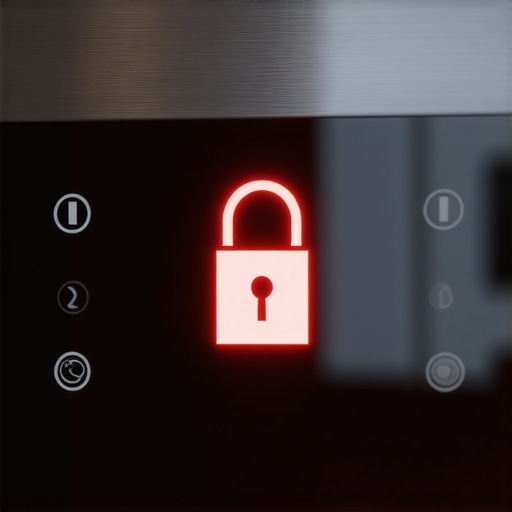
There I was, standing in front of my dryer with a mountain of damp towels, pressing the Start button like I was playing a frantic game of Whac-A-Mole. Nothing. Just a mocking little padlock icon blinking at me like a silent judge of my technical incompetence. I was moments away from a total meltdown, convinced that my three-year-old machine had finally kicked the bucket. I even started searching for what to expect from same-day appliance repair experts because I couldn’t imagine a night without clean laundry. It felt like my house was conspiring against me.
Stop Searching for Your Toolbox Right Now
It turns out, my dryer wasn’t dead. It was just safe. I had accidentally engaged the Control Lock while wiping down the display panel. It’s a common story. I cannot tell you how many times I have seen neighbors nearly shell out hundreds of dollars because their induction range beeps when nothing is on or their dishwasher won’t respond to a single touch. We live in an era where our appliances are basically iPads that wash dishes, and sometimes, they decide to lock us out for our own good—or simply because we bumped the wrong sensor while reaching for the pepper shaker. Years ago, before I knew better, I actually did call a pro for this exact issue. I sat there in sheepish silence while he held the Cycle Signal button for three seconds, the machine chirped to life, and he handed me a bill for the house call. It was a humbling lesson. Today, I want to save you that embarrassment and the cost of a service call by showing you how to reclaim control without needing warranty-backed appliance services for a non-problem.
Is This Feature Just a Way to Annoy Us?
You might be thinking this feature is a total gimmick, but it is actually designed to prevent toddlers from starting a heat cycle or to keep you from accidentally changing settings mid-wash. However, the reality is that many service calls are unnecessary. According to data from various repair industry insights, including reports from Consumer Reports, a significant percentage of service requests are for no-fault-found issues, which often include accidentally engaged safety locks or simple power resets. That is a lot of wasted money for a single button press. Have you ever felt that sinking feeling when your appliance just stares back at you, refusing to work? If you’ve checked the plug and verified the breaker hasn’t tripped, there is a massive chance your machine is just stuck in its own security protocol. Before you panic, we should look at the secret reset code for frustrated washing machine owners and other ways to bypass these digital gatekeepers.
Kill the Power and Walk Away for Ten Minutes
Think of your appliance’s control board like a smartphone that has been left in a hot car. It gets confused, the software loops, and eventually, it just stops responding to your touch. Before you start looking for an expert guide to appliance repair and installation today, try the ‘Hard Reset.’ This isn’t just turning it off; it’s a complete electrical purge. Unplug the machine or flip the breaker in your service panel. You need to wait at least ten minutes. This allows the capacitors on the control board to fully discharge, clearing out any ‘ghost’ errors that are keeping the system locked. I remember a humid Tuesday when my fridge started chirping like a panicked cricket. I was ready to lose $300 in groceries. Instead of panicking, I flipped the breaker, made a cup of coffee, and ten minutes later, the compressor hummed back to life like nothing had happened. Sometimes the best tool in your kit is just patience and a lack of electricity. expert guide to appliance repair and installation today.
Master the Secret Three Second Press
Most modern touchscreens and membrane pads have a hidden ‘escape’ sequence. If you see a padlock icon or a code like ‘Loc’ or ‘LC,’ you are likely stuck in a safety loop. Look for a button labeled ‘Control Lock,’ ‘Child Lock,’ or ‘Cycle Signal.’ The trick is that these aren’t just taps; they require a sustained hold—usually three to five seconds. If your display is completely dark, it might not even be a lock issue but rather the signs of a failing range control board. However, 90% of the time, holding the ‘Options’ and ‘Select’ buttons simultaneously for a slow count of five will trigger a satisfying beep that signals your freedom. If you are dealing with a laundry unit specifically, you might need to hunt for the secret reset code for frustrated washing machine owners which often involves a specific sequence of the cycle dial. 
The Ghost Fix That Most People Miss
There is a specific component called a thermal switch that can mimic a software lock. If your dryer or oven won’t even acknowledge that you’ve pressed ‘Start,’ the machine might think it’s overheating. This is a physical safety override. On many dryers, there is a tiny button on the back of the heater housing. If that switch has tripped, no amount of button-pressing will help. You have to physically push it back in. This is the thermal switch reset that brings your dryer back to life without needing a single replacement part. the thermal switch reset that brings your dryer back to life. I once helped a neighbor who was about to drag his dryer to the curb because it ‘just stopped.’ We popped the back panel, clicked that little red button, and it worked perfectly. He’d spent two days washing clothes in the bathtub for a problem that took thirty seconds to click back into place.
Decipher the Digital Language of Error Codes
When your appliance refuses to work, it’s usually trying to tell you why through a series of blinks or letters. Don’t ignore ‘F’ or ‘E’ codes. These are not random; they are your roadmap. If you see an error related to temperature, it’s time for the refrigerator thermostat test every diyer should know. If the code persists after a hard reset, it means a sensor is detecting a genuine fault, like a blocked vent or a jammed pump. If you find yourself staring at a code you can’t bypass, knowing what to expect from same-day appliance repair experts becomes your next logical step to ensure you don’t turn a simple sensor swap into a motherboard replacement. the refrigerator thermostat test every diyer should know. Always check the easiest physical blocks first—kinked hoses or blocked filters—before assuming the computer is fried.
While mastering the hard reset is a great first step, let’s dig deeper into the world of professional service and the mistakes I see homeowners making every single day. Most people assume that if their machine is under a protection plan, they are invincible. I’ve found that the opposite is often true. We tend to get lazy with maintenance when we think a third-party company is footing the bill, but that logic is a fast track to a massive headache. If you’ve ever wondered why your technician seems grumpy or why your claim was rejected, it’s usually because of a nuance in the fine print that you completely overlooked.
The Truth About Same-Day Fixes That Nobody Tells You
Everyone tells you to hunt for the fastest response time possible, especially when your fridge is warming up. However, there is a contrarian reality here: ‘Same-day service’ is often a marketing bridge, not a magic wand. In my experience, the ‘fastest’ companies are often dispatching generalists who might diagnose the problem today but won’t have the specialized parts on their truck. According to a study by the Service Council, the average first-time fix rate (FTFR) in the field service industry hovers around 75%. This means one out of every four visits will require a return trip. If you are scheduling your appliance repair for same-day service in 2025, you need to ask if they stock OEM parts for your specific brand. Otherwise, you’re just paying a ‘diagnostic fee’ for a guy to tell you what you already know: it’s broken. Have you ever fallen into this trap? Let me know in the comments.
Does Your Install Meet the Manufacturer’s Secret Demands?
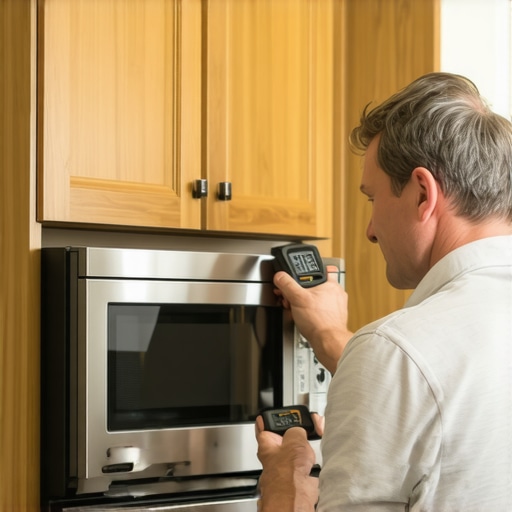
One of the most expensive ‘oops’ factors I encounter is the botched installation. You might think you saved money by having a friend help you slide in that new fridge, but how to ensure reliable appliance installation in 2025 depends entirely on following clearance specs that aren’t just suggestions. If your built-in microwave doesn’t have the critical airflow distance your built-in microwave requires, the magnetron will cook itself in half the time it’s rated for. When the technician arrives and sees the scorch marks on the cabinetry, they will cite ‘improper installation,’ and just like that, your $500 repair is now out-of-pocket because of a half-inch gap. This is a very common reason your warranty claim was denied before the tech even opened their toolbox.
The Paperwork Error That Costs Homeowners Thousands
The biggest trap in the industry isn’t a mechanical failure; it’s the lack of a paper trail. Before you even pick up the phone, you must find the document most people forget before calling service: the original purchase receipt and the installation log. Warranty companies love to use ‘pre-existing conditions’ or ‘lack of maintenance’ as a shield. If you can’t prove that you’ve been cleaning your condenser coils or checking your vent lines, they may point to the wear and tear clauses that might void your warranty. I’ve seen $2,000 refrigerator repairs get rejected because the owner couldn’t produce a receipt showing the water filter had been changed in the last two years. It’s brutal, but it’s the game they play. Always read the fine print that voids your fridge protection plan before you authorize a ‘free’ repair that might not be free at all. Knowing what to expect from same-day appliance repair experts means being as prepared with your paperwork as they are with their tools.
The One Tool That Actually Saves You Five Hundred Dollars
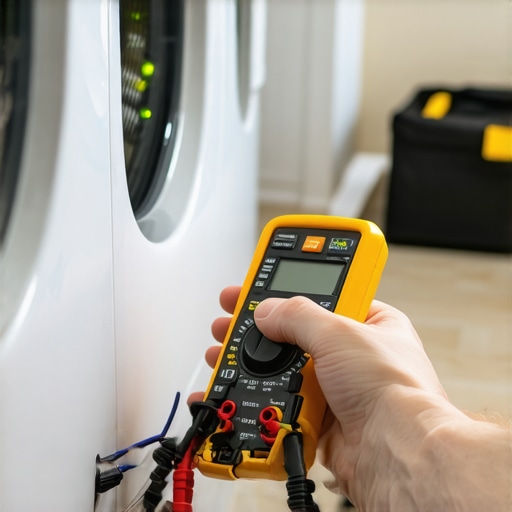
If you want to transition from a panicked homeowner to a confident DIYer, you need to stop guessing and start measuring. I’m not talking about a tape measure; I’m talking about a digital multimeter. For years, I just poked at wires and hoped for the best. Now, I use a Fluke or a high-quality Klein multimeter to perform the refrigerator thermostat test every diyer should know. This tool is the only way to verify if a part is actually dead or if you’re just dealing with a loose connection. Testing for continuity—the ability of electricity to flow through a part—is the difference between buying a $150 control board you didn’t need and fixing the one wire that always fails in your smart thermostat. If you can read a number on a screen, you can diagnose a dead heating element in five minutes flat.
How do I keep my laundry room from becoming a fire hazard?
Maintenance isn’t a seasonal event; it’s a lifestyle for your machines. Most people think they are safe because they swipe the lint off the mesh screen after every load. However, the lint trap trap why cleaning the screen is not enough is a lesson usually learned the hard way. According to the National Fire Protection Association (NFPA), nearly 16,000 home fires are caused by clothes dryers annually, with the leading cause being a simple failure to clean the vent. I personally use a flexible 20-foot brush attached to a cordless drill twice a year to clear the entire run to the outside wall. If you feel your laundry room getting humid or see moisture on the walls, your vent is likely choked. This is also why I advocate for a rigid metal vent for safety rather than those cheap foil accordions that trap lint like a spiderweb.
Thermal Cameras Reveal What Your Eyes Can’t See
I’ve recently started using a compact thermal imaging camera that plugs right into my smartphone. It sounds like overkill until you see a purple glow coming from your refrigerator door, signaling a failed seal. Finding the hidden gasket leak most dishwasher owners ignore before it rots your subfloor can save you thousands in flooring repairs. This technology allows you to see the heat signature of a failing motor or a clogged condenser coil that is forcing your refrigerator compressor to run 24 hours a day. It turns invisible problems into bright orange warnings.
The Shift Toward Predictive Maintenance Algorithms
Looking ahead, I predict we are moving away from ‘fix-it-when-it-breaks’ to AI-driven predictive maintenance. Within the next three years, your home hub won’t just tell you a part failed; it will monitor the amperage draw of your dishwasher pump and alert you that it’s likely to fail in the next 30 days. This will change how we use warranty-backed appliance services, as we will be scheduling appliance repair for same-day service in 2025 based on data, not disasters. For now, take ten minutes today to pull your fridge out and vacuum the coils; it’s the single most effective way to extend the life of your compressor and lower your electric bill. Go grab your vacuum and try it right now—you’ll be shocked at what’s hiding back there.
The Hard Lessons I Learned While Staring at a Frozen Control Board
After years of trial and error, I’ve realized that 90% of the stress we feel during a breakdown is purely psychological. The first time my dryer ‘died,’ I was ready to throw in the towel, literally. But looking back, I’ve learned that a blinking light is often a conversation, not a death sentence. One major takeaway is that you should never call for service before checking the child lock; it sounds simple, but it is the number one reason for ‘no-fault’ service fees. Also, I cannot stress enough the importance of organization. If you want your claims to go smoothly, you need the maintenance receipt you must save for future claims tucked away in a safe spot. It’s the difference between a covered repair and a denied one.
#IMAGE_PLACEHOLDER_E#
What Stays in My Junk Drawer for Appliance Emergencies
I don’t believe in owning every tool at the hardware store, but three things have saved me more money than a lottery win. First, a reliable digital multimeter—don’t guess if a heater is dead, prove it. Second, keep a long-reach vacuum attachment specifically for those fridge coils; it’s the best insurance policy you can buy. Speaking of insurance, I’m often asked is a manufacturer extended plan actually worth the monthly cost? My answer is always: only if you plan on staying in the home for more than five years. If you’re moving soon, you’re better off looking into the transferable warranty secret for home sellers which can actually increase your home’s resale value.
Stop Being Afraid of Your Smart Machines
Your appliances are designed to be used, but they are also designed to be maintained. Whether you are following an expert guide to appliance repair and installation today or simply trying to get through a Tuesday without the dishwasher overflowing, remember that you are the boss of these machines. They don’t have to be a source of anxiety. If a reset doesn’t work, don’t beat yourself up—sometimes you just need to know what to expect from same-day appliance repair experts so you can step back and let a pro handle the heavy lifting. Mastering the basics of appliance repair is about building confidence, one button press at a time. Have you ever accidentally locked yourself out of your own oven or dishwasher? Let me know your funniest ‘it wasn’t actually broken’ story in the comments below!