
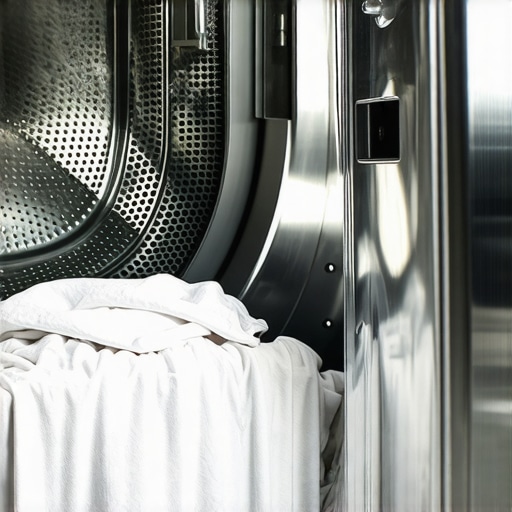
I stood there for twenty minutes, coffee in hand, staring through the glass door of my expensive high-efficiency washer. My favorite bulky towels were barely damp, tumbling around like dry leaves in a windstorm. It felt like a betrayal. I’d spent a small fortune on this machine, yet it seemed to be rationing water like we were in the middle of a historic drought. I even grabbed the manual, convinced I had accidentally hit a ‘desert mode’ button. I didn’t find one. Instead, I found a pile of frustration and a lot of half-clean shirts. We’ve all been there—tossing in a load and wondering if the machine is actually broken or just being incredibly stingy. I once made the mistake of calling for a pro because I thought my pump had died, only to realize I just didn’t understand how the sensors worked. Before you jump the gun and look for [affordable same-day appliance fixes with warranty benefits](https://discountappliancehub.com/affordable-same-day-appliance-fixes-with-warranty-benefits), let’s talk about what is actually happening inside that drum. [image_placeholder_1]
Your Washer Is Not Broken But It Is Being Stingy
My biggest mistake early on was assuming that more water always equals cleaner clothes. I used to dump extra buckets of water into the tub, thinking I was outsmarting the engineers. All I ended up doing was confusing the pressure switch and triggering a drain error. Modern machines are designed to be parsimonious. They use sensors to weigh the load and determine the absolute minimum moisture needed to saturate the fabric. If you are seeing dry spots, it might not be a mechanical failure, but a simple loading error or a sensor that needs a nudge. Sometimes, simply knowing [the secret reset code for frustrated washing machine owners](https://discountappliancehub.com/the-secret-reset-code-for-frustrated-washing-machine-owners) can solve the software hiccups that cause these low levels. Other times, it’s about how we treat the machine. I’ve learned that skipping [the maintenance move that extends your washer life for years](https://discountappliancehub.com/the-maintenance-move-that-extends-your-washer-life-for-years) leads to sediment buildup in the inlet valves, which slows the flow so much the machine just times out.
Is this high efficiency label just a marketing scam?
It is the question every frustrated homeowner asks when they see a thimble-full of water at the bottom of the tub. Skepticism is healthy. You wonder if the lack of water is actually rubbing dirt deeper into the fibers rather than washing it away. However, the Department of Energy notes that modern HE washers use about 70% less water than older agitator models, relying on specialized detergents and high-velocity tumbling to lift stains. It’s a completely different science than what our parents used. If you recently moved and had a [fast trustworthy appliance installation near you](https://discountappliancehub.com/fast-trustworthy-appliance-installation-near-you), make sure the installers didn’t kink the hoses, as restricted flow often mimics these ‘efficiency’ issues. Have you ever pulled a ‘clean’ shirt out of the wash only to find a bone-dry spot right in the middle? Tell me about your laundry nightmares in the comments. We’re going to dive into the settings and mechanical tweaks that can finally give you the water level you deserve.
Force Your Machine to Use More Water
Most people treat the ‘Normal’ cycle like it is the only button on the dashboard, but that is exactly where the machine is programmed to be the most frugal. If you want a deep soak, you have to break the habit of using standard settings. Many modern units have a ‘Deep Fill’ or ‘Extra Water’ button buried in the options, but even if yours doesn’t, switching to the ‘Bulky Items’ or ‘Towels’ cycle often overrides the standard weight sensors. This forces the control board to add several extra gallons to account for the absorbency of those fabrics. If you find your machine is still acting erratic even after changing settings, it might be a deeper technical issue that requires an expert guide to appliance repair and installation today to diagnose.
Stop Packing the Drum Like a Suitcase
I remember the time I tried to wash three sets of king-sized sheets at once. I stuffed them in there like I was trying to win a high-stakes game of Tetris, thinking I was being efficient. When the cycle finished, the center of the bundle was bone dry. HE washers are designed to move clothes through a small amount of water. When you overpack, you create a physical barrier that the water cannot penetrate. The secret is the ‘doughnut’ method: leave the center of the wash plate or agitator visible. This allows the water to circulate from the bottom up. If your machine is shaking violently because of an uneven, packed load, remember that the one screwdriver turn that levels a rattling washer can prevent a lot of long-term mechanical stress on the suspension.
Clean the Screens Before You Call for Service
Sometimes the lack of water isn’t a software choice; it is a physical bottleneck. Think of your water inlet valves like a straw with a piece of paper stuck in it. Over time, sediment and minerals from your pipes collect in the tiny mesh filters where the hoses connect to the back of the machine. I once spent two hours troubleshooting a ‘low flow’ error only to find a tiny pebble from a recent water main break wedged in the screen. If you’ve checked the filters and the flow is still weak, you might need to learn how to change the water inlet valve on a top load washing machine to restore the pressure. This is a common point of failure that looks like a major repair but is actually a simple swap.
The Pressure Tube Trick That Saves the Wash
Behind the scenes, your washer uses a clear plastic tube to ‘read’ the water level. As water rises in the tub, it pushes air up this tube, which triggers a sensor. If this tube gets gunked up with hair or old detergent, the sensor thinks the tub is full when it is actually empty. I’ve seen homeowners ready to scrap a three-year-old machine because they keep getting the error code that means your washer pump is dead, when in reality, the pressure tube just needed a quick blast of air to clear the blockage. If you are dealing with persistent software glitches or hardware failures that your DIY efforts can’t fix, check your documentation for top tips for same-day service warranty coverage so you don’t end up paying out of pocket for a factory defect.Most people think same-day service is a guarantee of a finished repair, but in reality, it is often just a guarantee of a visit. I have seen homeowners get furious when a tech arrives in three hours only to say they need to order a part. To actually get a one-visit fix when scheduling your appliance repair for same-day service in 2025, you have to give the model number and the specific symptoms upfront. The speed of the technician doesn’t matter if the part they need is sitting in a warehouse three states away. 
The Same-Day Service Trap
The biggest mistake I see is homeowners waiting until Friday afternoon to call for help. Even the best companies have limits on their van stock. A contrarian truth in this industry is that ‘same-day’ is often a diagnostic tool, not a magic wand. If you want a real solution, you need to provide the ‘F-codes’ or error messages during the initial call. This allows the dispatch team to cross-reference their inventory before the truck even leaves. Without that info, you are just paying for a very fast way to be told your machine is still broken. If you are in a rush, look for what to expect from same-day appliance repair experts to ensure they actually carry the most common failure components for your specific brand.
Stop Clearing Your Error Codes Before the Tech Arrives
Here is the ‘oops’ factor that ruins many warranty claims: clearing your own error codes. While I love a good DIY reset, doing so right before a professional arrives can be a disaster. Modern control boards store a fault history. If you wipe it to see if the machine will ‘just work’ one more time, you are deleting the forensic evidence the tech needs to justify a part replacement to a manufacturer. I once helped a neighbor who cleared a code on her high-end fridge, and the warranty company denied the claim because the tech could not replicate the failure in the driveway. This is a primary reason why third-party warranty companies deny legitimate claims.
Why does my ‘bumper-to-bumper’ coverage exclude the most expensive parts?
This is the hidden nuance that separates a good policy from a marketing gimmick. Many people assume an extended plan is an exact mirror of the manufacturer’s original warranty, but the fine print often reclassifies control boards or compressors as ‘non-mechanical’ if there is any sign of an external power surge or environmental moisture. According to data from the National Appliance Service Technician Association (NASTeC), a significant percentage of repairs are delayed not by labor shortages, but by the complex pre-authorization process required by secondary insurance providers. This is why you must have the document most people forget before calling service—your original purchase receipt—ready to go. To truly maximize your appliance warranty during emergency repairs, treat the technician’s visit like a legal deposition. Be precise with your timing and sounds. Don’t just say ‘it is acting weird.’ Say ‘the drain pump hums for 30 seconds then stops.’ This level of detail makes it harder for a warranty adjuster to claim the issue is ‘normal wear and tear.’ If you are still shopping for a plan, remember that why some extended warranty plans are better than others often comes down to how they define a ‘mechanical breakdown.’ Have you ever had a claim denied for a ridiculous reason? Let me know in the comments.
I have a rule in my house: never trust a hunch when a multimeter can give you the truth. If you are serious about avoiding constant calls for same-day appliance repair quick solutions with warranty support, you need to own a basic digital multimeter. I personally use a Klein Tools MM400 because it is rugged enough to survive a drop on a laundry room floor and accurate enough to detect the tiny resistance changes in a failing solenoid. When your machine refuses to fill, don’t just buy a new valve; test the terminals. If you get a reading of infinity (OL), the coil is dead. If you get a reading between 500 and 1,500 ohms, your problem is likely the control board or a clogged screen. This specific technical distinction is what separates the people who waste money from those who master their home. Even the expert guide to appliance repair and installation today emphasizes that electrical continuity is the first thing a pro checks, and you can do it yourself in five minutes.
How do I maintain my machine’s efficiency over the long haul?
Maintenance isn’t a one-time event; it is a ritual of documentation. The most overlooked part of keeping a machine running is actually record-keeping. According to the Association of Home Appliance Manufacturers (AHAM), failure to follow the manufacturer’s suggested cleaning cycles is the leading cause of premature pump failure in HE machines. I keep a physical folder clipped to the side of my dryer that holds the maintenance receipt you must save for future claims and a log of every time I run a tub-clean cycle with an active descaler. This isn’t just about cleanliness; it is about building a ‘legal defense’ for your machine. If a technician ever tries to claim user neglect, you can point to the log. This level of preparation is essential for those who want to maximize your appliance warranty during emergency repairs without a fight.
Looking ahead, I see the industry moving toward ‘predictive diagnostics’ where your washer will literally email you before a bearing fails. We are already seeing this with high-end brands that use Wi-fi modules to monitor motor torque. If the torque required to spin the drum increases by even 5%, the machine knows a heavy load or a failing part is to blame. Until that becomes standard, you have to be the sensor. Listen for the ‘death rattle’—that high-pitched metallic whine during the spin cycle. That is your signal to act before a small leak becomes a flood. If you’ve just moved in, ensuring you had a fast trustworthy appliance installation near you is the best way to prevent these vibration issues from the start. I challenge you this weekend to pull your machine out and check the hoses; if they aren’t braided stainless steel, replace them immediately. It is the cheapest insurance policy you will ever buy.
What My Repairman Finally Confessed Over a Cup of Coffee
I spent years thinking my washer was a lemon before I realized most ‘breakdowns’ are actually just misunderstandings between the user and the software. First, the ‘Auto-Sensing’ feature isn’t just about weight; it’s about water conductivity. If you use too much detergent, the machine thinks it’s already full of water and cuts the supply early. Second, I learned that ‘same-day’ is a marketing term, not a physical law. To get the best results, always look for warranty-backed appliance services you can rely on so you aren’t left hanging when a sensor fails. Finally, never underestimate the power of a hard reset; sometimes the motherboard just needs a ‘nap’ to clear a phantom error code that is blocking the water valves.
The Survival Kit for Your High-Tech Laundry Room
If you want to stop feeling helpless when a mysterious code starts flashing, keep these three things nearby. First, invest in a quality set of stainless steel braided hoses. I can’t stress this enough: why your washing machine hose is a ticking time bomb is usually due to age and pressure surges, and a burst hose can cause thousands in floor damage. Second, keep a digital multimeter to test the continuity of those inlet valves yourself. Lastly, always keep your original manual and purchase receipt in a plastic sleeve taped to the back of the machine. This simple step is vital for how to ensure reliable appliance installation in 2025 and beyond, as it streamlines the warranty verification process before the technician even arrives.
Stop Worrying and Start Washing Again
Owning a high-efficiency machine doesn’t have to be a constant battle against technology. By understanding the sensor logic and staying ahead of the maintenance curve, you can enjoy clean clothes without the water-level anxiety. Remember, the goal of professional appliance repair and consistent maintenance isn’t just to fix what’s currently broken—it’s to prevent the stress of the next breakdown before it starts. You now have the tools, the knowledge, and the plan to keep your laundry room running smoothly for a decade. Have you ever found a dry spot in your supposedly clean laundry, or has a warranty tech ever surprised you with a quick fix? Let me know your experiences in the comments below!