
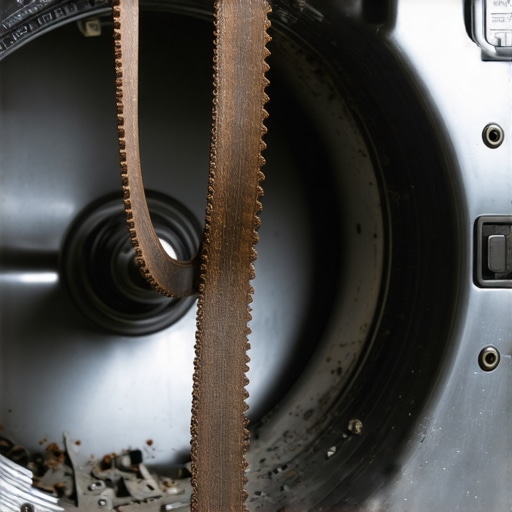
I’ll never forget the smell of burning rubber that filled my hallway at midnight. It wasn’t a car outside; it was my dryer finally surrendering to a load of heavy towels I should have never shoved in there. I ignored the rhythmic ‘chirp-chirp’ for weeks, thinking my dryer was just getting older. When it finally snapped with a loud crack, I was left with a mountain of wet laundry and the realization that my DIY procrastination just turned a twenty-dollar part into a frantic search for same-day appliance repair. We’ve all been there—trying to save five minutes today only to lose five hours tomorrow. I learned the hard way that ignoring the mechanical cries of your home appliances is a recipe for disaster. [image-placeholder-1]
Listen Closely to the Rhythms of a Failing Machine
Your dryer is a surprisingly vocal piece of equipment. Most of us just tune it out, but that belt is the lifeline of the whole operation. It’s a long, thin loop of rubber that endures constant heat and tension. Over time, friction wins. If you’re hearing something that sounds less like a dryer and more like drum roller wear, your belt is likely working overtime to compensate for other failing parts. A report by the National Fire Protection Association (NFPA) notes that mechanical failure is a leading cause of dryer fires, emphasizing that ignoring weird noises isn’t just a laundry problem—it’s a safety one. Early in my homeowner journey, I actually tried to ‘fix’ a squeak by spraying WD-40 on the belt. Please, never do that. It caused the belt to slip, melt, and almost caused a fire. Sometimes a squeaky dryer drum is just the final warning before a total breakdown. Proper maintenance matters. I’ve realized that reliable appliance installation and regular internal checks are the only real ways to avoid these midnight laundry disasters.
Can You Actually Fix This Yourself Without a Degree?
Many people fear that a snapped belt means the end of the machine’s life or a massive repair bill. It’s a valid concern—modern dryers look like spaceships inside. However, understanding the warning signs can save you from a full replacement. If you catch it early, you can often utilize warranty-backed appliance services to handle the technical bits without breaking the bank. Have you ever caught yourself staring at a dryer that refuses to turn, wondering if you should have called for help weeks ago? Today, we are going to dive into why these belts fail and how you can get affordable same-day appliance fixes with warranty benefits before you’re stuck at the laundromat.
Break Open the Cabinet with Confidence
Before you even touch a screwdriver, pull the plug. I learned this the hard way during a summer heatwave when I thought a ‘quick peek’ at my washer’s motor wouldn’t hurt. A stray spark and a numb arm later, I realized that electricity doesn’t care about your sense of urgency. Once you’re safely disconnected, you need to gain access to the drum. For most dryers, this involves popping the top lid like a hood of a car or unscrewing the front panel. It feels like you are performing surgery on a giant metal box, but stay focused. While the machine is open, take a long look at the debris. Most people ignore the build-up, but the lint trap trap why cleaning the screen is not enough applies here too; excess lint inside the cabinet is a massive fire hazard and a sign your airflow is choked.
Don’t Get Sliced by the Inner Workings
Dryer interiors are notorious for having edges sharper than a chef’s knife. I once reached in to grab a fallen screw and came back with a gash that required three stitches. Wear gloves. Once the drum is visible, you’ll see the belt—or what’s left of it—looped around the middle. If it’s snapped, it will be lying at the bottom like a dead snake. If it’s still on but loose, it’s likely stretched beyond its limits. Before you pull it out, check the sensors nearby. Sometimes, the thermal switch reset that brings your dryer back to life is all you actually need, but if that rubber is cracked, it has to go.
Thread the Needle Through the Pulley System
This is the part that makes grown men cry. You have to loop the new belt around the drum and then thread it through the motor pulley and the idler pulley. Think of it like a bicycle chain that’s fallen off the gears, but you’re working in a dark, cramped space. The idler pulley provides the tension; you have to push it to the side to create enough slack to slip the belt over the motor shaft. I remember trying to do this with a flashlight between my teeth, sweating into the motor. It took me four tries to get the alignment right. If you don’t feel that satisfying ‘snap’ of tension, the belt will just fly off the moment you start a cycle. If this dance feels too overwhelming, scheduling your appliance repair for same day service in 2025 is the smartest move to avoid a second teardown.
Why a New Belt Might Not Solve the Real Problem
A snapped belt is often a symptom, not the disease. If your drum rollers are seized up, they’re creating massive friction that’s basically ‘sawing’ through your belt every time it spins. Imagine trying to run a marathon while someone is pulling on your cape; eventually, the cape is going to rip. Always spin the drum by hand once the belt is off. It should glide smoothly. If it feels like it’s grinding through sand, you have bigger issues. This is where same day appliance repair quick solutions with warranty support become invaluable, as they can diagnose if your motor is dragging or if the rollers are shot.
Protect Your Investment with Proper Records
Every time you open your machine, you risk voiding your manufacturer’s protection. I always recommend that homeowners maximize your appliance warranty during emergency repairs by documenting what they see. Take photos of the model number and the state of the internal components. If you decide the job is too big, you’ll need those details for the technician. Ensuring you have a reliable appliance installation and maintenance history can save you hundreds if a major part fails later. Don’t just throw parts at the problem; understand the machine’s rhythm first.
Once you’ve successfully threaded that belt through the pulley system, you might think the hard part is over. But here is the nuance most DIYers miss: the intersection of repair speed and long-term warranty protection. Many people believe that ‘same-day service’ is just a marketing hook for impatient homeowners. In my experience, however, speed is a technical necessity. When an appliance like a dryer or fridge sits in a half-broken state, it often leads to secondary component failure. For example, a dryer with a frayed belt forces the motor to work against irregular resistance, which can heat up the windings and lead to a total motor burnout. This is why looking into affordable same-day appliance fixes with warranty benefits is often cheaper than waiting for a weekend to finish the job yourself.
Same-Day Service Isn’t Just for Impatient People
The industry secret that most big-box retailers won’t tell you is that modern appliances are designed with very tight tolerances. A study by the Association of Home Appliance Manufacturers (AHAM) suggests that deferred maintenance is the primary catalyst for ‘cascading failures’ in high-efficiency units. If you let a squeak go for a month, you aren’t just wearing out a belt; you’re likely damaging the drum support shafts. This is where what to expect from same-day appliance repair experts becomes clear—they aren’t just there to swap a part; they are there to stop the chain reaction of damage. 
How to Prove Periodic Maintenance to Keep Your Warranty Valid?
This is the advanced question that separates the amateurs from the pros. Most homeowners don’t realize that simply fixing a part yourself can lead to a denied claim later if you don’t document it correctly. To how to prove periodic maintenance to keep your warranty valid, you must keep a log of every time the cabinet is opened and what was cleaned or replaced. If a manufacturer sees a non-OEM (Original Equipment Manufacturer) belt and no service record, they will likely point to the wear and tear clauses that might void your warranty to avoid paying out on a major motor failure.
The Fine Print That Turns a Free Repair Into a Full Bill
There is a common trap I call the ‘Installation Gap.’ Many homeowners assume that because they bought a protection plan, everything is covered. However, if your dryer was installed with a flexible foil vent instead of a rigid pipe, many companies will reject your claim, citing improper environment. Always ensure you have a how to ensure reliable appliance installation in 2025 as your baseline. It’s also vital to understand why some extended warranty plans are better than others; the best ones cover the labor for these ‘nuisance’ repairs that DIYers often mess up. Before you tighten that last screw, ask yourself: is this saving me money, or am I accidentally voiding a $400 protection plan? Have you ever fallen into this trap where a $20 fix turned into a total loss because of a warranty technicality? Let me know in the comments below, and let’s make sure you maximize your appliance warranty during emergency repairs every single time.
Gear Up with These Three Non-Negotiable Tools
I’ve spent years tinkering with appliances, and if there is one thing I’ve learned, it is that a basic flathead screwdriver is your enemy. To truly master a repair, I always reach for a magnetic 5/16” nut driver and a flexible putty knife. The nut driver is essential because dryer manufacturers love to tuck screws into corners where your fingers can’t reach. I also never start a job without a high-quality digital multimeter. Even if you are just replacing a belt, you should perform the same diagnostic checks found in the refrigerator thermostat test every diyer should know to ensure your thermal fuses haven’t been stressed by the previous breakdown. Using the right gear isn’t about being fancy; it’s about preventing the stripped screws and broken plastic clips that lead to a rattling machine. For those who want to go deeper, I highly recommend checking out an expert guide to appliance repair and installation today to see how professional kits differ from junk drawer tools.
The Dust Secret Professionals Never Tell You
Maintenance doesn’t end when the new belt is on. The real killer of appliances isn’t age; it’s friction caused by micro-debris. I personally use a 24-inch flexible vacuum attachment to reach under the motor housing every six months. If you leave even a tablespoon of lint near the motor, it acts like an abrasive, wearing down the bearings. This is why top tips for same day service warranty coverage often emphasize cleanliness—a technician can tell immediately if a failure was caused by neglect. According to the Whirlpool Service Manual for Thin Twin Units, the tensioner arm must be lubricated with high-temperature lithium grease, not WD-40, to prevent the metal-on-metal grinding that eventually snaps your new belt. Ignoring this nuance is why many DIY repairs fail within the first ninety days.
How do I maintain my dryer’s health after a major fix?
The secret to longevity is a ‘listen and feel’ routine. Once a month, run the dryer empty and press your ear to the side panel. You are listening for the ‘thump-thump’ of a flat spot on a roller. If you hear it, you need to address it before it ruins the belt alignment. You can apply the same logic found in the pulley alignment fix for a squeaking washer drum to your dryer’s setup. Looking forward, I predict we will see smart sensors becoming standard—sensors that will alert your phone the second a belt stretches beyond a certain millimeter threshold. Until then, manual vigilance is your best tool. If you find yourself constantly resetting parts, it might be time for scheduling your appliance repair for same day service in 2025 to get a professional diagnostic. Advanced Tip: Take five minutes today to check your idler pulley’s spring tension; if it doesn’t snap back instantly when pulled, your new belt will slip and fail within weeks. Don’t wait for the smell of burning rubber to return!
The Hard Truths About Cutting Corners in the Laundry Room
After years of wrestling with lint-clogged cabinets, I’ve realized that procrastination is the most expensive part of any repair. If you hear a rhythmic chirp, investigate it today. Waiting until the belt snaps usually means you’re also dealing with drum roller wear that could have been avoided with a simple ten-minute check. I’ve learned that a clean machine isn’t just about aesthetics; it’s about reducing the friction that kills motors.
Always document your work with clear photos. Manufacturers look for any excuse to claim a repair was ‘unauthorized’ or performed incorrectly. By taking photos of the internal state before and after your work, you can effectively prove periodic maintenance to keep your warranty valid. It is truly the difference between a covered repair and a $300 bill out of your own pocket.
Finally, never underestimate the value of a professional’s eye for the complex stuff. Sometimes, finding affordable same-day appliance fixes with warranty benefits is the most ‘DIY’ thing you can do—it protects your time, your safety, and your machine’s long-term lifespan. Knowing when to put the screwdriver down is just as important as knowing how to use it.
My Go-To Kit for Keeping My Appliances Alive
I don’t believe in buying every gadget in the hardware store, but these three items are non-negotiable for my workbench. First, a magnetic 5/16” nut driver—because losing a screw inside a dark dryer cabinet is a special kind of nightmare. Second, a digital multimeter is vital for checking if the thermal switch reset is actually what you need or if a component has truly failed. Third, I always keep a flexible vacuum wand attachment to reach the lint that builds up under the motor housing. For anyone looking to level up their skills, I highly recommend reading an expert guide to appliance repair and installation today to build your confidence before you ever pop the lid of your machine.
Take the First Step Toward a Stress-Free Home
You don’t have to be a master mechanic to take control of your home’s health and safety. Whether you’re tightening a loose screw or scheduling your appliance repair for same-day service in 2025, the goal is always the same: peace of mind and a house that runs smoothly. Your appliances work hard for you every day; a little manual vigilance goes a long way in preventing a midnight laundry crisis. Don’t let a small squeak turn into a total breakdown! Have you ever tried to fix a dryer belt only to realize the rollers were the real problem? Let me know your DIY wins and woes in the comments below!