

It was 3:14 AM. I know the exact time because the piercing chirp-chirp-chirp of my kitchen range dragged me out of a dead sleep. I stumbled downstairs, half-convinced we had a carbon monoxide leak or a dying smoke detector battery. Nope. It was the induction cooktop. Dark, cold, and seemingly possessed, it was screaming for attention even though nobody had touched it since dinner. This phantom beeping is one of the most frustrating quirks of modern cooking tech. I remember my first time dealing with this; I panicked and started spraying the glass with heavy-duty degreaser, thinking a clean surface was the cure-all. Big mistake. That extra moisture actually seeped toward the touch sensors and made the alarm constant. If you are standing in your kitchen right now, glaring at a glass surface that won’t shut up, I promise we are going to fix this without you needing to pull the circuit breaker in frustration.
Why Your Stove Thinks Someone is Cooking
Induction ranges are incredibly smart, but they are also incredibly sensitive. They use capacitive touch sensors, much like your smartphone. When something—anything—interferes with those sensors, the board assumes a human is trying to give it a command or that something dangerous is happening. One of the most common culprits is simply a stray damp cloth or a heavy cast-iron pan left sitting on the controls. Even a tiny spill of salty pasta water can bridge the gap between two touchpoints, causing the software to freak out. According to the Association of Home Appliance Manufacturers (AHAM), modern smart appliances rely on precise electrical resistance, meaning even minor environmental changes like high humidity or a poorly positioned pot can trigger an alert. If you’ve checked for spills and the noise persists, you might be looking at why your range is showing an f1 error code and beeping, which often points toward the internal logic board rather than a surface issue.
Is My Kitchen Actually About to Explode?
It sounds dramatic, but when a high-voltage appliance starts screaming, our brains go straight to ‘fire hazard.’ The good news? It is almost never a safety emergency. Most induction beeps are ‘soft’ errors intended to protect the glass or the electronics from overheating. However, if the beeping is accompanied by a flickering display, it could be a sign of the signs of a failing range control board. Before you assume the worst, try a total ‘hard reset’ by flipping the breaker for ten minutes. It’s the kitchen version of ‘turning it off and on again,’ and it works more often than you’d think. If that doesn’t do the trick, you might need to consult an expert guide to appliance repair and installation today to see if a wire has vibrated loose. Have you ever felt like your kitchen was haunted by a beeping ghost, or did you manage to silence yours with a simple wipe-down? Let me know, because I’ve definitely been there! We will dive into the specific cleaning techniques and grounding issues that cause these phantom alerts next.
Clean the Glass Like Your Peace Depends on It
The very first thing you should do when your stove starts its 3 AM solo is reach for a dry microfiber cloth. I’m not talking about a quick swipe; I mean a thorough, buffing-style clean. Induction sensors are like a nervous cat—anything that touches them without warning makes them jump. Even a thin film of grease or a microscopic layer of salt can create enough electrical capacitance to trigger the board. I remember one Tuesday night I was ready to throw the whole stove out the window because of a persistent chirp. I had wiped it down three times with a damp rag, which only made it worse. Finally, I used a dry paper towel to aggressively dry the control area, and the silence was instant. It turns out, a single grain of sea salt was sitting right on the ‘increase heat’ sensor. If your surface is clean but the buttons are still acting up, you might find similarities in why your microwave buttons aren’t responding to your touch, as both appliances often use the same touch-capacitive technology.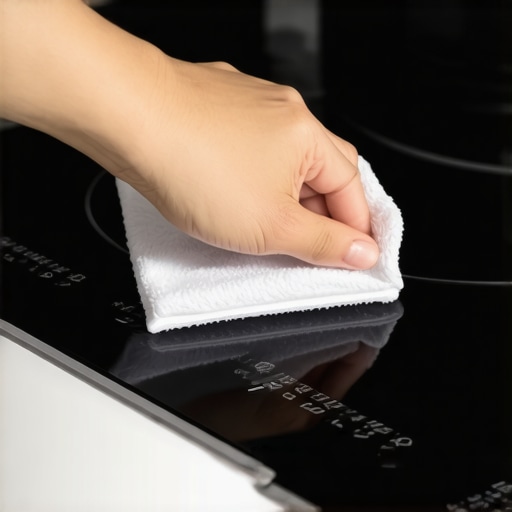
Engage the Control Lock First
If the beeping starts while you are actually cooking, the ‘Control Lock’ is your best friend. Most people think of this as a child-safety feature, but it’s actually a diagnostic tool. By locking the interface, you are telling the computer to ignore any input from the surface. If the beeping stops once the lock is engaged, you know for a fact that the issue is external—meaning something on the glass is bothering the sensors. If it keeps beeping even with the lock on, the ‘ghost’ is inside the machine, likely a failing component. This is often the point where people start worrying about costs, but if you have a solid service agreement, warranty-backed appliance services you can rely on can cover the technical deep-dive into the sensor array without breaking your budget.
Kill the Power to Clear the Memory
Sometimes the software just gets stuck in a loop. Think of your induction range like a computer that happens to boil water; it needs a reboot occasionally. Don’t just turn it off at the knob. You need to pull the plug or flip the breaker. Leave it off for at least ten minutes to let the capacitors on the control board fully discharge. When you flip it back on, the system performs a ‘power-on self-test.’ If the beeping returns immediately after a hard reset, you aren’t dealing with a glitch; you’re dealing with a hardware failure. This could be a sign of the control board solder joint that kills your range, which requires a steady hand and a pro’s eye to fix.
Check Your Grounding for Ghost Signals
If your stove is beeping and the lights are flickering, the problem might not be the stove at all—it’s your house. Induction cooktops are incredibly sensitive to ‘dirty power’ or poor grounding. If the unit isn’t grounded properly, static electricity can build up on the glass surface and discharge into the sensors, causing phantom presses. I saw this once in a beautiful 1920s remodel where the installer skipped a step. The stove would beep every time the refrigerator’s compressor kicked on. Learning how to properly ground your new induction cooktop is vital for long-term silence. If you suspect an electrical mismatch, it is better to seek same-day appliance repair quick solutions with warranty support rather than risking a short circuit that could fry your expensive logic board.
Stop Falling for the Same-Day Gimmick
Most homeowners assume that ‘same-day service’ is just a flashy marketing promise designed to get you to pick up the phone. I used to think the same until I realized that in the world of high-end induction tech, the real value of speed isn’t about having a working stove by dinner—it’s about the ‘triage’ that prevents a $500 mistake. When you are scheduling your appliance repair for same-day service in 2025, you aren’t just paying for a quick fix; you are paying for an expert to catch a failing capacitor before it sends a lethal surge into your logic board. A common contrarian truth in this industry is that ‘waiting a few days’ to see if the beeping stops on its own is the fastest way to turn a minor sensor glitch into a total unit replacement. If you want affordable same-day appliance fixes with warranty benefits, you have to act the moment the phantom beeping starts, not after the screen goes black.
Why Does My Provider Say a Power Surge Isn’t Covered?
This is the advanced question that catches most people off guard. You might have a premium protection plan, but did you know that many companies classify ‘dirty power’ or external surges as ‘acts of nature’ rather than ‘mechanical failure’? According to a study by Consumer Reports on appliance reliability, nearly 25% of smart appliance logic board failures are linked to external electrical fluctuations rather than manufacturing defects. This is the ultimate ‘oops’ factor: if a tech finds evidence of a surge and you don’t have a whole-home surge protector, your claim might be dead on arrival. This is specifically the reason your warranty claim was denied for many frustrated owners. If you are debating is a manufacturer extended plan actually worth the monthly cost, look for language that specifically covers ‘electrical surge protection’—without it, that expensive board replacement is coming out of your pocket.#IMAGE_PLACE_HOLDER_C#
The Document You Need Before the Tech Knocks
The biggest trap you can fall into is assuming the repairman will ‘just know’ what’s wrong because it’s a name-brand stove. Before you call for same-day appliance repair quick solutions with warranty support, you need to find your original installation receipt. Why? Because many induction issues, like the phantom beeping we discussed, stem from improper clearance or poor ventilation in the cabinetry. If the original installer didn’t follow the manufacturer’s specs, the warranty company can argue the ‘environment’ caused the failure, not the machine. Always keep the document most people forget before calling service ready to prove the unit was installed by a pro. When you focus on how to ensure reliable appliance installation in 2025, you aren’t just making sure the stove works today; you are building a legal paper trail that protects your future claims. Have you ever fallen into the trap of thinking a simple reset would fix everything, only to find out you inadvertently voided your protection plan? Let me know in the comments below! If you need more help navigating the fine print, check out these top tips for same-day service warranty coverage to stay one step ahead of the adjusters.
Stop the Grime Before It Stops the Sensors
I’ve learned the hard way that a standard kitchen sponge is actually your induction cooktop’s worst enemy. Most people don’t realize that the surfactants in common dish soaps leave a microscopic film that attracts static. To truly maintain a silent kitchen, I exclusively use a specialized glass cooktop cream—specifically one with a silicone-based protectant. This isn’t just for shine; that silicone layer acts as an insulator, preventing the salt and moisture from your boiling pasta water from creating a ‘bridge’ between sensors. If you want to keep things running smoothly, you should also learn how to spot a shady appliance repair quote before you let anyone open up your machine. A pro who knows induction will check your sensor’s capacitance values, not just suggest replacing the whole board immediately.
How do I maintain my induction cooktop over time?
Long-term maintenance is less about the glass and more about the ventilation underneath. The internal cooling fans on an induction unit are the unsung heroes of the appliance world. If they get clogged with dust or pet hair, the logic board overheats, leading to those erratic beeps and eventually a dead unit. I make it a habit to vacuum the cabinet space beneath my cooktop every six months. If you notice the fan sounding louder than usual, it’s time to find out what to expect from same-day appliance repair experts who can perform a deep internal cleaning. This small maintenance move is similar to the maintenance move that extends your washer life for years—it’s all about protecting the sensitive electronics from environmental stress. According to the IEEE Sensors Journal, capacitive touch interfaces are significantly affected by ambient humidity and temperature fluctuations, meaning a cool, dry environment is the best way to prevent ‘phantom’ signals.
The Future of Touch Controls is Haptic
As we look toward the next few years, I predict we will see a shift away from standard capacitive touch toward haptic-feedback glass. This will solve the phantom beeping issue entirely because the sensors will require a specific physical pressure rather than just an electrical change. Until that tech hits the mainstream, your best defense is a paper trail. Keep the maintenance receipt you must save for future claims in a dedicated folder. This proves you didn’t neglect the unit when the sensors eventually wear out. If you are currently dealing with a beeping stove, I challenge you to try the ‘Dry-Buff’ method: use a completely dry microfiber cloth and buff the control area for 60 seconds with firm pressure. It often clears the static that a wet wipe leaves behind. If that doesn’t work, don’t wait for the board to fry—look into scheduling your appliance repair for same-day service in 2025 to get a diagnostic before your warranty window closes.
The Hardest Lesson I Learned About Sudden Appliance Failure
The most humbling thing about a smart kitchen is realizing that a $3,000 stove can be outsmarted by a single grain of salt. My journey with phantom beeping taught me that modern sensors are both a miracle and a headache. First, I learned that moisture is a conductor, and using too much water to clean the touch panel is essentially asking for a glitch. Second, I realized that many owners panic and call a tech before checking the basics. Always try a 10-minute power-down at the breaker; it is the ultimate ‘reset’ that clears temporary logic errors. Lastly, I discovered that having the document most people forget before calling service ready is the difference between a free repair and a denied claim. If you can’t prove your unit was installed correctly, you are at the mercy of the manufacturer’s fine print.
My Essential Toolkit for Appliance Longevity
To keep your induction unit silent and responsive, I recommend three specific habits. First, keep a dedicated ‘buffing cloth’—a dry, high-gsm microfiber—to remove the static charge that builds up over a week of cooking. Second, I swear by a silicone-based glass protector; it creates a barrier that prevents spills from ‘bridging’ your touch sensors. Third, I always keep a digital folder of my service history. When you are scheduling your appliance repair for same-day service in 2025, having those records ready makes the tech’s job easier and your warranty stronger. I also suggest learning how to spot a shady appliance repair quote so you aren’t overcharged for a simple sensor calibration that takes ten minutes. These small steps ensure how to ensure reliable appliance installation in 2025 remains a priority for your household.
The Future of Your Silent Kitchen
You don’t have to live in fear of the 3 AM chirp. By understanding that your induction stove is more of a computer than a traditional heating element, you can treat it with the care it deserves. Don’t let a minor sensor glitch turn into a major financial burden. If the beeping persists after a deep dry-clean and a hard reset, lean on affordable same-day appliance fixes with warranty benefits to get an expert diagnosis before the board fails completely. Your kitchen should be a place of creativity, not a source of technical stress. Have you ever had a kitchen appliance wake you up in the middle of the night with a phantom alarm? Let me know your ghost stories in the comments below!