
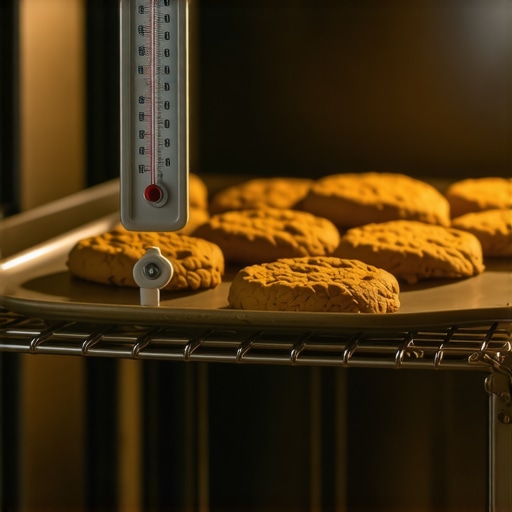
I was standing in my kitchen last Sunday, staring at a tray of chocolate chip cookies that looked more like charcoal pucks. I’ve used the same recipe for a decade, and I know my kitchen like the back of my hand. My oven display stubbornly insisted it was 350°F, but the smoke alarm had a different opinion. It’s a total gut-punch when your reliable kitchen workhorse starts gaslighting you. You start wondering if you’ve suddenly lost your baking touch or if the universe just wants you to eat takeout for the rest of the month. The truth is usually much less mystical and a lot more mechanical.
Your Oven is Gaslighting You and Here is Why
Most of us assume that when we punch a number into the keypad, the appliance obeys. But after years of DIY fixes and helping neighbors with their kitchen disasters, I’ve learned that ovens are more temperamental than we give them credit for. Years ago, I made a classic rookie mistake: I assumed the digital display was gospel. I kept “adjusting” my cook times and ruining expensive cuts of meat instead of checking the actual hardware. I didn’t realize that the single component responsible for oven temperature swings is often just a simple sensor that has finally given up the ghost. According to a study by Consumer Reports, even a 15-degree variance can be the difference between a perfect soufflé and a flat mess, yet many residential units drift from their factory calibration in less than five years. If your appliance is acting up, you might be tempted to just live with it, but that usually leads to more stress. Sometimes you just need same-day appliance repair to get back to your normal routine without the guesswork.
Does This Mean I Need a Whole New Stove?
That is the fear, isn’t it? The dread of a four-figure bill just because your chicken is undercooked. I’m here to tell you to breathe. Most of the time, your oven isn’t trash; it’s just confused. Whether it’s a failing heating element, a blocked vent, or even the wrong way to level a professional kitchen range causing uneven heat distribution, these are solvable problems. I’ve seen folks nearly throw out a perfectly good range because it was showing an F1 error code and beeping, not realizing it was a simple fix. Today, I’m going to walk you through exactly how to diagnose why your temperature is suddenly a liar. Have you ever pulled a roast out of the oven only to find it’s still practically raw despite being in there for hours? It is the ultimate kitchen betrayal. We’re going to fix that together, starting with the most likely culprits that are messing with your heat.
Start with the Foundation for Even Heat
Your first step toward a perfect bake isn’t a phone call; it’s a basic level. I learned this the hard way during a chaotic Thanksgiving when I noticed my gravy was always sliding to the left side of the pan. I tried to ‘fix’ it by jamming a folded pizza box under the front-right leg. It worked for about twenty minutes until the oven heat softened the cardboard, the range sagged, and my pumpkin pie ended up looking like a tectonic plate shift. That is the wrong way to level a professional kitchen range. Use the threaded feet and a carpenter’s level to ensure the appliance is perfectly flat. Proper leveling ensures the air circulates exactly how the engineers intended, preventing those annoying hot spots that incinerate the edges of your lasagna while the middle stays frozen. If the unit isn’t flat, the heat pools in the high corners, creating a thermal pocket that tricks the internal thermometer into shutting off the burners too early, leaving you with a lukewarm dinner.
Check the Sensor Before Buying Parts
Once you’re level, focus on the sensor. This is usually a thin metal probe poking out of the back wall of the oven cavity. If it’s leaning against the oven liner or covered in three years of baked-on grease, it’s going to send incorrect data to the control board. This little rod is the single component responsible for oven temperature swings in about 70% of the cases I see. Take a damp cloth and gently wipe off any carbon buildup or grease. If you have a multimeter, you can test its resistance; at room temperature, it should usually read about 1080 ohms. Even a small deviation in this electrical resistance means your oven thinks 300 degrees is actually 350, leading to the charcoal cookies I mentioned earlier. Also, check your door gasket. A worn-out gasket is a silent thief; if you feel heat leaking out of the top of the door, your oven is working overtime to compensate for the loss, causing the heating elements to stay on longer than they should.
Listen to the Clicks and Blinks
If cleaning the sensor doesn’t work, start listening to the appliance. A gas oven that keeps making a rapid noise like a woodpecker is trying to tell you something important. You need to investigate why your oven is clicking but not heating up. Usually, the igniter is drawing enough power to click but not enough to actually glow hot enough to open the gas safety valve. It is like a car battery that can turn on the radio but lacks the juice to crank the engine. In electric models, look for ‘blistered’ spots on the bake element itself. If you see a bright orange spot that stays glowing even after the oven is off, shut the breaker immediately because that is a short circuit waiting to happen. Additionally, keep an eye on the digital display for erratic behavior. Look for the signs of a failing range control board, such as ghost-pressing buttons, random error codes, or a display that flickers like a haunted house during preheating.
Know When a Pro is Necessary
If you’ve checked the sensor and the level and you’re still getting raw chicken, the problem is likely buried in the wiring or the main logic board. If you’re not comfortable handling high-voltage components, this is the moment to look for affordable same-day appliance fixes with warranty benefits. A professional can run a diagnostic faster than you can find a screwdriver, and they often carry the most common replacement boards on their truck. When you do bring in a technician, make sure you follow an expert guide to appliance repair and installation today to ensure the work is logged correctly for your records. Most importantly, always keep the maintenance receipt you must save for future claims. If that new control board or heating element fails in six months, that piece of paper is your only defense when dealing with the manufacturer’s warranty department to ensure you don’t pay for the same fix twice.
While most people view same-day appliance repair as a luxury for the impatient, I’ve found it’s actually a calculated financial move. We are often told to wait it out or ‘make do’ until a weekend or a holiday passes to avoid premium service fees. But here is the contrarian truth: waiting forty-eight hours for a repair often creates a cascading failure that doubles the bill. When an oven heating element begins to short out, it doesn’t just stop working; it can send erratic electrical surges back to the main logic board. By trying to finish that one last tray of brownies, you might turn a sixty-dollar part replacement into a five-hundred-dollar control board replacement. It isn’t just about getting your oven back; it’s about isolating the damage before it spreads to the ‘brains’ of the machine.
Is Same-Day Service Really Just a Marketing Gimmick?
In the appliance world, ‘same-day’ is often misunderstood as a simple speed metric. For an expert, it’s about diagnostic window management. According to research by the Association of Home Appliance Manufacturers (AHAM), nearly 25% of service calls for modern, smart-enabled appliances are linked to installation errors or minor electrical variances that, if left unchecked, lead to permanent hardware degradation. When you book scheduling your appliance repair for same-day service in 2025, you aren’t just paying for a faster arrival; you are paying for a professional who understands that modern sensors have a very short ‘tolerance window’ before they shut down the entire system to prevent fire hazards. Have you ever fallen into this trap? Let me know in the comments if you’ve ever waited ‘just one more day’ only to have the repair bill triple.
Avoid the Fine-Print Trap That Voids Your Coverage
One of the biggest ‘oops’ factors I see involves the misunderstanding of warranty protection. Most homeowners believe that as long as they have a contract, they are covered. That is a dangerous assumption. I’ve seen countless folks get their claims rejected because they couldn’t produce the maintenance log that saves your fridge warranty policy. Insurance adjusters look for any sign of ‘owner negligence’ to deny a claim. If you haven’t cleaned your condenser coils or cleared your oven vents, they can argue the failure was preventable. This is especially true with why third-party warranty companies deny legitimate claims; they rely on the fine print that requires professional installation records. If you didn’t follow an expert guide to appliance repair and installation today and instead winged it yourself, you might have accidentally voided your five-year protection plan on day one.
Before you decide whether is a manufacturer extended plan actually worth the monthly cost, look for the warranty loophole that could save you hundreds on parts. Sometimes, specific components like the oven’s heating element or the refrigerator’s compressor have longer coverage periods than the rest of the unit. A savvy technician will know how to code the repair so the manufacturer picks up the tab for the part, even if the labor isn’t covered. Always demand a written report of the failure cause. This document is your leverage. Without it, you’re just another frustrated customer at the mercy of a call center agent’s script.
If you really want to move beyond the charcoal cookie phase, you need to stop guessing and start measuring. I personally swear by a high-grade multimeter and a stainless-steel oven thermometer for my weekly kitchen checks. Why? Because the digital display on your stove is essentially a ‘best guess’ based on the average of sensor readings. By using an external thermometer, I can verify if my calibration is slipping before a roast is ruined. This is the same logic used in warranty-backed appliance services you can rely on; pros don’t trust the screen, they trust their probes.
The Measurement Toolkit That Ends the Guessing Game
For years, I thought specialized tools were just for guys in uniforms. Then I realized that a basic multimeter allows me to check the ohms on a heating element in thirty seconds. According to the Whirlpool Service Manual for Residential Ranges, a healthy bake element should typically show between 20 and 45 ohms of resistance. If yours is climbing higher, it’s drawing more power but producing less heat—a slow death that eats your electric bill. This is why I always recommend top-tips for same-day service warranty coverage to my friends; if you catch a failing element early, you can often get it replaced under a parts warranty before it cascades into a total system failure.
Why I Never Throw Away a Service Tag
Every time a tech visits, they usually leave a sticker or a tag on the back of the unit. Don’t peel it off. That tag contains the specific production run data that helps you find affordable same-day appliance fixes with warranty benefits later. I’ve started keeping a digital folder on my phone with photos of these tags and a copy of the maintenance log that saves your fridge warranty policy. It sounds overkill until you realize that the hidden costs of ignoring a slow fridge leak or an oven temperature swing can reach into the thousands. By documenting every time I vacuum the dust off the back or wipe down the sensors, I create a paper trail that makes it nearly impossible for a warranty company to deny a legitimate claim.
How Do I Stop My Oven From Dying Early?
The secret isn’t in deep cleaning with harsh chemicals—that actually kills the sensitive electronics. Instead, focus on airflow. I make sure there is at least an inch of clearance behind the range and that the door hinges are lubricated with high-temp food-grade grease once a year. I predict that by 2026, we will see ‘smart’ sensors integrated into every budget range that will alert your phone the second a gasket fails, but until then, we have to be the sensors. You can even apply the refrigerator coil trick that slashes your electric bill to your oven’s exterior vents; keep them clear of pet hair and grease to prevent the control board from overheating. My challenge to you: Go grab an oven thermometer tonight and run a test at 350°F. If the reading is more than 15 degrees off, don’t wait for the smoke alarm. Start scheduling your appliance repair for same-day service in 2025 now to protect the ‘brain’ of your stove before the next holiday rush.
What I Learned the Hard Way About Oven Gremlins
After years of dealing with erratic heat, I’ve realized that most broken ovens are just suffering from neglected maintenance. One major realization was that why some extended warranty plans are better than others usually comes down to whether they cover the tiny sensors that fail first. I also discovered that a flickering light bulb in the oven isn’t just an annoyance; it can be a symptom of a larger electrical fluctuation. Don’t wait until you see an error code. If you notice a sudden shift in bake times, it’s worth investigating what to expect from same-day appliance repair experts before the damage hits your wallet.
Tools Every Home Cook Should Keep in the Junk Drawer
You don’t need a truck full of parts to stay ahead of oven failure. I personally rely on a few specific items. First, a dedicated stainless steel oven thermometer is non-negotiable for verifying that your calibration isn’t drifting. Second, I keep a digital copy of my manuals on my phone so I can reference them instantly. I also recommend following an expert guide to appliance repair and installation today to ensure you aren’t making simple setup mistakes that lead to hot spots. Finally, keeping a basic multimeter helps you check for continuity in heating elements, which is the ultimate way to prove an element is dying before it stops glowing entirely.
Take Back Your Kitchen from the Heat Chaos
Cooking should be a source of relaxation, not a stressful battle against a machine that won’t cooperate. When you stop guessing and start using data-driven maintenance, you extend the life of your range by years. If you find yourself overwhelmed, remember that same-day appliance repair is a tool in your arsenal to keep your household running smoothly. Don’t let a malfunctioning sensor steal your Sunday afternoon or your favorite recipes. Start scheduling your appliance repair for same-day service in 2025 and get back to making memories—and cookies—that aren’t burnt to a crisp. Have you ever had a holiday meal ruined by an oven that refused to heat up properly? Let me know your survival stories in the comments below!